
In brief
A hot water bottle with a soft cover is a simple, cheap way to warm a cold bed or ease a chilly evening. Fill it with hot, not boiling, water to no more than two-thirds, push out the air and close the stopper firmly. Check the rubber and the date mark each winter, and take extra care if feeling in the skin is reduced.
Shortlisted for this decision
Affiliate-
Shortlisted
Fashy 2 L Bottle, Fleece Cover
For a covered 2 litre bottle
A 2 litre bottle in a soft fleece cover, from a maker that prints clear filling and safety rules.
Check price on AmazonCheck first: Fill with hot, not boiling, water to two-thirds, and check the date mark and stopper before each winter.
Affiliate links: we may earn a commission from qualifying purchases at no extra cost to you. Prices are shown only on Amazon. Amazon.com (US listing). See the full comparison ↓
Documented options
Hot water bottle guide: options compared
Options based on manufacturer documentation. Retailer links are affiliate links: we may earn a commission from qualifying purchases.
Affiliate retailer links
-
Fashy Hot Water Bottle with Fleece Cover
Exact variant: Charcoal, 2 L
View product details on Amazon — United States -
Fashy 6530 Wärmflasche mit Vliesbezug
Exact variant: 2 Liter, Vliesbezug
View product details on Amazon — Germany -
Fashy 6530 hot water bottle with fleece cover
Exact variant: 2 L, fleece cover
View product details on Amazon — France -
Fashy 6530 Wärmflasche mit Vliesbezug
Exact variant: 2 Liter, Vliesbezug
View product details on Amazon — Spain
IN THIS GUIDE
Who a hot water bottle suits
A hot water bottle needs no plug, no cable and no timer. You fill it, cover it and tuck it where you want warmth. That simplicity is why many older people still prefer it to electric heat.
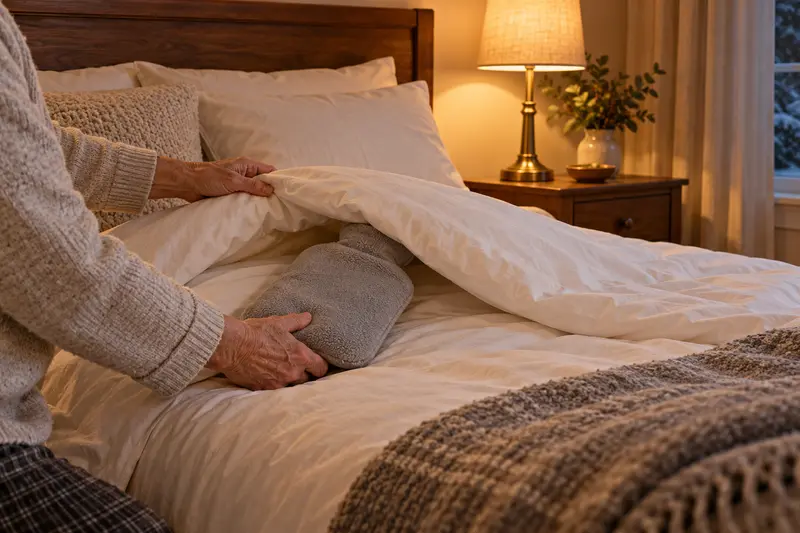
Say your mother feels the cold most when she first gets into bed. A covered bottle placed in the bed half an hour before can take the chill off the sheets. She can then move it to her feet or set it aside before she settles to sleep.
It also suits a cold sofa evening, a draughty spare room or a short power cut. It does not suit everyone, and the section on reduced sensation below explains who needs extra care.
- People who feel cold in bed but do not want an electric blanket
- Anyone who likes a little warmth on the lap or feet in the evening
- Homes where heating is kept low to save money
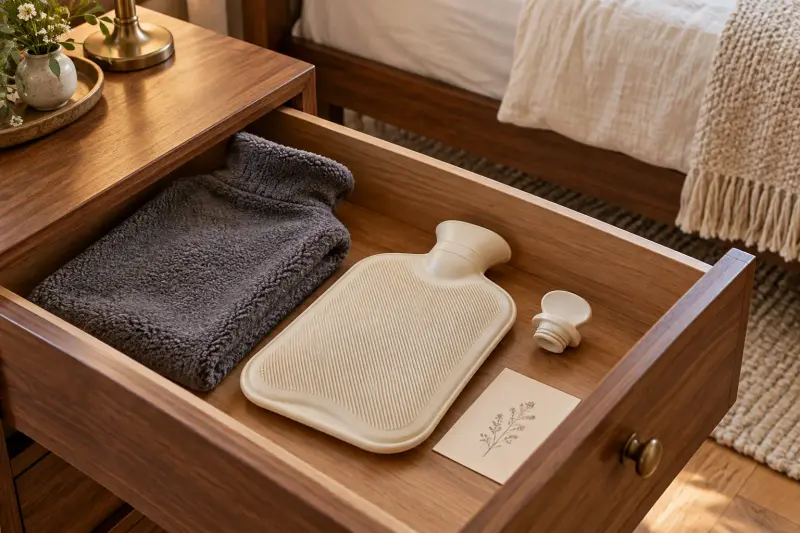
- Guests and spare rooms, since a bottle stores flat in a drawer
How to fill a hot water bottle safely
The filling step is where most care is needed. Fashy, the German maker of the pick below, says plainly on its product page: do not fill with boiling water, and fill to two-thirds at most.
Swansea Bay health board in Wales gives the same advice and adds a few steps. Let boiled water cool for a few minutes, then push out the extra air before closing the stopper. Somerset Council suggests mixing cold and hot water instead of using freshly boiled water.
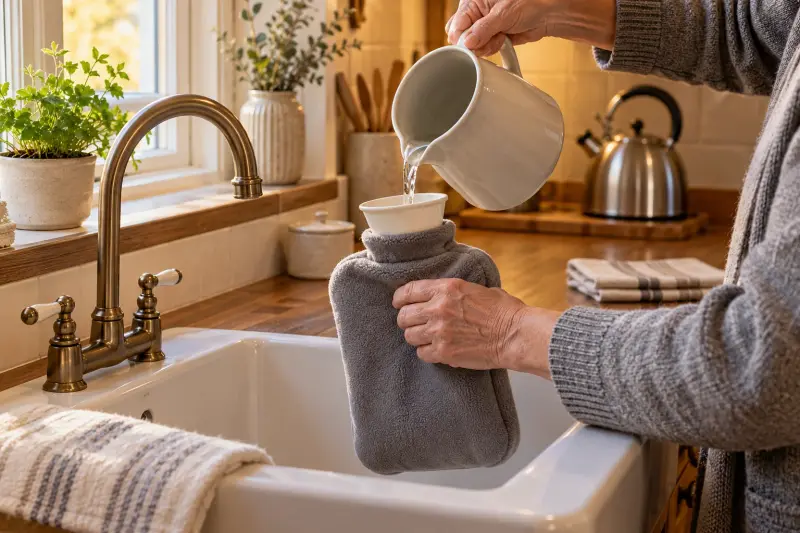
Fill at the sink with the bottle held upright, not on your lap. If hands are stiff or shaky, this is a good job to share. A family member can fill it while you warm the bed.
- Use hot water that has cooled for a few minutes, never straight from a boiling kettle
- Fill no more than two-thirds full
- Lay the bottle flat and press gently to push out air before you close it
- Check the stopper screws on firmly by hand and does not drip
- Always use a cover, and never lie or sit on a filled bottle
What to check on a hot water bottle with cover
Start with the bottle itself. Somerset Council explains that many bottles carry a small flower symbol, and the number in the middle shows the year it was made. Look for splits or cracks, especially near the neck and the seams.
Then look at the cover. A soft, thick cover keeps the hot surface off the skin and makes the warmth gentler. Swansea Bay says to always use a cover, and Fashy warns against long, direct skin contact.
UK health advice also names a safety standard, BS 1970:2021, for bottles sold there. When you shop, ask the seller one question: "Does the listing show the date mark, the capacity and what the cover is made of?"
- Date mark: find the flower symbol and read the year
- Body: no cracks, sticky patches or hard, stiff areas
- Stopper: screws in by hand and sits firmly
- Cover: soft, removable and the right size for the bottle
- Size: 2 litres warms a bed well but is heavier to carry when full
The Fashy 2 L bottle with fleece cover in plain facts
Our pick is the Fashy hot water bottle with fleece cover, 2 litres, verified today on Amazon.com, Amazon.de and Amazon.fr under the same listing number. Fashy lists the item as article 6530 on its own shop, with a 2.0 litre capacity and a 100 percent polyester cover.
The maker page gives clear safety rules but not the bottle material, its measurements or care steps for the cover. Read the leaflet in the box before the first use, as Fashy asks.
For comparison, an old bottle at the back of the cupboard costs nothing but may be past its safe age. A new covered bottle with a clear date mark is the safer swap for most homes.

- Capacity: 2.0 litres, per Fashy
- Cover: fleece, 100 percent polyester, per Fashy
- Colours: Fashy lists dark grey, royal blue, pink and red; the US listing is charcoal
- Fashy warnings: no boiling water, two-thirds full at most, check for wear and leaks before each use
- Also from Fashy: not for use as a pillow, and never heat it in a microwave or oven
Extra care for reduced feeling and frail skin
Here is the real limit, said once: a hot water bottle can burn skin that cannot feel the heat. Swansea Bay's burns team says people with peripheral neuropathy should be extra cautious, because reduced sensation means they may not notice hot water leaking out.
Imagine your father has diabetes and numb feet. Before he puts a bottle near his feet, ask his doctor or nurse: "Is a hot water bottle safe for his feet, and if so, for how long?" Fashy says that use by children, helpless or ill people should be supervised.
If a burn does happen, the NHS advises cool running water on the burn for 20 minutes. Remove clothing or jewellery near the area unless it is stuck, then cover loosely with cling film. Do not use creams, oils or butter. For a large or deep burn, call emergency services.
- No more than 20 minutes on one area of the body, per Swansea Bay
- Keep the cover on and keep the bottle off bare skin
- Do not use one for someone who cannot move it away themselves, unless someone is with them
- Check the skin afterwards for redness or blisters
- Ask a doctor or nurse first with diabetes, neuropathy or fragile skin
Care, storage and when to replace it
Rubber and plastic age, even in a drawer. Swansea Bay suggests replacing a hot water bottle every two years, and Somerset Council says two to three years after first use. Write the purchase date on the box or a label in the cupboard.
After each use, empty the bottle fully and store it with the stopper out. Keep it away from heaters, airing cupboards and sunny windowsills, where Swansea Bay says bottles harden and crack.
Each autumn, before the first cold night, take every bottle out and check it. Any bottle with no readable date, or a date more than a few years old, is a good one to retire.
- Empty fully after each use and store with the stopper removed
- Store flat, away from heat, sunlight and sharp objects
- Wash the cover as its label says, with the bottle taken out
- Replace after two to three years, or sooner if worn
MAKE THE SPEND MEANINGFUL
Hot water bottle guide: low-cost alternatives
- Check the bottle you already own: if the date is recent and the rubber is sound, a new cover may be all you need
- Warm the bed with an extra wool blanket or a fleece throw under the top sheet
- Warm socks and a layer over the shoulders often help on cold evenings
In brief
Hot water bottle guide: questions answered
How hot should the water be in a hot water bottle?
Hot, but not boiling. Fashy and UK health advice both say never to fill a bottle with boiling water. Let water from the kettle cool for a few minutes, or mix hot and cold water, then fill to two-thirds at most. Push out the air before closing the stopper. If the warmth feels unpleasant through the cover, it is too hot.
Is it safe to sleep with a hot water bottle?
Health advice warns against lying on a filled bottle, and Fashy says not to use it as a pillow. Swansea Bay advises no more than 20 minutes on one area of the body. A gentle routine is to warm the bed with the bottle, then move it to the side or out of the bed before you fall asleep.
How often should you replace a hot water bottle?
UK advice suggests replacing a hot water bottle every two to three years. Many bottles carry a small flower symbol, and the number in the middle shows the year it was made. Replace any bottle sooner if it shows cracks, sticky or hard patches, or a stopper that no longer closes firmly.
Can someone with diabetes use a hot water bottle?
Ask their doctor or diabetes nurse first. Burns teams warn that people with peripheral neuropathy may not feel heat or a leak, so a burn can happen without them noticing. If a bottle is agreed, keep the cover on, keep it short, keep it away from numb feet and check the skin afterwards.
How this guide was prepared
AI-assisted editorial research, checked against the linked primary sources.
Written with AI assistance from the sources listed below and checked against them. We have not tested these products in person.
How we use sources and AI assistance ↗Sources & fact checks
The guide separates sourced facts from editorial questions and examples. How we use sources and AI assistance.
- Swansea Bay University Health Board: hot water bottle safety tips from its burns team ↗
- Somerset Council: the flower date mark, filling and storage tips ↗
- Fashy Warmflasche mit Fleecebezug 2,0 L: capacity, cover fabric and safety warnings (German) ↗
- NHS: burns and scalds treatment and when to get help ↗
Found an error or an outdated detail? Contact the editorial team.