

In brief
A leg lifter is a strap with a foot loop and a hand loop that lets you lift a weak or stiff leg into bed, a car or a chair using your arms. Choose a length you can hold while sitting upright, from about 34 to 44 inches (86-112 cm), and a rigid loop that fits your shoe or cast.
Shortlisted for this decision
Affiliate-
Shortlisted
Vive Leg Lifter Strap 44 in
For moving a leg into bed or car
A rigid 44-inch strap with a large foot loop that fits over shoes or a cast, for moving a leg into bed or a car.
Check price on AmazonCheck first: Follow movement limits from your surgeon or therapist; smaller users may prefer a shorter strap.
Affiliate links: we may earn a commission from qualifying purchases at no extra cost to you. Prices are shown only on Amazon. Amazon.com (US listing). See the full comparison ↓
Documented options
Leg lifter strap: options compared
Options based on manufacturer documentation. Retailer links are affiliate links: we may earn a commission from qualifying purchases.
Affiliate retailer links
-
Vive Leg Lifter Strap
Exact variant: 44 inch, rigid foot loop
View product details on Amazon — United States
IN THIS GUIDE
What a leg lifter does and who it helps
A leg lifter is a long strap with a foot loop at one end and a hand loop at the other. You hook your foot, then use your arms to guide the leg where it needs to go. The effort moves from the hip and thigh to the hands and shoulders.
People use one after hip or knee surgery, with a leg cast, or when a leg is weak or stiff for other reasons. It can also spare a caregiver from lifting the leg by hand.
It moves the leg; it does not support the body. It does not replace a transfer belt, a grab handle or a second person when those are needed.
- Lifting a leg onto the bed when getting in at night
- Swinging legs into a car seat from a standing turn
- Moving a foot onto a wheelchair footrest or recliner footrest
- Shifting a leg in bed without bending forward
Rigid or soft leg lifter strap: which type?
Rigid leg lifters have a metal rod sewn along the strap. The rod keeps the foot loop open, so you can hook a foot without bending forward, and it lets you push the leg as well as pull it. Both Vive and Sammons Preston describe this design.
Soft webbing straps fold small and suit travel, or a user who only needs a little help. Their loop can flop closed, which makes hooking the foot harder from a seated position.
Whichever type you choose, check the loop against your bulkiest shoe or cast. Sammons Preston notes its rigid foot loop can be pre-bent to fit the width of a cast.

- Hand loop: wide enough for a relaxed grip, not a tight pinch
- Smooth nylon wipes clean and slides over bedding
| Feature | Rigid strap | Soft strap |
|---|---|---|
| Foot loop | Held open by a metal rod | Can flop closed |
| Hooking the foot while seated | Possible without bending forward | Harder from a seated position |
| Control | Push and pull the leg | Pull only |
| Weight and storage | Slightly heavier | Light; folds small for travel |
| Suits | Bending limits after surgery, or a cast | Travel, or a user who needs only a little help |
How long should a leg lifter be? A seated-reach check
Length decides whether you can sit upright while lifting. Too short and you lean forward to reach the hand loop, which hip precautions often ask you to avoid. Too long and the strap is harder to control.
Makers publish a range, shown in the table. No listing can know your reach, so check it at home before ordering.
Sit upright on the edge of the bed you use, foot flat on the floor. Have a helper run a tape measure from under your heel to your hand held at about lower-chest height, elbow relaxed. Compare that figure with the strap's listed length.
- Measure on the bed or chair you will use most
- Wear the shoe, slipper or cast you will use
- Choose a strap at or slightly above your measurement
- Ask your therapist to confirm the length after surgery
| Length | Listed for | Example |
|---|---|---|
| 34.5 in (88 cm) | Shorter adults | Sammons Preston rigid leg lifter |
| 41 in (104 cm) | Most adults | Sammons Preston rigid leg lifter |
| 44 in (112 cm) | No height stated | Vive Leg Lift Assist |
| Your seated reach, heel to hand | Choose a strap at or slightly above it | Measure on your own bed, in your usual shoe or cast |
Using the strap for bed, chair and car
The basic method is the same everywhere: sit first, hook the foot, then lift with your arms as you turn your body. Ask your therapist to show you before you go home, because they set your limits on bending, turning and weight bearing.
MedlinePlus hip care guidance tells people not to cross their legs or bend far forward from the waist, and to use helpful devices so they do not bend too much. Its home setup guidance suggests a bed low enough that your feet touch the floor when you sit on the edge.
In a car, sit down with your back to the seat first, then bring one leg in at a time if your therapist agrees. Keep the strap clear of the pedals.
- Sit on the bed edge and slide the loop over your foot
- Hold the hand loop with your back upright
- Lift the leg as you turn and scoot back onto the bed
- Lower the leg gently, then slip the loop off
- Stop and ask if a movement causes new or sharp pain
Leg lifter straps compared
We could confirm one leg lifter whose Amazon listing matches the maker's product page: the Vive Leg Lift Assist. The facts below come from Vive's page and the listing title; we have not tested it. Unbranded straps without a checkable maker page are left out.
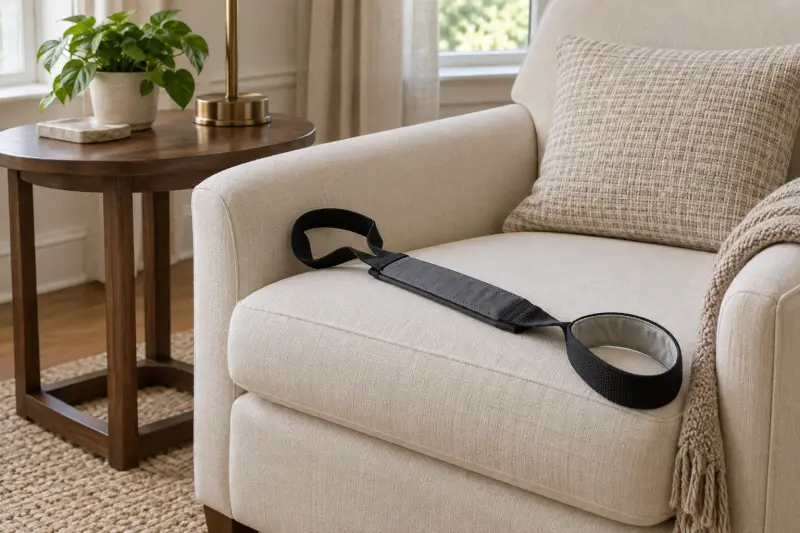
The Sammons Preston figures are a length reference from that maker's page, so you can see how a shorter strap compares. Keep the packaging until the strap works in your own bed and car.
| Strap | Length | Foot loop | Build | Intended use |
|---|---|---|---|---|
| Vive Leg Lift Assist | 44 in (112 cm) | 26 in (66 cm) around, sized for shoes and casts | Nylon with an aluminum rod | Moving legs in a bed, wheelchair or car |
| Sammons Preston rigid leg lifter | 34.5 or 41 in (88 or 104 cm) | 20.5 in (52 cm) around; can be pre-bent for a cast | Rigid strap with a metal rod | Length reference only; not checked against a listing |
Common mistakes and when to ask for help
The most common mistake is buying by price instead of seated reach, then leaning forward to use a strap that is too short. The second is using it in a way your care team has not cleared, such as pulling the leg across the body after hip surgery.
Setting matters too. A strap is harder to use on a very soft or very high bed, or in a low car seat. If you cannot move the leg even with the strap, or a caregiver is straining, ask an occupational therapist about other transfer aids.
- Choosing a length without a seated-reach check
- Pulling the leg across the body without advice
- Leaving the strap out of reach of the bed
- Using a frayed strap or one with a bent rod
- Carrying on when a helper strains to lift
MAKE THE SPEND MEANINGFUL
Leg lifter strap: low-cost alternatives
- Ask the hospital therapy team whether they supply a leg lifter or loan one before discharge
- Ask your therapist whether a long, firm strap you already own could serve short-term, and how to use it safely
- Check a local medical equipment loan closet for short-term needs after surgery
In brief
Leg lifter strap: questions answered
What is a leg lifter used for?
A leg lifter is a strap with a foot loop and a hand loop. You hook your foot, then use your arms to move the leg onto a bed, into a car or onto a footrest. People use them after hip or knee surgery, with a cast, or when one leg is weak or stiff.
How long should a leg lifter be?
Long enough that you can hold the hand loop while sitting upright with the foot loop around your foot. Makers list lengths from 34.5 inches (88 cm) for shorter adults to 41 or 44 inches (104 or 112 cm) for most adults. Measure from under your heel to your hand at lower-chest height while seated, and choose a strap at or slightly above that figure.

How do you use a leg strap to get into bed?
Sit on the edge of the bed first, slide the foot loop over your foot and hold the hand loop with your back upright. Lift the leg with your arms as you turn and scoot back onto the bed, then lower it and slip the loop off. After surgery, follow the exact method your therapist shows you.
Can I use a leg lifting strap after hip replacement?
Many people do, but how you move after hip replacement depends on your surgeon's and therapist's instructions. Some movements, such as bending far forward or crossing your legs, may be off-limits for a time. Ask your therapist to show you how to use the strap within your own limits.
How this guide was prepared
AI-assisted editorial research, checked against the linked primary sources.
Written with AI assistance from the sources listed below and checked against them. We have not tested these products in person.
How we use sources and AI assistance ↗Sources & fact checks
The guide separates sourced facts from editorial questions and examples. How we use sources and AI assistance.
- Performance Health: Sammons Preston Rigid Leg Lifter lengths and foot loop ↗
- Vive Health Leg Lift Assist: length, materials and loop size ↗
- MedlinePlus: taking care of your new hip joint ↗
- MedlinePlus: getting your home ready for knee or hip surgery ↗
Found an error or an outdated detail? Contact the editorial team.