

In brief
Do not add a portable rail on the assumption that it fits every adjustable bed or prevents every fall. Rails can introduce serious entrapment risks. Seek an individual assessment and exact bed, mattress and rail compatibility evidence. The useful next step is a documented review with the relevant care team and manufacturers, not an online suitability score.
IN THIS GUIDE
Describe the concern before choosing equipment
Write down why a rail is being considered and who raised the suggestion. Ask the relevant clinician or care professional to review the need, the occupant and possible alternatives. US FDA guidance identifies entrapment and falls concerns and says rails are not a substitute for proper monitoring. An attractive product photograph cannot settle an individual care decision.
Bring concrete questions to the discussion: what task is the equipment intended to address, what might change during the night, and who will review it after installation? Keep sensitive personal information in the care discussion rather than public website comments. A private question list can organize evidence requests; it cannot diagnose a need, replace the appropriate assessment or declare a rail safe.
Begin the discussion with the concern in plain language, not a product name. The purpose might have been raised by the occupant, a family member or a care professional. Record who will assess it and which task is being discussed. Different products may be marketed using similar assistance words, so a broad online search can blur the original need. This article provides a way to organize questions for responsible professionals; it does not prescribe a rail or decide an individual's care arrangement.
For a hypothetical family enquiry, someone sees a popular bedside rail and assumes it answers a relative's night-time concern. Instead of buying it from the photograph, they bring the actual task to the relevant clinician or care professional and ask for an assessment of options. Another enquiry begins with a professionally raised suggestion but lacks the exact bed identity. That still leaves a complete-equipment question. A recommendation needs its actual scope, not an assumed approval for every product sold under a similar label.
Keep the occupant's perspective in the discussion and use appropriate supported communication. A public buying quiz should not collect health details or produce a care recommendation from age alone. The private professional discussion can consider the actual person and circumstances. Someone helping with administration can assemble model information, record contacts and identify unanswered questions without deciding suitability. These roles are useful precisely because they support, rather than replace, the responsible assessment.
FDA guidance highlights entrapment and falls concerns and says rails do not replace proper monitoring. This is a reason to avoid presenting them as an uncomplicated convenience accessory. Do not adopt a broad protective label or infer that a more expensive design solves the personal question. The article supplies no product ranking, selected rail offer or affiliate purchase route. Procurement follows the necessary documented decision; it should not be the opening step in a sensitive care enquiry.

If equipment is already present and its purpose or compatibility is uncertain, contact the responsible professionals and manufacturers for specific guidance. This guide does not tell every household to continue, remove or substitute a rail on its own. The actual circumstances need a responsible answer, with a clear contact for concerns.
Request evidence for the complete combination
Record the exact base model, mattress model and thickness, any topper, and the proposed rail’s identifier. Ask the manufacturers to confirm whether that complete combination is permitted, including adjustment of the bed. The FDA warns that rails, mattresses and frames are not universally interchangeable and that movement or mattress compression can create gaps.
For a hypothetical replacement mattress, an approval that referred to the previous mattress should be reviewed again. Send the changed specification to the professionals and makers rather than guessing from similar dimensions. Ask who checks the installed combination and provides instructions to those involved. Do not tighten straps, add padding or reposition a rail as an improvised answer to an uncertain gap.
Make an equipment identity packet rather than a generic bed-size description. Include the exact base and generation, mattress, permitted topper if present, proposed rail and any relevant already-fitted accessories. Obtain identifying information through an appropriate method; do not reach into powered movement or dismantle equipment to read a label. Ask the supplier or installer for the correct documentation when the identity cannot be established from accessible records.
A hypothetical compatibility answer names a particular mattress and base with a specified rail. Later, a retailer suggests another mattress of apparently similar dimensions. The original answer should not silently apply to that change. Send the proposed identities to the responsible makers and professionals for review. A statement about one combination has a defined scope. The article does not create approval by comparing photographs, approximate thickness or a familiar product name.
Ask who takes responsibility for explaining the complete installed arrangement and how the relevant instructions are supplied. Different sellers may each describe their own product while nobody has answered the actual combination question. Put that unresolved responsibility on the packet. A seller's claim that the rail fits many beds does not identify the specific approved moving configuration or the individual's assessment. A clear referral to the responsible source is more useful than an unsupported universal badge.
Do not attempt to prove compatibility with an improvised gap check, added padding, tighter straps or a position copied from another product's video. These are not procedures supplied by this article. The responsible assessment and exact manufacturer's instructions need to address the real arrangement. If a fitter identifies an issue, request its documented response rather than treating a visual change as automatically adequate. The website has not inspected the bed or tested the rail.

Keep the packet current when a component is changed, even temporarily where the professional plan says a review is needed. A dated record should show the current identities and the source of each answer. Private serial or care information belongs only in the appropriate responsible channels.
Keep US product rules and UK assessment guidance explicit
In the US, CPSC guidance describes the mandatory standard at 16 CFR part 1270 for adult portable bed rails manufactured after 21 August 2023. Its scope is distinct from hospital-bed side rails and children’s rails. Request the appropriate product documentation; a claim of meeting a standard does not determine suitability for this particular person and bed.
In the UK, MHRA guidance emphasizes assessment, the equipment combination and review when circumstances change. It also distinguishes bed rails from grab handles. Checked on 4 October 2026, these primary sources support asking different regional questions, rather than importing a US compliance statement into a UK care plan. Have the supplier explain the exact product category and applicable documentation.
US product-compliance documentation and an individual care assessment answer different questions. The cited CPSC page describes the mandatory adult-portable-rail standard and its manufacturing-date scope, with categories outside that rule handled differently. Ask the supplier to identify the actual product category and relevant documentation. A standards claim does not establish that the proposed rail is appropriate for this particular occupant, mattress and powered arrangement.
FDA consumer guidance and CPSC's mandatory-rule information also have different roles. Do not quote an older consensus-standard mention as the entire current regulatory picture. For a US adult portable product within the rule's scope, the current CPSC source is important alongside the FDA's consumer concerns. This guide does not reproduce laboratory test methods or encourage household testing. The procurement enquiry requests the proper documentation from the responsible supplier while the individual assessment remains with appropriate professionals.
For a hypothetical UK enquiry, the family has a US listing with a compliance statement but needs advice for equipment supplied and used locally. They use the relevant UK guidance and ask the actual supplier about the category, combination and documentation. MHRA guidance emphasizes assessment and distinguishes rails from grab handles. A generic support word in an advertisement should not be used to decide which purpose the product serves. The guide does not translate one country's label into another country's care decision.
Record the source country and exact scope beside each document. That makes it easier for a responsible professional to see whether the packet includes a relevant local source or an unrelated foreign example. Do not infer worldwide eligibility, local availability or personal suitability from an international product page. Where a regional or category question is unsettled, obtain the appropriate answer before treating the procurement stage as ready.
Avoid turning the standards enquiry into a competitive sales claim. This publisher has not tested rail products or certified any supplier. Its role is to help the reader ask informed questions and keep a compliance document, manufacturer combination answer and individual assessment visibly separate.

Leave the decision with the documented assessment
Use a record with named responsibility for manufacturer confirmation, individual assessment, fitting, instructions and future review. Mark unanswered fields as unresolved. A seller saying that a rail is popular does not complete any of those fields. Ask the care team how changes to the mattress, bed position or person’s circumstances should trigger reassessment.
Keep the resulting instructions and relevant contacts accessible to the people involved. If a rail is already present but compatibility is uncertain, contact the responsible professionals and manufacturers for guidance rather than assuming continued use or improvising a replacement. Discuss alternatives within that assessment. This article supplies no rail shortlist or sales route because a purchase decision requires evidence beyond an online comparison.
A useful record names responsibilities rather than merely marking boxes completed. Identify who addresses individual assessment, who confirms the exact manufacturer combination, who fits the equipment, who explains its use and who arranges future review. The appropriate care team can define those roles for the actual setting. A household's research spreadsheet cannot appoint itself as an assessor or installer because several manufacturer pages have been read.
For a hypothetical handover, the equipment identities are recorded but the family cannot identify whom to contact after a mattress change. That remains an open field, not a finished care decision. They ask the responsible team about the review process and retain the response. Another record has fitting details but no accessible instructions for the people involved. The next task is a proper explanation through the responsible channel, not a purchase of additional accessories to make the setup appear complete.
Keep a dated current copy of the relevant instructions and contact information in a practical private location. Different people helping over time should be able to identify the right source without relying on a remembered product demonstration. The record should clearly distinguish confirmed answers, unresolved questions and superseded equipment descriptions. If the actual person's circumstances or the equipment change, follow the professional plan for reassessment rather than assuming the old approval is permanent.
This guide supplies no default inspection interval, technical gap limit or universal removal decision. Ask the responsible professionals and maker for the exact review and use instructions. When uncertainty concerns existing equipment, contact them for specific guidance; do not improvise a replacement or add padding. The website cannot evaluate the concern from a photograph or a few anonymous form fields. An online article can make the evidence request clearer while preserving that boundary.
A purchase is only one possible outcome of the documented process. Appropriate alternatives and a no-purchase decision can be discussed within the assessment. The goal is a responsible arrangement for the actual concern, not converting every bedroom-access question into a rail sale.
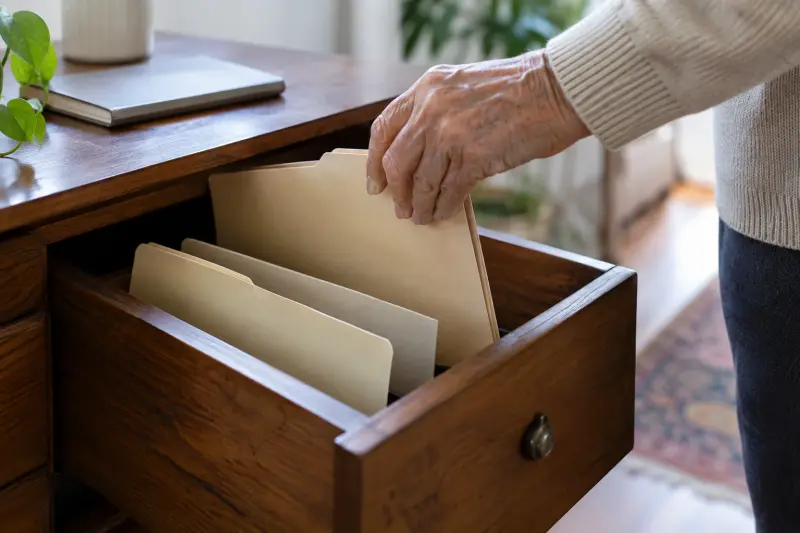
Prepare a focused question packet for the assessment
A packet can contain one short task description, the exact equipment list, available instructions and a responsibility sheet. Leave personal care information to the appropriate private professional discussion. Ask the relevant professional which further information is needed. The packet should reduce administrative confusion, not invite the reader to answer clinical questions alone or produce an online risk score.
For a hypothetical enquiry, the household knows the current base but not the mattress generation. They ask the seller for the identity and mark it unresolved meanwhile. Another packet includes a rail instruction for an older model whose name resembles the proposed one. They request the current exact document. Those missing facts are concrete reasons for further work. The article does not turn them into a universal prohibition or claim that a familiar older product is necessarily approved.
Use questions with a named recipient: which complete combination has manufacturer confirmation, who evaluates the individual need, who provides fitting and instructions, and what changes require review? Add the source or response beside the relevant field. A statement from the rail seller may not answer a base maker's movement restriction. Where suppliers refer responsibility elsewhere, preserve that distinction and ask the appropriate source. One positive answer should not fill every row automatically.
Do not add a product shortlist until the necessary process determines what equipment, if any, is appropriate. This article intentionally has no rail candidates or commission links. Ordinary bedding, tables and organizers also should not be presented as substitute care equipment. If another option is discussed, its intended role and necessary assessment need their own responsible answer. A low-cost convenience purchase cannot replace an unresolved individual-care question.
The packet succeeds when the next professional conversation has accurate identities, a clear purpose and visible unknowns. It does not need to be long or visually technical. A private, readable document is more useful than a public photograph marked safe or a detailed do-it-yourself inspection checklist derived from general guidance.
Keep a change log and an appropriate contact route
Record relevant changes as factual events: a proposed mattress, different permitted topper, altered equipment configuration or another circumstance the professional plan identifies for review. Include the date and the responsible contact. Do not assume a replacement with similar dimensions is the same approved combination. The care team and makers should address the actual change under the documented process, not an automatic website compatibility rule.
For a hypothetical replacement, the new mattress is suitable for the powered base but the rail combination has not been reviewed. These are different approvals. The family brings the new identity to the responsible people instead of assuming adjustable-base compatibility closes the rail question. Another change involves a different fitter or support provider. The current instructions and responsibilities should remain identifiable so knowledge is not lost between people helping with the equipment.

Keep previous records where they explain what changed, but clearly mark the current equipment and instructions. A superseded document should not be mistaken for present guidance. Share necessary details through appropriate verified professional or manufacturer channels, with private identifiers protected. A public website comment cannot assess an individual's situation and should not become the destination for health histories or photographs of a person in bed.
If a concern arises, use the responsible contact and local urgent-help route where appropriate rather than following an improvised repair from an unrelated article. This guide provides no emergency treatment or technical repair procedure. Ask the care team how concerns and changes are handled in the actual plan. A buyer should not be left with a vague promise that the equipment is protective and no clear source for a subsequent question.
The commercial boundary is straightforward: a sensitive equipment decision should remain evidence-led and individually assessed. This article can explain why general compatibility language is incomplete and make the conversation more organized. It cannot certify a rail, determine continued use or prescribe an alternative. A professionally supported no-purchase result is as valid as a documented appropriate procurement decision.
MAKE THE SPEND MEANINGFUL
Before adding to the basket.
- Discuss alternatives with the care team before ordering equipment.
- Avoid purchasing another rail while the existing combination remains unassessed.
How this guide was prepared
AI-assisted editorial research, checked against the linked primary sources. Product testing and a credentialed individual review are not claimed.
source-checked editorial; no hands-on testing or expert suitability assessment claimed
How we use sources and AI assistance ↗Sources & fact checks
The guide separates sourced facts from editorial questions and examples. We have not claimed hands-on product testing. How we use sources and AI assistance.
- US FDA: adult portable bed rail compatibility and entrapment guidance ↗
- US CPSC: mandatory adult portable bed rail standard and scope ↗
- UK MHRA: bed rail management, assessment and safe use ↗
Found an error or an outdated detail? Contact the editorial team.