
In brief
Match a protector to the mattress dimensions, depth and independent movement pattern. Verify its attachment design and care instructions, and ask for exact-system compatibility where it is unclear. A King label or stretch corner strap does not prove a protector works on every adjustable bed. Waterproof or allergy claims need their own evidence.
Documented options
A clearer comparison.
Research options based on manufacturer documentation. These are not results of hands-on testing. Manufacturer links are informational; no commission relationship is currently active.
IN THIS GUIDE
Describe the mattress before the protector
Record each mattress’s length, width and depth, including any topper that the protector is intended to cover. Write whether the bed has one mattress, two independent mattresses or a manufacturer-specific split design. Regional size names differ, so match measurements rather than translating a US King label into a UK size by name.
In a hypothetical split bed, two 38-by-80-inch mattresses require the supplier to confirm the intended protector configuration for each moving side. Those numbers are an example, not a universal split-bed specification. A single full-width protector could interact differently when the sides move separately. Keep a separate line for the sheet fitted over it, because a deeper combined layer changes the sheet-fitting question.
Draw the intended layer boundary, not just the bed outline. Ask whether the selected protector is meant to cover the mattress alone or the mattress plus a permitted topper, and where the maker intends that topper to sit. A shopper can otherwise measure one stack while ordering for another. Keep the actual base and mattress guidance beside the accessory enquiry. This drawing organizes the question; it does not approve a combination or prescribe an extra layer for every bed.
For a hypothetical purchase made before a replacement mattress arrives, the old mattress measurements describe the current surface, not the future one. The buyer requests the ordered mattress's exact dimensions and waits to resolve any required actual-fit question. They also identify whether existing protection is to be reused or replaced. A familiar bed-frame size cannot complete that enquiry. An early accessory discount is not a reason to turn an unsettled topper or split configuration into a confirmed measurement.
Include depth as its own field. A permitted topper can change the fitting requirement, while the fitted sheet over the protector has a separate pocket question. Ask for the protector's stated size and thickness scope rather than treating deep fit as a precise number. Do not invent a universal extra allowance for every layer. If the intended topper or mattress variant has not been selected, leave those dimensions open and consider postponing an accessory order until the final arrangement is clear.
Editorial illustration Keep the source of each number visible. A maker's specification and a household measurement are different evidence. Where the actual surface differs from a remembered standard chart, ask the seller about the exact product rather than rounding the result toward a familiar label. A simple private sketch can identify each mattress and proposed covering without exposing a bedroom photograph or personal details in a public comparison tool.
The first purchase decision is what needs covering and why. If existing compatible protection still follows the current instructions, changing the powered base alone need not trigger replacement. A new protector should solve a defined remaining need, with the exact surface and configuration identified.
Inspect the attachment and coverage design
Compare fitted-skirt, corner-strap and encasement designs using their actual instructions. Ask where attachments sit and whether they are approved for the intended mattress and base arrangement. Excess material should not be tucked into moving mechanisms, and a strap should not be routed under a powered base simply because it appears to hold the protector firmly.
IKEA’s US ROSENVIAL King listing gives dimensions, a maximum mattress thickness and elastic corner straps. Checked on 4 October 2026, it supplies measurable fitting information but does not establish compatibility with an independently moving split bed. Treat it as a specification example. Do not interpret its product name or marketing language as proof of a sleep benefit or adjustable-system approval.
Ask which surfaces the design covers. A top pad, a fitted-skirt item and an enclosing design need not describe the same coverage, even when all are called protectors. Compare the actual diagram and instructions with the task you want addressed. Then distinguish coverage from attachment: enclosing more of a mattress does not itself approve the fastening or powered movement arrangement. The makers' exact guidance remains necessary, and straps must not be routed around powered components as an improvised restraint.
IKEA's cited US ROSENVIAL King item measures eighty by seventy-six inches and lists a maximum mattress height of sixteen-and-a-half inches, with elastic corner straps. Its material fields separately name nylon top fabric, a polyester-and-viscose filling and polyester back fabric. That is more specific than treating the item as one generic fabric. These facts concern that exact regional product. They establish neither approval for independently moving Twin XL surfaces nor a tested temperature, health or complete-system outcome.
For a hypothetical candidate, the dimensions appear suitable but the attachment path is not explained for the moving arrangement. The buyer asks the protector and bed makers before ordering. Another item has a familiar fitted-skirt design but a depth scope below the complete mattress and permitted topper. Tightening it or introducing unfamiliar clips does not answer that mismatch. A documented alternative is preferable to an improvised restraint presented as a clever household fix.
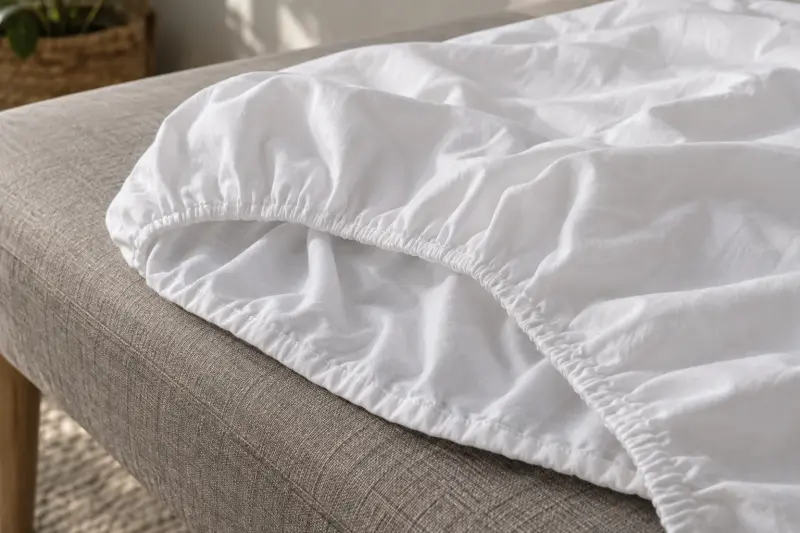
Consider how the protector is removed and replaced under the equipment instructions. Some designs may involve different handling tasks, but the guide does not prescribe a universal installation sequence or assess the user's physical ability. If handling or access raises a personal question, obtain appropriate help or advice. The responsible maker can explain the fitting requirements. Keep the attachment enquiry separate from a sales claim that a particular design is effortless for every older adult.
Record the exact item and documented fitting scope on the private checklist. If the seller supplies another variant, revisit the relevant fields. Similar material or appearance does not guarantee the same dimensions, attachment or approved use.
Separate coverage from material claims
Decide which job you want the protector to perform: an additional washable surface, a stated liquid barrier, or another documented purpose. Ask for the exact evidence and care conditions for any claimed feature. The term protector does not itself establish waterproofing, treatment of allergies or a health benefit; those claims should not be supplied by inference.
For a hypothetical purchaser who mainly wants easier bedding changes, a washable compatible layer may address the task without a specialized claim. A buyer seeking a verified liquid barrier needs product-specific information about coverage, seams and instructions. Keep the reason for buying next to the evidence. A feature you do not need should not outweigh correct sizing or a care routine you cannot follow.
If a stated barrier is essential, ask what the claim applies to: a material sample, the complete supplied product or a particular covered area under its instructions. Request the applicable evidence and care conditions instead of assuming those scopes are interchangeable. A liquid-barrier claim still leaves the intended fitting arrangement to be checked. For an allergy or other medical concern, use the appropriate professional advice and relevant evidence; a general accessory description cannot prescribe a treatment.
A hypothetical buyer requests a documented liquid barrier but receives a shortlist described only as a washable padded surface. The next question is about the missing function, not whether the padding looks luxurious. Another candidate has the requested stated purpose but unclear size and attachment guidance for the actual bed. Keep both enquiries open. The right shortlist connects the needed function to the supplied item and its instructions without invented leakage, breathability or durability ratings.
Keep a small claim register with the wording source, exact item and practical condition. A seller may use a broad collection description while the selected variant has its own instructions. If the answer is unclear, ask for clarification rather than reproducing an unsupported claim in a shortlist. Do not turn a customer review into measured evidence. A purchaser's experience can be subjective and does not establish that every combination behaves the same way.
Fit and care remain essential even when a feature sounds useful. An item with an appealing stated purpose can still be the wrong configuration or require laundering the household cannot manage. Compare those fields without inventing a single overall protection score. The decision is whether this documented design addresses this task on this arrangement. An existing compatible protector may already do so, making a replacement unnecessary unless condition or instructions indicate otherwise.
Avoid buying a specialized package solely because the mattress is expensive. Price is not evidence that every additional claim is needed. Choose a clear purpose, obtain the actual specification and leave unsupported outcomes out of the purchase story.
Plan washing, refitting and replacement decisions
Read the care label before purchase and record allowed washing, drying and any restrictions. Make sure the protector can be cleaned within your household routine. After laundering, refit it according to the maker’s instructions and review the full bedding arrangement; do not assume that an accessory remains suitable after a mattress, topper or configuration changes.
Ask the supplier how to assess fit during permitted use and what happens if the selected depth or size is wrong. Keep the product label and receipt privately. Existing compatible protection may be enough, so avoid replacing it merely because the base changes. If a new protector is needed, verify one exact configuration before ordering extras for every bed in the household.
ROSENVIAL's US care entry lists a warm normal machine wash, low normal tumble drying and low ironing, and excludes bleaching and dry cleaning. Keep those directions attached to that item rather than copying them to every protector. A machine-washable description also does not answer how the household removes, transports and refits the complete design. Obtain the actual fitting instructions and arrange appropriate help where needed. Laundering permission is not evidence of sterilization, a medical outcome or unchanged performance indefinitely.
For a hypothetical full-split bed, two separate protectors have the right documented scope, but the outside laundry service quotes by piece. The household asks whether that service can follow each label and what its actual charge covers. Another service returns items in a bundle, so identifying the separate pieces becomes a practical question. These are routine and cost enquiries, not measured drying-time claims. They can affect whether a spare is useful without changing the required fitting or care instructions.
After laundering, follow the maker's fitting guidance and ask about an unexpected change or fit concern. This article does not predict shrinkage, certify barrier performance after a particular number of washes or supply a tension test. If the surface, topper or bed configuration changes, review the full arrangement again. Previous correct dimensions do not automatically apply to a replacement mattress or a newly independent split side.

Keep the identity, receipt and care source privately. A warranty or return question may need the exact variant and purchase date. Ask the seller about permitted inspection, washing and use under the current terms before relying on a preference return. Statutory rights and voluntary policies are separate questions in the relevant jurisdiction; a general bedding policy headline should not be extended to every circumstance. Avoid publishing identifying paperwork in website comments.
The routine is complete when the household knows which surface the item serves, how it is fitted under instructions and how it is cared for. A basic appropriate layer can answer that purpose; extra specialized claims or additional spares should have their own documented reason.
Compare the protector and sheet as a complete layer plan
Draw the layers from the actual mattress outward, identifying each permitted item rather than assuming every topper or accessory can be combined. Record the mattress configuration, protector construction and the fitted sheet above it. Each item has its own dimensions and instructions. The layer worksheet organizes the enquiry; it does not certify a system or establish a personal sleep or medical outcome.
For a hypothetical split bed, the protector enquiry is settled for each surface but the existing continuous fitted sheet has not been checked for independent movement. That remaining question cannot be closed by a correct protector size. Another household changes only a permitted topper, affecting both the protector depth scope and sheet pocket question. Updating the complete worksheet avoids treating those accessories as unrelated purchases whose dimensions never interact.
Ask the relevant maker about an uncertain combination without creating an improvised restraint. A protector strap, fitted-sheet elastic and moving base should not be assumed compatible simply because each separate item is sold for beds. Where a written answer refers to an exact configuration, preserve its scope. If another item is substituted later, revisit the affected fields. A screenshot of a similar setup is not the responsible maker's confirmation.
Keep the plan proportionate. Do not add another layer to solve a problem that may be a size mismatch or unresolved instruction. If the existing arrangement serves the defined task under current guidance, retain it. Where a new item is needed, start with the exact intended purpose and complete fit. Compare the actual documents and identify the next unresolved question; a completed layer list does not establish universally secure corner retention or guaranteed protection.
Keep the layer plan privately with the exact product identifiers, current instructions and any maker response. If a seller proposes a substitute, compare the affected coverage, dimensions, attachment and care before accepting it. A substitute can look similar while leaving one required field unanswered. Share only the relevant product and configuration information for that enquiry; personal health details and identifying bedroom photographs need not be posted publicly. A settled protector enquiry still does not settle the separate sheet or mattress questions.
Editorial illustration
Choose one documented function before adding spares
The final comparison should show exact surface, product variant, dimensions, attachment, stated purpose and care. Add the current seller's delivery and inspection terms separately. Use the same fields for a modest candidate and a premium one, without making cost an automatic quality ranking. A higher price cannot answer an unexplained attachment path or a wrong split configuration.
For a hypothetical shortlist, Candidate A fits the listed dimensions but lacks the requested documented barrier purpose. Candidate B describes that purpose but has no answer for the actual moving arrangement. The buyer requests the missing evidence rather than naming either best. Another reader already has an appropriate protector and only needs correct care information. A no-purchase result can be the most useful outcome when the task is already served.
At checkout, confirm the exact selected size, region and supplied pieces. A broad product page may default to another variant. Read the actual current terms before buying several items on the assumption they can all be inspected and returned in the same way. This article represents no live price, stock or approved commission relationship. Manufacturer links are documentation references and do not establish affiliate availability in the reader's country.
After the first appropriate configuration is understood, decide whether a spare meets a real laundry need. A new powered base is not evidence that every household mattress requires a new accessory. Keep personal preferences and specialized concerns separate, with appropriate advice where required. Avoid fear-based claims that an expensive mattress is unprotected without a promoted premium package.
The useful result is a layer with a defined role, documented fit and manageable instructions. This publisher has not tested the listed products or assessed an individual setup. The article provides a more precise route to the purchase and a valid option to retain existing compatible equipment, while unresolved technical or medical questions remain with their proper sources.
MAKE THE SPEND MEANINGFUL
Before adding to the basket.
- Retain an existing protector only when the revised setup is confirmed compatible.
- Buy one verified configuration before purchasing duplicate sets.
How this guide was prepared
AI-assisted editorial research, checked against the linked primary sources. Product testing and a credentialed individual review are not claimed.
source-checked editorial; no hands-on testing or expert suitability assessment claimed
How we use sources and AI assistance ↗Sources & fact checks
The guide separates sourced facts from editorial questions and examples. We have not claimed hands-on product testing. How we use sources and AI assistance.
Found an error or an outdated detail? Contact the editorial team.