

In brief
Identify the mattress configuration, measure the actual length, width and depth, and check exactly which pieces a set includes. A split king and a partially split mattress need different fitted-sheet arrangements. Choose the correct fit before premium fabric or a bedding bundle. Confirm the bedding instructions with the mattress and base manufacturers where movement raises a compatibility question.
Documented options
A clearer comparison.
Research options based on manufacturer documentation. These are not results of hands-on testing. Manufacturer links are informational; no commission relationship is currently active.
IN THIS GUIDE
Draw the mattress arrangement
Start with a drawing of the sleeping surfaces rather than a bedding size name. Mark whether the mattress is one continuous piece, two separate pieces or a partially split construction. Note which sections are intended to move independently under the bed instructions. A familiar word such as king can describe different arrangements across countries and sellers. The drawing gives a retailer a concrete question: which fitted pieces are intended for this exact mattress layout?
For a hypothetical full split, the household has two independently moving mattresses but searches only for a king set. A package containing one continuous fitted sheet does not answer the same configuration question as two separate fitted sheets. They ask for the exact included pieces and manufacturer guidance before selecting fabric. Another household has a partial split and cannot substitute a full-split package solely because both contain the word split. The correct construction needs to be established for the actual mattress, including any brand-specific split design.
Saatva's published package description provides one useful example: its split-king set includes two Twin XL fitted pieces, a king flat piece and two king pillowcases, with Upper-Flex options described separately. Keep that description attached to the named maker and current offered variant. Another supplier may package pillows or flat sheets differently. Do not assume that a set from a second store has identical contents or that a foreign size name identifies the same measurements. Count the required pieces before comparing bundle prices.
Separate the fitted-sheet decision from shared top bedding. Ask what the mattress and base instructions permit for the actual arrangement. A continuous top piece shown in a styled photograph does not establish how every independent movement should be used. This guide does not supply a universal restraint or fastening method. If the configuration is unfamiliar, take the drawing and exact product identities to the responsible maker. A brief factual answer is preferable to ordering an attractive set and adapting it later.
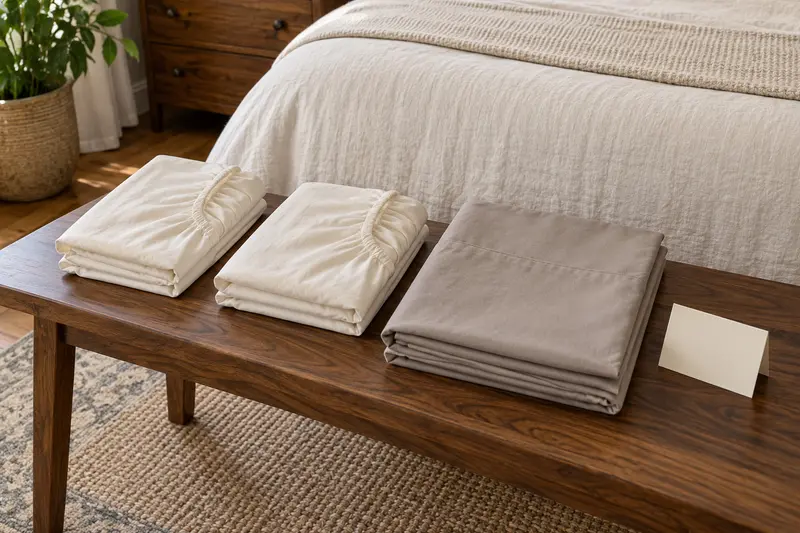
Editorial illustration Write down what existing bedding can already serve. You may only need one correct fitted piece or a configuration change, subject to the relevant instructions. A full decorative collection is not an automatic requirement of an adjustable base. That inventory keeps the purchase scope connected to the real mattress arrangement.
A full split does not always mean that both surfaces present the same pocket-depth question. In a hypothetical arrangement, the two mattresses have the same recorded length and width, but one has a permitted topper and the other does not. Write a separate depth row for each surface. A package with two matching fitted pieces still needs checking against both rows; matching piece counts alone do not settle their fit. Ask whether the maker documents the proposed combination or whether separately selected pieces are appropriate. This is a purchase enquiry, not permission to change mattresses, add a topper or alter how the base is used.
Measure the actual mattress and topper
Record the actual mattress measurements in one unit system, including the complete depth of any permitted topper. Identify each separate piece independently rather than measuring the overall frame and halving the number. Check the manufacturer's approved measuring and bedding guidance for the exact arrangement. A nominal size can be helpful navigation, but the product dimensions and pocket specification do the practical comparison. Where a retailer omits a critical number, request it rather than inventing a standard allowance.
A hypothetical mattress is twelve inches deep before a permitted two-inch topper is included. The complete depth becomes fourteen inches. A sheet listed for a maximum thirteen-inch mattress has an unresolved or unsuitable depth question for that example, despite the correct length label. These are illustrative measurements, not a claim about a specific mattress or a universal fit tolerance. The reader should use their own documented arrangement and the actual sheet maker's guidance. A deeper advertised pocket still does not establish approval for every moving configuration.
The named Room Essentials Twin/Twin XL item at Target illustrates the need to read the selected variant: its fitted piece is listed as eighty by thirty-nine inches, with a thirteen-inch maximum mattress depth. Its package also identifies one fitted sheet, one flat sheet and one pillowcase. Keep those facts attached to that exact listing. They are not a description of every Room Essentials set or an endorsement of its performance on a moving base. Another size or product identifier needs its own check.
Make the comparison visible in a short private table: surface identity, actual length, actual width, complete depth, candidate dimensions and pocket limit. Add a field for maker guidance or an unresolved question. If you convert inches to centimetres, keep the original units alongside the conversion and avoid rounding a borderline result into apparent compatibility. The purpose is to explain the enquiry, not to produce a universal fitting calculator that certifies every combination.
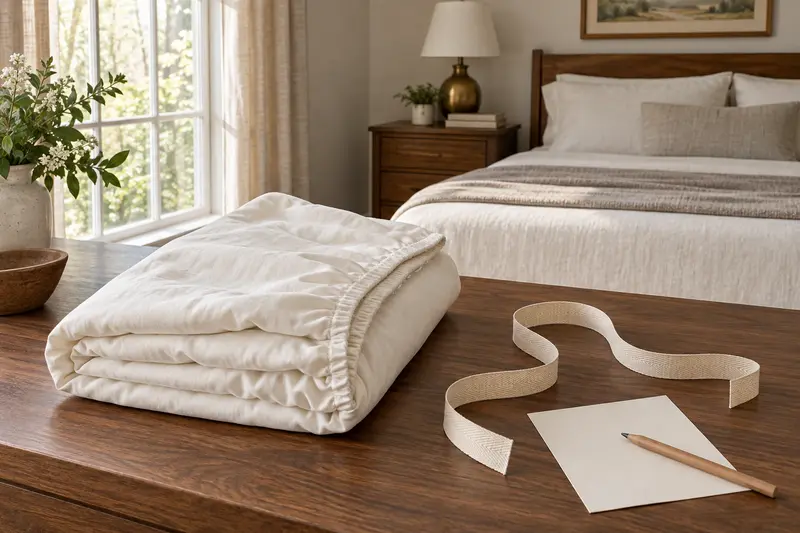
Check the ordered pieces when the parcel arrives, under the seller's permitted inspection conditions. If the label or dimensions differ from the saved offer, ask for clarification before relying on the set. Do not force a mismatched corner or add an unfamiliar strap to make an incorrect specification appear acceptable.
For a unit-check example, a stated thirteen-inch pocket limit converts to 33.02 centimetres using 2.54 centimetres per inch. An illustrative recorded depth of 33.4 centimetres is greater than that figure. A comparison card that rounds both numbers to thirty-three centimetres can hide the difference. Keep the original limit, the conversion and the actual recorded value in separate cells, then ask the maker about its measuring guidance. The calculation does not certify a fit or create extra tolerance. It simply prevents a rounded display from changing the buying question. Nor does a different, deeper pocket eliminate the separate mattress-layout and movement checks.
Choose fabric by preference and care
Once the layout and dimensions are addressed, compare the fabric as a personal preference and a laundering task. Record the stated composition and weave for the exact variant. Cotton blend, sateen and percale are product descriptors, not enough evidence to predict an individual's comfort or sleep quality. A premium price does not convert a subjective feel into a medical outcome. This publisher has not tested breathability, cooling, durability or sleep effects of the candidates.
For a hypothetical choice, the shopper likes a particular fabric but its prescribed care does not fit the household's ordinary routine. They compare a different correctly sized option rather than assuming that a costly set deserves special equipment or an unrealistic laundry schedule. Another person prefers the feel of a simpler existing fabric and has no reason to upgrade merely because the base has powered movement. The relevant comparison is between documented practical needs and preferences, not a hierarchy in which every adjustable bed requires luxury sheets.
Read the care label as part of the purchase, including washing and drying directions. Ask who will handle the separate pieces, whether the needed routine is feasible and how the set will be stored. Avoid transferring instructions from another collection by the same brand. A household that uses an outside laundry service can check whether that service follows the actual label. The service question is separate from a manufacturer's certification or material description; neither proves how a sheet will feel after every wash.
Saatva's Organic Sateen page is a premium reference with composition, configuration and care information to examine. Use those documented fields without adopting a blanket sleep or health benefit. Compare the chosen variant against the same layout and depth card used for a basic candidate. If both require further fit clarification, a refined photograph does not settle the difference. Ask the maker for the missing answer and retain the source privately. Premium fabric can be a considered preference after the required configuration is clear.
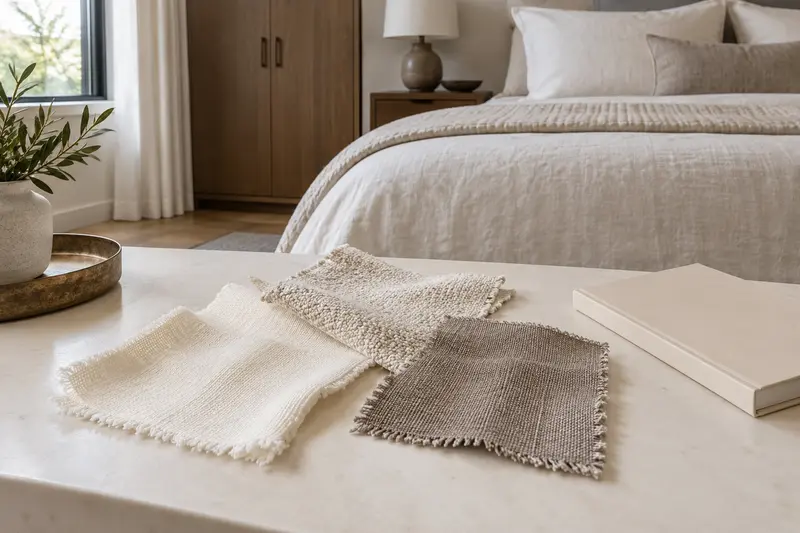
If color matters, check the current offered choice and the seller's information without promising exact screen-to-fabric appearance. Ordering extra matching pieces before the first appropriate set is understood can expand the purchase unnecessarily. Keep the first decision focused on the fitted arrangement and an acceptable care routine; decorative changes can remain separate optional choices.
Keep fibre composition, weave and descriptive language in separate fields. In a hypothetical comparison, one listing provides a composition and weave, while another only calls the fabric silky. That adjective does not identify its fibre content or care requirements. Ask for the missing documented information rather than treating the two descriptions as equivalent. Likewise, a material name does not fill an absent weave field. The reader can still have a preference for a familiar feel, but the order record should distinguish that preference from what the label actually states. A cooling or luxury headline should not silently become a measured performance claim in the comparison.
Check the use instructions before adding fixes
Use the exact bed and mattress instructions for the moving arrangement. A correctly named sheet is not proof that every tension, attachment or accessory is permitted. Ask the maker about any unexplained fit issue and keep loose objects and unapproved additions away from the mechanism. Do not wrap unfamiliar fasteners around a moving base or create a restraint from a video about another model. The article provides purchase questions, not an installation or troubleshooting procedure.
For a hypothetical full-split arrangement, one side's fitted piece repeatedly comes loose. The buyer checks the recorded dimensions, permitted topper and actual supplied variant before shopping for clips. They contact the sheet seller or bed maker about the exact problem. Another arrangement involves an unfamiliar partial split that does not match the ordered construction. The next step is a configuration answer, not tighter attachment. An improvised fix can hide the original mismatch and leave an essential question unresolved.
Think through the laundry sequence as well as the attractive made-bed image. Two fitted pieces mean two items to identify, fit and remove according to the bed instructions. Ask who carries out the task, where clean pieces are kept and whether any personal handling question needs appropriate support. A shopping guide should not prescribe bending or reaching exercises to prove that the user can change bedding. Necessary assistance belongs in the practical plan. The simplest suitable arrangement may have more value than a large bundle of unfamiliar pieces.
Keep the pieces distinguishable without modifying the product in a way the maker has not approved. Package labels, retained care information and a private inventory can clarify what belongs to each surface. If the set contains a shared flat piece or several pillowcases, record their separate roles rather than treating all fabric as interchangeable. Confirm any laundering-related fitting change with the actual manufacturer. This guide does not claim a particular shrinkage rate or provide a universal tension test.
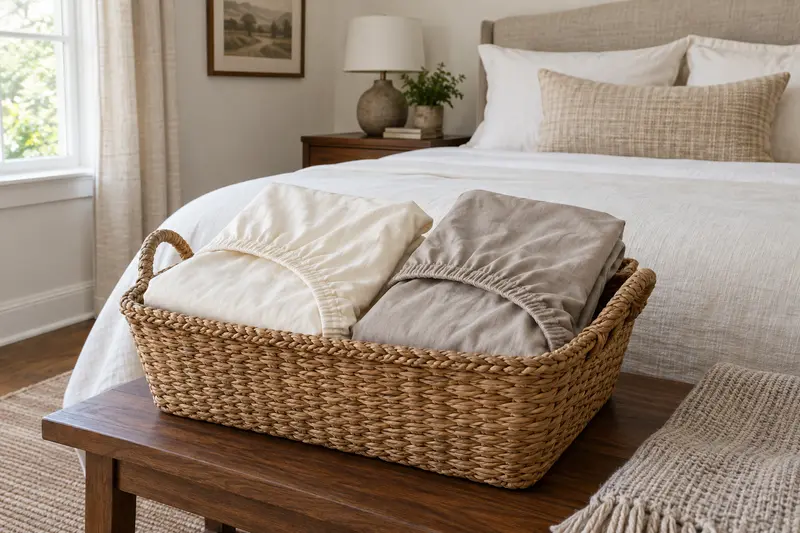
Buy spares only after the first arrangement and its instructions are understood. A household may eventually want another correctly documented set for its laundry routine, but that is a separate need. Starting with several sizes or straps increases the chance of confusion without resolving compatibility. Existing appropriate bedding remains a reasonable option; the bed purchase alone is not a reason to replace every textile.
If a problem appears, describe when it first became noticeable without diagnosing its cause. For a hypothetical household, the correct supplied piece seemed ordinary on arrival but later came loose after laundering and a mattress arrangement change. Its enquiry should identify the ordered variant, previous and current measurements, applicable care directions and what changed. Those facts help the responsible seller or maker address the question; they do not justify assuming shrinkage, defective elastic or base incompatibility. Avoid running extra movements or adding a restraint to obtain a desired result. Keep the question open until the relevant source explains the appropriate next step.
Build a pieces-and-fit card
The pieces-and-fit card should be useful at the retailer, not an elaborate score. Keep five factual fields together: mattress layout, actual measurements, pocket guidance, included pieces and care. Add the exact variant and source date. Use a separate note for any movement question that needs the mattress or base maker's answer. A completed card organizes a purchase; it does not certify the combination or predict a comfort result. An unknown field should remain visibly unknown until the responsible source explains it.
For a hypothetical shortlist, the first package has the right two fitted pieces but a depth limit below the actual arrangement. The second has enough listed depth but contains a construction intended for a different split. Neither becomes a good purchase because it is discounted. The buyer returns to the exact layout and requests a matching candidate. A third possibility is reusing an existing suitable piece with current instructions. This is a useful outcome when it answers the need without a new bundle.
Compare total current delivered terms for the correct scope. Two separate fitted pieces may be sold differently from a branded complete set, and included pillowcases may be unnecessary duplicates. Check the seller's current inspection, washing and return conditions before acting, with statutory rights and voluntary policies distinguished in the relevant jurisdiction. The links in this guide are information references; no live price, regional stock, commission relationship or approved affiliate checkout is represented. The exact selected size must be checked again in the basket.
Keep a modest purchase order: solve the required fitted arrangement, confirm care and use, then consider a spare only when there is a clear laundry purpose. A duvet, extra pillows or coordinated decorations may be enjoyable optional choices, but they should not be presented as equipment the base needs to function. This article has not tested the listed sets on every bed. It can help the reader avoid buying the wrong number, shape or depth of pieces while keeping premium preferences proportionate.
Editorial illustration
After a mattress, topper or configuration change, review the card before reordering the familiar item. A previous correct purchase is not universal approval for a different surface. The best purchase can be one appropriate set, reuse of existing pieces or a pause for clarification. Each leaves the reader in control of the scope rather than using the adjustable-bed project to sell an entire bedroom collection.
Compare packages by the necessary order, not by the number of items advertised. In a hypothetical purchase, one offer sells a fitted piece individually and another sells two fitted pieces with flat bedding and pillowcases. Work out the actual quantity required for the recorded surfaces, then request or read the complete delivered terms for that quantity. Do not deduct an imagined resale value for unwanted extras, or divide a bundle price across every item to make the required pieces appear cheaper. Extra pieces are included contents, not automatic benefits. A larger package earns consideration when its contents have an explained use and its fitted arrangement is documented.
MAKE THE SPEND MEANINGFUL
Before adding to the basket.
- Reuse appropriate existing bedding if it fits and follows the bed instructions.
- Compare a basic correctly sized set before a premium one; buy a spare only after the first arrangement is understood.
In brief
Questions worth answering
Are king and split-king sheets interchangeable?
Do not assume that. Confirm the mattress configuration and dimensions first. A split system can require different fitted pieces and a separate decision about the top sheet.
Should I buy the deepest pocket available?
Choose a pocket that matches the exact mattress depth and the sheet maker’s stated fit. Extra depth by itself does not establish that a sheet will stay fitted through bed movement.
How this guide was prepared
AI-assisted editorial research, checked against the linked primary sources. Product testing and a credentialed individual review are not claimed.
source-checked editorial; no hands-on testing or expert suitability assessment claimed
How we use sources and AI assistance ↗Sources & fact checks
The guide separates sourced facts from editorial questions and examples. We have not claimed hands-on product testing. How we use sources and AI assistance.
- Saatva: split-king and Upper-Flex sheet configurations ↗
- Target: Room Essentials Twin/Twin XL cotton-blend sheet specifications ↗
- Saatva: Organic Sateen sheets sizes and care ↗
Found an error or an outdated detail? Contact the editorial team.