

In brief
A rechargeable hand warmer is a small battery heater that sits in a pocket or glove and warms the hands for walks, waiting outdoors or a chilly room. Choose one with a low setting, a clear on and off switch and a size that suits the hand. If feeling in the hands is reduced, keep it on low, wrapped in a glove, and check the skin often.
IN THIS GUIDE
Who a hand warmer helps
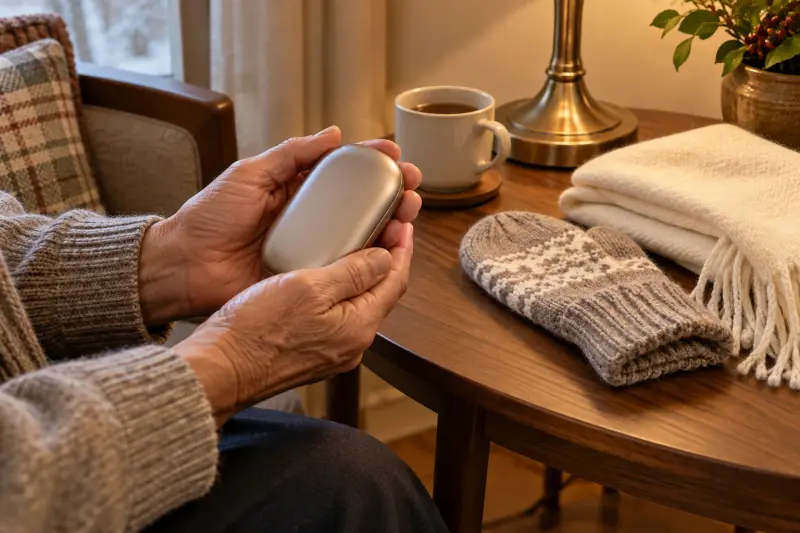
Cold hands are more than a nuisance when you are older. Stiff, cold fingers make buttons, keys and walking sticks harder to handle. A small warmer in the pocket gives the hands somewhere warm to go between tasks.
Say your mother walks to the bus stop each morning and stands for ten minutes. Gloves help, but her fingers still go white and numb. A warmer she can hold inside a mitten, then switch off on the bus, is a simple fix for that wait.
Warmers also suit people who sit still a lot. Watching a grandchild play football, sitting in a draughty church or reading by the window are all moments when the hands cool down first.
- Walks, dog walks and waiting at bus stops in cold weather
- Sitting still outdoors at games, gardens or markets
- People with Raynaud's, whose fingers react strongly to cold
- Stiff fingers that need warming before fiddly tasks
- A cool room where heating the whole house is not practical
What to check in a rechargeable hand warmer
Start with the heat settings. A low setting matters more than a high one, because gentle warmth held for longer is what most hands need. Three settings with an obvious low is a good sign.
Then look at the controls. A single large button that shows the setting with a light is easier with stiff or cold fingers than a tiny switch. Some warmers split into two magnetic halves, one for each pocket, which is handy if both hands get cold.
Before ordering, read the listing and ask: "Does it say the temperature for each setting, how long it runs on low, and how it charges?" If the answers are missing, keep looking.
- Heat: at least one clearly low setting and an automatic shut-off if listed
- Controls: a large button with a visible light for each setting
- Size and weight: fits in the person's own pocket or mitten
- Run time on low, not just on high
- Charging: USB-C cable and plug type the household already has
Rechargeable, disposable and microwavable warmers compared
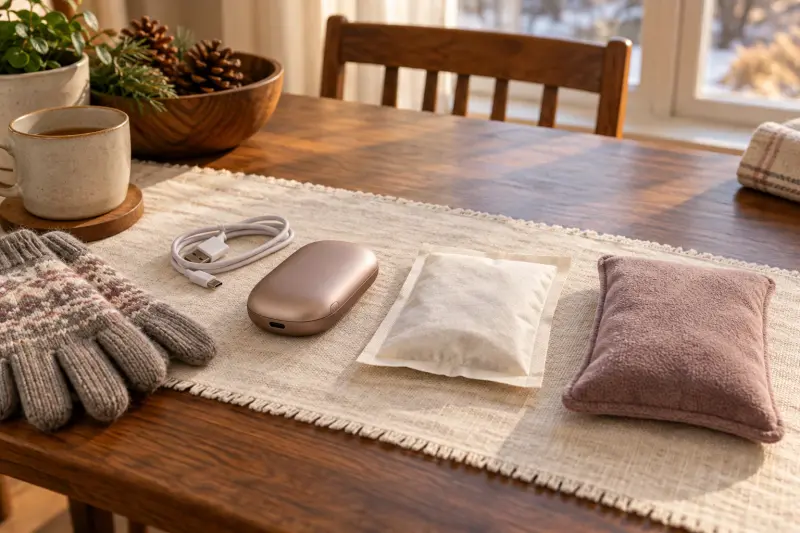
There are three common kinds of hand warmer. The Scleroderma and Raynaud's UK leaflet on keeping warm lists disposable, rechargeable and microwavable heat packs, and suggests always taking hand warmers with you when you go out.
A Raynaud's advice sheet from the Scottish Paediatric and Adolescent Rheumatology Network notes that air-activated disposable warmers are one use only but last up to 8 hours, while rechargeable ones can be switched on and off. That switch is the main practical difference.
Imagine your father goes to a two-hour football match each Saturday. A disposable pack heats for the whole match but cannot be paused. A rechargeable one can be turned on at half time and charged again at home.
- Rechargeable: switch on and off, several settings, needs charging and contains a lithium battery
- Disposable air-activated: no charging, starts when opened, one use, up to about 8 hours per the SPARN sheet
- Microwavable: no battery, reusable, heat fades and needs care not to overheat
- All three: warm only the part they touch, so gloves and layers still do most of the work
Safe use with Raynaud's, diabetes or reduced feeling
Here is the real limit, said once: a hand warmer warms the skin it touches, but it does not treat Raynaud's or improve circulation, and it can burn skin that cannot feel heat. People with diabetes, nerve damage or very cold numb fingers may not notice a warmer getting too hot.
NHS Fife advice for people with neuropathy says to avoid direct contact with heat sources such as hot water bottles and electric blankets, because burns may go unnoticed. The same thinking applies to a warmer held against numb fingers.
The SPARN sheet advises reheating cold hands gradually with warm, not hot, heat. So start on the lowest setting, keep the warmer inside a glove or pocket rather than on bare skin, and look at the hands every so often for redness.
- Use the lowest setting first, and only go up if it feels gentle
- Keep a layer of fabric between the warmer and the skin
- Check the skin for redness or blisters during and after use
- Never sleep with a warmer in the hand or in bed
- Warm the whole body too: NHS advice is to keep the home warm and avoid sudden changes in temperature
Charging, care and flying with a warmer
A rechargeable warmer is a small lithium battery pack. Charge it on a hard surface, away from the bed or a sofa cushion, and unplug it when the light shows it is full. A warmer that swells, cracks or smells hot should be retired.
For trips by plane, the FAA says devices with lithium batteries should go in carry-on baggage. In checked bags they must be fully switched off and protected from turning on by accident, and damaged batteries should not fly at all.
Picture your mother packing for a winter visit to family. The simplest rule is to keep the warmer in her handbag, switched off, with its cable. Check the airline's own page before travelling, as rules can differ.
- Charge on a hard, clear surface and unplug when full
- Use the cable that came with it, or one with the same connector
- Store it switched off, out of direct sun and away from water
- Carry it in hand luggage when flying, switched off
- Stop using it if the case is swollen, cracked or very hot
When to ask for advice
Cold hands are common, but some signs need a doctor. The NHS suggests seeing a GP if Raynaud's symptoms are very bad or getting worse, affect daily life, affect only one side of the body, or start for the first time after age 30.
If a parent has diabetes or numb fingers, ask the doctor or nurse: "Is a hand warmer safe for her, and what should we check on her skin?" An occupational therapist can also suggest gloves and grips that make cold-weather tasks easier.
If a burn, blister or a finger that stays white or blue appears, stop using the warmer and get it looked at. In an emergency, call 911.
- Raynaud's that is getting worse or affects daily life
- New symptoms after 30, or symptoms on one side only
- Diabetes, neuropathy or any loss of feeling in the hands
- A blister, burn or skin change after using any heat pack
MAKE THE SPEND MEANINGFUL
Rechargeable hand warmer guide: low-cost alternatives
- Thin cotton or silk gloves under thicker mittens, as the SRUK leaflet suggests
- Air-activated disposable warmers for occasional long outings, with no charging
- Warming the whole body with layers and a warm room before reaching for any gadget
In brief
Rechargeable hand warmer guide: questions answered
Are rechargeable hand warmers safe for older people?
They can be, with a few habits. Start on the lowest setting, keep the warmer inside a glove or pocket rather than against bare skin, and check the hands for redness. Take extra care with diabetes, nerve damage or numb fingers, because heat may not be felt. Ask the doctor or nurse first in those cases, and never sleep with a warmer in the hand.
Do hand warmers help with Raynaud's?
They can make cold spells more comfortable. Scleroderma and Raynaud's UK suggests carrying hand warmers when you go out, along with gloves and layers. A warmer does not treat Raynaud's, though. The NHS also advises keeping the home warm and avoiding sudden temperature changes, and seeing a GP if symptoms are severe, getting worse or new after 30.
Is an electric hand warmer better than disposable ones?
It depends on the routine. An electric hand warmer can be switched on and off and charged again, which suits short, repeated use such as daily walks. Disposable air-activated warmers need no charging and, per a SPARN advice sheet, last up to 8 hours, but they are single use. Many households keep both.
Can I take a rechargeable hand warmer on a plane?
The FAA says devices with lithium batteries should be carried in carry-on baggage. If one goes in a checked bag, it must be fully switched off and protected so it cannot turn on by accident. Damaged batteries should not fly. Rules vary by airline and country, so check your airline's page before you pack.
How this guide was prepared
AI-assisted editorial research, checked against the linked primary sources.
Written with AI assistance from the sources listed below and checked against them. We have not tested these products in person.
How we use sources and AI assistance ↗Sources & fact checks
The guide separates sourced facts from editorial questions and examples. How we use sources and AI assistance.
- NHS: Raynaud's, symptoms, self-care and when to see a GP ↗
- Scleroderma and Raynaud's UK: Handy hints on keeping warm ↗
- SPARN (NHS Scotland): Raynaud's advice sheet, gloves and hand warmers ↗
- NHS Fife: peripheral neuropathy advice, avoiding direct heat and unnoticed burns ↗
- FAA PackSafe: portable electronic devices containing batteries ↗
Found an error or an outdated detail? Contact the editorial team.