
In brief
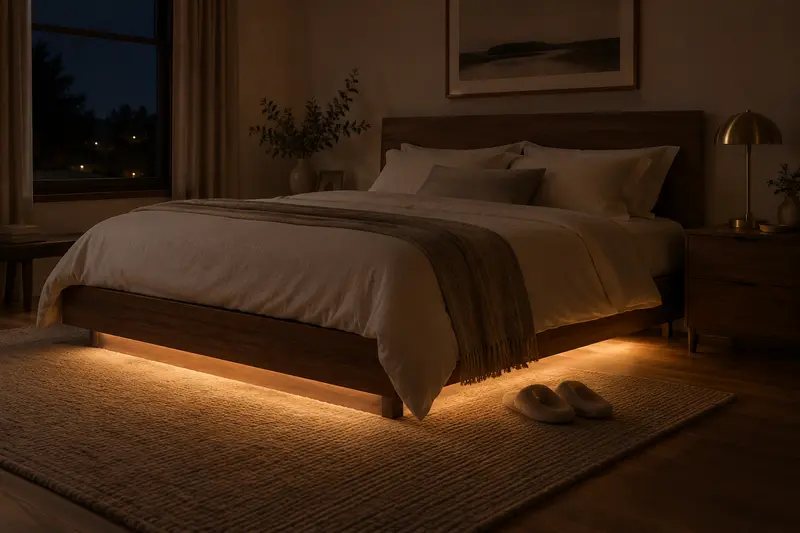
For under bed lighting, a dim, warm motion sensor night light placed low by the bed can light the floor as you stand up, without a bright overhead lamp. Check two things before buying: where it will mount on your bed frame, and how often it needs recharging. A plug-in nightlight or a reachable bedside lamp are simple alternatives.
Shortlisted for this decision
Affiliate-
Shortlisted
Lyridz Motion Night Light, 2-Pack
For lighting the floor by the bed
A dim, warm motion light you can place low by the bed so the floor lights up as you get up, then switches off by itself.
Check price on AmazonCheck first: The title gives no model number; confirm specs and mounting, and plan regular recharging.
Affiliate links: we may earn a commission from qualifying purchases at no extra cost to you. Prices are shown only on Amazon. Amazon.com (US listing). See the full comparison ↓
Documented options
Under bed lighting: options compared
Options based on manufacturer documentation. Retailer links are affiliate links: we may earn a commission from qualifying purchases.
Affiliate retailer links
-
Lyridz Rechargeable Battery Night Light with Motion Sensor
Exact variant: Warm white, 2-Pack
View product details on Amazon — United States -
Lyridz Rechargeable Battery Night Light with Motion Sensor
Exact variant: Warm white, 2-Pack
View product details on Amazon — Germany -
Lyridz Rechargeable Battery Night Light with Motion Sensor
Exact variant: Warm white, 2-Pack
View product details on Amazon — France -
Lyridz Rechargeable Battery Night Light with Motion Sensor
Exact variant: Warm white, 2-Pack
View product details on Amazon — Spain
IN THIS GUIDE
Why under bed lighting helps at night
Getting up in the dark means finding slippers, a rug edge and the doorway by memory. The CDC's home fall prevention checklist asks whether the path from bed to bathroom is dark, and suggests a nightlight so you can see where you are walking.
Light placed low and aimed at the floor shows what is underfoot without filling the room with glare. A motion sensor does the switching, so nobody has to reach for a lamp while still half asleep.
MedlinePlus gives similar advice for people preparing their home for knee or hip surgery: place night lights in hallways and rooms that can be dark. The same idea helps anyone who gets up during the night.
- Lights the floor at the moment you sit up and stand
- Avoids the glare of switching on an overhead light
- Works without finding a switch in the dark
- Helps a partner keep sleeping, since the light stays low
What to check before buying a motion sensor night light
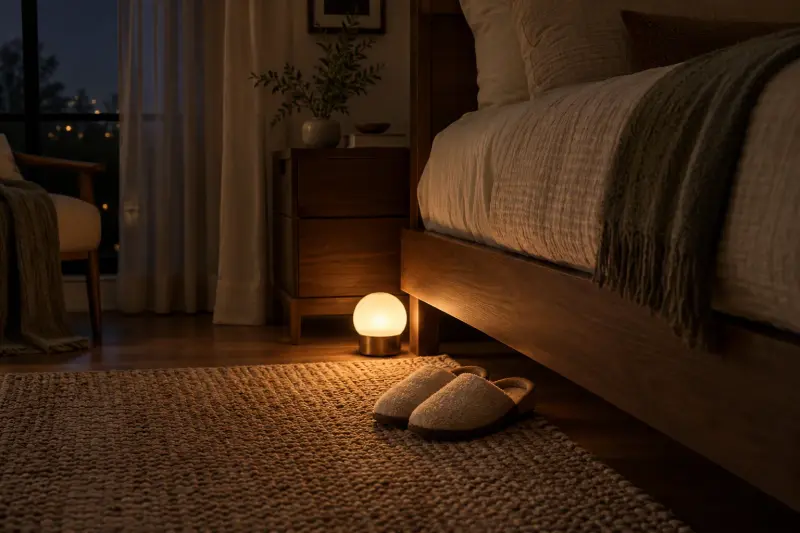
Brightness and color come first. A warm light around 2700K is easier on eyes adjusted to the dark than a cool white, and a low setting is usually enough to see the floor.
Next, look at the sensor and the timer. The sensor needs to see your feet or legs as you get up, and the light should stay on long enough to cross the room. Power matters too: rechargeable lights need a routine, while plug-in lights need an outlet near the bed.
Finally, check how it attaches. Many small motion lights use a magnet, an adhesive pad or both, and a magnet only holds on iron or steel. A wooden or upholstered frame needs a pad, a screw plate or a different spot.
- Warm color temperature, ideally near 2700K
- A brightness setting low enough not to wake a partner
- Sensor range that reaches from the light to where your feet land
- An auto-off delay long enough to reach the door
- Mounting that suits your frame: magnet, adhesive pad or screw
Where to place under bed lighting on your frame
Mount the light low on the side of the bed you get out of, angled toward the floor rather than toward the pillow. A light pointed at the eyes defeats the purpose.
Test the sensor from the bed before fixing anything in place. Sit on the edge as you would at night and see whether the light turns on before your feet touch the floor. If the bed is high or the frame is upholstered, the inside of a nightstand leg or the base of a dresser may work better.
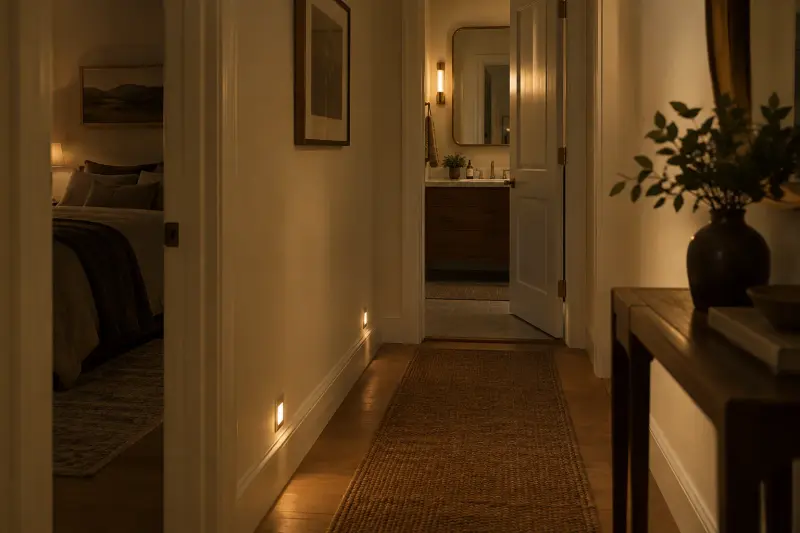
Think beyond the bed too. A second light at the doorway or along the hall to the bathroom extends the same low path, which is where a 2-pack is useful.
- Low on the getting-out side, aimed at the floor
- Test the trigger point while sitting on the bed edge
- Check a magnetic light against the frame material first
- Add a second light at the door or along the hallway
How the Lyridz light compares with other night light types
We list one product because it is the only motion light in this guide with a manufacturer page we could tie to an Amazon listing. The Amazon 2-pack title does not give a model number, so the specs below are from Lyridz's A5126 page and should be confirmed against the listing.
Plug-in and battery lights are listed here as general types, not specific products, so the same questions apply: how warm and how dim, how far the sensor reaches, and where it can sit.
- Lyridz A5126, light: 2700K warm, five presets from 1 to 20 lumens, per Lyridz
- Lyridz A5126, sensor: 120 degrees, about 10 to 13 feet, per Lyridz
- Lyridz A5126, power: USB rechargeable, about 3 hours to charge, 10 hours at max or 25 at min
- Lyridz A5126, mounting: magnetic back for iron surfaces, per Lyridz; the Amazon title says stick-on
- Plug-in nightlight: no charging, but fixed to an outlet's height and place
Setup and a simple charging routine
Charge each light fully before the first night, then set the lowest brightness that still shows the floor clearly. Walk the route once with the room dark to check nothing is left in shadow.
A rechargeable light that runs flat gives no warning in the middle of the night. Pick a regular day to recharge, and keep the cable somewhere you will remember it.
If a family member sets the lights up, show the person who uses them how to switch modes and charge them. A light that only one person understands tends to stop being used.
- Charge fully before first use
- Set the lowest brightness that still shows the floor
- Walk the route in the dark once to check coverage
- Recharge on a fixed day so the light never runs flat
- Keep cables off the floor where they could catch a foot
When to look beyond a night light
A light helps you see, but it does not fix every night-time risk. If someone has fallen at night, feels dizzy on standing, or gets up many times a night, talk to a doctor or an occupational therapist.
A home safety review can also look at rugs, cords, bed height and the route to the bathroom together. The CDC checklist is a free place to start.
Lighting works best alongside the basics: footwear with grip, a clear path, and a lamp the person can reach from bed. Keep a phone or call device within reach as well.
- Recent falls or near-falls at night: ask a clinician
- Dizziness on standing: raise it with a doctor
- Bed too high or low to stand from easily: ask an occupational therapist
- Loose rugs or cords on the route: remove them first
MAKE THE SPEND MEANINGFUL
Under bed lighting: low-cost alternatives
- A plug-in nightlight in an outlet near the bed or in the hallway needs no charging and no fixing.
- Move a bedside lamp so the switch is within easy reach, as the CDC checklist suggests.
- Clear the route to the bathroom of rugs, cords and clutter, which costs nothing and helps with any light.
In brief
Under bed lighting: questions answered
Is under bed lighting worth it?
It can be, for anyone who gets up at night. Low light aimed at the floor shows rugs, slippers and the bed edge without the glare of an overhead lamp, and a motion sensor turns it on for you. The CDC suggests a nightlight on the path from bed to bathroom.

What color night light is best for sleep?
A warm light, around 2700K, is generally gentler on eyes adjusted to darkness than a cool white or blue light. Keep it dim and point it at the floor, not toward the pillow. If someone has a specific sleep problem, ask a doctor rather than relying on a light.
How long do rechargeable motion sensor night lights last?
It depends on brightness and how often the light is triggered. Lyridz lists 10 hours of lit time at maximum brightness or 25 hours at minimum for its A5126, which is lit time rather than days. Set a regular recharge day so the light does not run flat at night.
Where should a motion sensor night light go?
Place it low on the side of the bed you get out of, aimed at the floor, so it triggers as you sit up. Test it from the bed edge before fixing it. A second light near the door or along the hallway extends the path to the bathroom.
How this guide was prepared
AI-assisted editorial research, checked against the linked primary sources.
Written with AI assistance from the sources listed below and checked against them. We have not tested these products in person.
How we use sources and AI assistance ↗Sources & fact checks
The guide separates sourced facts from editorial questions and examples. How we use sources and AI assistance.
- CDC STEADI: Check for Safety, home fall prevention for older adults ↗
- MedlinePlus: Getting your home ready, knee or hip surgery ↗
- Lyridz Rechargeable Motion Sensor Night Light A5126: specs ↗
Found an error or an outdated detail? Contact the editorial team.