
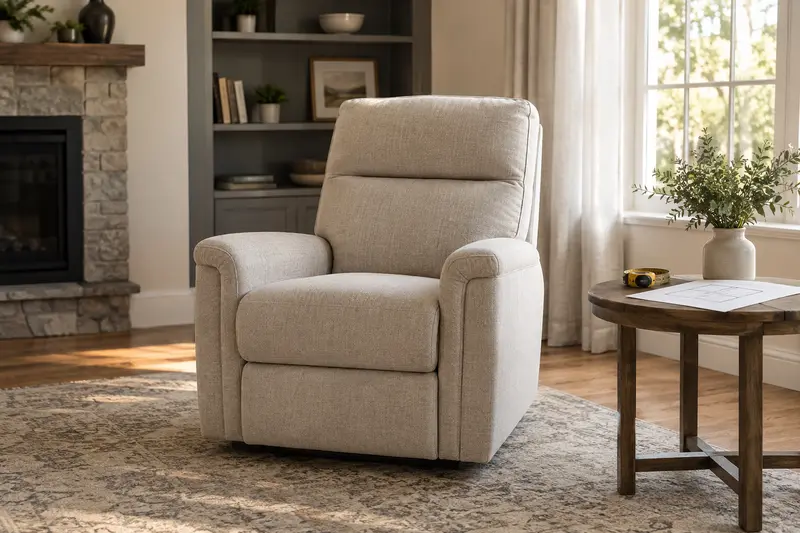
In brief
A lift recliner should be shortlisted by its usable seat dimensions and tried by the person who will use it. A height label or generous weight limit alone cannot establish fit, comfort or suitability.
IN THIS GUIDE
Start with the usable seat and the person who will use it
A lift recliner seat decision combines product dimensions, personal preferences and appropriate individual advice. Begin with the person who will use the chair and the tasks it needs to support. A family member can help organise the enquiry, but their experience of a display chair does not establish the intended user's fit.
Write down what the person finds difficult or uncomfortable in their current arrangement, using ordinary descriptions rather than diagnoses. Examples include a seat feeling too deep, difficulty reaching the controls or uncertainty about the available space. Those observations can help the provider prepare a useful demonstration and identify when professional advice is needed.
The cited US-published Pride manual carries a prescription-use sale caution and describes provider involvement. For other markets, obtain the local device documentation rather than infer the requirements from this US reference. Those requirements must be addressed for the actual device and market. A shopping guide does not assess eligibility, prescribe a chair or replace personal advice about posture, transfers or a health concern.
Keep the chair's dimensions separate from room and delivery questions. A seat can feel appropriate in a supported trial while the full chair is impractical for the home. Conversely, a compact overall footprint does not guarantee a comfortable seat. The purchase should connect these decisions without allowing one successful measurement to stand in for all the others.
Record five distinct measurements before comparing
Ask for seat width, seat depth, seat-to-floor height, back height above the seat and the arm arrangement. Record the manufacturer's exact terms and units. If a seller gives only overall chair width or height, ask for the seat measurements before shortlisting by size.
Overall width describes the furniture footprint, not the space the person sits in. Width between arms, cushion width and a contoured seat's usable space can differ. Ask the provider to show the relevant measurement on the actual model. A generous-looking photograph is not a dimensional record.
Seat depth also needs a reference point. The shape of the back cushion and seat can affect the sitting experience, so the headline dimension should prompt a trial rather than a body-size calculation. Do not choose a depth by subtracting a universal allowance from a home measurement; this guide does not supply a clinical fitting formula.
Use a simple measurement table with a column for source, another for the configuration demonstrated and another for questions. Leave unclear fields pending. A table with five clearly defined measurements is more useful than a long feature list that combines room dimensions, capacity and marketing labels without explaining what the numbers describe.
Read the exact variant rather than the collection name
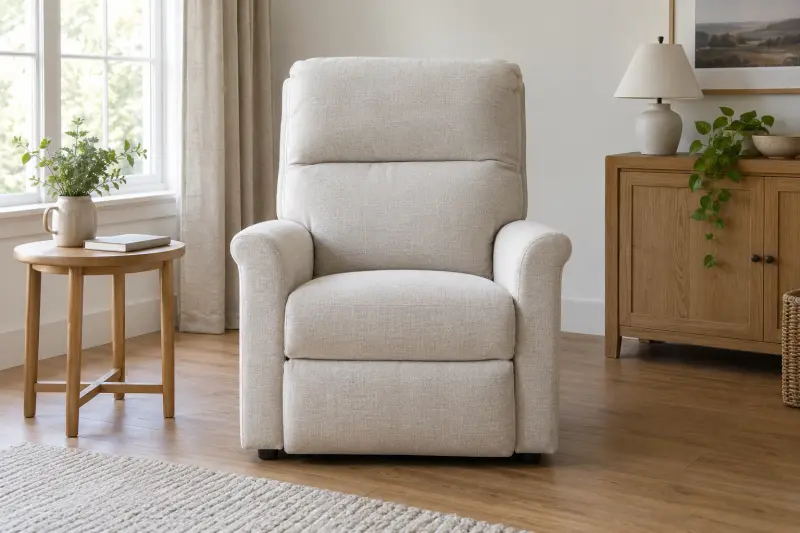
Pride's Radiance sell sheet lists several model variants rather than one universal seat. The Small PLR-3955S and Petite Wide PLR-3955PW both carry a “5 feet 4 inches and below” size label, yet the listed seat widths are 20 and 24 inches respectively. That shared height label does not make the seats identical.
The same sheet lists an 18-inch seat depth for those two variants, but different seat-to-floor figures: 18 inches for Small and 19.5 inches for Petite Wide. These are manufacturer specifications for the stated US/Canada sheet, with its measurement tolerance and change qualification. They are not recommendations for a particular body or medical need.
Use the difference to improve the supplier enquiry. Ask which variant is demonstrated and which one is quoted. “Radiance in the preferred fabric” leaves a material gap if the size suffix is absent. The exact reference should remain visible throughout the trial, order and delivery record.
For a fictional shopper choosing between those variants, the wider seat may appear attractive while the different height raises another question. The correct response is a suitable trial and provider discussion, not an automatic upgrade. A wider model can change the room footprint as well, so the comparison needs to remain connected to the intended home.
Treat width as a task and comfort question
Discuss what the reader wants from seat width. They may want a less confined feeling, easier access to an appropriate arm arrangement or a particular amount of room for ordinary clothing. Describe that preference to the provider instead of using body weight or a broad “wide chair” label as the whole specification.
A chair's maximum weight capacity is a product limit; it does not establish comfortable width, seat depth or usable control reach. A high-capacity model can have dimensions that do not suit the individual. Keep capacity checks alongside, rather than in place of, the seat comparison.
Ask whether the width shown in the brochure is the cushion or another specified measurement. For contoured seating, the experience can differ from a flat rectangle drawn to the same dimensions. A physical trial of the actual configuration is useful because it lets the user discuss that distinction.
Avoid automatically putting a cushion, pillow or side support in the quote to fill a perceived gap. An addition can change the seating arrangement and needs exact compatibility and appropriate personal advice. If the chair's supplied seat does not meet the established requirement, consider another appropriate configuration rather than assuming an accessory can make any width work.
Compare depth with the back in the intended position
Seat depth affects how the person experiences the back and seat together. Ask to try the actual chair in the relevant permitted sitting positions with the provider's support. The chair's adjustable back and headrest features should be understood as part of the configuration, not as proof that any depth can be made suitable.
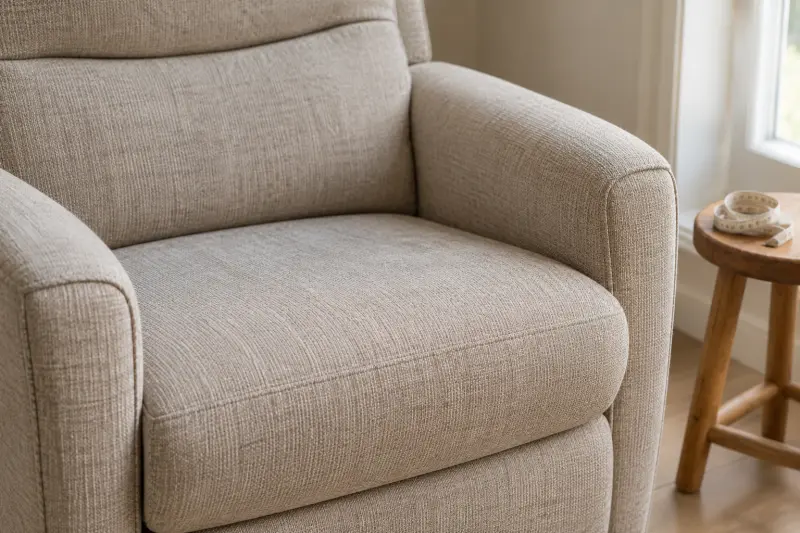
Record the user's ordinary observations. “The seat feels deeper than the chair tried earlier” or “I cannot comfortably reach the control in this position” gives the provider information. Do not turn those observations into a posture diagnosis or a prescriptive adjustment from a blog.
A collection can offer different depths across sizes, so keep the exact variant on the comparison sheet. Do not rely on a retailer page that shows one set of dimensions for every selection. Ask whether choosing another size changes the seat, back, wall clearance, overall footprint and available options.
For a fictional comparison, Candidate A has the preferred fabric and functions, but the demonstrated depth remains uncomfortable. Candidate B has fewer optional features and an appropriately advised seat arrangement. The useful decision compares the actual seating result and task needs. A prestigious collection name or a higher price is not evidence that Candidate A is the better purchase.
Discuss seat-to-floor height without inventing a fitting formula
Seat-to-floor height is worth recording, but it cannot by itself establish how the person should sit or move from the chair. Ask the provider to explain the stated measurement and how the actual cushion and configuration affect it. Do not assume the listed figure is identical under every use condition.
If the person's concern involves standing, balance or transferring, obtain appropriate individual advice. A lift function is not permission to attempt a new transfer method, and this article does not give a procedure. The actual chair, person and support arrangement need to be considered together.
Keep home measurements as descriptive evidence. A reader can note the dimensions of a currently comfortable chair or photograph its label where available. Those observations may help a conversation, but they do not create a clinical specification for the replacement. Avoid claiming that stature determines one correct seat height.
For a fictional reader, the preferred seat width is found in a variant with a higher stated seat-to-floor dimension. That becomes a provider question and a trial requirement. It should not be hidden because the width fits the budget. A purchase that answers only one dimension remains an incomplete seating decision.
Include back height and arm access in the trial
Back height above the seat and the arm arrangement deserve their own questions. A tall overall chair can have a different seat-to-back relationship from another tall model. Ask for the actual specification and try the relevant features through the approved demonstration rather than choosing by the silhouette.
An adjustable headrest or lumbar component is a positioning feature, not evidence of therapeutic benefit. Do not assume it treats pain, improves circulation or makes a poorly matched seat appropriate. If the reader has a health-related objective, discuss it with an appropriate professional and the provider.
Arm shape can affect how controls, pockets and nearby items are reached. It can also influence the practical experience of the seat. Describe any difficulty in ordinary task terms. Do not use the arms as supports for an improvised transfer technique or treat an added arm cover as a solution to an unresolved suitability concern.
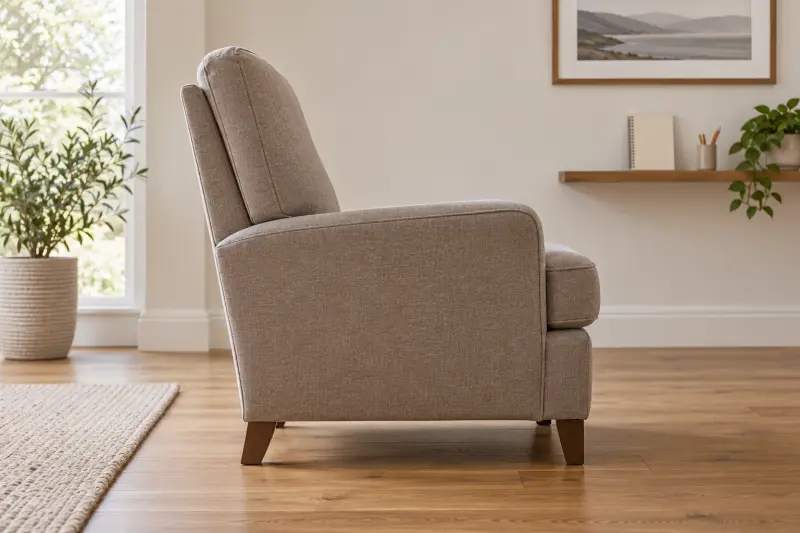
Keep a record of the features actually supplied. A showroom chair may have a different remote location, additional pocket or optional arm arrangement. If those influenced the decision, they belong in the order confirmation. A photograph of the collection does not establish which setup the reader will receive.
Make the demonstration identify both chair and setup
Book a demonstration for the intended user and explain any important questions in advance. Ask whether the exact size variant is available. A trial of a medium chair followed by an order for a small variant is not a direct trial of the purchased seating, even if the family name and fabric match.
Ask the provider to demonstrate the relevant approved positions and controls, with appropriate support. The visit should help the user understand the chair and identify unresolved questions. It should not become an unsupervised endurance test or a claim that a few minutes proves comfort for all-day use.
In a fictional demonstration record, the reader notes the model suffix, fabric, seat dimensions and the three ordinary tasks discussed: reading, reaching the control and using the agreed sitting position. Any concern is recorded as a question for the provider or professional adviser. There is no invented rating or timed pass threshold.
A companion can take notes and help compare answers afterwards. They should not silently substitute their own preference for the user's experience. Ask the intended user which observations matter most and keep the supported demonstration focused on those tasks. The best trial produces a clear configuration record, not a vague memory that one chair felt luxurious.
Keep seat additions within approved and advised arrangements
A cushion, protector or pillow can alter the chair's seating experience and effective dimensions. Before adding one, ask about compatibility with the exact chair and obtain appropriate personal advice where the purpose involves support, posture or pressure concerns. Do not recommend a generic accessory as a treatment.
Check whether the manufacturer permits the intended addition and how it affects movement, controls and care. A loose cover can obscure labels or interfere with features if inappropriate. A padded addition can change reach or the relationship to the back. These are questions to settle before purchase, not reasons to improvise.
Distinguish protection from fitting. An approved fabric-care arrangement may address everyday cleaning, while a cushion intended to change the seating addresses another task. Do not call a washable throw a fit solution or assume a premium cushion makes an unsuitable chair acceptable.
If a supplied size does not meet the established requirement, another appropriate model or variant may be a better comparison. Keep the accessory route only where it has a clear purpose and relevant approval. This can prevent a chain of small purchases from masking the fact that the main seating question remains unanswered.
Connect the chosen seat to room and delivery requirements
Once a seat configuration is shortlisted, review the full chair dimensions and required movement space. A wider seat may come with a larger overall chair, and another size may require a different wall distance. Do not transfer room measurements from the model tried to a different variant without checking.

Trace the delivery route from vehicle to final location. Ask the seller for the actual packed and handled component dimensions, who assembles the chair and what happens if placement is impossible. A seat's width is not a delivery width, and an overall chair figure does not describe every package or turn.
For a fictional home, the preferred wide variant fits the proposed sitting area, but a tight hallway turn is unresolved. The buyer asks the delivery provider to confirm the route using its handling information. It would be premature to pay based solely on the room sketch or to assume a removable back guarantees access.
Record the full chosen configuration in the order: model suffix, fabric, options, delivery scope and setup. That connects the seat decision to the actual purchase. If the seller proposes another size because it is in stock, treat it as a new comparison rather than a harmless substitution.
Compare prices after the seating requirement is understood
Request actual delivered quotations for the appropriate configurations. A chair that is less expensive because it has another size or lacks required setup is a different offer. Compare those differences openly rather than choosing from a price-filtered grid and trying to solve fit afterwards.
Separate necessary features from optional ones. The relevant seat and controls belong to the core equipment decision. A preferred fabric upgrade, additional storage or other optional function needs its own task-based reason. Do not reduce an important requirement simply to make room for an accessory bundle.
Where a size or setup remains untried, check the actual returns and special-order terms before payment. A generous product warranty is not a guarantee that an unwanted seat can be returned without cost. Cancellation, fit disappointment, damage and technical faults can follow different processes.
A no-purchase next step may be a more suitable demonstration or individual advice. It may also be retaining an existing appropriate chair until the requirement is clear. A seating guide serves the reader best when it supports an explained decision, including the decision to pause, rather than encouraging a costly order because one specification appears close.
Use the size record to check the delivered chair
At delivery, ask the provider to identify the actual model and setup. Compare them with the order and the configuration relied on in the demonstration. If a size suffix, seat or control arrangement differs, raise it promptly through the seller's process instead of assuming that a collection name guarantees equivalence.
Ask for the appropriate setup and instruction before using features unfamiliar to the person. Keep the current manual and supplier contact route accessible. If the user experiences an unresolved problem, seek the relevant advice rather than adding a cushion or changing a mechanism by trial and error.
Keep the comparison sheet for later changes. The person's needs or household layout may change, and a previous successful trial is not a permanent assessment. Record new questions in the same ordinary task language and involve the appropriate provider or professional where needed.
Editorial illustration
A strong seat decision is specific: this variant was compared, these measurements were defined, these tasks were discussed and these questions were resolved. It does not promise a universal perfect fit. It gives the reader a clear reason for the purchase and a practical way to detect when the delivered arrangement differs from that reason.
MAKE THE SPEND MEANINGFUL
Before adding to the basket.
- Use a focused exact-size demonstration and a simple measurement sheet before buying fitting accessories.
- Compare appropriate standard configurations with optional upgrades only when they solve a defined task.
- Keep an existing suitable chair while unresolved fitting questions are answered rather than making a rushed substitute purchase.
How this guide was prepared
AI-assisted editorial research, checked against the linked primary sources. Product testing and a credentialed individual review are not claimed.
AI-assisted, source-checked editorial; no hands-on test, human expert review or personal suitability assessment claimed
How we use sources and AI assistance ↗Sources & fact checks
The guide separates sourced facts from editorial questions and examples. We have not claimed hands-on product testing. How we use sources and AI assistance.
- Pride US-published lift-chair owner manual, revision Y June 2025: provider and prescription-use restrictions; US-published document, local market requirements need separate verification ↗
- Pride VivaLift Radiance US/Canada sell sheet: exact size variant dimensions and measurement tolerance ↗
Found an error or an outdated detail? Contact the editorial team.