
YOUR USEFUL STARTING POINT
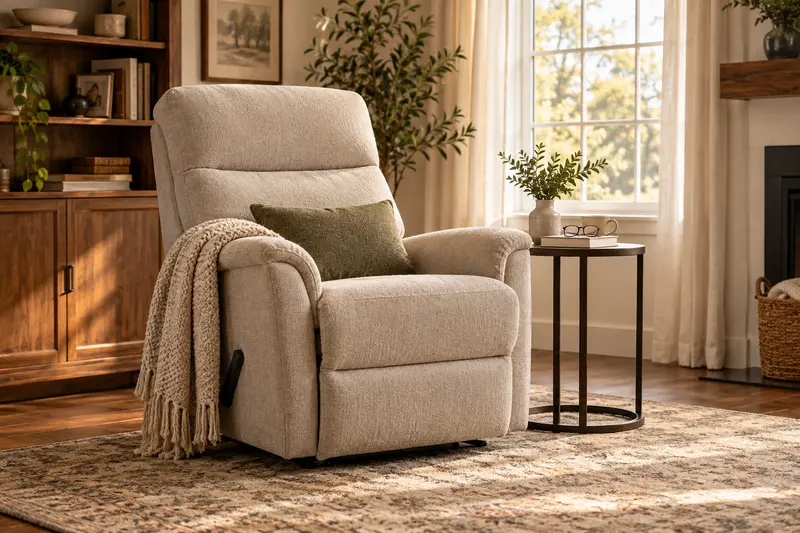
Choose the table around the seated reach and the chair’s complete movement. Measure the tabletop, base and walking route; do not judge fit by tabletop width alone. An ordinary side table is a place for objects, not a standing aid. Begin with the items you use and compare one simple table before considering a feature-heavy accessory.
List what needs a home beside the chair
Start with ordinary items: a book, glasses, remote or drink. Decide which should be reachable while seated and which can be stored elsewhere. A table crowded with unused objects is not a more convenient seating area. Move occasional items away and check whether an existing stable piece of furniture already serves the task.
Involve the person who uses the chair. Ask which side feels convenient and which route they use to get up and move away. If reach or transfer is uncertain, obtain appropriate advice. A table can solve a storage inconvenience, but it cannot provide the function of an assessed transfer aid or a suitable chair.
A chair-side table is a small purchase with a very specific job. Begin by watching the existing arrangement over an ordinary evening: where do the glasses go, where is the remote, and which items are fetched from another surface? Make a list of the objects used frequently, then cross out decorative or occasional items that could live elsewhere. The result might be a book, glasses and a drink, rather than an entire drawer of household supplies. Buying a smaller, focused table can be more useful than buying extra storage and filling it immediately.
Separate storage from support at the beginning. If the person uses a nearby surface when getting up, do not assume a replacement side table can take over that role. Ordinary furniture has its own intended use and load limits. A question about standing or transfers belongs with appropriate assessment and equipment advice. Keep it on a different list from the task of storing a remote. This matters even when a table looks substantial, attaches to the chair or is marketed with images of older adults. Appearance and audience targeting do not establish suitable support.
Consider a hypothetical reader whose present table holds a lamp, two books, a plant, chargers and a large basket. They want a more expensive table because the remote keeps disappearing. Before replacing it, the household moves occasional items elsewhere and gives the remote a consistent place. If the surface then serves the task and the chair movement remains clear, the storage problem may already be solved. If an important object is still difficult to reach, record that precise difficulty and seek suitable advice where needed. The purchase should answer the remaining problem rather than reward the longest accessory list.
Ask the chair user which side they prefer and how the area is shared. A table between two chairs may work for conversation but be less convenient for an individual's remote. A table on the room's outer side may be easier for another person to approach, yet interfere with the usual exit route. These are arrangement questions to resolve with the actual chair and room. Avoid choosing a side purely to create visual symmetry. An attractive seating area can be asymmetrical when that better reflects how people use it.
Measure the whole chair movement
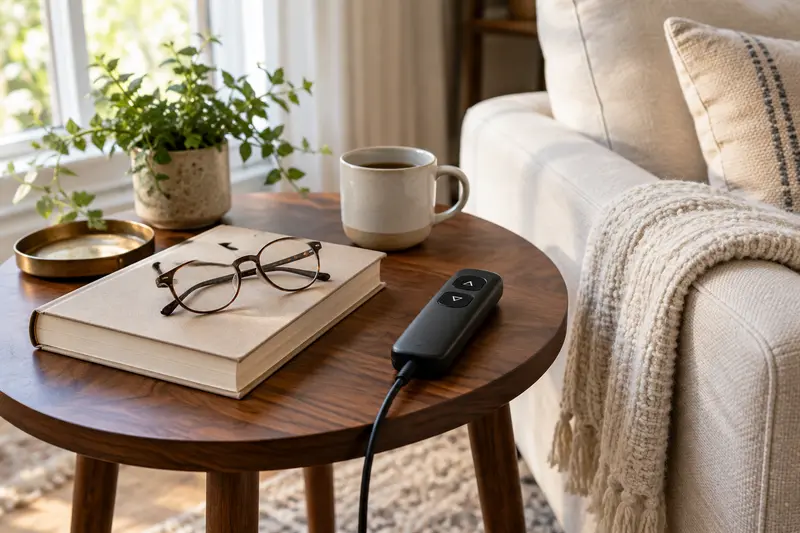
Check the exact chair instructions for clearance and moving parts. Mark the table’s proposed base and the chair’s movement area on a floor sketch. Include footrest extension, raised position and the route used to stand and walk away. Keep cables and table legs outside the needed space instead of assuming a narrow tabletop will make the entire table unobtrusive.
Pride’s Radiance specifications distinguish clearance by chair size. That is a reminder to use the exact model when planning a nearby table. A picture of a side table next to a stationary chair does not show how the two interact during lift or recline. Ask the chair supplier about any uncertain placement.
Start the room plan with the chair's manual, not a picture of a styled living room. Identify its exact model and size, then ask the supplier which clearance requirements and moving areas need to remain free. A powered recliner can occupy different space when upright, reclined or raised. Its extended footrest is another part of the arrangement. The side table's top, legs, shelf and cables all need consideration in those positions. Do not run the chair against a table as a way to discover the correct clearance; an uncertain layout should be resolved before normal use.
Measure the table's largest relevant dimensions rather than treating the top as its entire footprint. A round top may sit above a wider base. A C-shaped table may have a narrow visible column but a lower section intended to slide under furniture. That lower section introduces questions about the chair's underframe and mechanism. Never assume a gap beneath an upholstered chair is available for a table foot. If an arrangement depends on placing something under the chair, ask the chair maker and table maker about that exact use. The word slim does not answer a compatibility question.
For a hypothetical floor sketch, use a rectangle for the chair and a separate shaded area for the maker-required movement space. Mark the normal walking route, doorway and position of a lamp. Draw candidate A's complete base, then candidate B's. A may provide a smaller top but have legs that enter the route; B may have a larger top that sits entirely outside it. The sketch cannot certify an arrangement, but it makes the reason for a supplier question obvious. It also prevents comparisons based solely on the maximum tabletop diameter.
Include objects that move independently of the furniture. A charging lead may hang off the surface, a tray may be removed for serving, and a drawer may open toward the chair. Ask where each will go during the ordinary routine. A table with wheels adds the maker's instructions for movement and any locking features; it is a different furniture choice rather than an automatic upgrade. Keep the chair controls accessible, avoid blocking the intended route and ask for advice if reach or transfer needs are uncertain. Planning the ordinary sequence is more informative than a photograph of the chair at rest.
Compare a simple table by dimensions and care
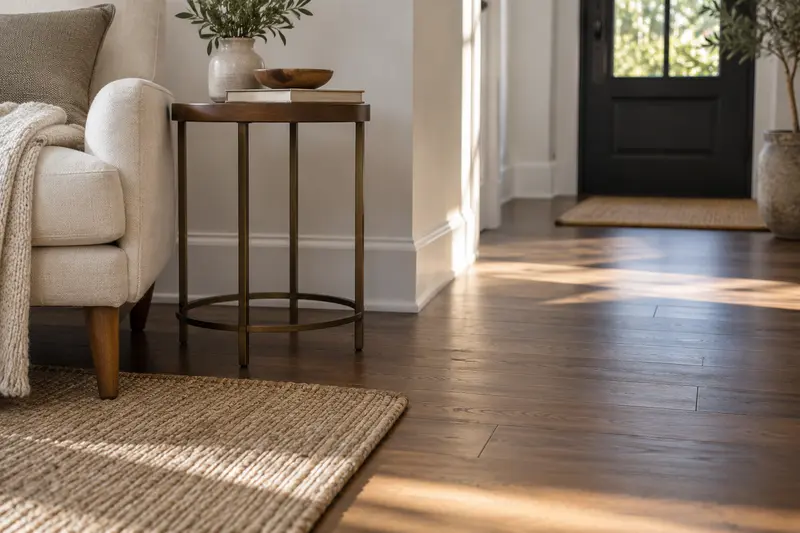
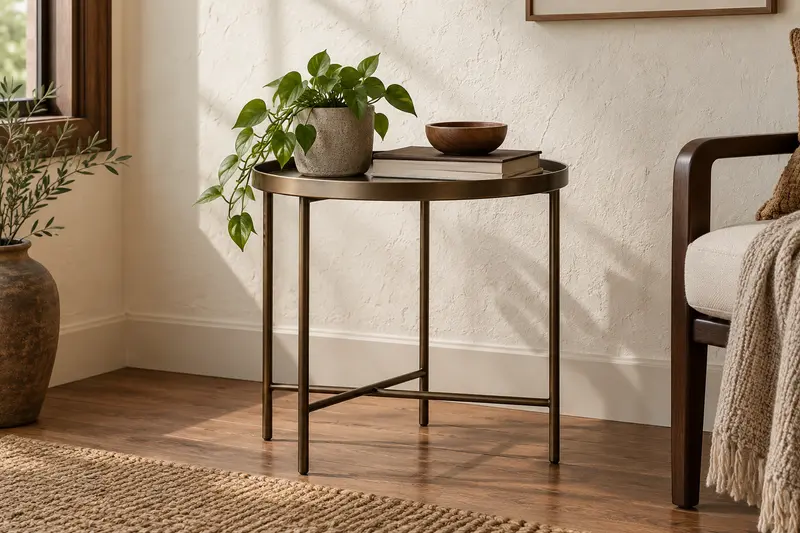
IKEA’s GLADOM US page lists a 17.5-inch diameter, 20.625-inch height and 22-pound tabletop load limit. It is an indoor tray table with a removable top. These details make it a concrete ordinary-table candidate, not a recommendation that it supports a person or fits every recliner.
For any table, compare overall base shape, height, usable top and assembly instructions. A rim or removable tray may serve one preference and complicate another. Check how the surface is cleaned and what load the maker permits. Do not use a tabletop or tray to pull yourself up, even if the furniture looks sturdy.
Use a published product page as a source of questions, not a guarantee of fit. The US GLADOM listing gives a diameter of seventeen and a half inches, a height of twenty and five-eighths inches, and a maximum tabletop load of twenty-two pounds. Those figures describe the listed ordinary table. They do not show the user's seated reach, the chair's movement or whether the exact floor position works. A local listing may use different units, availability or terms, so confirm the current product in the market where the order will be placed.
When comparing two ordinary side tables, record the usable top, complete base, overall height, material, assembly and permitted use. Add the features that affect the chosen task. A rim may be useful for one household but interfere with a book lying flat. A removable tray makes serving possible, yet creates a separate object to place and handle. Drawers provide storage but need opening space. Integrated charging may reduce one inconvenience while adding a power lead and a maintenance question. Each feature should have a clear purpose before it earns a place in the shortlist.
A hypothetical buyer comparing a plain table and a more elaborate tray station can ask five practical questions. Does the top accommodate the essential objects without crowding? Does the full base fit the proposed position? Can the item be assembled and cared for as instructed? Does the chair's movement remain clear? Are the delivery and return terms acceptable? If both choices answer these questions, personal preference can decide. If the elaborate option answers none of them more clearly, a higher specification does not establish better value. Do not invent a numerical value score that conceals unanswered fit questions.
Keep the maker's load statement in its proper context. A tabletop limit for objects is not a rating for leaning, pulling up or transferring body weight. The IKEA page identifies indoor use, care and fastening checks; follow the supplied instructions for the purchased item. Do not modify legs, add an improvised chair attachment or use a loose tray as a support surface. If the assembled furniture is unstable or differs from the order, contact the seller rather than trying to make an unsuitable piece work because its colour coordinates with the room.
Keep controls and everyday reach clear
Leave a consistent place for the remote so it can be found without searching under objects. Avoid routing charging cables across the standing or walking path. Think about whether a drink can be placed without stretching and whether the table can be approached by someone helping. An over-chair table introduces another movement and mounting question, so evaluate its own instructions separately.
After appropriate assembly and placement, check the ordinary sequence with the user and suitable help: sitting, finding an item, operating the chair and leaving the area. If the table is in the way, change the arrangement. Do not try to force the room to match a product already purchased because its finish is attractive.
Think through the whole chair-side routine with the intended user and suitable help. Finding the remote, placing a book, setting down a drink, adjusting the chair and leaving the area are separate tasks. A surface can be convenient for one and obstruct another. The aim is not to prescribe a reach distance; individual needs vary. Instead, record which task remains difficult, show the proposed arrangement to an appropriate adviser where necessary and avoid relying on a generic photograph as evidence that the position will suit everyone.
Give small objects a consistent home. A remote stored behind a large vase is harder to locate than one in a visible place chosen by the user. Glasses placed on a clear section of the top are less likely to be buried under correspondence. Consider a separate location for mail, spare cables and items used only occasionally. The improvement may come from the arrangement rather than a new piece of furniture. An additional organizer should serve a defined object and stay within the table's intended use; adding compartments without a purpose can recreate the clutter in a more expensive form.
If drinks are part of the routine, ask what the user wants from the surface and how the item is ordinarily handled. Do not infer spill prevention or burn protection from a rim, cup holder or seller's lifestyle image. Cleaning instructions, surface finish and any removable parts are relevant buying details. Ask whether the tray is intended to remain in place or be removed for serving, and where it will be put while removed. Where handling or reach is uncertain, appropriate advice is more useful than selecting a feature that merely looks convenient on screen.
Plan maintenance as an ordinary household task. Keep the assembly instructions, identify who can carry out the maker's fastening checks, and follow the stated cleaning method. Revisit the layout when furniture moves or the user's needs change. A new lamp or replacement chair can alter the previous arrangement even if the table has not changed. If normal chair movement or the route becomes obstructed, pause use of the problematic arrangement and seek clarification. Do not try to resolve a powered mechanism conflict by trimming table parts or tying furniture to the chair.

Use a chair-side fit card
Our fit card records the necessary objects, preferred side, chair movement, table dimensions and clear route. Add assembly and care questions beside the candidate. It helps compare a simple side table with a more elaborate tray arrangement without assuming more features mean more usefulness. Leave support needs on a separate professionally assessed list.
Check current availability, delivered scope and return terms. If a basic table meets the task, keep the purchase focused. If existing furniture works, keep it after clearing the space. A seating area can feel more considered with fewer carefully placed objects; there is no need to turn an everyday reach task into an expensive furniture makeover.
The chair-side fit card should be short enough to bring to a shop. Put the essential objects at the top, followed by the preferred side and the exact chair details. Record the table's full dimensions, intended use, assembly and care. Add a sketch of its proposed position and the questions that remain. Mark each answer as measured, demonstrated, maker-confirmed or unresolved. That distinction keeps a retailer's reassuring phrase separate from an actual specification. The card is a buying aid, not a certification of reach or transfer suitability.
Use a small shortlist rather than collecting dozens of nearly identical links. A suitable existing table, one straightforward new table and one alternative with a clearly useful feature are enough to expose the main tradeoffs. Compare the complete delivered purchase: assembly, packaging, any required accessories and the return process. A table promoted with a temporary discount still needs to meet the task. Check current terms at checkout instead of assuming an old article's price or return offer applies. We do not report a live price, stock level or commission relationship for the linked manufacturer page.
For a hypothetical final decision, suppose a household has narrowed the task to storing a remote and a book beside a suitable existing recliner. The existing table can serve it after clearing clutter, but its base occupies the intended exit route. A smaller replacement whose complete footprint fits the planned position may be reasonable after the relevant checks. A charging station with drawers and a swinging tray does not necessarily improve that result. Conversely, if an ordinary table cannot provide appropriate reach or clearance, buying the cheapest one is not a useful economy. Resolve the fit question before comparing finishes.
Keep the decision proportionate. You do not need matching furniture throughout the room to make one chair-side routine more convenient. Buy only after the important questions are answered, keep the order and instructions, and use the table for its intended object-storage role. If the need is support when standing, return to suitable assessment rather than searching for sturdier-looking ordinary furniture. If existing furniture works, keeping it is a valid outcome. A focused guide should help the reader make a considered choice, including the choice to buy nothing, rather than turn a modest convenience into an unnecessary room makeover.
YOUR DOCUMENTATION WORKSHEET
Chair-side fit card
A small useful furniture scope matched to the existing chair arrangement.
Record a documented answer or an open question. These fields stay on this page; print it to keep a copy.
MAKE THE SPEND MEANINGFUL
Before adding to the basket.
- Use a suitable existing side table after clearing it.
- Choose a simple table that meets the task before paying for integrated trays, drawers or charging features.
DOCUMENTED OPTIONS TO RESEARCH
Compare the details behind a name.
These are research candidates, not hands-on rankings. Confirm the exact model, local availability and terms before buying.
IKEA GLADOM tray table
A straightforward ordinary side table with published dimensions and care requirements.
- Check before choosing
- Not a standing or transfer aid. Actual seated reach, chair movement and route clearance must be checked.
- Market context
- US listing; use the correct local listing for availability and terms.
Sources & fact checks
The guide separates sourced facts from editorial questions and examples. We have not claimed hands-on product testing. How we use sources and AI assistance.
- Pride Mobility: Radiance size-specific specification sheet ↗
- IKEA US: GLADOM tray table dimensions and load limit ↗
Found an error or an outdated detail? Contact the editorial team.