
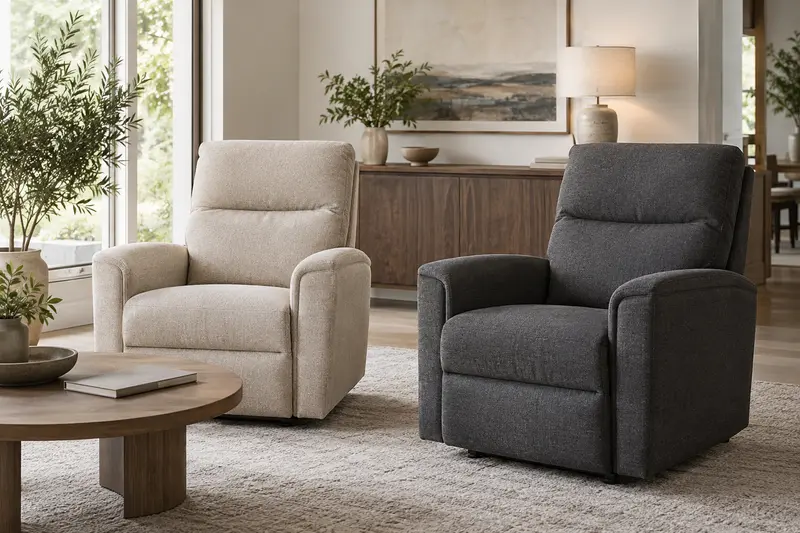
In brief
Compare the movements a lift recliner can make and the controls required to make them. Motor count is a useful question, but the exact model manual and a demonstration provide a better buying comparison.
Documented options
A clearer comparison.
Research options based on manufacturer documentation. These are not results of hands-on testing. Manufacturer links are informational; no commission relationship is currently active.
IN THIS GUIDE
Compare movements before comparing motor counts
Single-motor and dual-motor descriptions can help organise a recliner search, but the more useful question is what the exact chair can do. List the ordinary positions and control tasks the reader wants to understand. Ask the seller to demonstrate those through the approved instructions on the actual configuration.
Do not assume that every chair advertised with two motors offers the same independent movements, or that a multi-zone description is simply another way to count motors. A manufacturer can organise its positioning features differently. The exact model manual, control and demonstration are better evidence than a category label.
Pride's current manufacturer explanation describes its three-position single-motor chairs as moving the back and chaise together, and its infinite-position category as allowing independent back and chaise movement. That explains its stated product categories; it is not a universal specification for every brand or a recommendation for the reader.
The cited US-published Pride manual carries a prescription-use sale caution and describes provider involvement. For other markets, obtain the local device documentation rather than infer the requirements from this US reference. Address the actual device requirements and personal suitability before treating the purchase as ordinary furniture shopping. This guide does not prescribe a position, approve transfers or claim that additional motors deliver a health benefit. It helps readers ask a more precise product question.
Create a movement matrix for the shortlisted models
Make a small matrix with rows for backrest, leg rest, lift function and any other powered component that matters to the user. Put the exact model and configuration in each column. For every movement, ask whether it is independent, linked to another movement or unavailable. Record the answer from the supplied literature and demonstration.
Add a second row under each important movement for the relevant control task. Ask which button or approved sequence operates it, how movement is stopped and whether a preset affects other components. Keep that explanation tied to the actual manual; do not produce generic operating instructions for all power chairs.
Use “not yet confirmed” when the literature is unclear. A large collection photograph or a list of comfort zones does not tell you the precise control behaviour. A pending entry should lead to a provider enquiry, rather than to an inferred motor layout or an unsupported score.
A fictional comparison can show Candidate A's back and leg rest moving together, while Candidate B allows separate adjustment. The matrix then asks whether the reader actually needs that separation. If both meet the established tasks, another criterion such as seat fit or usable controls may decide the comparison. More independent functions are not automatically more valuable.
Understand what linked movement means for the task
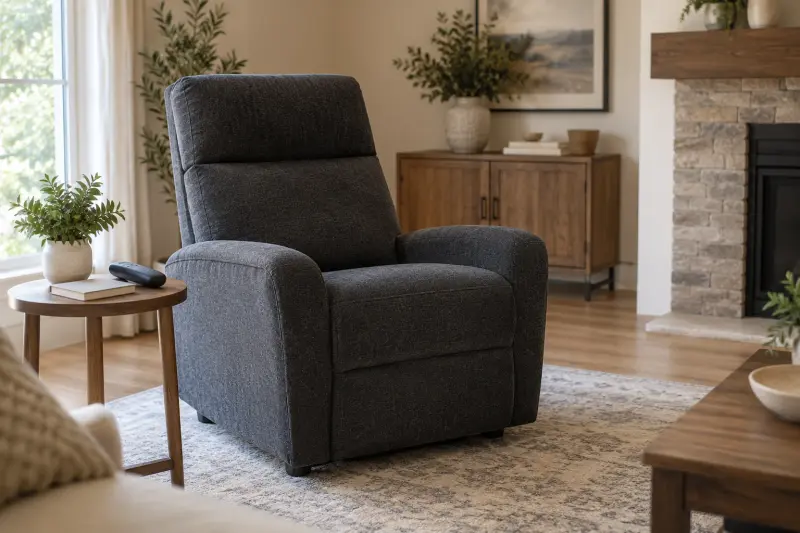
A linked movement arrangement can be a sensible option when it matches the person's appropriately advised needs and the controls are usable. Ask the provider to show the actual relationship between components through the approved demonstration. Do not assume the same sequence or range applies to every single-motor model.
Describe the intended task in ordinary language. A reader might want a comfortable reading position, an upright sitting position and a clear way to return to the agreed setup. Those requests help the provider show whether the chair offers the needed arrangement. They are not medical positioning prescriptions.
If the demonstration reveals that a desired combination cannot be reached because the components move together, record the specific limitation. That is a reason to compare another appropriate model, not evidence that all linked systems are poor. A chair can be well suited to one set of tasks and unsuitable for another.
Keep the user's control experience visible. A simpler movement arrangement may reduce the number of choices, but it does not automatically make the chair appropriate for someone with impaired dexterity or understanding. Personal operation needs still require a supported trial and appropriate advice. Avoid “easy for everyone” claims based solely on the number of motors.
Ask whether independent movement offers useful choices
Independent back and leg-rest movement can offer combinations that a linked arrangement does not provide. Ask the seller to demonstrate the combinations relevant to the reader, using the exact current chair. Do not infer a full range of positions from “dual motor” without checking how the manufacturer defines that model.
The extra flexibility deserves a task-based reason. A reader may value adjusting one component while keeping another in its existing position. If that function solves a real preference or appropriately advised need, it belongs in the comparison. If it will not be used, its presence need not decide the purchase.
For a fictional example, Candidate B can provide the demonstrated component relationship the reader prefers for reading. The buyer still needs to confirm the seat dimensions, remote clarity and room footprint. Independent movement does not erase an unsuitable seat or a control the user cannot operate appropriately.
Avoid presenting a reclined or elevated position as treatment for pain, swelling, breathing or circulation. A feature being available is not evidence that the person should use it for a health objective. Seek the relevant professional advice and provider input rather than selecting a motor count from a claimed medical benefit on a retailer page.
Separate advanced positioning from simple two-motor labels
Some chairs describe several positioning zones or additional powered components. Golden's US Cloud Supreme with Twilight PR519 page identifies separate positioning features including headrest, lumbar, backrest, seat and footrest, with a programmable AutoDrive hand control. That is a specific model example, not a definition of every dual-motor chair.
Do not convert the number of listed comfort zones directly into a motor count unless the manufacturer explicitly makes that connection. Ask what each feature does, how it is controlled and what is supplied in the ordered version. A shopper needs the usable function, not an inferred engineering diagram.
Additional powered components can increase the choices the user must understand. Ask which functions are essential to their ordinary task and which are optional preferences. More functions can be useful, but their relevance should be demonstrated rather than assumed from a premium description.
Keep marketed wellness language separate from verified feature descriptions. This guide uses the PR519 page to identify functions and the control route; it does not adopt claims about circulation, pressure, posture or therapeutic benefit. If such an objective matters to the reader, it needs appropriate individual advice and evidence beyond a product's marketing copy.
Try the exact control that will arrive with the chair
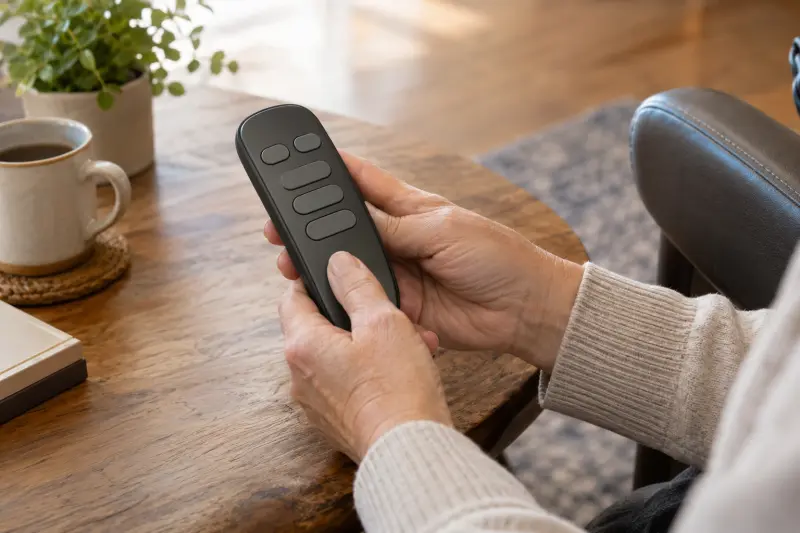
Motor count and remote usability are different questions. Ask to see the hand control supplied for the exact configuration. Record its identity where available, the relevant functions and any approved alternative. A picture of the collection's most elaborate remote may not show what arrives with another version.
Pride's VivaLift insert illustrates several hand-control configurations and notes that supplied controls can have fewer options than the highest-function illustration. That is a practical reason to check the actual control instead of relying on one promotional diagram. The current manual and insert need to match the ordered chair.
During the supported demonstration, ask the user to discuss label clarity, reach and understanding of the ordinary tasks. A companion can record questions, but should not complete the control comparison in place of the intended user. Do not create an invented timed test or use a successful single action as proof of all operation.
A preset or memory button may be useful, yet the user still needs to understand the approved behaviour and how to stop movement. Ask the provider to explain it in ordinary language. A one-touch description is not a clinical suitability assessment or a guarantee that a stored position serves every person's needs.
Evaluate presets by what they change
Ask what a preset changes on the exact chair. It may involve more than one component, and its behaviour should be explained by the provider using the supplied instructions. Do not assume that a button labelled home, rest or memory has the same meaning across manufacturers.
Record which ordinary task a preset would support and whether the intended user understands it. A memory feature can save repeated adjustment, but it can also introduce another mode or sequence to learn. A simple explanation from the actual provider is more useful than declaring memory controls universally easier.
For a fictional comparison, the user prefers manually adjusting one component on Candidate A and finds Candidate B's preset description confusing. The task sheet records that observation for discussion. It does not say presets are generally unsafe or manual controls are always superior. The product decision depends on the appropriate configuration and actual operation needs.

Keep personal positioning advice distinct from programming a feature. A provider can explain how the function works, while an appropriate professional addresses a health-related seating objective where necessary. Do not use this article to select a supposedly therapeutic preset or copy a programmed arrangement from an unrelated user.
Check the moving footprint for the chosen functions
A more flexible chair still needs the specified space for its full motion. Ask for wall distance, forward extension and other relevant dimensions for the exact size. A showroom may have ample space that the intended room lacks. Do not judge placement only from the upright footprint.
Consider nearby furniture, lamp bases, side tables and the route the person uses. Keep required movement and access clear through an appropriately planned setup. The provider should identify the exact chair's requirements. A generic “wall hugger” description is not a measurement for a different model.
In a fictional room comparison, Candidate A fits the upright space and its stated moving footprint, while Candidate B's additional positioning requires further space clarification. The extra function is not useful if the household cannot accommodate the approved motion. The next step is a placement enquiry, not an instruction to place the chair closer than specified.
Include power and remote cable routes in the same room sketch, with technical requirements handled through the manufacturer and appropriate qualified support. This article does not provide wiring or mechanism adjustments. A complete choice connects the desired movements to a room where the exact equipment can be used as intended.
Ask how each important function is supported
Before ordering, ask who handles problems with the chair and its important functions. Identify the exact local support route, whether a home visit is available and how parts and diagnosis are arranged. A multi-motor description does not predict failure frequency, repair cost or warranty cover.
Read the applicable warranty component by component. Frame cover, electronics, labour and transport can have different conditions. Do not assume that a long headline warranty covers every powered function for the same period or that all service happens at home without charge.
Keep backup power separate from motor count. Ask what the actual installed backup supports, how it is maintained and what the manufacturer says about its limits. A battery-backup label does not promise prolonged operation of every movement, heat function or charging feature.
For a fictional quotation, a more advanced chair meets the task needs but its local service arrangements are still pending. The buyer requests a clear support answer before comparing total value. That missing information should not be concealed by praising the positioning system. Practical support matters most when the person relies on the chair in everyday routines.
Compare equivalent chairs with actual delivered prices
Ask for delivered quotations that identify the exact size, fabric, control, functions and setup. A lower price for a smaller seat or a different remote is not an equivalent offer. Record those differences so the comparison stays about the actual arrangement the reader would receive.

Editorial illustration Separate essential positioning requirements from preferred extras. If independent movement is necessary for an appropriately advised task, it belongs to the core comparison. A heat option, USB port or fabric upgrade should have its own reason. Do not sacrifice an important seat or control requirement to make room for optional premium features.
Use actual quotes rather than claiming a standard price difference between single and dual motors. Regional stock, service, size and configuration affect the offers. This guide does not invent prices or a universal upgrade percentage to create a persuasive purchase conclusion.
A fictional buyer may find that a linked model meets every established task and offers appropriate support at a lower actual total. Another buyer may need the demonstrated independence of a different model. Both decisions can be sensible. The worksheet should show the reason, not award a category winner to whichever model has the largest number in its description.
Translate broad position names into demonstrable questions
Position names such as infinite, zero gravity and lay flat can sound precise while leaving useful details unanswered. Ask the manufacturer or provider what the exact term means for the model, which components move and what the current manual permits. A name is not a measured angle or a personal recommendation.
Do not assume a chair is appropriate as a bed or for prolonged sleeping because a product page says lay flat. Sleep and health needs require appropriate advice, and the device's instructions still apply. A shopping guide should not turn an available position into a prescribed overnight arrangement.
Avoid using promotional comparisons as evidence of comfort or quality. Statements such as most comfortable cannot establish the intended user's experience, and this publisher has not performed a hands-on test. The useful source-backed information is the particular function, supplied configuration and documented requirement.
When a broad claim remains unclear, write the next question. “Does the exact quoted version permit the back and leg rest combination demonstrated?” is answerable. “Is this the best motor system?” is vague. Clear questions make the comparison more helpful and reduce the chance that an impressive label drives a purchase that does not meet the task.
Choose the functions the reader can actually use
The final comparison should connect a suitable seat, usable controls, required movements, room placement and practical support. Motor count is one descriptive field within that comparison. It should not become the whole decision or an assumed proxy for quality, medical suitability or value.
Confirm that the ordered chair matches the demonstrated configuration. Keep the exact model, size, remote and options in the purchase record. If the seller offers a substitution, revisit the relevant functions and personal questions. A new collection name or revised remote can change the comparison even when the motor count is the same.
A low-cost next step may be another demonstration, clearer instructions or retaining an existing appropriate setup. It is not automatically buying a control attachment or a seat accessory to compensate for unresolved questions. Spend only when the actual function and purpose are understood.
A good choice can be explained simply: the reader needed these tasks, the provider demonstrated these functions on this exact configuration, and the remaining suitability and support questions were addressed. That explanation is stronger than claiming one or two motors are best for everyone. It supports an informed purchase without making promises the evidence cannot support.
MAKE THE SPEND MEANINGFUL
Before adding to the basket.
- A suitable linked-movement model can be worth comparing if it meets the established tasks; more functions are not automatic value.
- Request another exact-model demonstration before buying accessories to compensate for unclear operation.
- Use a plain movement matrix and retain an existing appropriate setup while important questions remain unresolved.
How this guide was prepared
AI-assisted editorial research, checked against the linked primary sources. Product testing and a credentialed individual review are not claimed.
AI-assisted, source-checked editorial; no hands-on test, human expert review or personal suitability assessment claimed
How we use sources and AI assistance ↗Sources & fact checks
The guide separates sourced facts from editorial questions and examples. We have not claimed hands-on product testing. How we use sources and AI assistance.
- Pride manufacturer explanation: its three-position single-motor and infinite-position independent-movement categories; not a personal suitability claim ↗
- Pride US-published lift-chair manual: prescription-use and provider restrictions for the cited device category; US-published document, local market requirements need separate verification ↗
- Golden Cloud Supreme with Twilight PR519: exact US positioning and control features ↗
- Pride VivaLift insert: several hand-control configurations; exact supplied functions must be identified ↗
Found an error or an outdated detail? Contact the editorial team.