

In brief
Calculate the finished flat-bed height from the approved base setup and actual mattress thickness. Leg height alone is incomplete. Compare that measurement with your current bed and intended furniture arrangement; there is no universal height target here. If getting into or out of bed needs assistance, request an individual professional assessment.
IN THIS GUIDE
Measure from one consistent starting point
Keep specification height and observed installed height in separate columns. One describes the maker's nominal product, while the other describes the household's actual flat arrangement when measured appropriately. If they differ, ask about the datum, settings and included layers before concluding a product is wrong. Do not average unrelated numbers to make them agree. Record original units and whether the value is stated, estimated or measured.
Saatva's standard-base example lists a 15-inch overall height with 11-inch legs, adjustable overall heights from 12 to 17 inches, and a 4-inch base without legs. These are named model dimensions, not recommended personal heights. They show why adding legs again to an overall measurement double-counts them. Ask for the corresponding definition for another model or supported platform arrangement rather than transferring these values to the Plus.
Name the measurement before writing the number. Floor to leg top, floor to base deck and floor to mattress top describe different things. A retailer may advertise one while a household is comparing another. Ask for a drawing or plain explanation of the datum, and keep that explanation with the specification. Start with the flat installed arrangement rather than a raised head section or a styled photograph whose perspective hides the floor.
Saatva's cited standard-base guidance separates the leg setting from the overall base height. It is useful precisely because it identifies the model and what contributes to the dimension. Do not apply those values to the Plus merely because both products share a brand. A different generation, regional variant or permitted support arrangement needs its own document. An unspecified low-profile claim should remain a question until the supplier provides a defined measurement for the proposed installation.
For a hypothetical retailer enquiry, the specification lists an eleven-inch leg but does not say whether the deck adds to that number. The buyer asks for the floor-to-deck height at the intended setting and checks the exact product. They do not assume the finished mattress surface is eleven inches high. Another setup uses a maker-approved platform arrangement without the usual legs; the starting point and included layers change. The worksheet must describe that arrangement rather than transplanting the freestanding arithmetic.
Record the existing room measurements without altering the equipment. Ask for help where the measurement cannot be obtained safely or where access is difficult. A photograph may explain which surface is being discussed, but do not publish a private bedroom image or address in a website form. Mark approximate household measurements as approximate; supplier confirmation is a different evidence field. This guide has not surveyed the room or assessed any person's entry or exit needs.
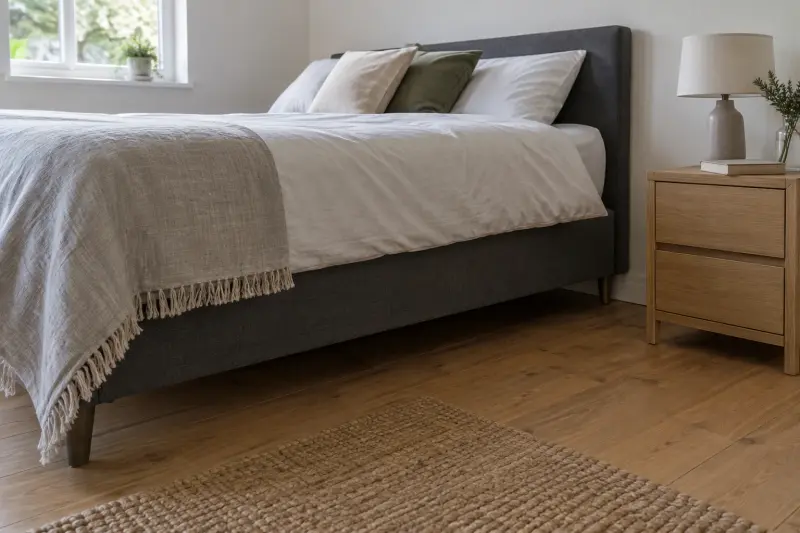
Editorial illustration Keep the measurement date alongside the model and planned setting. If the frame, platform or mattress changes later, the original datum is still useful but the final calculation may no longer describe the installed bed.
Build a complete-height worksheet
Keep every arithmetic row tied to one proposed configuration. Do not combine the lowest leg setting from one size with the mattress depth from another offer unless the supplier confirms that combination. A fictional worksheet has separate columns for Offer A and Offer B, each with its own approved setting and compatible layers. The result is a nominal comparison of complete proposals, not a recommended access height or a prediction of mattress compression.
Ask whether a quoted range describes selectable settings or manufacturing variation. Those meanings are different. If the supplier says the completed arrangement measures between two figures, request the configuration assumptions and how the actual installed value will be confirmed. A range should not be treated as a promise that every intermediate height is available. Keep technical settings with the responsible provider and any individual access requirement with appropriate assessment.
Use a worksheet with a named component in each row. Include only layers that actually contribute to the defined floor-to-top measurement. The manufacturer's floor-to-deck figure may already include the selected legs; adding leg height again would double-count that contribution. Ask the supplier about an ambiguous drawing before treating the total as an order specification. Keep a permitted platform or support layer separate until its relationship to the quoted base measurement is clear.
The original thirty-centimetre base and twenty-five-centimetre mattress example is a nominal fifty-five-centimetre total. It illustrates addition, not a recommended personal height. The edge of a mattress under use can behave differently from its stated unloaded thickness, so a calculated number should not substitute for an appropriate assessment or demonstration. A five-centimetre thickness change produces a five-centimetre nominal change only when the other contributing dimensions remain the same. Check those assumptions explicitly.
A second hypothetical comparison changes both the leg setting and mattress. If one permitted arrangement lowers the deck by three centimetres while the mattress becomes five centimetres thicker, the nominal total rises by two centimetres. That difference follows the example's arithmetic; it is not approval of any leg adjustment or prediction of actual access. The supplier must confirm the permitted configuration and dimensions. Recording both changes avoids blaming the mattress alone for a result caused by the combined order.
Keep original units beside any conversion. Someone can compare supplier inches with household centimetres, but premature rounding can conceal a meaningful discrepancy between records. There is no need for a website to invent a safe height range from those numbers. Use the calculation to frame the actual question: what will the flat completed arrangement measure, and which contributing settings are supported? A personal requirement belongs with appropriate assessment rather than an automatic green compatibility badge.
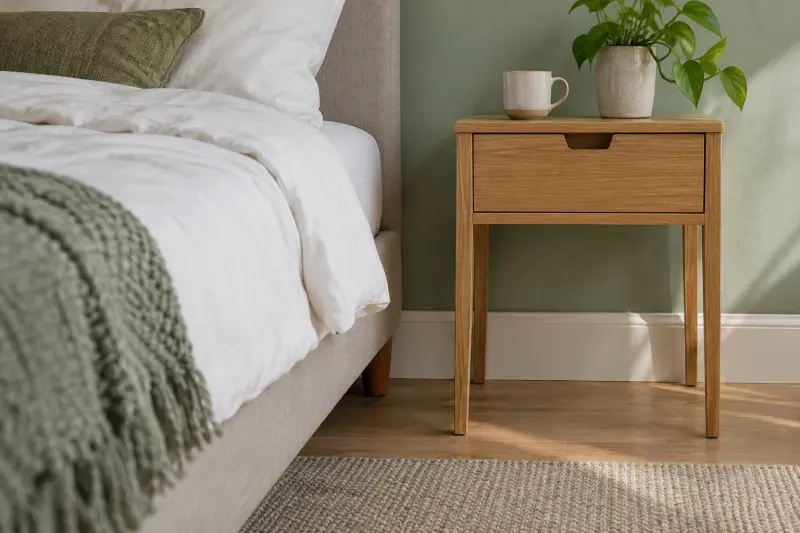
Editorial illustration Include the actual ordered mattress variant, not merely its range name. Different depths within a family can change the total. If a topper is permitted and intended, record that exact layer and ask the maker how it should be considered. A vague future topper makes the final measurement unresolved.
Compare with your existing room
Separate changing appearance from changing an ordinary task. A taller visible mattress may cover less of a decorative headboard without changing the reason the household chose adjustment. A bedside surface might instead need a specific layout review. Record the actual concern before buying replacement furniture. This helps compare a permitted setting, a compatible mattress choice and a décor preference without declaring one number ideal for every person.
For a fictional couple, one offer has the same nominal top height as their current bed but a different mattress edge and split configuration. Matching the number preserves one reference, not the entire experience. Ask for a supported review of the changed tasks rather than labeling the new bed equivalent. A household member helping with measurements can explain the old arrangement, while any transfer or care assessment remains an individual professional responsibility.
Describe the reason for changing height in ordinary task language. The bedside surface may look out of proportion, a headboard may cover less of the mattress than expected, or the user may have an access concern requiring professional input. Those are different decisions. Place decorative preferences, furniture relationships and individual needs in separate rows. A taller bed cannot be assumed better for every person, and a lower-looking photograph is not proof of easier entry.
For a hypothetical bedroom, the current mattress top aligns with a familiar bedside surface. A new compatible mattress raises the nominal top, changing the appearance and the relationship with stored objects. The shopper can compare furniture dimensions and ask for a complete-layout review before ordering a replacement table. They should not assume a particular surface distance is universally reachable. If reaching or assistance is the concern, use the appropriate supported review of the actual arrangement.
Another household hopes to reduce an uncomfortable entry task. Its existing height measurement is useful context for an assessor, but the new powered bed differs in mattress edge, movement and surrounding furniture. Matching the old number does not establish the same experience. Describe the task, equipment and relevant circumstances to the responsible professional rather than declaring a new model suitable from a chart. This article intentionally supplies no universal transfer-height prescription or self-assessment routine.
Consider the whole room record without collecting sensitive personal information online. A private sketch can show the floor, frame, nearby furniture and route. Questions about cables, moving clearance and installed configuration belong with the exact base instructions and supplier. If a bedside item changes, revisit the furniture arrangement separately from the height calculation. One measured total does not answer every practical issue in an adjustable-bedroom project.

Keep preferences ranked by the actual purpose. A decorative improvement can be optional while an unresolved access requirement needs advice before purchase. The decision may be a confirmed configuration, retaining existing furniture, another supported option or delaying the order while essential information is obtained.
Confirm the setting before delivery
Make a requested setting part of the actual service scope. Ask whether the quoted installer will supply the approved legs, select the documented setting and record the final configuration, or whether another appointment is needed. A photograph of a low showroom bed does not put that setup on the order. Obtain the defined arrangement before selecting a replacement table or leg accessory, with no improvised spacer or block solution.
If the installer reports another final measurement, compare assumptions before deciding what changed. Was the specified mattress supplied, is the documented setting the same, and was the same floor-to-top datum used? Ask the responsible provider to resolve any discrepancy; do not adjust the equipment to chase an earlier estimate. Retain the explanation with the order so a later mattress or furniture enquiry starts from the actual setup rather than a superseded calculation.
Ask the supplier to put the permitted setting and defined final measurement in the order record. Include the exact base, compatible mattress and approved support arrangement. Clarify whether the installer adjusts the legs, how that task is documented and which settings are actually available for the named unit. Do not assume a generic accessory kit fits because a seller describes it as adjustable. Required approval should come from the responsible manufacturer for the complete configuration.
A hypothetical order uses the default showroom setting, while the buyer's worksheet assumed another approved setting. Without a written setting, both parties may think they agreed on the same height. Resolving it before delivery is easier than discovering the difference after assembly. Another shopper wants an unsupported extension kit to reach a preferred number. That is a manufacturer question; stacked blocks, improvised spacers or removing required supports are not a shopping workaround supplied by this guide.
At handover, ask for the flat completed arrangement to be identified and measured under the supplier's appropriate procedure. Compare the result with the order record, allowing the supplier to explain any difference in datum or specification. The aim is confirmation, not persuading the household to adjust equipment itself. If the supplied mattress or leg setting differs, record the discrepancy privately and seek clarification before assuming the intended arrangement has been delivered.
Retain the setup record with the correct manual and supplier contact. Ask which later changes require another configuration check. A new mattress, permitted topper, frame or support setting can affect the original calculation. Separate any technical adjustment from ordinary user operation; the person carrying out changes needs the maker's instructions and appropriate responsibility. A household note that says previously worked is not evidence that every later combination is approved.

Avoid ordering a new side table, organizer or decorative frame solely to repair a number that has not been confirmed. First establish the actual supported bed arrangement. Then consider whether the existing room serves it and whether any new item has a clear task. Keeping that sequence can prevent several unnecessary purchases.
Turn a vague height quote into an answer
Ask a supplier to respond to a concrete sentence: for this exact base, at this permitted leg setting, with this exact compatible mattress and support arrangement, what is the nominal flat floor-to-mattress-top height? The answer should identify its assumptions. If the quotation instead supplies leg length alone, ask for the missing deck relationship. A short well-defined response is more useful than several unexplained low or standard labels.
For a hypothetical side-by-side quote, Offer A specifies the mattress depth but not the installed deck height. Offer B defines both but assumes a platform arrangement the room does not have. Neither gives a directly comparable final result yet. The buyer asks each supplier to describe the same intended support arrangement rather than subtracting unrelated figures. This does not require inventing installation measurements; it requires keeping questions aligned.
Make a change log with only relevant edits. If a supplier swaps the mattress thickness or a setting, write the old and new descriptions and the revised nominal total. Do not silently overwrite an early estimate and lose the reason for the difference. A family member helping with research can maintain that record without deciding personal suitability or adjusting the equipment. The responsible supplier confirms model-specific configuration; appropriate professionals address individual needs.
Where the final total is only an estimate, label it that way and ask how it will be confirmed. Do not present a range as a guaranteed installed dimension. A household can still make progress by obtaining a precise datum, compatible-model answer and installation responsibility. The result may be to retain the current mattress if that documented combination serves the task, avoiding a replacement bought only to match a broad marketing description.
Keep the quote and room record private. A public comparison tool needs general dimensions or anonymous notes, not health details, receipt identifiers or bedroom photographs. The worksheet's value is a clearer conversation and reproducible order scope, not a medical clearance or a universal best-height recommendation.
Review the measurement when the setup changes
Use the confirmed flat measurement as a dated reference. Do not treat it as a permanent characteristic of the room when the mattress, topper or support arrangement changes. A later supplier enquiry can start with the original component list and explain exactly what is proposed. That is more useful than saying the bed has become high without identifying the changed layer or setting.
For a hypothetical mattress replacement, the new model is compatible with the base but thicker than the earlier one. Compatibility and finished height are separate fields: one answer does not automatically settle the other. Recalculate the nominal total using the confirmed datum, then request any needed review of access or furniture relationships. Conversely, keeping a familiar height is not enough reason to buy a mattress whose exact adjustable-base compatibility remains unresolved.
Store the worksheet where the household can find it alongside the model-specific instructions. If help with bedding or furniture changes is provided by different people over time, the record explains the current configuration without exposing private details publicly. Ask the supplier about any technical change rather than allowing a familiar-looking leg or block to become an assumed approved component. A new adjustable setting needs the actual instructions and responsible confirmation.
The purchase sequence should remain proportionate: identify the real task, confirm the complete supported arrangement, understand its height and review the surrounding room. Additional bedding or furniture earns its place only when a remaining need is clear. A no-purchase outcome is valid when the current documented setup serves the purpose; delaying an order is valid when an essential answer is missing. This article has not measured or tested any household bed.
A precise measurement can support a better conversation, but it cannot declare an individual transfer easy, safe or medically appropriate. Keep that boundary visible. The most useful final record is a defined measurement, exact components, a confirmed setting and the next responsible contact if circumstances change.
MAKE THE SPEND MEANINGFUL
Before adding to the basket.
- Measure the current arrangement before buying height-related accessories.
- Ask about approved settings already included with the selected base.
How this guide was prepared
AI-assisted editorial research, checked against the linked primary sources. Product testing and a credentialed individual review are not claimed.
source-checked editorial; no hands-on testing or expert suitability assessment claimed
How we use sources and AI assistance ↗Sources & fact checks
The guide separates sourced facts from editorial questions and examples. We have not claimed hands-on product testing. How we use sources and AI assistance.
Found an error or an outdated detail? Contact the editorial team.