
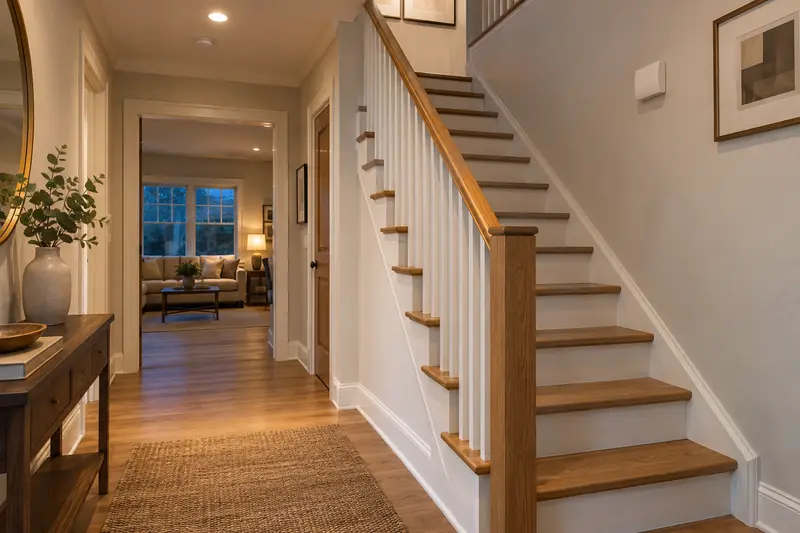
In brief
Check what you cannot see and where you need the light before buying a multipack. Sensor timing, placement, power source and glare matter as much as brightness. A small night light can supplement an existing lighting arrangement, but it should not be assumed to provide adequate illumination for an entire staircase. Start with the route and the existing switches.
Documented options
A clearer comparison.
Research options based on manufacturer documentation. These are not results of hands-on testing. Manufacturer links are informational; no commission relationship is currently active.
IN THIS GUIDE
Find the lighting gap first
The National Institute on Aging recommends good stair lighting, switches at the top and bottom of stairs and each end of a long hall, and consideration of plug-in motion-activated lights for stairwells and pathways. That general guidance is not an endorsement of the battery lamp discussed here. Begin with a description that another person can understand without standing on the staircase. For example, the household may want to find a hallway switch before entering a passage, or identify the approach to a change in level. Those are different questions from illuminating an entire flight. Record which existing light serves the route and whether a repair or a wider lighting review is needed. A small accessory should supplement an appropriate arrangement, not become the assumed answer to a larger unresolved problem.
Ask the person using the route when the issue occurs and what they find difficult. Keep relevant individual needs with an appropriate assessment instead of prescribing brightness from age alone. A family member can help record the room layout from a secure position. Do not recreate a risky dark journey to prove that a product is needed. The buying record can state that part of the route needs professional review without collecting sensitive health details in a public tool.
For a hypothetical hallway, the main lighting works but the switch is inconvenient to locate on the approach. A supplementary sensor function may deserve discussion. In another home, the stairs themselves remain poorly lit; buying a night-light multipack does not complete that lighting plan. The household should obtain suitable advice about the wider arrangement. These examples show why the same shopping phrase can hide different tasks, and why a clear problem description is more useful than selecting the brightest-looking product photo.
Draw the route's beginning and end, including doors and other ordinary obstructions. Add which direction is used and whether the need occurs on both approaches. Keep the sketch private and avoid photographs containing addresses or personal paperwork. A route-light worksheet does not certify visibility or predict falls. It gives the retailer or appropriate provider a concise description of the task and unanswered questions. That can lead to one modest supplementary purchase, a different lighting arrangement or no new accessory if the existing equipment already serves the need.

Record whether the issue is new or has always been part of the layout. In a hypothetical home, a previously useful fixed light has stopped working; in another, a cupboard door now covers the usual switch. Give the relevant person that factual history before selecting an accessory. A lamp failure, a changed obstruction and a desire for supplementary convenience lead to different enquiries. If a fixture needs repair, a shopping list for small battery lights leaves that original task unanswered. Describe the present arrangement from a secure position with suitable help, including what normally works, without switching off needed lighting to recreate the problem.
Keep the wider home context visible after the initial enquiry. A light can answer one documented task while a separate switch, installation or maintenance question remains. Do not average those questions into a reassuring score. The guide has not inspected the home, measured illuminance or established a medical outcome.
Compare the ownership task as well as the light
Power source is an ownership decision, not simply a specification to compare. Ask who will maintain the chosen unit, how it is removed as instructed and which parts or batteries it needs. A battery-operated lamp can avoid one cable arrangement while adding replacement or charging tasks. A plug-in lamp depends on an appropriate socket location. Permanently fitted equipment has an installation scope. Choose after those ordinary responsibilities are understood, rather than assuming that the least expensive unit is the least demanding arrangement.
Check the complete package for batteries, mounting parts and the relevant instructions. For the current UK MOLGAN example, the manufacturer says three AAA batteries are required and sold separately, and wall-mounting screws are not included. Those details belong in the actual scope. Do not invent battery life or a lifetime saving from a product's small power figure. Follow the specific battery and mounting guidance and ask about any uncertainty before adding replacement packs or accessories.
For a hypothetical household, a sensor lamp is proposed high on a wall because that position looks tidy. The next question is who can carry out the maintenance appropriately. If routine access would require an awkward climb, ask about another permitted arrangement or another system. A magnetic mount or removable housing should not be assumed to answer the question unless its instructions and location are understood. A convenient first installation can still produce an inconvenient recurring task.
Keep electrical work with an appropriately qualified person. Do not stretch a cable across a route, modify a plug or improvise a power connection to reach the preferred position. Ask the provider about the actual site and product requirements. A removable lamp can be a useful option for a specific purpose without replacing suitable fixed lighting or a necessary repair. The budget should compare complete documented arrangements, including required parts and maintenance access, rather than treat the first device payment as the whole purchase.
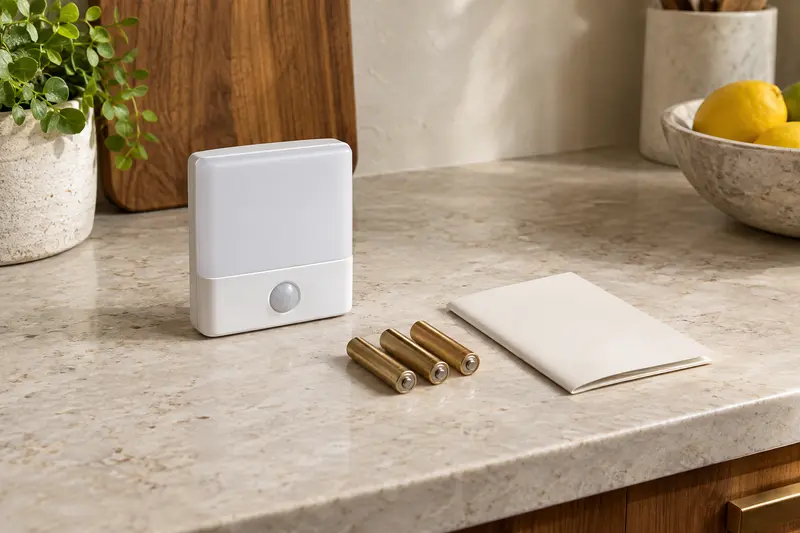
Separate the number of batteries required from the pack size offered by a seller. In a hypothetical order, a lamp needs three cells and the compatible batteries are offered in packs of four. One pack supplies the required three and leaves one spare; it does not supply two complete three-cell sets. The spare is not a reason to buy another lamp. Use the actual instructions to identify battery type, compatibility and storage requirements, then record the required quantity and the pack quantity separately. The calculation helps define the order without claiming how long any batteries will last.
If considering rechargeable cells, list the complete charging arrangement as a separate ownership question. Ask which cells the exact lamp permits and whether the household has a compatible charger used under its own instructions. Having another device with the same-looking batteries is not enough to settle that. One buyer already has the appropriate documented equipment; another would need additional items and a practical charging routine. Compare those actual arrangements without treating a rechargeable label as a guaranteed saving or specifying an unsupported charging method.
Ask where the care instructions and exact part information will be kept. A household may prefer a printed page rather than a code on discarded packaging. Identify who can obtain the appropriate replacement or contact the supplier if operation changes. Keep the model and local support route privately with the receipt. This small organizational step can make maintenance clearer without promising a service interval or battery lifespan. If the unit becomes unreliable or the arrangement no longer serves the task, seek clarification or review the complete lighting plan instead of adding another identical device to conceal the unanswered problem.
Treat sensor timing as a buying criterion
Write the required purpose and duration before comparing sensor products. A light that switches off after a fixed interval can behave differently from one with an adjustable timer or another sensing arrangement. Ask the maker how the exact device activates, what conditions it needs and how it behaves during an ordinary pause. Do not assume all products described as motion lights use the same detection method, cover the same area or remain on while the user needs illumination.
The MOLGAN page supplies a specific ten-second shut-off and darkness-only activation description for that UK item. These are limitations to compare, not a claim that ten seconds is suitable for the reader's route. Ask about the complete function under the actual instructions and avoid transferring the statement to a similarly named product. The manufacturer's output figure and design description are not independent measurements by this publisher. A product photograph of a glowing passage does not show every approach or interruption that matters to the household.
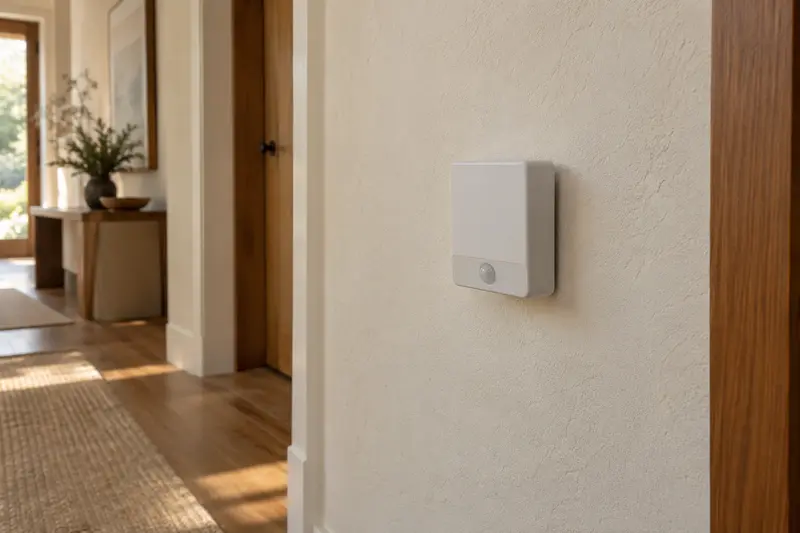
For a hypothetical hallway task, the household expects to pause at a cupboard while using the route. A fixed brief duration may introduce another question, depending on the exact sensor behaviour and permitted placement. Ask the maker or appropriate provider rather than selecting a multipack to compensate automatically. Another buyer only needs a specific supplementary indication on an approach already served by adequate lighting. The comparison is different because the intended task is different, not because one user belongs to a different marketing age group.
Read activation conditions as well as elapsed time. A hypothetical buyer wants a small lamp to illuminate a cupboard approach while the main hallway lights are already on. The UK MOLGAN page's darkness-only activation raises a compatibility question for that purpose. Ask the maker about the intended conditions instead of assuming motion alone makes the lamp illuminate whenever somebody approaches. A bright-room photograph or an unlit lamp in daylight is not evidence of a fault or successful activation. Keep the existing adequate lighting in the plan; do not switch it off to make an accessory's sensor appear useful.
Distinguish housing dimensions from detection and illumination information. A product's width can help describe how much wall space its casing occupies; it does not tell you how far or from which direction the sensor detects movement. A general output description also does not identify every surface illuminated in your hallway. Ask for the relevant range, orientation, output and behaviour during a stationary pause where these matter to the task. In a comparison, label each field precisely instead of putting a housing dimension in a range column or treating an attractive photo as a measurement. An unanswered specification is a useful question to send to the maker.
Record adjustable and fixed functions separately. A retailer may advertise customizable lighting while the particular variant has no timer adjustment. Ask which controls are supplied, how they are operated and whether they are understandable for the intended user. Leave missing specifications blank in the worksheet until clarified. Do not calculate a safety score from activation distance, output and duration, or claim a lamp prevents falls. The useful question is whether the product's documented function addresses the actual supplementary task within a suitable complete lighting arrangement.
Check glare and the complete approach
Discuss placement with the actual instructions and the whole approach. The lamp, bracket and any power equipment occupy space even if the illuminated area looks attractive. Ask about permitted mounting surfaces, environmental conditions and how the device is accessed for care. Keep it clear of the needed route under the appropriate plan. A product labelled easy to install still needs the correct mounting arrangement; adhesive or a supplied fitting is not universal approval for every wall surface.
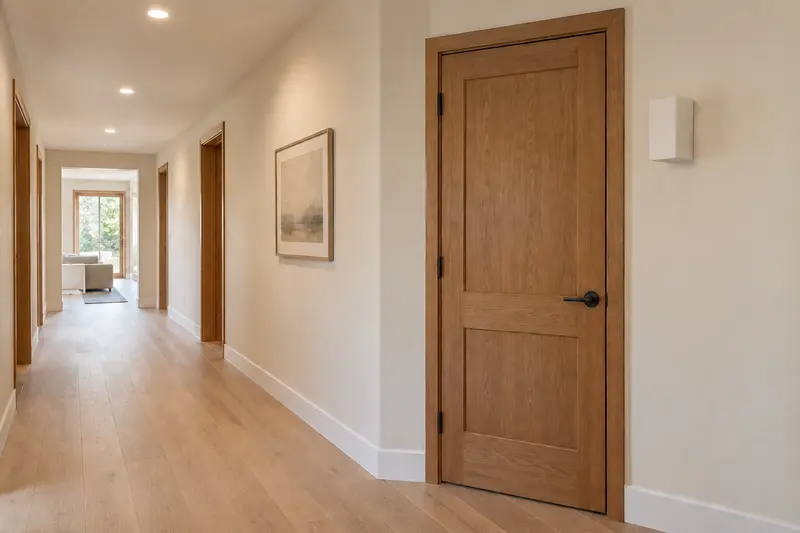
Glare and visibility are questions for the actual setting rather than a universal position stated by this guide. An eye-catching glow in a lifestyle photograph may not reveal the relevant surfaces or switches for the household. Describe where the light is intended to help and ask for suitable advice where the layout is uncertain. Do not use a dark staircase as an experimental product test. A supported check of an appropriately installed arrangement should follow the relevant instructions and assistance needs.
For a hypothetical entry, the proposed light is hidden by an open door on one approach. Adding an identical lamp farther along the passage may not answer the initial switch-location task. Revisit the placement and complete route with the provider. In another case, the unit is visible but its maintenance access is poor. That belongs in the ownership record before purchase. The examples do not prescribe where a reader should put a lamp; they show which assumptions a styled photograph can leave out.
Keep privacy in the planning images. Photograph only what is needed for the private supplier discussion, avoiding people, addresses and personal documents. Label a sketch with a simple reference instead of exposing identifying information. This website has not inspected the room or confirmed a safe installation. The guide's practical role is to help the household seek a coherent lighting answer and avoid buying extra units whose placement, power or maintenance remains unexplained.
For a plug-in candidate, include the plug body in the placement enquiry. In a hypothetical hallway, the socket location seems convenient, but the proposed unit's housing would occupy space beside another socket that the household uses. Ask the relevant provider to confirm the complete product and socket arrangement, including access to nearby controls and the walking route. Compare the actual casing and permitted orientation rather than only the light-emitting face. Do not solve an unresolved location by inventing an adapter or trailing extension arrangement. A different properly specified device or position may be the more coherent option.
Discuss the finish as well as the mounting method before anything is fixed. A hypothetical household likes an adhesive option but also needs to preserve a decorated wall. Ask which surfaces the maker permits, what its removal instructions say and who will address any necessary making-good work. Where another person is responsible for the property or finish, involve them in that discussion before installation. This does not assert a particular permission rule or promise damage-free removal. It puts the proposed attachment and its later removal in the same decision, rather than treating a simple-looking fitting as a temporary mark-free solution.
Review the arrangement when furniture, doors or ordinary use changes. A once-understood supplementary purpose can be affected by a new obstruction or another lamp. Ask the relevant provider about the changed question instead of assuming the previous placement remains suitable indefinitely.
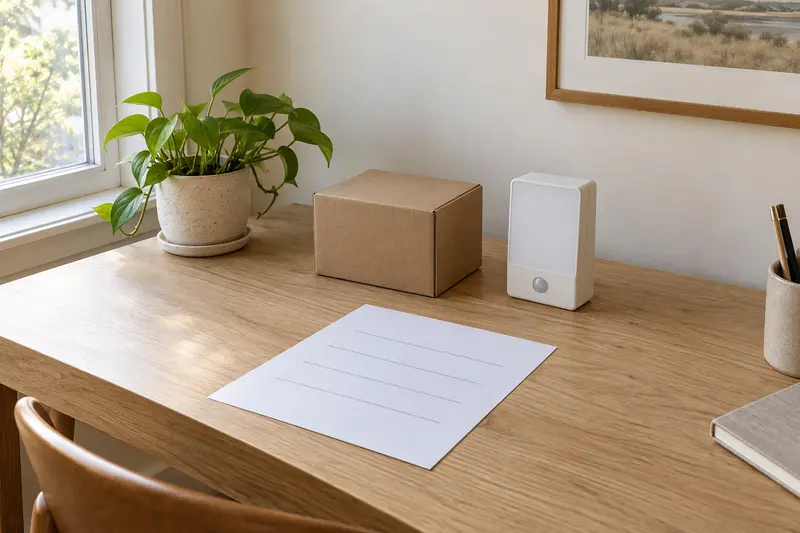
Buy one useful function before a bundle
Use the route-light worksheet to compare no purchase, one correctly specified supplementary unit and another appropriate arrangement. For each option, record the task, duration question, power source, mounting, maintenance and unresolved information. Keep the source and exact variant beside the answer. A promotional multipack belongs in the comparison only if the additional units each have a purpose. A low per-unit figure does not establish that the household needs several devices or that they solve different rooms in the same way.
For a hypothetical final shortlist, the existing main lighting serves the route but one supplementary task remains. The buyer compares a single documented sensor unit with an option that needs a different power or mounting arrangement. They ask about the fixed timing and maintenance before deciding. If the existing switches and lighting already meet the task, they buy nothing. If the wider stair lighting is inadequate, they seek appropriate review instead of treating the accessory as a complete replacement. Each result follows the actual requirement rather than a sales target.
Check the current selected variant and order scope at checkout. Ask which parts are included, which need separate purchase and what inspection or return conditions apply. Do not assume an installed device has the same change-of-mind terms as unopened equipment. Statutory rights and voluntary policies are separate questions for the relevant transaction and jurisdiction. Keep the instructions and receipt privately and follow the maker's care requirements after appropriate installation. This guide does not report a live price or stock promise.
If buying for someone else's home, make the task the starting point for the gift or assistance. In a hypothetical family, a relative has found a decorative multipack, but the intended user only wants help finding one hallway switch and already has suitable main lighting. Ask about that purpose and the maintenance arrangement before ordering. A choice that suits the purchaser's taste may introduce batteries, mounts or controls the recipient did not want. Share the relevant model information and keep the recipient's preferences visible. One agreed item, help arranging an appropriate repair or no purchase can each be more useful than an unrequested bundle.
On delivery, compare the received item with the saved order before fixing it in place, using the seller's permitted inspection process. Check the product identifier, power requirement and included parts against the exact variant ordered. A hypothetical parcel contains a similarly named light with a different battery requirement; the buyer asks the seller to resolve that difference rather than adapting the shopping plan around it. Keep the order confirmation, relevant offer and instructions together for the enquiry. Do not discard packaging needed for an applicable return process before that discrepancy is understood. This is a product-identification check, not an illumination or home-safety test.
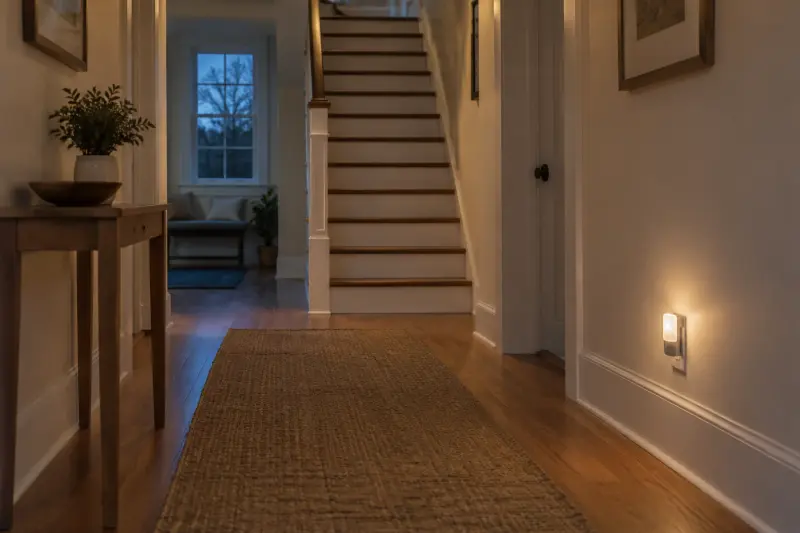
Use a modest sensor light for a defined convenience task, without expecting it to prevent falls. This publisher has not tested illumination or inspected the home. Keep the agreed purpose and maintenance limits with the order. A repair, appropriate advice or no purchase remains reasonable when the wider lighting question is unresolved.
MAKE THE SPEND MEANINGFUL
Before adding to the basket.
- Use existing working lighting where it meets the task.
- Buy only the units required for a confirmed placement plan; do not buy a multipack solely because its unit price looks lower.
In brief
Questions worth answering
Can a small motion light replace complete stair lighting?
Do not assume that. Treat it as a documented lighting option for a particular task; compare its coverage, triggering and placement with the whole route and existing lighting.
What should I check before ordering a multipack?
Count the actual light locations and confirm included units, battery type, mounting method and replacement access. Match the exact pack listing instead of extrapolating from one product photo.
How this guide was prepared
AI-assisted editorial research, checked against the linked primary sources. Product testing and a credentialed individual review are not claimed.
source-checked editorial; no hands-on testing or expert suitability assessment claimed
How we use sources and AI assistance ↗Sources & fact checks
The guide separates sourced facts from editorial questions and examples. We have not claimed hands-on product testing. How we use sources and AI assistance.
- National Institute on Aging: room-by-room home safety ↗
- IKEA UK: MOLGAN battery-operated motion light ↗
Found an error or an outdated detail? Contact the editorial team.