
In brief
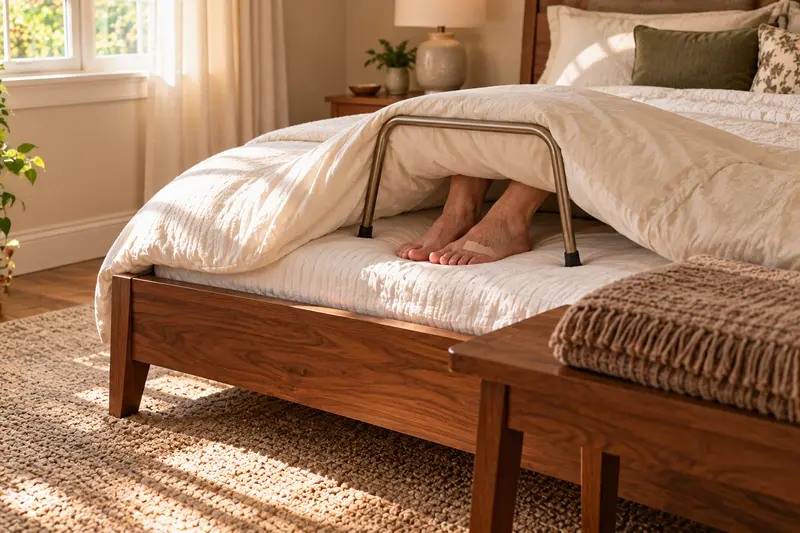
A blanket lifter for feet is a frame that tucks under the end of the mattress and holds the covers up, so sheets do not press on sore toes, a gouty joint or a healing ankle. Check that its height clears the feet with room to spare and that it fits your bed. After surgery, ask the ward or nurse first.
Shortlisted for this decision
Affiliate-
Shortlisted
Vive Blanket Lifter
For keeping covers off sore feet
A steel lifter with an extendable rail and two clips that fits under the mattress or fixes to the floor, per Vive.
Check price on AmazonCheck first: Ask Vive whether the 26 to 34 in height is measured from the floor or the mattress.
Affiliate links: we may earn a commission from qualifying purchases at no extra cost to you. Prices are shown only on Amazon. Amazon.com (US listing). See the full comparison ↓
Documented options
Blanket lifter for feet: options compared
Options based on manufacturer documentation. Retailer links are affiliate links: we may earn a commission from qualifying purchases.
Affiliate retailer links
-
Vive Blanket Lifter for Feet
Exact variant: Adjustable, 26-34 in
View product details on Amazon — United States
IN THIS GUIDE
Who a blanket lifter for feet helps
Some nights the lightest sheet feels heavy. The NHS advice for a gout attack says to try to keep bedclothes off the affected joint at night, and that is exactly what a blanket lifter does. Hospitals call the same idea a bed cradle.
Say your mother is home after bunion surgery. Every time she turns, the duvet drags across her foot and wakes her. A lifter at the end of the bed makes a small tent, so the covers keep her warm without touching the foot.
Performance Health, a UK supplier of bed cradles, describes them for people with sensitive or damaged skin, limited movement in the legs, or sores, and for some people at risk of pressure ulcers.
- Gout or other painful joints in the feet and ankles
- Recovery after foot, ankle or toe surgery
- Sensitive skin on the feet, for example with neuropathy
- People who spend long hours in bed and find the covers press down
- Partners who want to share a duvet without disturbing a sore foot
What to measure on the bed first
Most lifters slide a flat base or bar under the mattress at the foot end, and the weight of the mattress holds it in place. So the bed matters as much as the lifter. A thin mattress on a slatted frame behaves differently from a thick mattress on a divan.
Measure the height you need, too. Lie in the usual sleeping position, with the feet in their normal place, and ask someone to measure from the mattress to just above the highest point of the feet or a bulky dressing. Then add a hand's width for turning.
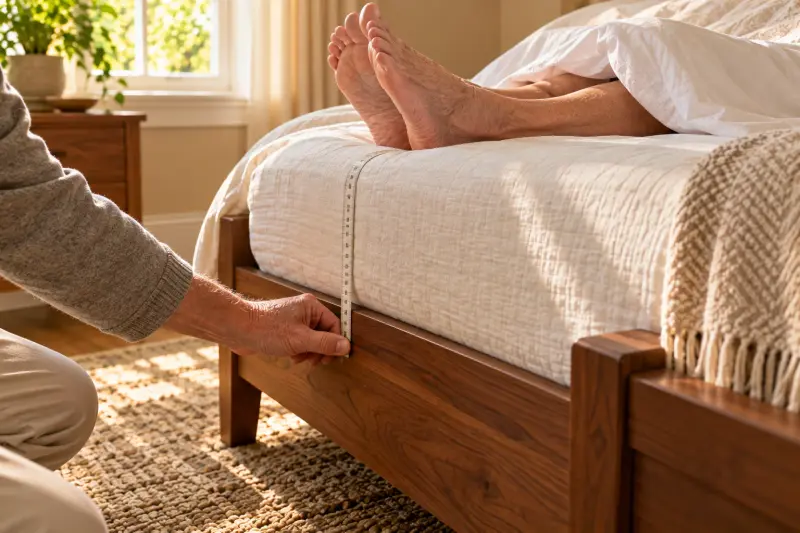
Vive gives its lifter's adjustable height as 26 to 34 in (66 to 86 cm) and says it can be fixed to the floor for lower beds. The page does not say where that height is measured from, so ask Vive: "Is the 26 to 34 inch range measured from the floor or from the top of the mattress?"
- Height from mattress top to just above the feet, plus room to turn
- Mattress height from the floor
- Mattress type: standard, memory foam or air mattress
- Bed base: slats, divan, adjustable base or hospital bed
- Clear floor space at the end of the bed for a floor-standing lifter
How the Vive lifter compares with a hospital-style cradle
The product here is the Vive Blanket Lifter, verified on Amazon.com in the US. To put its numbers in context, the facts below sit next to the adjustable bed cradle that Performance Health lists for hospitals, care homes and home use in the UK.
The main difference is shape. The Vive lifter is a single extendable rail with two clips, while the hospital-style cradle has a wide base under the mattress and a frame over the legs. Either way, read the dimensions against your own bed.
- Vive Blanket Lifter: steel frame, height adjustable from 26 to 34 in (66 to 86 cm), per Vive
- Vive: one extendable rail and two blanket clips; fits under the mattress or fixes to the floor
- Vive dimensions listed as 17 x 13.5 in (43 x 34 cm), without saying which way
- Performance Health adjustable cradle: 18 to 27 in (46 to 69 cm) tall on a 14 x 28 in (36 x 71 cm) base
- Performance Health flags natural rubber latex on its listing; Vive does not mention latex
Setting it up and making the bed
The Canadian Red Cross instructions are a good model. Slide the base between the bed base and the mattress at the foot of the bed, make sure no part of the cradle touches the person, and set the same height on both sides.
Then tighten every screw, or check that spring buttons have popped fully out of their holes, before anyone gets into bed. Lay the top covers so they reach the shoulders, and drape the lower end over the frame so it hangs clear of the feet.
Imagine your father makes his own bed. A light blanket over the frame, with a second one over the shoulders, keeps him warm without a heavy weight at the end. Clip the covers if they tend to slide off.
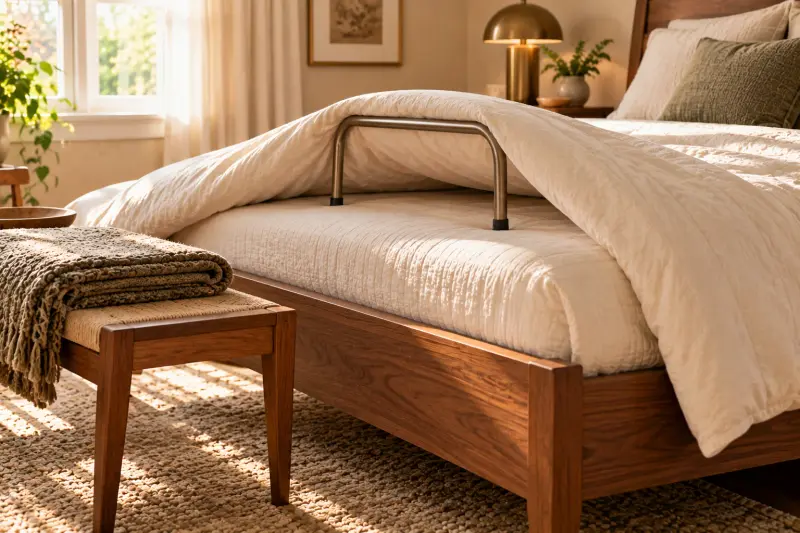
- Fit the lifter with the bed empty, not with someone lying in it
- Tighten all screws or check buttons before each night
- Use lighter layers over the frame, warmer layers higher up
- Clean with detergent and water and dry well, per the Red Cross
- Avoid scouring pads and solvents such as acetone
When to ask a nurse or occupational therapist
A lifter takes the weight of the bedding off, but the heels still rest on the mattress. Heel and pressure care is a clinical matter, so if your relative spends most of the day in bed, a nurse or occupational therapist should look at the whole setup.
After surgery, the ward often has its own advice about raising the leg and keeping a dressing clear. Before buying, ask: "Should we use a bed cradle at home, and how high should it be?" The Red Cross also says to use a cradle only as your healthcare provider directs.
With gout, the NHS says to get urgent advice if the pain keeps getting worse, or comes with a high temperature, shivers or feeling sick. That can mean an infection in the joint.
- Red, broken or blistered skin on the heels or toes
- A new wound or dressing on the foot
- Pain that keeps getting worse, or a fever with a hot, swollen joint
- Someone who cannot move their legs or feel their feet well
- A hospital bed or air mattress, where the fit needs checking
Common mistakes with a bed cradle
Most problems come from fit, not from the lifter itself. A frame that is too low still lets the covers rest on the toes, and one placed too far up the bed can knock the shins when someone turns.
Keep the frame in mind at night, too. A floor-standing lifter can catch a foot on the way to the bathroom, so leave a clear route and a light within reach.
- Setting the height for lying still, not for turning over
- Leaving screws loose after adjusting
- Piling heavy blankets on top so the frame sags
- Forgetting the floor-standing feet on a night walk
- Using it instead of asking about skin or heel care
BEFORE YOU DECIDE
Blanket lifter for feet: buying checklist
These checks organize the decision.
MAKE THE SPEND MEANINGFUL
Blanket lifter for feet: low-cost alternatives
- Ask the hospital ward, community nurse or occupational therapist whether a cradle can be lent
- A lighter duvet or loose blanket tucked in at the sides, not at the foot
- Untucking the sheet at the foot end so it can lift freely
In brief
Blanket lifter for feet: questions answered
What is a bed cradle used for?
A bed cradle, or blanket lifter, is a frame at the foot of the bed that keeps sheets and blankets off the feet and lower legs. People use one with gout, after foot or ankle surgery, with sensitive skin, or when they spend long hours in bed. It holds the covers up, so they stay warm without pressing on a sore spot.
Does a blanket lifter help with gout?
It can make nights more bearable. The NHS suggests trying to keep bedclothes off the affected joint at night during a gout attack, and a lifter does that without leaving the foot cold. It does not treat gout. If the pain keeps getting worse, or comes with a fever or feeling sick, get urgent medical advice.
Will a blanket lifter fit my bed?
Most slide under the end of the mattress, so they suit many ordinary beds, and some can also stand on the floor. Check the height range, how the base sits on your bed frame, and whether a heavy mattress or an air mattress changes the fit. On a hospital or adjustable bed, ask the supplier or nurse before fitting one.
Does a bed cradle protect the heels from pressure sores?
Not on its own. A cradle lifts the weight of the bedding, but the heels still rest on the mattress. Performance Health describes cradles as one aid for people at risk of pressure ulcers, alongside proper care. If skin on the heels or toes looks red or broken, ask a nurse to check it and advise on positioning.
How this guide was prepared
AI-assisted editorial research, checked against the linked primary sources.
Written with AI assistance from the sources listed below and checked against them. We have not tested these products in person.
How we use sources and AI assistance ↗Sources & fact checks
The guide separates sourced facts from editorial questions and examples. How we use sources and AI assistance.
- NHS: gout treatment and self-care during an attack ↗
- Performance Health UK: bed cradles, what they do and how they fit ↗
- Vive Health: Blanket Lifter product page (height range, steel frame, clips, fitting) ↗
- Canadian Red Cross: instructions for care and use of a bed cradle ↗
Found an error or an outdated detail? Contact the editorial team.