
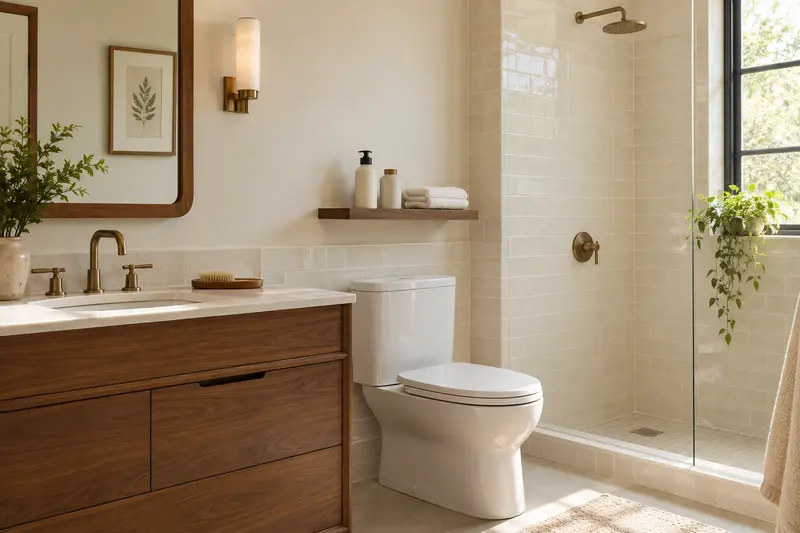
In brief
Start by removing what you do not use and placing essential items within an appropriate reach. Then compare organizer size, mounting surface, drainage and cleaning. A shower caddy is storage, not a grab bar. Suction products may require smooth surfaces and may not work on textured or porous walls. Choose a documented mounting arrangement for the actual bathroom.
Documented options
A clearer comparison.
Research options based on manufacturer documentation. These are not results of hands-on testing. Manufacturer links are informational; no commission relationship is currently active.
IN THIS GUIDE
Make a small inventory before shopping
Take the inventory from one ordinary routine. List the items used at that time, then separate refills, occasional products and decorative objects. An organizer intended to hold a few shower essentials should not become a storage location for everything in the bathroom. The useful first action may be removing duplicates or relocating spares. Ask the user which object is difficult to find or place before choosing a larger basket.
Group items by purpose rather than package appearance. A washing aid, soap container and handshower belong to different questions, while a private medicine or device may have storage instructions that need a different location. Do not move it into the shower merely because a new compartment is empty. Keep sensitive labels and personal items out of public planning photographs. The inventory can be a simple private list that describes the task without collecting unnecessary information.
For a hypothetical bathroom, the existing shelf is crowded with several spare bottles, but only two are used during an ordinary shower. Clearing the spares may restore a useful arrangement with no purchase. Another room has no suitable existing place for a frequently used small object. One documented accessory cup may deserve comparison. A third household has an unresolved reach or support question requiring appropriate assessment. All three can begin from the same inventory method without receiving the same product recommendation.
Consider the shape and ordinary handling of the objects. A tall bottle, a small brush and a detachable washing head occupy space differently. Ask what the organizer is intended to hold and which stated limits apply. An attractive empty basket does not demonstrate a full routine. Record what must be reached and what can remain stored elsewhere, so that the product shortlist is based on use rather than an impulse to buy a matching bathroom collection. Keep a note of the ordinary container size too. A replacement bottle can be taller or differently shaped even when it contains the same type of product. Ask whether that changes the actual contents or handling question under the organizer instructions, instead of assuming that a compartment remains suitable because its previous bottle fitted. The list should describe current use rather than become a permanent capacity claim.
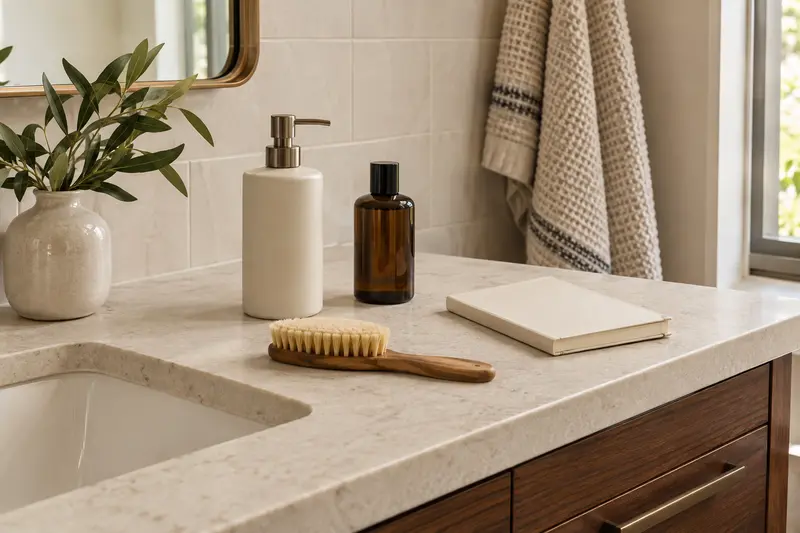
A focused inventory also helps with later changes. If the household adds another essential item, review its location and the exact organizer's requirements rather than filling the remaining space automatically. More capacity is useful only when it serves an explained task and a documented arrangement.
Distinguish shopping quantities from items actually kept in the organizer. In a hypothetical household, a shampoo arrives as a three-pack, but only one bottle is in use; the other two belong in suitable spare storage under their own requirements. Another household shares one soap but uses two different shampoos. Its item count is different even with the same number of users. Write the ordinary in-use contents first, then compare the actual organizer dimensions and limits. A multipack offer is not a reason to increase wet-area storage. Keep any identifying labels private, and use simple labels for everyday identification only where they help the user.
Plan storage around the actual position
Describe the user's position and the surrounding equipment to the appropriate adviser where reach is uncertain. A shelf that looks convenient from the doorway can be different from the position used during bathing. The guide does not prescribe a universal mounting height, safe reach distance or transfer arrangement. Keep those individual questions separate from the ordinary purchase of storage. A modest caddy should not be presented as a solution to a wider bathing need.
Draw the proposed place alongside the controls, door, hose and required support equipment. Ask about any interaction before buying. An organizer's top, hanging item or mounting mechanism can occupy space beyond its main container. A door can move into that space; a hose can take a different path during use. The relevant provider should review the actual arrangement where necessary. Do not ask someone to lean or reach through an uncertain setup to prove that the purchase will fit.
For a hypothetical seated bathing routine, the household initially selects a basket because it is visually centred on the wall. The user finds that the position does not serve the intended item access. The next conversation concerns an appropriately assessed position or another storage arrangement, not simply a bigger basket. Another household wants a cup beside an existing shelf and needs to confirm that it does not obstruct the actual controls. Appearance becomes a preference after the practical questions are answered.
Keep ordinary storage separate from support. A shower cup, shelf or towel rail has its own intended use and should not replace a properly specified support arrangement. A product targeted at bathroom convenience does not establish that it can bear body weight. The NIA home-safety reference concerns wider bathroom measures; the caddy is a different function. This publisher has not assessed the room or person. The buying guide helps the reader recognize which question belongs with professional advice and which can be answered by product specifications.

If existing suitable storage serves the routine, retain it after clearing unnecessary items. A no-purchase result is often the most proportionate answer to clutter. If a new piece is needed, keep its purpose specific enough to explain in one sentence before selecting a finish.
Identify what the proposed mounting location actually is: a wall, shower rail, enclosure edge or existing shelf. These are different arrangements, even when each appears close to the user. For a hypothetical shortlist, one accessory attaches to a wall while another relies on a rail fitting. The second does not become compatible merely because its container has similar dimensions. Ask the responsible makers about the exact attachment and whether it changes access to the existing fitting. Keep an unresolved attachment question separate from a preference about basket height. Do not alter a rail, hang a new load from support equipment or treat a no-drill description as permission.
Match the mounting system to the surface
Identify the actual mounting surface before comparing attachment types. Smooth glazed tile, textured tile, glass, porous stone and other materials are not interchangeable descriptions. Ask the organizer maker which surfaces it permits and which it excludes. A no-drill label can describe a method without proving fit on every wall. Keep the exact product and instructions beside the surface record, especially when a bathroom's appearance makes the material difficult to identify.
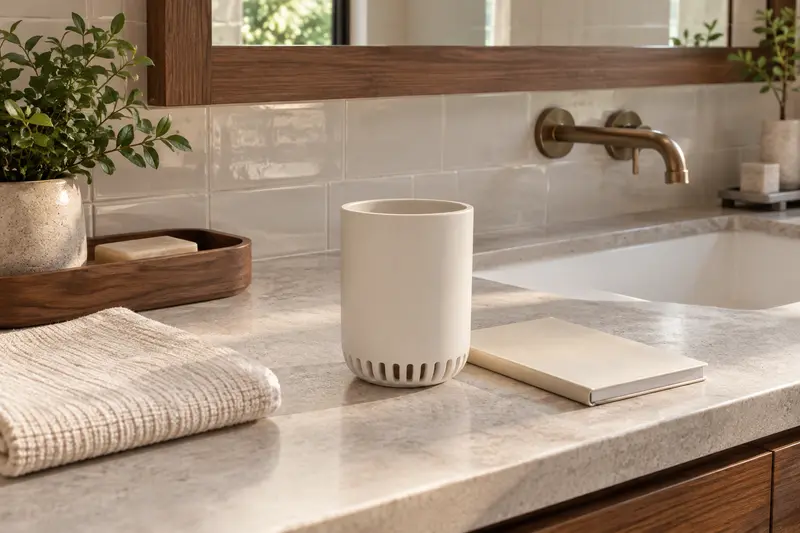
OXO's current StrongHold accessory cup page specifies smooth glazed surfaces, mirrors or glass and advises against textured or porous surfaces, including some stone, acrylic and metal. Those limitations belong to the named cup. They should not be transferred into a claim that every suction accessory works on permitted-looking surfaces, or that the product fits a reader's wall without checking. The ventilated-base description is a design feature, not evidence of hygiene performance or a professional installation assessment.
For a hypothetical shower, the wall has textured stone-like tiles and the buyer likes the cup's lever arrangement. The attractive control does not answer the surface exclusion. The buyer asks about the actual material and another documented mounting option rather than trying extra adhesive to preserve the choice. A different bathroom may have a suitable stated surface but an unresolved placement or load question. Passing one specification does not complete the entire storage decision.
For permanent fixings, obtain appropriate advice about the actual construction, installation and any required property permission. Do not drill into a wet-area wall, modify a mounting part or improvise a support from a generic guide. A supplied kit is not universal evidence that the site is suitable. Ask who assesses and installs the proposed arrangement and what the maker's instructions require. Keep the installation scope separate from the product payment.
Record stated load information where it is supplied and ask about missing information. Filled containers need consideration under the actual instructions. Do not invent a load capacity from a product's appearance or borrow one from another size. An unanswered requirement is a reason to contact the maker before using or buying the piece.
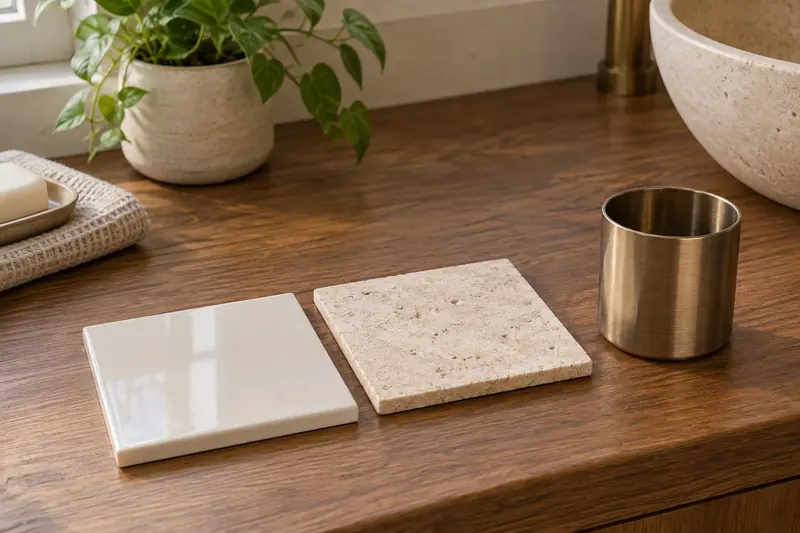
Look at the proposed contact area, rather than naming the entire wall as tile. A hypothetical shower has smooth glazed tile panels separated by joints; the preferred position would place an attachment across a joint. That is a specific question for the accessory maker about the actual contact footprint and permitted mounting conditions, not proof of compatibility from the broad material description. Another proposed spot lies wholly on one panel but has a different finish. Record both possibilities and request an answer before purchasing. Do not fill a gap, add glue or substitute a mounting pad to turn an unanswered condition into an apparent fit.
Compare cleaning and everyday access
Cleaning is part of the routine that the organizer is meant to improve. Ask how the container is removed, which parts are cleaned, what method the maker permits and how it is returned to place. A product can be convenient to fill while difficult to maintain. A removable design or drainage opening deserves comparison through the exact instructions rather than a universal easy-clean label. Keep care separate from unsupported claims about preventing mould or other health outcomes.
Review access to the object as well as access to the organizer. A bottle can be visible yet difficult to lift if it is crowded by taller items. A small brush can disappear at the bottom of a deep container. Record which everyday object creates the remaining task. Do not respond to each difficulty by adding another accessory immediately. A different arrangement of a few essentials or suitable existing storage may answer it without increasing the number of pieces to fit and clean.
For a hypothetical household, the new basket looks spacious but has several small catches that the user finds difficult to manage during permitted inspection. The next question is whether appropriate help or another documented design suits the routine. Another user can manage the catches but wants an easier place to put the removable part during cleaning. These are different care questions. More storage volume or a premium finish does not resolve either without a practical explanation.
Keep items requiring dry or other specified storage out of a wet arrangement unless their own instructions permit it. An organizer should serve the intended bathing objects, not become a universal shelf for devices and private medicines. Follow both the accessory's care instructions and the relevant items' requirements. The public guide need not collect personal details to explain that distinction. Use a private task record and contact the relevant maker where the complete arrangement is unclear.
Review the care record if the mounting surface, product or normal contents change. A previously useful setup can need another question after new bottles or a different enclosure are introduced. Keep the actual instructions available rather than assume a familiar-looking accessory always has the same care method.
Editorial illustration
Ask whether a replaceable mounting or cleaning component is available for the exact variant, and what the maker permits when it needs replacement. In a hypothetical comparison, one accessory has a separately documented replacement part while another requires an enquiry before anything can be ordered. That does not establish which will last longer; it clarifies the maintenance route. Record the part identity and source rather than buying a universal-looking pad. If the component cannot be identified, leave that question open. A modest initial purchase can still be inconvenient if maintaining it would require an undocumented substitution or replacing more pieces than the household expected.
Use a place-purpose-surface card
The place-purpose-surface card connects the useful items, user position, proposed location, permitted surface and care routine. Add the exact organizer dimensions, mounting requirements and stated limits. Label each answer with its source or status. A surface answer, a reach assessment and a subjective finish preference are different evidence types. Do not create a score that pretends to establish bathroom safety or personal suitability from a few shopping fields.
For a hypothetical final choice, the household compares a cleared existing shelf, one documented accessory cup and a larger matching collection. If the shelf already meets the task under the relevant arrangement, nothing needs buying. If the small cup answers a remaining requirement after the surface and placement questions are resolved, it can be considered on its own. The larger collection should have additional explained purposes before it belongs in the basket. A coordinated appearance is a preference, not proof of greater usefulness.
Check the exact selected variant, current package contents and relevant local offer before ordering. Read inspection, return and mounting terms for the actual transaction. A general returns headline should not be assumed to answer what happens after a piece has been fitted or used. Statutory rights and voluntary policies are separate regional questions. Keep the receipt and instructions privately. This article does not promise current stock, quote a live price or claim an approved affiliate relationship for the manufacturer reference.
After permitted installation, follow the maker's use and care requirements and seek the appropriate source if a fitting or condition is uncertain. Do not turn a storage accessory into a grab handle or modify it to support an unapproved load. Revisit the arrangement if the user's needs change and obtain professional advice where appropriate. A considered purchase can be one modest piece, a better use of existing storage or another conversation before spending.
The useful outcome is a familiar routine with a clearer object arrangement and documented limitations. The guide has not inspected the bathroom, tested suction performance or established that a particular product improves safety. Keep the purchase proportionate to the actual task, with the freedom to choose fewer pieces or no new product when that serves the household better.
Use the delivery check to close the loop between the shortlist and the actual item. Compare the supplied variant, component list and instructions with the saved offer before mounting. In a hypothetical two-piece package, one component intended for the chosen location is missing; the second component should not be treated as an interchangeable spare without confirmation. Contact the seller with the item identity and factual discrepancy, and retain the unused pieces under the applicable inspection terms. The card can then record resolved, returned or awaiting clarification. An attractive finished photograph is not a reason to install first and ask about a missing part afterwards. Record whether the seller requires a photograph, packaging retention or another step before returning an incomplete delivery. Identify who handles the enquiry so another household member does not install a questioned component while the response is pending.
MAKE THE SPEND MEANINGFUL
Before adding to the basket.
- Rearrange a suitable existing shelf before buying storage.
- Choose one appropriately sized organizer for the essential items instead of filling the room with a matching set.
In brief
Questions worth answering
Is a bathroom organizer also a support handle?
An ordinary organizer is for storage. Do not treat it as a grab bar or transfer aid; those are separate products and individual installation questions.
How do I compare two shower organizers?
Begin with the objects you need, their reachable position, the documented mounting surface and cleaning access. Compare the complete footprint and attachment instructions rather than shelf count alone.
How this guide was prepared
AI-assisted editorial research, checked against the linked primary sources. Product testing and a credentialed individual review are not claimed.
source-checked editorial; no hands-on testing or expert suitability assessment claimed
How we use sources and AI assistance ↗Sources & fact checks
The guide separates sourced facts from editorial questions and examples. We have not claimed hands-on product testing. How we use sources and AI assistance.
- National Institute on Aging: room-by-room home safety ↗
- OXO: StrongHold shower cup and surface limitations ↗
Found an error or an outdated detail? Contact the editorial team.