

In brief
Start with the journey, then compare the equipment. A useful stairlift shortlist explains how you will get on, travel, turn and get off at both landings, while everyone else can still use the stairs. Collect a professional survey and a written scope before comparing prices. A model that fits the staircase can still be awkward for the person using it.
Documented options
A clearer comparison.
Research options based on manufacturer documentation. These are not results of hands-on testing. Manufacturer links are informational; no commission relationship is currently active.
For installed equipment, take your measurements and questions to a provider. Ask for an itemised local quote; this site does not currently operate a paid quote referral service.
IN THIS GUIDE
Describe the journey you want to keep
Use one representative day to make the enquiry concrete. Name the destinations, the number of ordinary trips and any activities before and after them. Reaching an upstairs bedroom is a different task from occasionally collecting an object. A person might have equipment or help at each landing that also needs discussion. This is a private journey description, not a health questionnaire for the website. It should help the user explain what matters to them without reducing the decision to their age.
For a hypothetical household, the user wants a regular trip between bedroom and kitchen while another person continues using the staircase. The discussion needs both the user's approach and the shared route. Another household only has an occasional upstairs task and wants to examine alternative arrangements before equipment is ordered. Neither situation can be resolved by a generic best stairlift list. The relevant survey and appropriate personal assessment need to address the actual journey, with no assumption that purchase is the only useful outcome.
Include the actual user in the process through appropriate support. A relative can help with notes and appointments while leaving preferences and personal questions visible. If sitting, turning or transferring needs advice, ask the appropriate professional rather than treating a sales appointment as a clinical evaluation. A retailer explains its documented equipment and installation options; a website has not assessed the person or home. Keep those responsibilities separate so an unresolved individual task is not hidden behind a positive equipment description.
Write essential tasks first and optional preferences underneath. A finish, upgraded upholstery or convenience feature can be a considered choice once the required journey is understood. Do not use a premium package to distract from an unclear landing arrangement. The first useful research result is a concise task brief and a named next contact for any unanswered personal or property question. That can support a better survey before a model shortlist is finalized.
Editorial illustration
Separate the person's trip from the movement of household items. In a hypothetical morning, the user needs to reach the kitchen, while bedding also needs taking downstairs and a walking aid needs to be available at the destination. Put these on separate lines and ask the appropriate people how each task will be addressed. Stannah describes its seat stairlifts as single-user seated transport, rather than wheelchair or multiple-rider transport. Do not quietly turn a basket, another passenger or an aid into part of the chair journey. A proposed seated journey can be useful while the laundry or equipment question still requires its own answer.
Keep ordinary travel and emergency planning separate too. The posted US Siena 600 user guide says that model must not be relied on for escape in a fire. Ask the appropriate local professional about the household's emergency arrangements; buying a stairlift does not settle that question. Record the next contact rather than improvising an evacuation procedure. For a household considering upstairs sleeping, this is a separate planning task alongside the everyday bedroom-to-kitchen journey, not an extra chair feature to select from a brochure.
Retain the brief privately and date relevant changes. A new destination, aid or assistance arrangement can change the original enquiry. Avoid pretending to forecast future health; ask how the proposed equipment and service could be reviewed if circumstances change.
Compare the rail and the landing together
Treat the rail as part of a surveyed route with defined starts, finishes and parking. The broad straight, curved and outdoor categories described by Stannah help frame that conversation, but they do not certify a particular staircase. A measurement at the widest point or a familiar product photograph cannot answer every obstruction. Ask the surveyor to explain the actual proposed drawing and which equipment configuration it represents.
For a hypothetical doorway at the foot of the stairs, the parked chair or rail proposal needs to be discussed alongside normal household traffic. The buyer asks where each component is when folded, in use and parked under the exact instructions. Another staircase has a turn or intermediate landing that needs a specific rail design. A telephone description of curved does not establish final dimensions or installation scope. Keep the survey drawing linked to the quoted model and options so another offer can be compared on the same route.
Published dimensions are useful questions, not a universal fit calculation. Stannah's cited page expressly describes nominal figures for configurations and different staircase types. Do not import a single minimum width as proof that any lift fits a home or that every user has adequate clearance. The surveyor and any appropriate assessment must consider the actual arrangement. A public measuring checklist can identify information to gather without instructing the household to climb or alter a stairway for a sales exercise.
If a hinged or retracting rail is proposed, request its actual operating explanation and supported power-interruption behavior. The name of an option does not settle its role. Ask what is included in the quote, who explains it at handover and which later service questions it introduces. Do not reproduce a generic mechanism procedure or assume an option removes every doorway issue. A responsibility and instruction source should accompany the proposed solution.
Read the labels beside dimensions before comparing numbers. A chair's inside-arm width, its folded depth from the wall and the rail's distance from the wall describe different things on Stannah's dimension page. A hypothetical buyer has copied one figure from a seat diagram and another from a folded-chair diagram into a single column called width. Those figures cannot answer the same question. Ask the surveyor to identify each relevant measurement on the actual proposal, including obstructions such as handrails. Use the same label and unit in both offers; leave a missing value for the provider to explain rather than estimating it from a photograph.
Add charging position to the parking discussion. For the particular optional retractable-rail arrangement in the posted US Siena 600 guide, the manual links the lower-end parking instructions with keeping the rail out of the passage and the chair on charge. Ask the provider to explain how the supplied configuration handles those two needs together. Keep the rail area clear as that manual requires. The decision record should name the correct instruction page, not turn this example into an operating procedure for every retracting rail.
Keep the route drawing private and ask for revisions when an option changes. A showroom chair preference can remain valid while its installed rail or parking arrangement still needs review. Finish choices should be made within a properly defined configuration, with unanswered household-clearance questions left visible.
Use a demonstration to resolve practical questions
Use a supported demonstration to answer named questions under the equipment instructions. Ask the provider to explain the supported sequence: approach, sit, use the belt and controls, stop, swivel where required and get off. The complete sequence matters more than an isolated comfortable seat. Ask which actions are manual or powered, how the actual controls are explained and which supplied options the demonstration includes. The guide does not prescribe a transfer technique or assess anyone's ability. If a relevant task cannot be appropriately reviewed, obtain further advice rather than treating willingness to try as proof of suitability.
For a hypothetical comparison, the demonstration uses a powered swivel but the basic quote does not include that option. The buyer records the difference and asks what the actual ordered sequence would involve. Another model has a folding action the user wants explained again. Their preference is valuable without being turned into an accessibility ranking for every older adult. The demonstration record should identify the exact seat, arms, footrest, controls and options so it is not mistaken for a different package.
Let the user pause or ask for clarification. An appointment is not a test they must pass to justify help. A confident demonstrator does not determine a person's present or future needs. Where appropriate, a professional can consider the actual situation and equipment arrangement. Someone helping can note questions and source pages while keeping technical and personal responsibility with the proper people. A website cannot certify use from a completed task checklist or a video.
Ask how instructions are provided after installation. The household needs the exact current manual, ordinary explanation and local support route, rather than relying only on a remembered showroom sequence. Identify who answers a later question about a control or changed configuration. If an option is substituted, revisit the affected explanation. A similar icon or chair appearance does not guarantee identical behavior across models or generations.
Include calling the chair from the other landing as a separate demonstration question. The posted US Siena 600 guide distinguishes landing calling controls from the arm control used by the seated passenger. Ask which controls belong to the ordered arrangement, where they will be available and who explains their permitted use. A household may understand the seated trip but still not know how the chair returns when it is parked elsewhere. Have the provider resolve that question under the exact instructions, including the manual's requirement to check that nobody else is using the chair before calling it.
Ask for the exact model's rated limit and intended use to be identified in the supplied documentation. The posted US Siena 600 guide specifies one person at a time, belt use and a 350-pound limit for the covered model. That number is not a limit for every straight, curved or outdoor Stannah range, and it is not proof of personal suitability. In a comparison, keep the demonstrated model, the offered configuration and its own document together. If a different chair is later proposed, obtain its information rather than carrying over the earlier limit or explanation.
Avoid buying extra controls before the basic supported arrangement is understood. An approved accessory can have a purpose, but it should address a specific remaining task. More features do not automatically make the lift easier to operate or settle an unresolved personal-assessment question.
Make two quotes comparable
Itemize the complete proposal so two providers are describing comparable work. Separate equipment and rail, installation, necessary electrical tasks, removal and finishing. Add optional controls and upholstery as distinct rows. Ask which preliminary estimate becomes a surveyed quotation and which assumptions are still open. This article does not invent a typical installed price; the provider's actual written scope is the evidence for the order.
A hypothetical Offer A has a smaller headline but omits old-equipment removal and local call-out information. Offer B includes those fields while quoting a different rail option. The buyer first aligns the configuration and scope, then considers current confirmed totals. A missing line should remain unresolved rather than being filled with a guessed figure from another home. A telephone estimate and a home-survey proposal are different evidence and should be labeled accordingly.
For new, reconditioned or rental equipment, ask what exactly is supplied and which parts or services are covered. A reused chair does not establish that every rail or support term is equivalent to a new offer. Rental duration, removal, service and current contractual conditions deserve their own reading. Do not estimate resale value or promise that a used unit can move to any later staircase. The exact equipment and relevant provider answers matter.
Keep warranty, maintenance and local breakdown service separate. A warranty headline does not necessarily describe appointment availability, call-out scope or every component. Ask who handles the claim, which region the service covers and what a proposed paid plan adds. Identify cancellation, deposit and access-related terms for the actual transaction, with applicable local consumer rights distinguished from voluntary policies. Seek appropriate advice if a material classification or exclusion is disputed.
Ask whether the quoted configuration is held subject to another measurement or technical sign-off. If so, record who completes that work and whether the customer sees the revised proposal before committing to a change. An estimate with a drawing attached can still contain an unresolved assumption. Keep a version date on each offer so an earlier seat, rail or service package is not compared against a later total as though nothing changed.
Put installation dependencies beside the appointment window. Ask who confirms any necessary electrical provision, who coordinates removal of existing equipment, and whether the household must arrange another contractor before the installer attends. A hypothetical quote says installation takes place after a separate electrical task, but gives only one date and no named coordinator. The buyer asks for the sequence, responsible contact and conditions for confirming the appointment. This is a scheduling gap, even when the equipment total is clear. Make arrangements for the affected rooms and household routine from the actual agreed schedule, not an assumed same-day completion.
Clarify how a later service request becomes authorized work. Ask whom to contact, what information they need, whether an initial assessment is distinct from a repair, and who confirms any charge before additional work goes ahead. A hypothetical household has a plan name on its quote but cannot tell whether the named local provider or another company handles the enquiry. The useful answer is a contact and a documented process, rather than another broad promise of support. Keep any actual plan exclusions, approval steps and service terms with that answer so someone helping later does not have to reconstruct the original sales conversation.
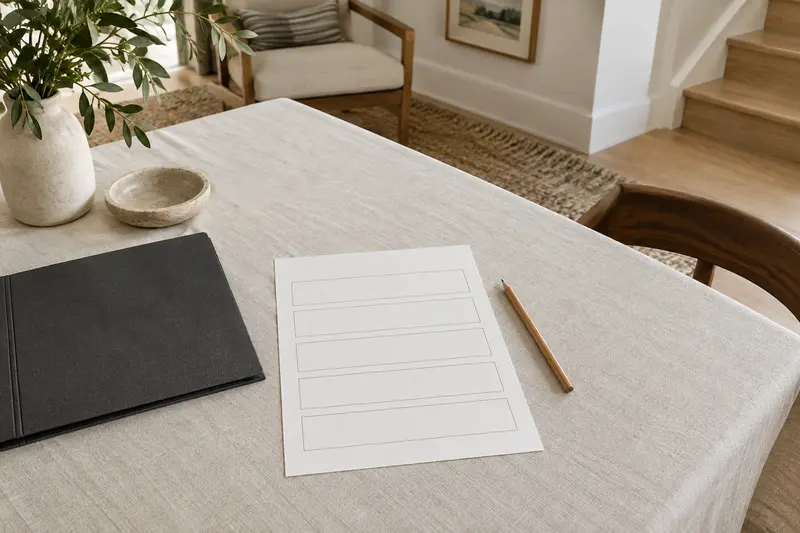
Compare the resolved specification and complete commitment. For financing, read the actual total and full terms, rather than using monthly payments alone.
Build a stairlift decision comparison record
Use the comparison record as a source map: requirement, exact provider answer, supporting document and next question. The five rows connect the route, personal transfer enquiry, controls, household clearance and service. Do not calculate a percentage that appears to certify safety. A lift can have a clear equipment description while an individual task or landing question remains open. Show that distinction instead of allowing several completed rows to hide the missing one.
For a hypothetical final shortlist, the rail survey is complete but the quoted seat option differs from the supported demonstration. The buyer asks for the corrected specification and affected explanation. Another household has resolved ordinary operation but not its local service route. That needs a provider answer before the commitment is understood. A third decides another appropriate home arrangement is worth exploring. These are valid research outcomes without treating a purchase as the only successful end of the guide.
At ordering, identify the seller taking the order, the company installing the equipment and the provider responsible for later service. Ask which contact handles a change, delivery discrepancy or cancellation enquiry. They may be the same organization, but the record should make that clear. A manufacturer resource page explains a range; it is not the household's final order. Keep the current model specification, rail drawing, selected options, service scope and actual transaction terms with the order confirmation. In a hypothetical purchase through a local provider, the buyer saves that provider's offer alongside the manufacturer information, so a family member can find the responsible seller rather than assuming a general brand website contains their particular agreement.
Use the comparison record at handover through the installer's appropriate process. Ask for the supplied configuration, correct instructions and support contacts to be explained against the final order. Record factual differences or unresolved points through the responsible provider rather than improvising an adjustment. If the household arrangement changes later, the record helps identify which questions need review. It is not permanent approval for every new task or assistance need.
Prepare a short support note while the installer or provider can explain it: exact model, the correct manual, the service contact, and the information that contact asks for when something changes. Keep serial details privately. Ask how an observed display message or sound should be reported without interpreting it yourself. The posted US Siena 600 guide directs uncertain users to their supplier and prohibits dismantling the lift. A hypothetical relative helping by telephone can then find the correct contact and describe what was observed, instead of searching a similar-looking model and offering a guessed repair. This record supports a provider conversation; it does not authorize the household to alter mechanisms or resolve a stopped-chair situation alone.
Before adding ordinary accessories, identify the specific remaining purpose. Appropriate lighting or another household item can help a separate task under its own instructions, but is not a substitute for the surveyed lift or personal assessment. Retaining existing suitable equipment and buying no extras can be the informed result. A useful premium experience is clear responsibility, respectful explanation and a configuration chosen for the actual journey.
MAKE THE SPEND MEANINGFUL
Before adding to the basket.
- Ask about professionally supplied reconditioned or rental options where offered; compare coverage rather than assuming equivalent terms.
- Improve lighting and remove clutter as separate home tasks, without treating them as substitutes for needed mobility equipment.
In brief
Questions worth answering
Does a brochure show whether a stairlift fits my stairs?
No. A useful quote needs a survey of your actual stairway, the proposed rail and parking positions, and a demonstration of the intended transfer routine.
What should I compare in written quotes?
Compare the same surveyed scope: exact chair and rail, installation, access changes, warranty, service, call-outs and removal terms. Keep unresolved questions visible rather than comparing only a headline price.
How this guide was prepared
AI-assisted editorial research, checked against the linked primary sources. Product testing and a credentialed individual review are not claimed.
source-checked editorial; no hands-on testing or expert suitability assessment claimed
How we use sources and AI assistance ↗Sources & fact checks
The guide separates sourced facts from editorial questions and examples. We have not claimed hands-on product testing. How we use sources and AI assistance.
- Stannah: posted US Siena 600 user guide, pages 3 and 16 (covered model only) ↗
- Stannah: model-specific stairlift dimensions ↗
- Stannah: straight, curved and outdoor stairlifts ↗
Found an error or an outdated detail? Contact the editorial team.