

In brief
Confirm the exact base and frame combination with both manufacturers. Measure usable internal space and identify support components, drawers and headboard padding. A matching mattress-size label or the phrase zero clearance does not establish compatibility with every frame. Do not remove structural parts without an approved instruction.
IN THIS GUIDE
Describe the frame beyond its outside dimensions
Distinguish dimensions supplied for the bare furniture from observations made with the existing bed assembled. A padded opening, hidden support or drawer may not appear in the advertised outside size. Ask the frame maker which drawing describes the owned model and which information the base provider needs. Keep any photograph private and taken appropriately; the purpose is clarifying construction, not proving structural capacity from appearance.
Ask which part of the proposed purchase is creating the change. A new mattress on an unchanged approved base raises another question from replacing the powered base inside an existing frame. Name what stays and what changes before seeking approval. That helps the providers answer the relevant combination rather than suggesting an unnecessary whole-room replacement. A familiar decorative style cannot substitute for identifying the actual structural furniture.
The frame description should show its internal structure, not only the decorative outline. Record the usable opening, support pieces, ledges and any storage mechanism. Add parts that project into the space, including upholstered padding. A retailer may call the furniture a king or queen frame while leaving its internal construction unspecified. Use the exact model and actual measurements in the enquiry. A matching size name is useful identification, but it does not establish support or moving clearance.
Ask the frame maker which components are structural and what arrangements it permits. A slat that can be lifted out is not automatically optional, and a cross-member hidden beneath the mattress may serve another purpose. Do not dismantle the frame to create an opening based on an assumption. If removal is proposed by a seller, request the exact maker-supported instructions and a description of what remains. The combined setup needs a coherent answer from the relevant providers before it becomes an installation task.
For a hypothetical upholstered bed, the external measurements appear generous but a padded headboard reduces the usable space near the base. The buyer photographs the actual structure privately and asks both suppliers about that projection. Another frame includes drawers whose mechanism occupies space beneath the mattress. The same outside dimensions can therefore describe different compatibility questions. The guide does not prescribe trimming padding or removing storage parts to make a preferred base fit.
Keep the frame's condition and identity visible if it is an older piece. A current product page for a similar-looking version may not describe the owned frame. Ask the maker or an appropriate provider how to identify it and assess the relevant setup. If the identity cannot be established, mark the evidence gap rather than treating the decorative style as sufficient information. This publisher has not inspected the frame or its structural capacity.
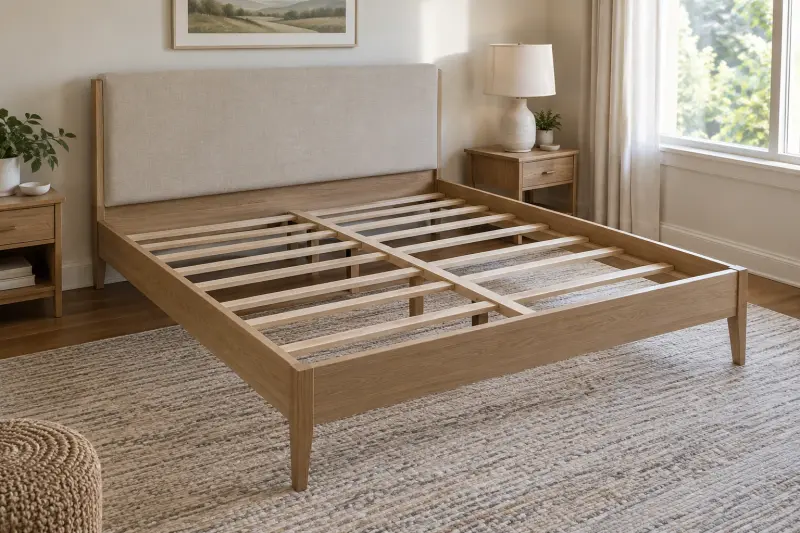
Bring a concise private record to the supplier: exact frame, internal measurements, relevant photographs and intended base. Ask which additional information is needed. Avoid sending personal bedroom or health details beyond what the private enquiry requires. The result should be a clear description of the actual furniture combination, not a public image implying that the website has assessed or approved the room.
Read zero-clearance guidance for the actual base
Compare support wording across the exact manuals before substituting a base. Saatva's cited open-frame arrangement describes removing platform or slat pieces with the base legs on the floor. The cited TEMPUR Ergo manual recommends cross-bed supports for its direct platform arrangement. These are different product instructions, not interchangeable furniture rules. Ask both relevant makers to explain your actual setup; this comparison does not authorize dismantling either frame or powered equipment.
A supplier answer should identify its boundary. If the frame maker confirms the furniture's intended support but has not reviewed the proposed powered base, retain that narrower statement. If the base maker addresses zero clearance but not the actual padded opening, ask the missing question. Two responses can be useful without forming a complete approval. Request a coordinated explanation rather than extending either party's answer beyond the equipment it describes.
Read zero clearance in the context of the exact maker's instructions. It describes a permitted design or setup feature, not universal permission to place a powered base on every platform. Ask which surfaces and support arrangements are approved and whether the base uses its own legs in the proposed frame. Keep the answer tied to the model, version and complete configuration. Another base advertised with the same phrase can have different requirements.
Saatva's current frame guidance is a useful specific example. It distinguishes platform use from an open-frame arrangement, names exclusions and directs owners of other frames to the frame maker. Its page also addresses padded headboards and frames with drawers. Those statements concern the specified equipment. They should not be expanded into a rule that every platform is suitable or every storage bed is unsuitable for all other brands. Use the actual documentation for the combination being purchased.
For a hypothetical offer, a retailer says the base fits any standard frame because it is zero clearance. The buyer asks for the exact support arrangement and the relevant maker's reference. The frame maker has not confirmed the proposed use. That unanswered row remains important even if the base's dimensions fit the opening. A coordinated answer or a different documented combination may be needed. Do not allow a broad sales phrase to replace the structural and installation questions.
Ask who supplies any required approved component and who performs the installation. A compatible support arrangement on paper can still require a specific provider scope. If both makers refer the question away, the buyer should not take on the technical decision by guessing. Request clarification or compare another complete setup. The guide organizes those requests; it does not certify support, authorize removing parts or teach a universal base-on-platform installation.
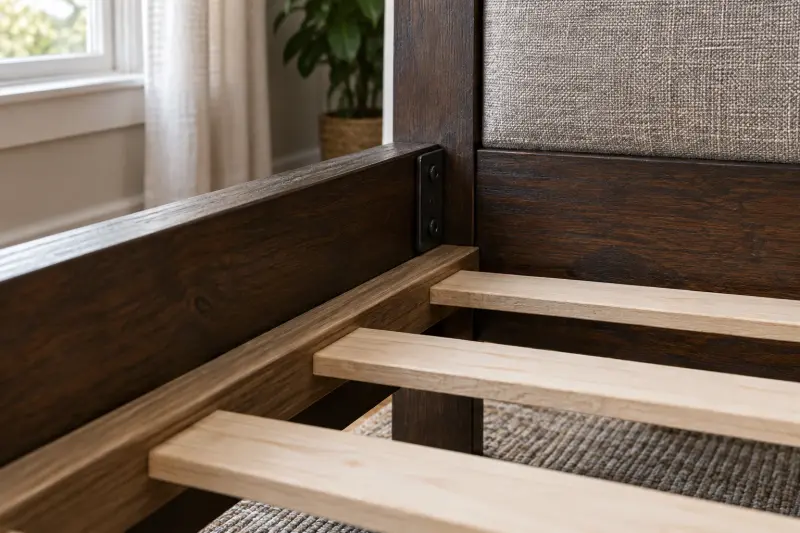
Editorial illustration Keep the permitted setup on the written proposal. An order should identify whether the base stands on its own legs, sits on an approved support or uses another explicitly allowed arrangement. The installer should be able to recognize it from the record. A decorative photograph and a mattress-size label are not enough for that purpose.
Review the complete movement envelope
Distinguish the space needed for ordinary movement from access needed for installation or later service. Ask the provider what surrounding space each task requires for the exact setup. A bed may occupy the intended outline while a technician cannot reach a required area without another arrangement. Keep those responsibilities and any real service scope visible before checkout rather than using a single floor-plan rectangle as evidence that every future task is practical.
For a fictional storage frame, the buyer likes its drawers but the relevant base guidance excludes that arrangement. The next comparison can retain the documented furniture with another appropriately confirmed option, or use a different supported setup. It should not assume the drawer mechanism can be removed without affecting the furniture. Price the actual alternatives after the makers clarify them; an accessory adapter is not a verified answer merely because it is cheaper.
The movement envelope is a complete-system question. Ask the provider to explain how the head and foot sections move in the approved installation, which nearby objects must remain clear and what the owner instructions require. Include the headboard, footboard, bedding, nearby furniture and cables in the discussion. Do not run the base against an uncertain obstruction to discover whether it fits, or reach into moving components while experimenting with placement.
A room sketch can show interactions without pretending to certify clearance. Draw the bed and the surrounding furniture, then identify the items the installer needs to consider. A side table may be outside the decorative frame but still have a cable or opening drawer that introduces another question. Objects stored below can affect the approved arrangement. Ask the exact provider which use is permitted; the presence of a visible gap is not automatic permission to fill it with storage.
For a hypothetical padded headboard, a projection that looked minor in the empty room becomes relevant to the proposed movement. The buyer asks about another frame or approved arrangement instead of assuming a stronger motor can force the fit. A different example involves a footboard whose position is not clear in the product photograph. The supplier should answer using the actual dimensions and instructions. A small-looking interference remains a real question until resolved by the appropriate source.
The TEMPUR Ergo owner documentation provides another model-specific reason to consider objects, bedding and moving components. Use the manual for the actual base rather than adopting another product's dimensions or procedure. This guide does not supply a universal gap, a DIY obstruction test or an installation technique. Keep the technical answer with the maker or installer and any individual access or care question with the appropriate professional.
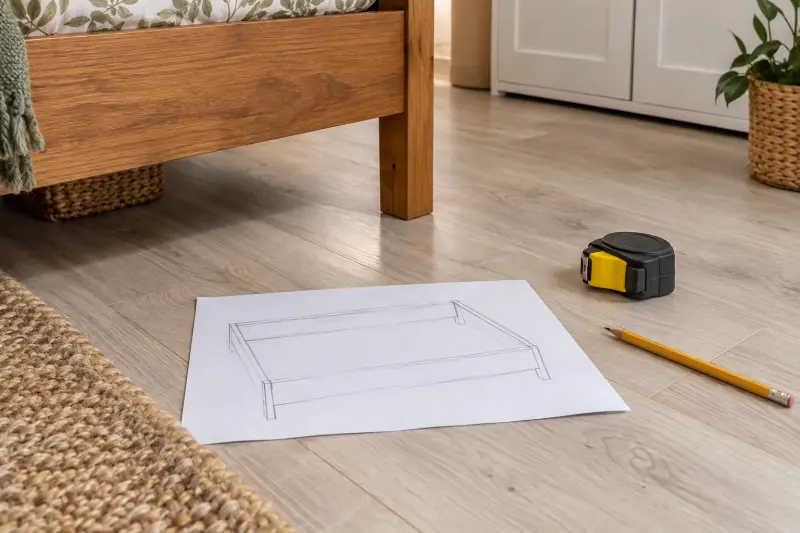
After the arrangement is confirmed, appearance can inform the preference decision. The existing upholstered frame may be reusable, or a simpler compatible setup may deserve comparison. An attractive finish does not answer a movement question, and a premium base cannot compensate for an unexplained furniture combination. Resolve the requirements before buying accessories intended to hide or bridge an uncertain fit.
Create a frame-to-base checklist
Compare included fitting responsibilities as well as components. Ask who supplies any approved bracket, who confirms the selected support arrangement and who resolves a missing or mismatched part at installation. A base-only listing and a complete setup offer may have different service scopes. Mark those differences before comparing actual quotes. Do not assume the household must perform unfamiliar assembly because a listing omits the installation task.
Preserve an accepted alternative explicitly if the preferred furniture combination is unavailable. In a fictional order, the buyer agrees to a simpler supported frame but the revised offer still names the earlier decorative model. Correct that description before delivery. The point is order accuracy, not choosing plain furniture as universally better. A documented change needs its own component list, service scope and applicable terms rather than inheriting every earlier fitting answer.
The private dated frame-to-base record should list both exact identities, usable opening, permitted support arrangement, relevant obstructions and installer confirmation. Add the instruction sources and date. Mark measured, maker-confirmed and unresolved information separately. A rectangle of compatible-looking dimensions should not be treated as an overall approval. The record is a way to keep the complete question visible, particularly when several retailers or installers are involved.
Ask the seller to name the actual components on the offer, including any approved legs, brackets or fittings required for the discussed setup. Compare the delivered scope rather than a price for the base alone. A package may include decorative furniture that the household does not need, while a base-only offer may leave installation unquoted. Obtain the missing scope before comparing totals. This guide does not assume current availability, a live price or an affiliate relationship for the manufacturer references.
For a hypothetical final decision, option A retains an existing frame with a documented permitted arrangement. Option B provides a simple new compatible setup. Once the technical questions are answered, the household can compare preference, complete cost and delivery scope. If A is still unconfirmed, it should not be declared the cheaper equivalent by pricing the uncertainty at zero. If A is confirmed and serves the routine, buying a new decorative frame is not necessary simply because the powered base is new.
At handover, compare the installed arrangement with the record and ask for the matching instructions. If a component or version differs, seek clarification before treating the earlier answer as valid. Keep documentation and receipts privately for future support. A later headboard, storage change or base replacement can affect the combination and deserves another review.
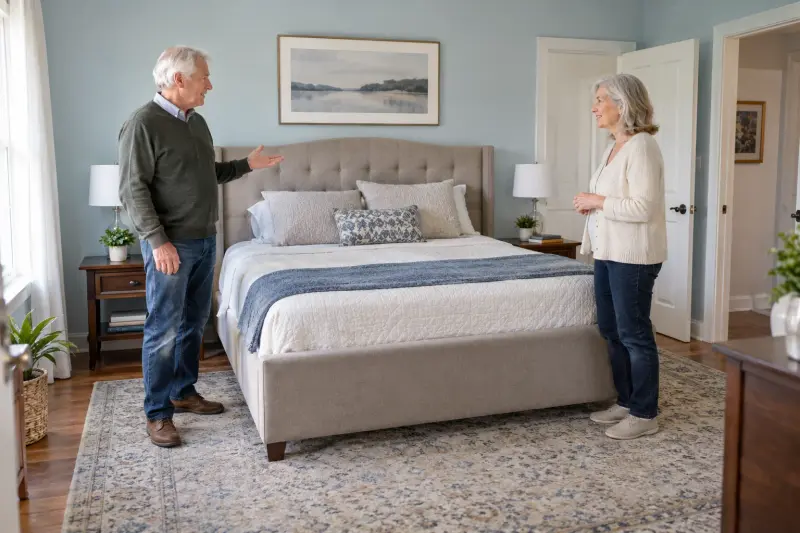
The article supplies buying questions and primary references, not structural inspection or personal suitability assessment. The useful outcome is a documented complete setup and a proportionate order. Reuse, a simpler arrangement, another provider enquiry or postponing the purchase can each be sensible when they follow the actual evidence.
Keep the frame decision separate from the room plan
A base fitting inside a frame does not establish that the complete bed works in the room. Record the finished outline, doorway, ordinary access route and nearby furniture. Ask the installer about the actual movement and cable arrangement. Where individual access or care needs are involved, obtain appropriate assessment in addition to equipment confirmation. The website cannot determine a safe reach or transfer arrangement from a room sketch.
For a hypothetical bedroom, the frame-and-base combination is documented, but a cabinet door opens into the space used beside the bed. The question is now the room layout, not mattress compatibility. Another household has a generous room but a tight delivery turn at the entrance. That is a delivery-scope question. Keep each with the right provider instead of assuming one approved component answers every surrounding task. A complete plan can involve several sources without turning their responsibilities into a vague overall score.
Consider storage as an actual use rather than unused space to fill. A drawer system, hanging organizer or item placed below the bed may have its own compatibility and movement questions. Ask the relevant makers before adding it. A visible opening beneath the base is not evidence that any box or cable can occupy it. Ordinary furniture should not be treated as a standing or transfer aid because it is conveniently placed nearby. Keep support needs separate from decorative and storage purchases.
If the existing room can support a simple documented setup, that may avoid an unnecessary furniture package. If a new frame is needed, compare its complete structure and delivery scope before choosing its finish. Keep the purchase focused on the tasks the household has actually described. A room can look considered with fewer compatible pieces, while an attractive bundle can still leave access, movement or installation unresolved. The buying guide should make those questions clearer without manufacturing urgency to replace the whole bedroom.
Ask what happens if the promised combination cannot be installed
Clarify the provider's responsibility before payment. Ask who checks the frame information, who installs the approved setup and what happens if the actual combination differs from the written description. Delivery, assembly and operating explanation are separate services, and a broad installed label may leave their boundaries unclear. Request the order-specific scope and any access or preparation conditions. Keep those answers beside the fitting record rather than relying on a verbal assurance that the team will make it work.
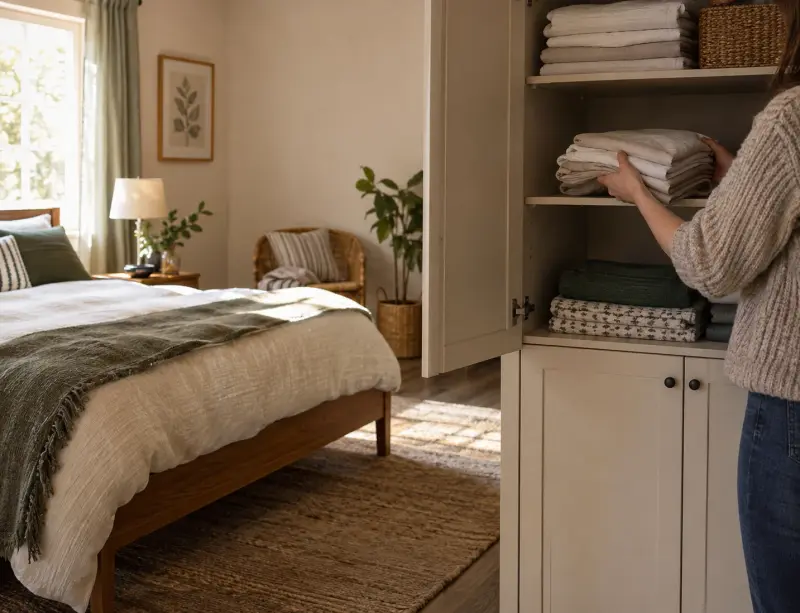
For a hypothetical delivery, the installer finds a structural component not described in the buyer's original record. The next step is clarification with the appropriate makers and seller, not removing it spontaneously to complete the appointment. If the planned installation cannot proceed, ask about the applicable order process and terms. This guide does not promise a refund or interpret every contract. Statutory rights and voluntary policies require the actual transaction and jurisdiction to be considered.
Read the separate terms for the base, mattress and frame. A mattress trial should not be assumed to cover the powered base or decorative furniture. Ask what permitted inspection or cancellation process applies and which conditions matter to this order. Save the relevant documents before paying, especially when a chosen configuration is made to order. A generous marketing headline is not a substitute for the detailed scope of each component.
After handover, keep the exact manuals and confirmation accessible privately. Follow the approved arrangement and ask the appropriate provider about technical changes or uncertainty. Do not modify the furniture or powered equipment to preserve an order whose original combination was never resolved. The practical goal is a coherent purchase with a clear installation route, including the valid choice to reuse approved furniture, select a simpler setup or wait until the important fitting questions have been answered.
MAKE THE SPEND MEANINGFUL
Before adding to the basket.
- Reuse a frame only after the complete combination is confirmed.
- Compare a simple compatible arrangement before a new decorative frame.
How this guide was prepared
AI-assisted editorial research, checked against the linked primary sources. Product testing and a credentialed individual review are not claimed.
source-checked editorial; no hands-on testing or expert suitability assessment claimed
How we use sources and AI assistance ↗Sources & fact checks
The guide separates sourced facts from editorial questions and examples. We have not claimed hands-on product testing. How we use sources and AI assistance.
- Saatva: adjustable-base frame compatibility ↗
- TEMPUR Ergo: exact-model owner instructions and moving-part precautions ↗
Found an error or an outdated detail? Contact the editorial team.