

In brief
Start with the complete routine: approach, enter, close the door, sit, use controls, fill, wash, drain and leave. Compare the exact configuration and surveyed room, keeping personal access assessment separate from product dimensions. Request household plumbing and water-heater review, a complete work offer and option-specific care. A low threshold, fast-drain clip or luxurious package cannot settle an unanswered essential action. An assessed shower or smaller adaptation can remain a useful alternative.
Documented options
A clearer comparison.
Research options based on manufacturer documentation. These are not results of hands-on testing. Manufacturer links are informational; no commission relationship is currently active.
For installed equipment, take your measurements and questions to a provider. Ask for an itemised local quote; this site does not currently operate a paid quote referral service.
IN THIS GUIDE
Define the bathing goal and the evidence each decision needs
Begin with the actual user's reason for changing the bathroom. A seated soak, washing without an uncertain movement and a quicker shared-room routine are different goals. Ask what they want to preserve as well as change. Record the essential task first and attractive extras second. If transfers, support or care needs are unclear, obtain an appropriate assessment before a product presentation turns a broad concern into a specific purchase recommendation.
Separate washing while seated from wanting to soak. An appropriately assessed shower arrangement may have a seated routine, while a door-entry bath introduces its own filling and draining stages. Neither category has a universal suitability advantage established by this guide. Give providers the same practical brief so their proposals answer the same question. A household can deliberately value soaking without claiming that the bath treats a condition or provides independence for every user.
Give each kind of evidence its own job. A specification can describe a component dimension; a site review can address the proposed room and services; an appropriate assessor can address individual movements. The user's preferences are another field. Do not combine these into a safety percentage. A published dimension can be correct while the relevant action remains unresolved, and a comfortable-looking illustration cannot substitute for the actual person, equipment and room.
For a hypothetical shared bathroom, one regular user wants a soak while another prefers a short wash. They ask how each proposed configuration serves those two routines, including any extra shower option. A bath-and-shower label alone does not prove both requests are answered. The provider needs to identify the supplied controls, standing or seated arrangement and actual room use. Each person's comments should remain visible instead of averaging different preferences into one premium-package choice.
Describe assistance where it is already part of the intended routine, through the appropriate private discussion. A helper may prepare belongings or perform an agreed action, but willingness does not establish adequate space or suitable movement. Ask the provider to explain the physical proposal and the relevant professional to address personal tasks. This website does not need diagnoses, home addresses or a public care questionnaire to help readers prepare those questions.
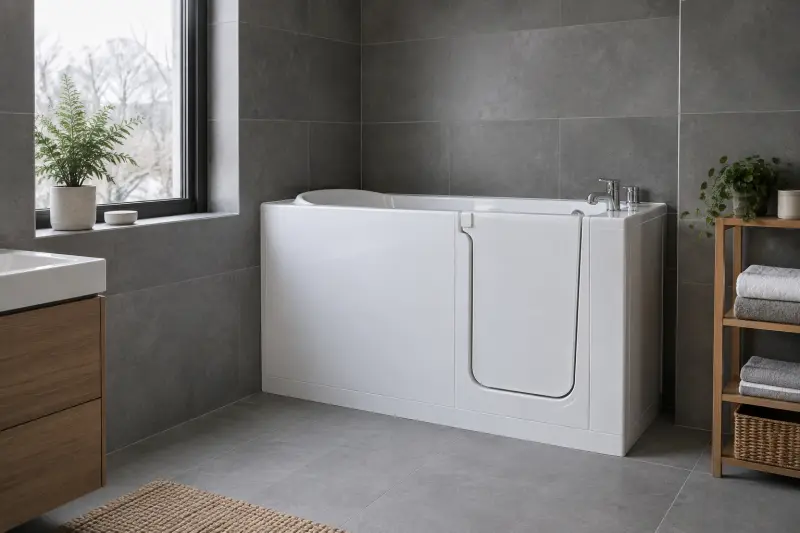
Editorial illustration Write the sequence in ordinary words without turning it into a bathing procedure. Include preparing the room, approach, entry, door use, seating, controls, washing and leaving. Ask the supplier to explain filling and draining within its exact normal-use instructions. The outline identifies buying questions; it does not prescribe a transfer or emergency action. If one important stage is unclear, keep that question visible before selecting finishes or additional systems.
Keep smaller alternatives proportionate to their task. A suitable washing aid may answer a specific reach question under its own instructions, but does not replace an unresolved bath transfer or support plan. An assessed adaptation to existing equipment can merit discussion before full replacement. No purchase is also a valid outcome when the present routine works or more evidence is needed. A good comparison gives the household reasons for its choice rather than treating every enquiry as ready for an order.
Separate room fit, internal use and delivery access
Put exterior frame, internal seat, usable entrance and door movement on separate rows. KOHLER's US dimensions page distinguishes these component measurements and qualifies installed step-in height. Those distinctions help a provider discussion without establishing personal fit. Ask which exact model, variant and current document apply. Do not substitute a general walk-in-tub size or another model's interior photograph for the offered configuration merely because the external outline looks similar.
Give the room proposal its own drawing. Show the bathroom entrance, fixed fixtures, normal storage and the proposed bath orientation. Ask the installer to explain where the bath door moves and how the ordinary approach and exit continue beyond it. A product can occupy the old tub outline while leaving another task unanswered. Keep any proposed furniture move labelled as proposed, with its new location shown rather than presenting a temporarily emptied room as the finished arrangement.
Clarify handedness from the manufacturer's reference view. Door side, drain side and inward or outward movement are different details. A catalogue photograph can be mirrored or show another variant. Ask the provider to mark the handle, water controls, handshower and service access on the actual plan before accepting the order. The term right-hand should not become a guess shared by the household and installer from different imagined viewing positions.
Read internal dimensions as specification evidence rather than a personal trial. Ask about the intended seated position, legroom, handle and control tasks through the relevant explanation and assessment. A larger exterior does not automatically improve reach, and a marketing percentage does not establish fit for an individual. If a demonstration uses another variant, identify what differs and what remains unanswered. Never improvise a transfer test from an unstable household object to make a candidate appear verified.
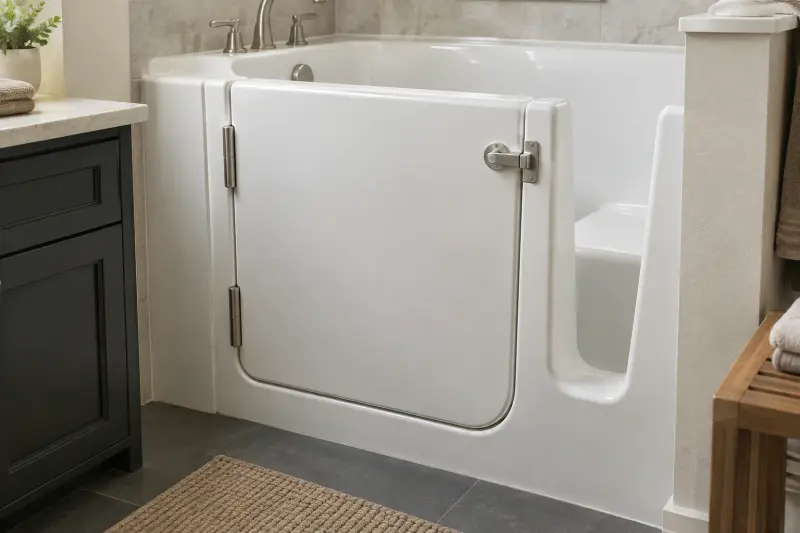
For a hypothetical layout, the proposed bath fits the exterior outline but its door movement conflicts with an ordinary cupboard task. The household asks for a revised surveyed drawing before ordering. It compares moving the cupboard with a different configuration, including effects elsewhere in the room. Neither revision receives automatic approval from this example. The point is to expose which action changes, which provider checks it and whether the quote still describes the same proposed project.
Check delivery separately from installed use. Ask the provider which packed or handling form arrives, who assesses the route and which entrances or turns matter. Installed exterior dimensions need not describe the delivered package or supported handling method. Do not remove fixtures or improvise lifting to make a guessed route work. A clear description and provider review can identify the missing evidence before equipment, wall finishes or optional accessories are ordered.
Preserve unresolved dimension conflicts rather than selecting the convenient figure. If a current webpage, specification or sales drawing appears inconsistent, retain their dates and ask which applies to the exact order. Nominal component values can have conditions that a simplified list omits. Record the provider's written clarification privately. This is more useful than an invented clearance allowance or a fit score built from dimensions that describe different components or versions.
Understand waiting, controls and ongoing care
Ask what the fill and drain evidence actually measures. Record start and end events, operating level, exact drain option and relevant plumbing conditions beside a stated time. KOHLER's US FAQ qualifies timing by the home's plumbing. A short edited clip can explain a feature without documenting the whole sequence in the reader's bathroom. Keep demonstration, estimate and site-specific response distinct instead of averaging them into a fictional typical duration.
Discuss what matters during the waiting stages. The user may want to understand a supplied handshower, a comfort function or the later towel arrangement. Ask which actions the exact bath permits at each stage through its current instructions. Personal concerns about temperature tolerance, prolonged sitting or assistance need appropriate advice. A relaxing description neither settles that concern nor proves that every reader will find the sequence comfortable.
Keep comfort controls separate from incoming-water questions. KOHLER's panel page describes its backrest and jet functions; that does not establish thermostatic water control or a medical effect. Ask the provider to identify each supplied control and its task on the delivered configuration. If a heating feature is offered, clarify its actual role rather than assume a heated backrest or bath system replaces the household hot-water assessment.
Request the local water-system evaluation before treating retention or replacement as confirmed. KOHLER's US FAQ describes reviewing water-heater age, condition and volume during its home appointment. A nominal tank capacity alone does not answer the complete system and intended routine. Ask the qualified provider which bath information, other household demand and site conditions support its recommendation. Do not raise existing heater settings or order a larger unit to compensate for an unanswered question.

Editorial illustration Identify what can genuinely be demonstrated before purchase. KOHLER's cited US FAQ says its bath is not available in a showroom and describes videos, photographs and other in-home explanatory materials. Those materials are indirect evidence, not a claim that this publisher or reader has tried the bath. Another provider may offer different arrangements, which need their own verification. Ask how any decisive personal or installation question will be addressed if a hands-on example is unavailable.
Choose the care routine with the features. Obtain the exact owner manual and option-specific instructions for surfaces, hardware, door seal, drain and any internal system. KOHLER's care page distinguishes its bath and related finishes rather than providing one universal cleaning recipe. Ask who performs the permitted household tasks and how professional service access remains available. An automatic-cleaning label does not establish that every owner responsibility disappears or that a generic cleaner suits all components.
Ask for the normal-use and fault-reporting explanation without improvising procedures. Which provider receives a question if the expected sequence does not complete, and which current instructions apply? Do not test a filled-door release, modify a drain or open service equipment based on an article. Retain the actual model manual and private support contact. Understanding the routine can support a considered purchase; an essential unanswered stage is a reason to seek the relevant response first.
Compare the complete installed offer in the correct market
Verify the offer's market and seller before comparing it. KOHLER's cited program FAQ limits that installation program to the contiguous United States. A translated article or international brand name does not establish equivalent installation, warranty service or commercial terms elsewhere. A reader in another country needs an actual local provider and documented model. Manufacturer information links here supply evidence, with no approved affiliate route, live installed price or guaranteed local stock.
Separate a complete installed program from a product-only listing. Ask which party supplies the bath, removes existing equipment, performs plumbing or electrical work, completes finishes and disposes of waste. A component price and a finished-room offer answer different purchasing questions. Record included, excluded, allowance and unanswered work with responsible parties. Do not put zero against omitted work or use an unrelated home's total to fill the gap.
Ask the relevant provider and authority what project requirements apply locally. This guide does not invent a universal permit, certificate or inspection rule. Request the actual scope and completion evidence identified for the installation. Keep any change to structure, services or access with the appropriate professional responsibility. A brochure claim about straightforward installation should not decide what this room needs or replace the provider's current project description.
For a hypothetical comparison, offer A includes disposal but leaves wall finishing uncertain; offer B describes finishing but excludes disposal. The household requests both missing lines before calling either complete. A separate water-system recommendation remains provisional until professionally defined. No example price is inserted. The useful comparison aligns real responsibilities and evidence, allowing a smaller headline to remain provisional rather than appear cheaper because necessary work is hidden outside it.

Keep decorative preferences separate from essential work. A wall finish, hardware choice or extra comfort package can be a deliberate choice after the routine is understood. Ask whether adding or omitting it changes installation, care or commercial scope, and obtain a revised offer. Do not subtract an imagined upgrade amount from a package. Likewise, do not describe the richest variant as required because it is the one used in an attractive rendering.
Request the project's sequence and bathroom-access arrangements. A proposed fitting day is different from the full unavailable period or an agreed reopening condition. Ask how removal, preparation, fitting and finishing depend on one another and who confirms completion. A one-day marketing headline is not a guarantee for every home. If ordinary bathing or care arrangements are affected, obtain appropriate planning advice rather than relying on the sales timetable alone.
Clarify unexpected-condition and variation terms before work starts. Ask how a changed requirement is described, who authorizes it and what revised document or amount is supplied. Retain the accepted model, scope and relevant written responses so another household helper can understand what changed. Do not assume every unanticipated task is included or automatically payable. The actual transaction and appropriate local rights need their own accurate documents, rather than a generic website conclusion.
Read the seller's deposit, cancellation, warranty, repair and financing terms. Parts cover, labour, attendance and surrounding finishes can be different commitments. A monthly finance figure does not describe total cost or every condition. Request the current complete terms and relevant advice if something is unclear. This comparison does not promise eligibility, approved credit, a transferable warranty or a legal outcome; it supports a documented decision about the real offer.
Build a decision record that preserves unresolved questions
Create an ordinary paper record with a row for each essential action and a separate installation-scope page. Put requirement, response, source and unresolved question beside the action. Keep the actual user's comments visible. This format requires no public questionnaire or downloaded tool. It helps direct the next question to the provider or appropriate assessor without suggesting that several answered rows certify personal suitability or compensate for one essential action that remains uncertain.
Distinguish explained from demonstrated and assessed. A provider can explain the door sequence using a video; a room review can address a physical proposal; personal-task assessment answers another question. Record what actually occurred. Do not label explanatory material a successful trial, or a family preference an expert endorsement. The same discipline applies to our illustrative images: they provide visual context and are not evidence of tested product appearance, performance or an individual's experience.
For a hypothetical decision, the household has chosen a finish and external configuration while a seated-control task remains open. Buying a convenient organizer would answer a separate storage need but cannot settle the fixed-control question. The reader requests the appropriate explanation or assessment before placing the order. This example preserves an inexpensive companion option without using it to make a larger unresolved purchase feel complete.
If the proposal changes, revisit the affected rows. A different door orientation, shower package or component can change earlier layout, service or care answers. Ask the provider for the current specification and revised work offer. Do not assume every option can be retrofitted after delivery; obtain the exact maker's current answer. Archive the earlier planning record privately and identify which version now describes the purchase.
At handover, ask the installer to connect the delivered configuration to the accepted documents and applicable normal-use explanation. Record factual differences, missing instructions or unfinished work through the responsible channel. Keep specialist testing and adjustments with the appropriate professional. A generic video is not confirmation that every question in the room has been resolved, and this publication claims no installation inspection, hands-on test or clinical assessment.
Consider companion products only for a defined narrow task after the main routine is understood. Existing suitable towels, storage or a plain document folder may already serve it. A documented washing aid needs its own handling and care questions. Avoid a matching accessory bundle chosen merely because it completes a lifestyle photograph. Each purchase should have a useful purpose, compatible use and limits, with the no-purchase option made equally clear.
Close the record with the decision and its reason: proceed with confirmed scope, revise optional choices, compare another assessed arrangement or gather more information. A reader can choose a premium bath deliberately after understanding its commitments, and can also pause without being pressured by a promotional package. Keep the original bathing goal, appropriate evidence and private support records together. The useful outcome is a more informed household decision, not a guarantee of future safety or a forced sale.
MAKE THE SPEND MEANINGFUL
Before adding to the basket.
- Compare an appropriately assessed shower arrangement if the real goal is quicker bathing.
- A suitable long-handled washing aid may address a particular reach task at lower commitment; it does not change the bath transfer or resolve support needs.
How this guide was prepared
AI-assisted editorial research, checked against the linked primary sources. Product testing and a credentialed individual review are not claimed.
AI-assisted, source-checked editorial; no hands-on test, human expert review or personal suitability assessment claimed
How we use sources and AI assistance ↗Sources & fact checks
The guide separates sourced facts from editorial questions and examples. We have not claimed hands-on product testing. How we use sources and AI assistance.
- KOHLER: Walk-In Bath dimensions and plumbing caveats ↗
- KOHLER: Walk-In Bath FAQs and service coverage ↗
- KOHLER US: documented backrest and jet control-panel functions ↗
- KOHLER US: component-specific cleaning and care ↗
Found an error or an outdated detail? Contact the editorial team.