
In brief
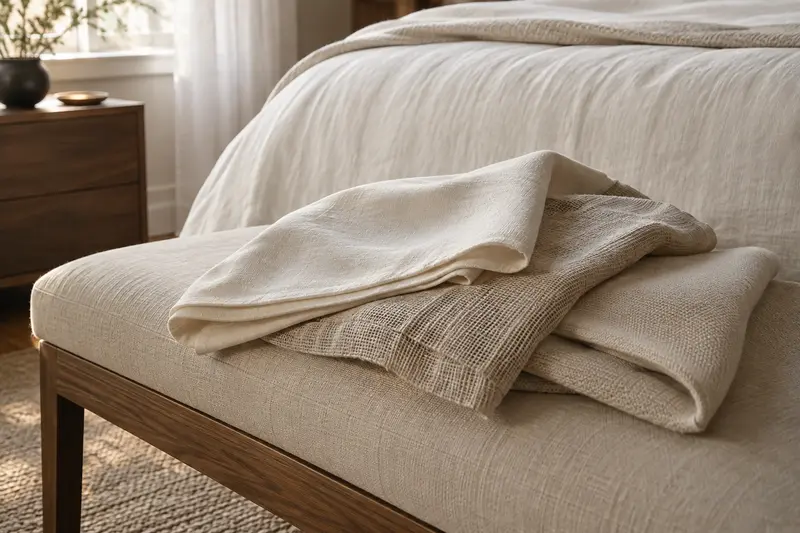
Fit the moving mattress first, then compare fabric feel and care requirements. Cotton, linen and stretch blends are categories with many constructions, not reliable rankings of comfort. Inspect the exact composition and pocket specification, and use a sample or permitted inspection when available. Keep subjective preferences separate from unverified cooling or sleep claims.
IN THIS GUIDE
Read composition and construction separately
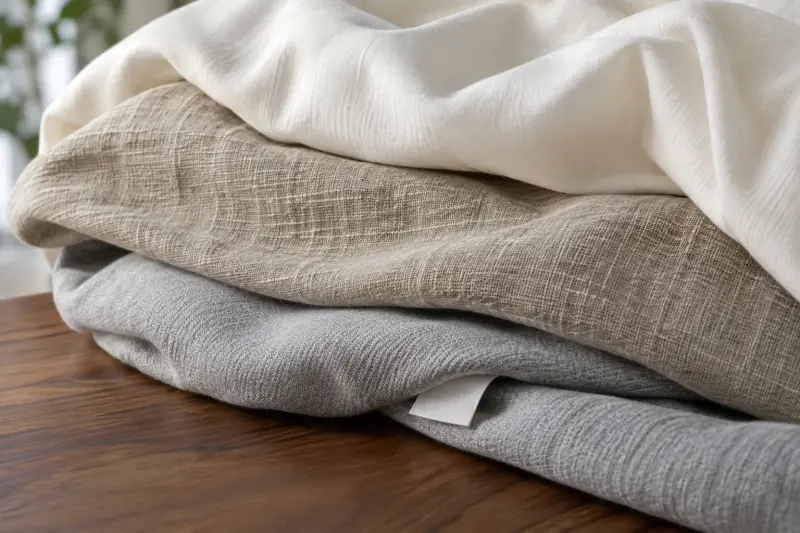
A sheet listing can contain a fibre name, weave or knit description, finish and marketing phrase. Record them separately so that a cotton sateen option is not compared with a stretch blend as though the words describe the same feature. If elastane or another stretch fibre is important to your preference, read its stated proportion rather than relying on the word flexible.
Cotton and linen labels alone do not tell you how the fabric feels to you or how the finished fitted sheet behaves. Thread-count headlines likewise leave composition, elastic design and exact dimensions unanswered. Use the product specification to identify what is actually supplied. Do not infer a medical, allergy or sleep outcome from a premium material name.
Separate the description of the fitted sheet from that of the rest of a set. A collection may offer a fitted piece, flat sheet and pillowcases under one headline, while the shopper's immediate question concerns only the moving mattress. Ask which pieces have the stated composition and construction. If the seller offers individual pieces, compare the exact needed item; do not assume that every component or replacement in the collection has the same specification.
For a hypothetical basket, a buyer selects a cotton fitted sheet but the accompanying pillowcase description names another blend. They ask the seller to identify each supplied piece instead of applying the collection headline to everything. Another offer contains only one fitted sheet, so its price cannot be compared directly with a complete set. Record the required pieces and inclusions before comparing totals. These are scope checks, not a claim that either construction is inherently better.
Read the variant, not only the product family. Color, size or regional versions can have separate product identifiers or supplied information. A seller's broad collection page may lead to a different selected item in the basket. Keep the final composition and care details associated with the actual order. If specifications appear inconsistent between the page and supplied label, ask the seller to explain before relying on a remembered description from an earlier comparison.
Thread count should stay alongside the other fields rather than becoming the sole decision rule. It cannot answer what pieces are supplied, how deep the fitted pocket is, what the household likes or what the maker instructs for care. This article has not tested the candidates or established a universal thread-count threshold. Avoid turning a large number into a guarantee of durability, temperature comfort or improved sleep. An individual preference can be discussed without making a scientific performance claim.
If an allergy or other medical concern is the reason for shopping, seek the appropriate professional advice and relevant product evidence. Do not translate a natural or organic label into a treatment recommendation. The ordinary fabric shortlist concerns documented composition, fit, preferences and care, with specialized needs handled through the proper sources.
Compare preferences without declaring a universal winner
Make three columns for feel, appearance and laundry. Under feel, record your preference for smooth, textured or stretchy fabric after inspecting a sample where possible. Under appearance, decide how much wrinkling or a relaxed surface matters to you. Under laundry, record the exact washing and drying instructions alongside the routine your household can manage.
For a hypothetical buyer who likes a textured sample but wants minimal ironing, the question is whether its everyday appearance is acceptable, not whether linen is better than cotton. Another buyer may prioritize a stretchy feel while disliking the blend’s care instructions. These are useful preference trade-offs. They should not become invented performance scores or claims that one material guarantees cooler nights.
Agree which preferences are essential and which are flexible before requesting samples. A buyer might prioritize an acceptable feel while accepting a less formal made-bed appearance; another may prefer the appearance but reject a laundering step. Write those trade-offs in order rather than awarding every desirable word a point. An option that fails a required fitting arrangement stays outside the shortlist even when its sample is the favourite. Personal preferences cannot settle a product instruction or medical concern.
A hypothetical split-bed household has two users who like different samples. They ask whether the needed fitted pieces can be supplied separately, then check each selected item's construction, fit and care. A matching-room appearance is optional; it does not require both people to describe the same preference. If separate pieces would create a laundry routine the household does not want, compare that practical consequence before ordering. No fabric choice here establishes independent movement compatibility or improved sleep.
Consider the household's laundry resources and who carries out each ordinary task. A care instruction can be straightforward for one household and inconvenient for another. Ask whether an outside service can follow the actual label if that is part of the routine. Do not invent comparative drying times or energy costs without measured evidence. The useful information is the documented process and whether it is feasible, not a claim that every natural fibre is easy-care or that every blend requires no attention.
Keep visual design optional. A refined bedroom can use plain existing textiles when their documented arrangement works. A coordinated premium collection may be enjoyable, but it is not equipment the powered base needs simply because it looks luxurious. Compare a modest correctly sized option under the same factual fields. This avoids turning personal taste into pressure to replace the duvet, pillowcases and every spare set at once.

Editorial illustration Use a short preference statement for the retailer. For example, a buyer can say they want a smoother-feeling sample with a care routine they already manage, while preserving their exact split arrangement. That gives the seller a more meaningful question than asking for the best sheets for everyone over a certain age.
Verify fit independently of fabric preference
Match the sheet to the actual mattress length, width, depth and split arrangement. Stretch fabric does not remove the need for correct sizing. Ask the sheet maker whether its fitted design is intended for the proposed configuration, and check any adjustable-base guidance supplied by the mattress or base manufacturer.
A single wide fitted sheet should not be assumed suitable for two independently moving mattresses. Conversely, purchasing two smaller sheets makes sense only when their dimensions match each side. During an approved demonstration or permitted use, observe corner retention and excess fabric without reaching near moving parts. Do not add clips, straps or improvised attachments until the relevant makers confirm that they are appropriate.
Turn the mattress layout into a piece count. In a fictional example, two independently moving surfaces each measure thirty-eight by eighty inches; the required enquiry concerns two correctly shaped fitted pieces for those surfaces, not merely a total width of seventy-six inches. The arithmetic explains this example only and is not a universal split-bed specification. Ask the relevant makers about the actual arrangement, including any permitted topper and the complete pocket requirement, before accepting a familiar size name.
A partial split deserves its own drawing. Describe where the mattresses or surface separate and where they remain connected, then ask whether the sheet design is intended for that exact shape. A label containing split does not tell you whether it describes two fully separate fitted pieces or another construction. Request a dimensioned product description when the photographs leave that unclear. Do not substitute two generic sheets or one wide sheet solely because their overall dimensions appear close.
Include the depth of any permitted topper in the mattress record. Adding a protector can also create a question about the complete fitted arrangement, so check its own instructions and the sheet's actual pocket guidance. Do not invent a universal extra allowance or tension limit. A listing that says deep pocket still needs a stated scope. Where the final mattress identity or topper choice is unsettled, it can be sensible to postpone a full bedding order rather than guessing and duplicating an incorrect set.
At delivery, compare the selected variant and supplied pieces with the written order before washing or using them. A preferred collection can arrive in the wrong fitted construction, and that transaction mismatch is different from the fabric feeling unlike the sample. Ask the seller how to report either issue under the applicable terms. Follow the equipment and textile instructions for any permitted fit observation, with appropriate assistance; do not reach near moving parts or invent attachments to rescue an incorrect order.
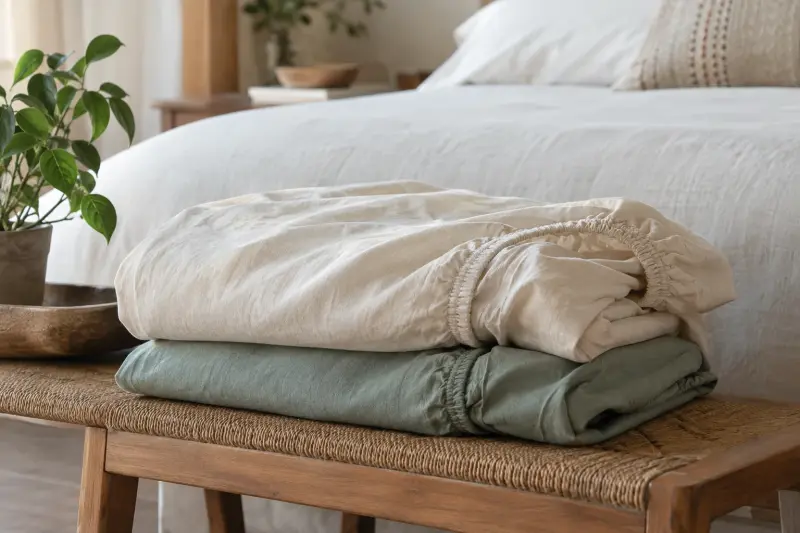
Separate the outcome into documented fit, personal fabric preference and unresolved instructions. A product can meet the first dimension check while leaving another question open. A comparison tool should show those factual distinctions rather than collapsing them into a universal compatible badge.
Check the routine before ordering a full set
Brooklinen’s current care guide organizes instructions by named bedding collection, including percale, sateen and linen, rather than issuing one rule for every textile. Checked on 4 October 2026, it is a useful example of why the exact collection and sewn-in label should guide laundering. Do not transfer one brand’s instructions to another blend.
Ask whether a sample is available and what inspection, washing or use does to return eligibility. If an existing correctly sized set works, keep it while investigating a replacement. Buying one suitable set before duplicating the order can reveal whether the feel and care routine meet your preference. Choose additional sets for an actual laundry need, not a suggestion that new fabric is required for every adjustable bed.
The current Brooklinen care guide gives its Luxe Sateen, Classic Percale and Washed Linen sheets the same listed cold-wash and low-tumble-dry directions, with prompt removal and low ironing if needed. A different material headline therefore does not necessarily imply a different laundry process. Those sheet entries permit only non-chlorine bleach, while the separate linen-quilt and sham entry prohibits bleach. Use the actual item and sewn-in label; neither the sheet entry nor this example supplies universal instructions for another textile.
For a hypothetical order needed before visitors arrive, the buyer checks the actual delivery estimate and leaves time for the seller's permitted inspection process. An appealing sample does not make the correct fitted configuration available by that date. If the current compatible set still works, it can remain in use while the new order is clarified. Ask whether an unavailable colour or construction changes the order, rather than accepting a substitute whose size and care were never compared.
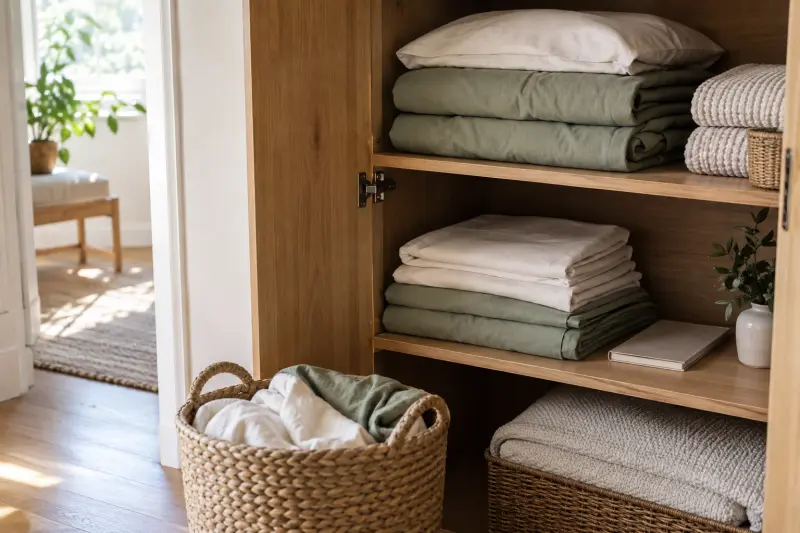
Plan where the clean set will be stored and how separate fitted pieces are identified. A split configuration may require more organization than one continuous fitted piece, regardless of fibre. Retaining a plain package label or private inventory can help avoid confusing differently shaped pieces. Do not modify a product or add unfamiliar fastening hardware to compensate for uncertainty. If another household member helps with laundry, share the exact care information without assuming they remember a collection description.
Judge a spare purchase by an actual need. A second appropriate set may help a household's routine, but several premium sets are not required merely because the first feels appealing. Start with the correct documented scope. If existing compatible bedding remains useful, there is no need to discard it automatically. This guide does not estimate service life, prescribe replacement every fixed period or promise that a particular fibre becomes more comfortable with every wash.
Review the fit and care record after a mattress or configuration change. The familiar collection name may still suit personal taste while its old fitted shape no longer answers the new surface. Reusing documentation is helpful only when the actual components and instructions still match.
Use a sample to answer the right question
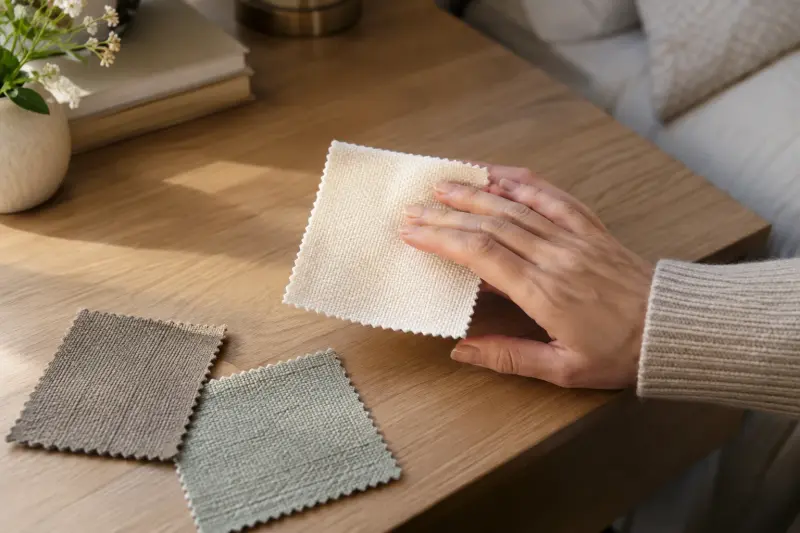
A fabric sample can narrow a subjective preference. Ask whether it represents the actual current collection and what the seller means by a sample. Keep the result modest: the buyer likes or dislikes that feel and appearance under the inspection they performed. It is not evidence about cooling, durability, shrinkage, moving-base retention or sleep quality. Those questions need appropriate product-specific information and, where relevant, actual measured evidence the guide does not possess.
Ask what the sample represents: the selected current fabric, a colour reference, or a different demonstration piece. A sample can answer the feel question only to the extent of what was actually supplied and inspected. It does not show the fitted sheet's elastic, seams, pocket or shape unless those features are included. If no sample is available, separate documented specifications from preferences that remain uncertain, then decide whether the seller's actual inspection terms give an acceptable next step.
Bring the mattress layout and measured dimensions to the same conversation. The seller can identify whether the preferred collection offers the required fitted pieces and pocket specification. If not, compare another documented option rather than trying to make the wrong construction work. The material can remain a preferred future choice without becoming the right current purchase. A clear no-match answer saves more unnecessary ordering than a vague best-fabric recommendation.
Record the chosen collection and exact variant privately with its care source. Screens and styled photography may inform taste, but they are not a guarantee of exact delivered color or individual feel. Ask the seller about any important uncertainty. Do not buy a full coordinated room package solely to maintain a theme before the essential fitted arrangement is understood.
The sample stage succeeds when it answers a preference question while leaving other evidence fields intact. That lets the shopper choose premium fabric deliberately, choose a simpler option confidently or retain existing pieces. It does not make a purchase mandatory, and it should not be described as a clinical or hands-on performance test by this publisher.
Make the fabric comparison lead to a proportionate order
Finish with a small comparison table containing the exact variant, configuration, dimensions, composition, construction, care and personal preference note. Add the current seller terms and any unresolved maker question separately. Use the same fields for a basic and a premium option. A luxurious description belongs in taste context; it should not overwrite a depth mismatch or unexplained partial split.
For a hypothetical final basket, the premium collection offers a preferred feel but not the confirmed needed construction. The buyer postpones it and seeks a fitting option. A simpler set meets the documented scope and the household's acceptable preference. Another household already has appropriate bedding and wants only information about a future change. These are useful outcomes without assigning a universal winner or implying that low cost necessarily compromises the required specification.
Check the final selected size and included pieces at checkout. A collection page can default to a different variant, and a bundle may add pieces the household does not need. Read current delivery and return terms for the actual transaction rather than assuming a mattress trial applies to bedding. The information links here represent neither verified affiliate approval nor live stock or price. Keep private receipts and account details outside public article comments.
Before committing to a complete package, ask whether the needed fitted pieces and later replacements are sold separately. A spare can be useful for an actual laundry need, but that does not mean an extra flat sheet or matching pillowcases are required. Check the current package and seller terms rather than assuming an individual component can be returned while the rest is kept. Future availability is also a question, not a promise that today's collection will always remain stocked.
This guide compares purchasing questions rather than tested textile performance. The reader's best fabric is a personal, documented choice within the correct fitting arrangement and manageable instructions. Clear specifications and proportionate scope can support a premium result without making the adjustable bed an excuse to replace every item in the room.
MAKE THE SPEND MEANINGFUL
Before adding to the basket.
- Keep an existing correctly fitting set if it works with the approved setup.
- Try one verified set before buying several matching sets.
How this guide was prepared
AI-assisted editorial research, checked against the linked primary sources. Product testing and a credentialed individual review are not claimed.
source-checked editorial; no hands-on testing or expert suitability assessment claimed
How we use sources and AI assistance ↗Sources & fact checks
The guide separates sourced facts from editorial questions and examples. We have not claimed hands-on product testing. How we use sources and AI assistance.
Found an error or an outdated detail? Contact the editorial team.