

In brief
Choose bedside storage after reviewing the bed’s installed movement and your everyday reach preferences. Check the flat and raised positions, entry route and cables. A table is a place for objects, not an assumed support for getting up. Reuse existing furniture if it meets the task without entering the movement area.
Documented options
A clearer comparison.
Research options based on manufacturer documentation. These are not results of hands-on testing. Manufacturer links are informational; no commission relationship is currently active.
IN THIS GUIDE
Start with the objects you actually use
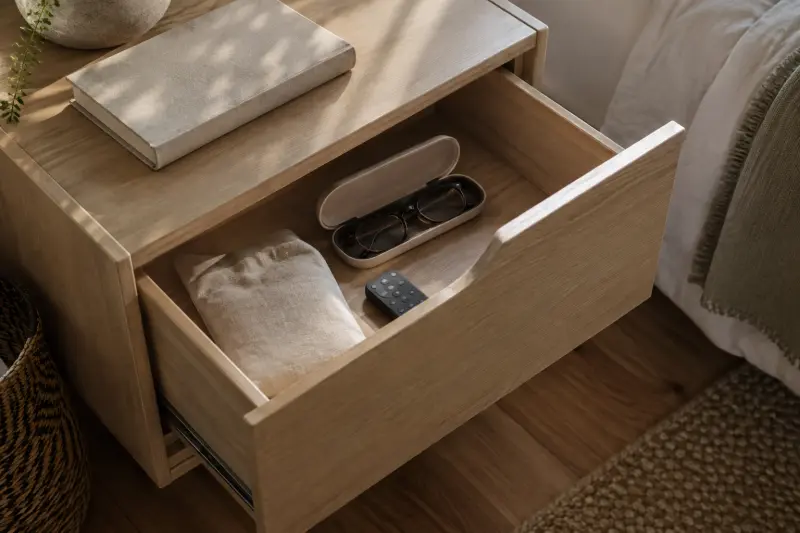
List a few items that need a predictable home: the remote, glasses, a book and a lamp control, for example. Group them by when you use them. A large surface can be convenient, but a small organized tray may meet the task if the surrounding table and position already work. Avoid buying storage capacity without identifying what it needs to hold.
Draw the arrangement privately on a simple room sketch. Mark the bed’s current location, nearby furniture and the path used to enter and leave the room. If access or assistance is a concern, involve the appropriate professional in the layout review. The sketch records furniture preferences; it does not determine a person’s safe reach distance or mobility needs.
Give each ordinary object a usable-space description. A book stored closed and a book being read use different parts of a surface; a lamp base can occupy space its shade does not suggest. A glasses case and remote need their own predictable locations. List occasional belongings separately, and keep medicine or device storage under its specific instructions rather than an ordinary organizer recommendation. These observations describe objects and tasks, not a prescribed personal reach distance or a need to publish private details.
For a hypothetical room, a small table holds the closed book and remote, but the drawer beneath it cannot open in the proposed furniture arrangement. Another candidate provides an open surface with a removable tray the household does not want to carry. Compare those actual tasks before increasing capacity. The existing furniture may still work for a smaller object list. A drawing can expose the unanswered layout question, while appropriate advice remains necessary for individual access or handling concerns.
Write the task at the moment it occurs. Finding the remote in a commonly used position differs from collecting glasses before getting out, and both differ from a helper changing bedding. Those descriptions let the installer or appropriate professional understand the actual layout question. Avoid replacing them with a universal bedside height or distance. A larger surface is not automatically more useful if its footprint occupies space the room needs for another purpose.

Make a private inventory of what already exists: table, tray, shelf or approved holder, along with its documented role and condition. Do not treat ordinary furniture as equipment for leaning, pulling or transferring simply because it sits close to the bed. If a support task is the concern, seek the appropriate assessment rather than increasing a table's advertised load capacity. The buying decision should distinguish storage from personal assistance.
The first useful step can be a simplified arrangement with no purchase. If an object still lacks an appropriate home, describe that remaining need before browsing. That produces a more focused shortlist than adding a general bedroom organizer bundle to a powered-base order.
Check the layout across the intended positions
Review the approved installed setup in flat and commonly used raised positions, with the installer explaining movement clearance. A bedside object that is close in one position may be inconvenient in another. Ask where furniture, hanging fabric and cables should remain; do not reach into the mechanism or position objects under it during movement.
The TEMPUR Ergo owner manual warns about objects and bedding obstructing movement and directs readers to model-specific usage precautions. Use the instructions for your actual base when planning nearby storage. In a hypothetical layout, raising the head changes the relationship with a fixed table. That calls for a demonstration and a different placement if needed, not an assumed universal distance from the bed.
Identify what the installer or relevant provider actually reviewed. A comment about the base's clear movement is different from an assessment of a person's reach, and neither automatically approves every lamp or hanging accessory. Record the exact furniture and cable arrangement discussed, then leave other questions with the appropriate source. A useful written explanation states its scope instead of using a general suitable-room label. Follow the actual precautions without entering the mechanism or creating a home movement test.
For a hypothetical split bed, each side can change position independently. A shared lamp or object location therefore belongs in the conversation about the actual two-side arrangement, rather than being approved from a symmetrical photograph. Ask how the intended routine is addressed under the relevant instructions and assistance. A confirmed location for one side is not a prescribed reach distance for the other person. Do not add a longer arm, hanging strap or extra lead to answer an unresolved movement question by appearance alone.
The cited TEMPUR Ergo manual describes moving-part precautions for that model. It is a useful reminder to use exact equipment instructions rather than a generic adjustable-bed diagram. If the room uses another base or generation, obtain its own manual. A previous storage arrangement may need review when the base, mattress or frame changes. Do not assume that a table staying in the same place means the complete movement relationship is unchanged.
Ask which ordinary positions the planned routine actually involves, without adopting marketing position names as medical recommendations. A supported demonstration can inform the practical questions while individual access needs belong with appropriate advice. The website has not assessed a person's reach, vision or mobility. A user can describe an inconvenient object location without a guide prescribing a physical maneuver to prove that a product is suitable.
Record any confirmed guidance and unresolved point in the private room sketch, with the source and exact scope beside each answer. A completed drawing does not establish universal safe placement. If the important question remains unanswered, leave the accessory order open instead of buying a longer arm or hanging attachment to solve it by appearance alone.
Compare the useful dimensions and behaviour
Record surface height, footprint, edges and how the table remains stable on the actual floor. Drawers need their own opening space. A removable tray adds another handling step, while a wheeled unit needs its documented use and positioning reviewed. Choose the arrangement for the actual objects and room rather than a style photograph alone.
IKEA’s US GLADOM listing provides a stated height, diameter and removable-tray design. Checked on 4 October 2026, it is a measurable furniture example, not evidence that it fits a particular adjustable bed. The listing describes indoor furniture; do not treat a table as a transfer aid or assume it can support someone leaning or pulling on it.
Distinguish the furniture's outer footprint from the usable surface and any opening space. A tray edge, drawer, projecting leg or separate lamp base can change what the quoted overall measurement answers. Ask which dimension the listing describes and compare it with the private plan. Packaging measurements answer delivery questions, not installed furniture dimensions. A wheeled or adjustable unit also needs its documented intended use and settings understood; none of these measurements rates the furniture for body support.
The cited US GLADOM item is twenty-and-five-eighths inches high and seventeen-and-a-half inches in diameter, with a removable tray. IKEA states indoor use and a maximum tabletop load of twenty-two pounds. Keep that load attached to ordinary stored objects under the table's instructions; it is not a rating for leaning, pulling or transfers. The dimensions still do not establish fit beside a particular adjustable bed. Another regional or similar-looking item requires its own current information.
For a hypothetical room, a round table has an attractive small visual profile but the proposed drawer unit requires more opening space. The buyer compares the actual object list and room constraints instead of declaring round or rectangular universally better. Another table has a removable top the user does not want to handle. That preference may favor a different suitable surface without saying the tray design is unsafe for everyone. The relevant outcome is an arrangement that answers the stated task under its instructions.

Include floor and room conditions in the supplier or professional discussion where appropriate. A photograph cannot establish stability on the actual surface, and this article supplies no do-it-yourself furniture loading test. Ask about the maker's intended use and the required setup. If a body-support or transfer need has motivated the purchase, stop treating the table catalogue as the answer and obtain appropriate advice about that separate task.
Use the same factual fields for modest and premium furniture. Finish and craftsmanship can be preferences, but a luxurious description does not settle movement, footprint or opening questions. Existing suitable furniture can remain part of a premium-looking room through a carefully edited surface rather than replacement alone.
Keep the arrangement simple to maintain
Choose one home for the remote and another for loose charging cables, following the base maker’s clearance guidance. Keep a lamp or phone lead from hanging into moving components. If a bedside organizer attaches to the bed, obtain exact-system approval before adding it; a convenient-looking strap is not a compatibility assessment.
Try reorganizing an existing suitable surface before replacing the furniture. During normal permitted use, note which items remain inconvenient and adjust the plan with any needed assistance. A split bed may require different storage on each side. Save the final sketch with the setup record so that a new table, bedding or base position prompts another clearance review rather than an unnoticed change to the original arrangement.
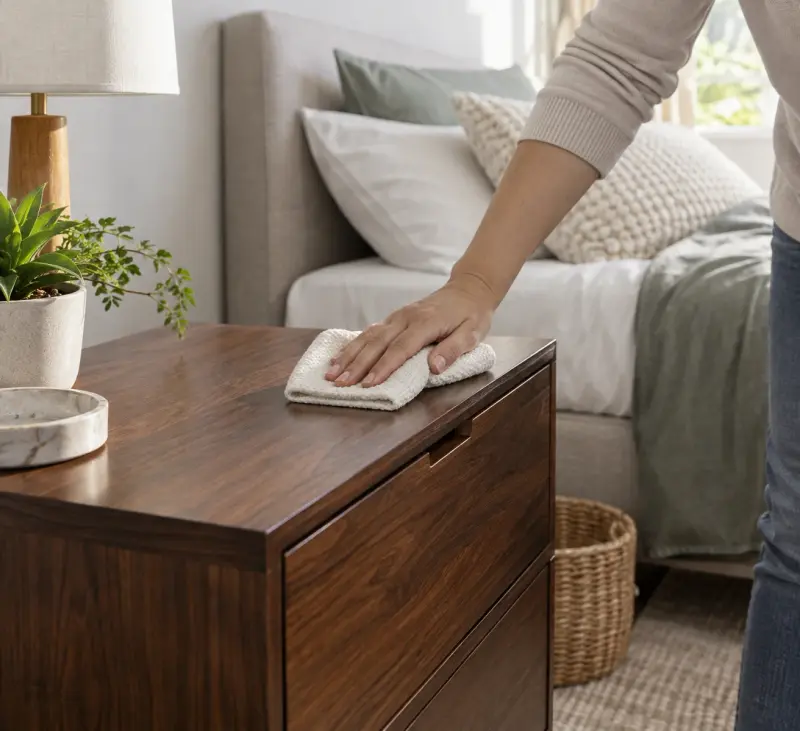
Keep furniture care and powered-base care as separate tasks. GLADOM's current listing calls for wiping with a damp cloth, wiping dry and regularly checking its assembly fastenings under the supplied instructions. Those furniture directions do not authorize moving a base, disturbing electrical equipment or entering a mechanism for cleaning. Ask the responsible provider about the approved room routine where the tasks interact. A removable tray can help organize objects only when its own handling and intended use suit the actual arrangement.
For a hypothetical household, one person cleans the table while another normally handles the bed's setup questions. They agree which ordinary objects belong on the surface and which concerns should go to the supplier, so a loose cable is not treated as an invitation to reroute equipment. A second household uses an outside cleaning service and shares the relevant room instructions privately. The routine should explain responsibilities without asking someone doing ordinary housekeeping to determine electrical or movement compatibility.
Consider who tidies, who changes bedding and whether assistance is part of the actual plan. Communicate the confirmed arrangement without asking a helper to decide technical compatibility. A private sketch can show which objects belong to which surface and which areas follow maker guidance. If individual reach or access needs change, seek appropriate reassessment rather than adjusting the layout solely from the old drawing. A storage system should be allowed to change when the underlying routine changes.

Judge extra capacity by the object list rather than filling every empty pocket or drawer. A rarely used item may have a more appropriate home elsewhere, while a medicine or device can have specific storage requirements that ordinary furniture does not settle. Before adding a new lamp, charger or decorative object, ask whether it changes the established surface, cable or movement arrangement. A larger table should solve an identified task, not create several new accessory questions merely because room remains on top.
Review the layout after a furniture, mattress, frame or accessory change. Record what actually changed and ask the relevant maker about affected precautions. The old successful arrangement is useful context, not universal approval. Retaining an existing suitable surface remains a valid outcome when it serves the current task.
Compare reorganization, a tray and new furniture
Compare three scopes rather than beginning with the most expensive option. The first is reorganizing existing suitable furniture. The second is an ordinary tray or holder with a documented role and any needed approval. The third is replacing furniture to address a specific unresolved dimension or storage task. Each scope still needs the applicable equipment guidance and individual review where appropriate; lower cost does not waive those questions.
For a hypothetical object list of remote, glasses and one book, the existing suitable surface may work after unrelated belongings are moved elsewhere. A tray can be a second consideration if it has a useful organizing purpose and follows the relevant instructions. If the surface dimensions or opening space do not serve the task, new furniture can be considered with a clear specification. These are distinct possibilities, not a ranking in which every reader should progress through all three purchases.
A different room has an unresolved personal access concern. That should not be converted into a product comparison between increasingly tall tables. Appropriate assessment comes before a furniture prescription. Ordinary storage can be compared once the necessary requirements are understood. This guide provides no universal reachable distance, transfer method or safe surface height. It can help the reader explain the task and avoid buying equipment for a purpose the maker did not intend.
Keep current delivered terms, material and care as additional fields after the required layout questions. A premium finish can be a deliberate preference when the documented purpose is met. It is not evidence of stability on the actual floor or proof of moving-base compatibility. Manufacturer links here are information references, with no live price, stock or approved affiliate relationship represented.
Choose the scope that answers the remaining task: reorganizing suitable furniture, adding one justified organizing item or comparing a needed replacement. Keep the private layout note and any unanswered question together. Our remote-control or complete-bed-height guides can help you prepare a more focused enquiry when those topics matter, without making another purchase automatic. A clearer room with existing furniture can be the useful result.
Leave a simple room record for future changes
The final record can fit on one page: exact installed bed, relevant owner manual, furniture identity, ordinary object list and any confirmed layout guidance. Add the date and unresolved contacts. Keep private household details outside public tools. The record explains what is current; it does not certify the room or assess a person's abilities from a completed checklist.
For a hypothetical later mattress change, the bed remains in the same location but the surface height and movement relationship may differ. The household uses the original record to identify what needs review. Another change adds a hanging organizer or a longer charging lead. That can create a new instruction question even when the furniture has not moved. Ask the exact maker rather than assuming every small accessory is outside the scope of the setup.
A person helping with cleaning can use the object list to preserve the intended organization without touching technical components. Any equipment adjustment, support need or uncertain condition belongs with the responsible provider and appropriate advice. Do not put a label such as safe arrangement on the sketch; specify the factual source and scope instead. That leaves room for changed circumstances and prevents an earlier note from becoming a permanent claim.
If the current arrangement serves the documented tasks, no new purchase is necessary. Where a real gap remains, identify the exact dimension, storage purpose or instruction question before choosing one item. Check the selected variant and current seller terms. An unverified bundle of convenience accessories can add more uncertainty than it removes, especially when attachment paths and movement are not explained.
This article has not tested bedside furniture or assessed any user. Its contribution is a clearer object inventory, a complete movement enquiry and a proportionate purchase scope. The room can remain refined and personal while avoiding both clutter and unsupported support claims. A predictable home for a few necessary objects is often a more useful goal than maximum storage capacity.
MAKE THE SPEND MEANINGFUL
Before adding to the basket.
- Reorganize a suitable existing bedside surface first.
- Add one simple tray only if it solves an identified storage task.
How this guide was prepared
AI-assisted editorial research, checked against the linked primary sources. Product testing and a credentialed individual review are not claimed.
source-checked editorial; no hands-on testing or expert suitability assessment claimed
How we use sources and AI assistance ↗Sources & fact checks
The guide separates sourced facts from editorial questions and examples. We have not claimed hands-on product testing. How we use sources and AI assistance.
- Tempur-Pedic: TEMPUR Ergo 3.0 owner manual, controls and emergency backup ↗
- IKEA US GLADOM 504.119.90: furniture care and assembly checks; not powered-base instructions ↗
Found an error or an outdated detail? Contact the editorial team.