
In brief
An outdoor stair route needs an outdoor-rated model, an installation survey and a plan for weather exposure and care. Compare the whole approach, including gates and lighting. A protective cover does not turn an indoor lift into an outdoor one.
IN THIS GUIDE
Describe the exposure honestly
Stannah describes dedicated outdoor equipment with weather-resistant components and a cover. That is a product-range distinction; it is not evidence that every model can tolerate every local environment. Ask the supplier for the selected model’s operating and storage limitations.
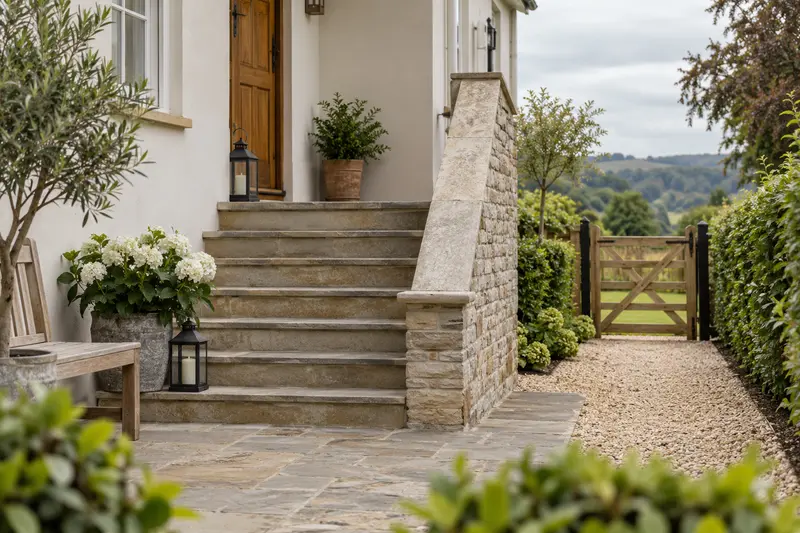
Record whether the stairs are sheltered, exposed to wind-driven rain or beside irrigation. Add leaves, drainage and the position of snow or debris when relevant. Photographs help the surveyor understand the approach, but should not replace a site visit. Note how the route changes during ordinary bad weather rather than photographing only a clear sunny afternoon.
Consider the path beyond the seat
Draw the path from the exterior door to the lift and from the other landing to the destination. Include gates, steps, bins and places where water collects. Ask where the chair parks, how the cover is handled, and whether the controls remain reachable with the actual clothing used outside.
Power provision is another part of the installation scope. Ask the installer and electrician to confirm the appropriate arrangement for the exact equipment and site. Avoid outdoor extension-lead improvisations or moving a socket based on a general web diagram. Keep any necessary building and electrical tasks named in the quote.
Worked decision: a sheltered chair but exposed landing
Consider an outside lift whose lower parked position sits beneath a porch, while the upper arrival area is exposed. A reassuring photo of the covered chair does not explain the complete trip. Ask how rainwater, surface condition and the upper approach affect use and maintenance.
The supplier may propose another parking arrangement or ask for drainage or route work to be reviewed. Those changes belong in the written project scope. A smaller improvement, such as removing stored objects from the approach, can help separately. It does not resolve an equipment rating or weather limitation.
Prepare an outdoor ownership card
Record the exact model, permitted conditions, cover procedure, care instructions and local service contact. Ask which observations mean stop using the equipment and contact support. The supplier should explain the current manual at handover, including what the owner may clean or check.
Compare outdoor proposals on this documented basis rather than the promise of universal weather resistance. If the proposed route is impractical in the conditions you expect, discuss another assessed access approach. It is better to resolve a seasonal limitation before installing equipment than to discover that the journey is unavailable when needed.
- ExposureDescribe shelter, drainage and typical debris.
- RouteMap gates and the path at both landings.
- PowerAssign the model-specific electrical work to a professional.
- CareObtain cover, cleaning, stop-use and service instructions.
Write an exposure brief for both ends of the route
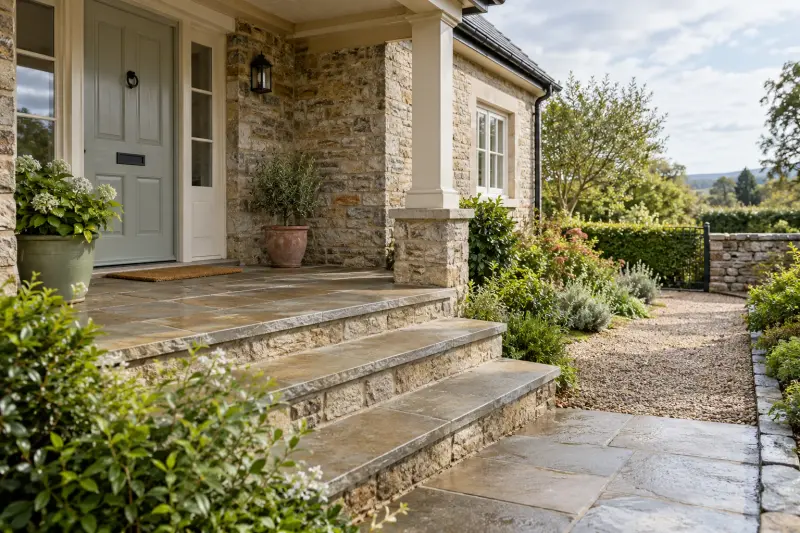
An outdoor brief should describe the stairs as they are used across ordinary conditions, rather than only on the day a photograph is taken. Write where the route starts, where it ends and which areas are sheltered. Add the direction from which rain commonly reaches the area, nearby irrigation, falling leaves and any seasonal accumulation you have observed. These are observations for the survey, not your own judgement that a product is suitable for the environment.
Separate equipment exposure from the person's approach. A chair can park beneath a porch while the path to it remains exposed. Likewise, a covered lower landing does not explain the upper arrival. Draw each section and mark what the person does before sitting and after leaving the chair. If the complete route is not practical in the conditions the household expects, the issue needs an appropriate access discussion, not merely a better-looking equipment cover.
Describe drainage observations without proposing building work yourself. Note where water remains after ordinary rain and which doorway or path it affects. Do not recreate a difficult wet routine to obtain evidence. Photographs from an appropriate safe position and ordinary observations can communicate the question. If drainage, surfaces or other route work are proposed, ask the relevant professional to define the work and coordinate it with the installation scope.
Include the household's use of the exterior area. A gate, bins, deliveries or garden storage can alter the route even when the stair dimensions remain the same. Mark normal positions and moving items. Ask the surveyor to consider the chair's proposed parked position beside those activities. Avoid clearing everything for a photo and assuming the resulting empty space represents the day-to-day environment the equipment must coexist with.
Finish the brief with any uncertainty. Perhaps a seasonal issue has not been observed yet, or the household does not know the surface construction. State that honestly. Ask the provider what information it needs and what limitations it can confirm for the offered model. A thoughtful exposure brief can improve the proposal without asserting local weather statistics, an environmental rating or a safety outcome not supported by the specific documentation.
Read outdoor equipment claims as model-specific boundaries
Begin with the exact offered model and market. Ask the supplier to identify the current instructions and limitations applying to outdoor use at this site. A broad term such as weather-resistant is not a complete description of operating conditions, storage, care or service. The buying question is what the manufacturer permits for this configuration and how the supplier proposes to meet those requirements in the actual environment.
Stannah's cited US page distinguishes dedicated outdoor equipment and describes a straight outdoor route in that range. This is a product and market example, not a promise about every staircase or brand. A turning exterior route needs its own provider response; you should not assume an indoor curved model becomes appropriate outdoors with a cover. Keep model availability and route suitability as distinct survey questions.
Ask about permitted conditions in words you understand. Which temperature, moisture, surface or exposure limits appear in the exact documentation? Which observations mean the owner should stop using the equipment and contact support? The provider should explain these points at purchase and handover. Do not replace an unanswered limit with a guessed threshold from another model or a general climate description.
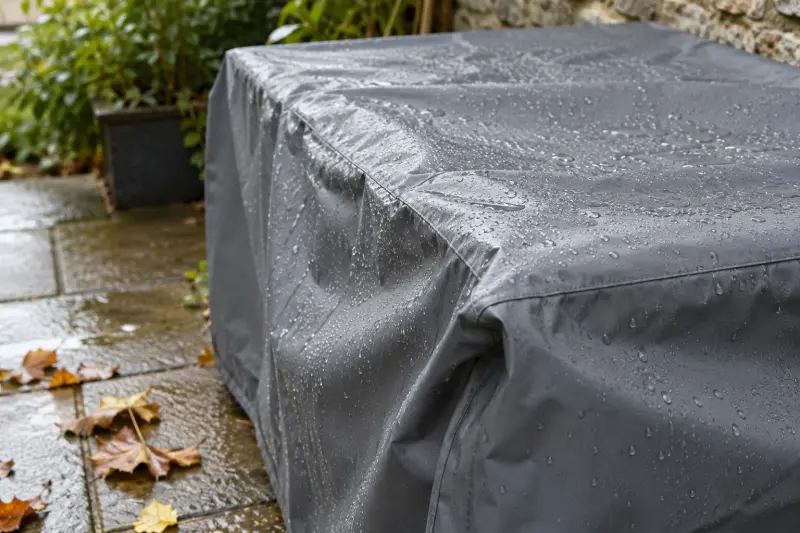
Ask what the cover does and when it is used. Does the supplier describe the cover as part of the offered arrangement, and what handling and storage task comes with it? A cover can have its own instructions without solving every route or environmental question. Record who will put it on, remove it and store it as directed. If handling the cover is difficult, raise that practical issue before ordering a package that assumes it is straightforward.
For locks and access controls, ask which functions are supplied and who manages them. A public-facing exterior area may raise household questions different from an enclosed garden. Keep the exact instructions and responsibilities in the ownership note rather than making unsupported theft-prevention or child-safety claims. The useful result is a model-specific explanation and realistic owner routine, with any unanswered boundary still visible when the proposal is compared.
- ModelExact outdoor configuration and applicable market documents.
- LimitsAsk for permitted conditions and reasons to contact support.
- CoverInstructions, handling, storage and responsible person.
- AccessSupplied lock or control arrangement and ordinary household use.
Connect gates, doors and lighting to the whole journey
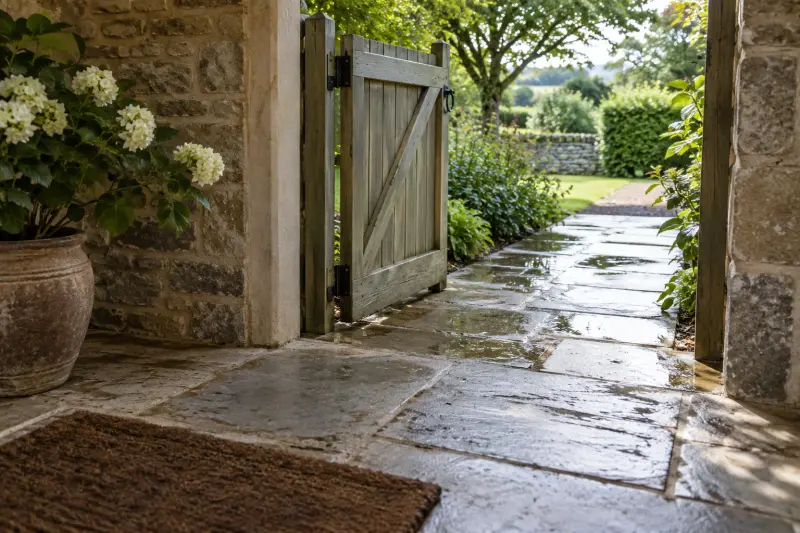
Draw the exterior door, lower approach, stairs, upper arrival and onward path on one page. Mark gates in the positions in which they are normally used. A route can be clear with a gate closed and different when it opens. Ask the surveyor to show the proposed equipment alongside that ordinary movement. Do not assume a compact chair photograph answers what happens during approach, parking and departure.
Add the items carried or managed in ordinary life. The person may want to reach a garden sitting area, enter from a driveway or use a porch. Describe the destination and ask about the required sequence without improvising carriage of bags, tools or aids on equipment not intended for that task. If another person helps, include their role and any uncertainty. Equipment placement and personal movement should each receive the relevant professional attention.
Consider what can be seen along the route at the times it is used. Identify a lighting question for the appropriate installer rather than placing a loose lamp or extension lead outdoors. An adjacent light may illuminate the doorway while leaving another approach in shadow. Record the actual task and proposed location for professional review. Adding brightness without considering control, exposure and installation is not a complete answer.
Keep electrical provision explicitly within the project scope. Ask the equipment provider and qualified electrical professional what the exact model and site require, who performs the work and what must happen before fitting. Do not copy a connection arrangement from an unrelated domestic diagram. If the provider references a particular indoor supply arrangement in its market documentation, ask how that statement applies to the offered local installation rather than assuming a universal voltage or outlet rule.
Finally, review normal passage for people who do not use the lift. Deliveries, bins and garden tasks may interact with the proposed parked position. Moving unnecessary storage can help one task, while a moving-gate or electrical conflict requires a documented response. Keep these categories separate. A complete outdoor comparison concerns the journey through the property, not only whether a rail line can be drawn over the stairs.
Worked example: shelter protects only one part of the proposal
This hypothetical home has a lower chair position under a porch and an upper arrival beside an exposed garden path. The household receives a photograph of the covered lower area and initially believes the proposal handles the weather question. The exposure brief reveals two separate conditions: equipment parked under shelter and a person continuing onto an exposed arrival route. The photograph answers neither condition completely.
The household asks the provider for the exact outdoor model's instructions and the proposed upper and lower positions. It also records where water has been observed after ordinary rain. Those observations are taken to the relevant professional for route or drainage review. The household does not treat the cover as a substitute for that review or invent an instruction to use the equipment through particular weather conditions.
A revised proposal might alter parking or identify work that another trade must undertake. The household requests a drawing and scope explaining the revision. If an exterior gate now interacts with the changed parking point, that movement is added to the comparison. A revision is useful because it explains a response to the question, not because any new drawing automatically proves the route works for the person.
Meanwhile, stored garden items can be moved to an appropriate location without waiting for an equipment order. The worksheet records that separate household task as completed. It leaves the model limitation, exposed arrival and proposed electrical work open until the responsible parties answer them. This distinction avoids a familiar mistake: a visibly tidier area can feel resolved even when the consequential installation and use questions remain unanswered.
The final outcome could be the revised outdoor arrangement, another appropriately assessed access route or no purchase yet. There is no claimed successful installation, tested weather rating or universal best model in the example. Its purpose is to demonstrate why both ends and the onward route belong in the buying brief. A household can make useful progress by obtaining the right explanations before committing to equipment that may not answer the conditions it actually encounters.
Prepare an ownership routine you can actually maintain
Write an ownership card with model, current manual, permitted conditions, ordinary parking, cover handling, owner care and service contact. Keep equipment identifiers and household details private. The card should point to the applicable instructions instead of rewriting them from memory. Ask the installer to explain which owner tasks are permitted and which belong to the service provider. A general buying article cannot supply every outdoor model's cleaning or inspection procedure.
For each required owner task, identify who can perform it and where any necessary item is stored. Cover handling, cleaning within the instructions and contacting support can all involve practical reach or lifting questions. If a proposed routine depends on an awkward movement, raise it with the provider before purchase. The answer may involve a different arrangement or appropriate assistance, rather than another accessory selected without understanding the task.
Ask how seasonal observations should be reported. You can record a change in the route, an unclear indication or a damaged cover without diagnosing an electrical or mechanical fault. Follow the exact instructions and contact the appropriate support channel when uncertain. Do not apply lubricants, sealants or improvised protective materials because another outdoor product uses them. An attempt to improve weather resistance can alter the equipment without answering the original limitation.
Keep service and warranty documentation beside the care note. Ask what the offered agreement says about environmental exposure, owner care and authorised work. Record any relevant exclusions without predicting that a claim will be accepted or rejected. The purchase decision should use the actual documentation for this configuration and market. A general indoor warranty or another supplier's weather wording is not reliable evidence for the outdoor arrangement.
Review the card when the household's routine changes. A new gate, different storage or changed assistance can alter the route without changing the equipment label. Describe the new task and ask for suitable advice rather than assuming the first survey remains an answer to every future arrangement. Useful ownership planning begins with a realistic routine and an understandable contact route, not a promise that outdoor equipment will require no attention.
- Owner taskIdentify only tasks permitted by the exact instructions.
- ResponsibilityName the household role or appropriate support route privately.
- ObservationRecord a change without attempting a technical diagnosis.
- DocumentKeep care, service and warranty linked to the actual model.
Reader questions about outdoor stairlift purchases
Can an indoor stairlift be used outdoors with a cover?
Ask for an outdoor-specific offered model and its applicable instructions. A cover does not establish that indoor equipment is permitted for an exterior site. Product availability, environmental limits and the route each need a supplier response. Do not infer an approval from a photograph of another installation.
Are all outdoor stairs suitable for a stairlift?
A site survey and model-specific proposal are needed. The cited US manufacturer example describes a particular outdoor range, not every possible exterior route. Turns, approaches, gates and local conditions should be included in the request. Where a proposed configuration is unavailable or the user's task remains unresolved, discuss another appropriate access approach.
What should I ask about rain or cold weather?
Request the exact model's permitted operating and storage conditions, care requirements and circumstances for contacting support. Record observations about both landings and onward paths. Do not use this article to set a universal temperature or moisture threshold. The provider should explain the relevant documents for the actual site and configuration.
Does a protected parked position solve the weather question?
It describes one part of the arrangement. The person's approach, arrival, onward route and ordinary equipment use also matter. Ask how the proposal addresses those tasks and whether another professional needs to review surfaces or drainage. A sheltered photograph should not erase an unanswered exposed-landing question.
Can I arrange power before the survey?
Ask the equipment provider and qualified local professional to coordinate the exact requirements first. Do not improvise outdoor extension leads or copy another market's connection arrangement. Record who performs the electrical task and how it relates to the final proposal. Scope clarification is useful progress before buying parts.
What is worth doing before ordering?
Describe exposure and the full route, organise the supplier's documents and remove unnecessary stored items where appropriate. Keep route, equipment and personal-task questions distinct. A clearer brief or another assessment may be more useful than an accessory package. Choose equipment when the actual arrangement and owner routine are sufficiently understood, including any stated limits.
MAKE THE SPEND MEANINGFUL
Before adding to the basket.
- Clear storage from the approach as a separate task.
- Review another assessed route when weather limitations remain unresolved.
How this guide was prepared
AI-assisted editorial research, checked against the linked primary sources. Product testing and a credentialed individual review are not claimed.
source-checked editorial; no hands-on testing or expert suitability assessment claimed
How we use sources and AI assistance ↗Sources & fact checks
The guide separates sourced facts from editorial questions and examples. We have not claimed hands-on product testing. How we use sources and AI assistance.
Found an error or an outdated detail? Contact the editorial team.