
In brief
List the journeys you want to make and the narrowest spaces along them. Then compare controls, turning, transport pieces, charging and local service. Published range is conditional, not a promise for your route. A scooter that disassembles can still have a component too awkward to lift. Confirm personal suitability and the rules where you will use it.
Documented options
A clearer comparison.
Research options based on manufacturer documentation. These are not results of hands-on testing. Manufacturer links are informational; no commission relationship is currently active.
IN THIS GUIDE
Make one ordinary journey your reference
Choose a real ordinary journey rather than a maximum-distance ambition. Describe leaving the storage location, reaching the destination, moving through the necessary spaces, parking and returning. Add any transport operator involved. The route list turns general portability and range language into specific questions for a provider. It is not a declaration that a product may cross every listed surface or that the user has been assessed to operate it.
For a hypothetical shopping trip, the doorway, a destination turn and the return journey are all relevant. The buyer asks about the exact local model and appropriate demonstration rather than treating overall width as the entire answer. Another person mainly wants to reach a friend by a route involving a bus. The operator's acceptance conditions need their own verification; a retailer's travel-scooter label does not settle them. Where physical suitability is uncertain, appropriate professional advice remains part of the decision.
Keep operating tasks distinct from equipment fit. Tiller position, ordinary stopping, getting on and off and looking around concern the actual user and setup. A family member can help list those questions without evaluating ability from a product photo. The website does not collect medical histories or declare suitability from age, height or a brief quiz. Bring personal concerns to the appropriate private assessment and let the actual user participate in the provider's supported explanation.
Identify which destination tasks are essential and which are occasional. A scooter selected for an unusual excursion may create an unnecessary everyday transport routine, while a frequent task may justify another documented configuration. Do not claim one model is best for all older adults or every neighborhood. The useful comparison preserves the real journey and asks which exact candidate can be appropriately reviewed for it. An unresolved route or personal question should remain visible even when another feature is appealing.

Editorial illustration
Add distances only to describe the outing, not to predict battery performance. In an illustrative route note, the shop is 0.8 miles from home and the outward and return trips add to 1.6 miles. Another 0.2 miles of movement around the destination brings the recorded journey to 1.8 miles. These are invented example measurements, not a tested scooter result. Keep a separate note for detours, destination access and any transport operator. The provider can then discuss the exact model and route; subtracting 1.8 from an advertised range does not establish an assured reserve. This simple route arithmetic also reveals whether a larger battery is being considered for a real frequent task or merely because its catalogue number is higher.
Keep the original goal open to another arrangement when needed. A no-purchase outcome or further advice can be useful if the representative journey has not been settled. Optional storage and comfort features belong after the ordinary route and operation enquiries, with each accessory given its own approved purpose.
Read range and dimensions in context
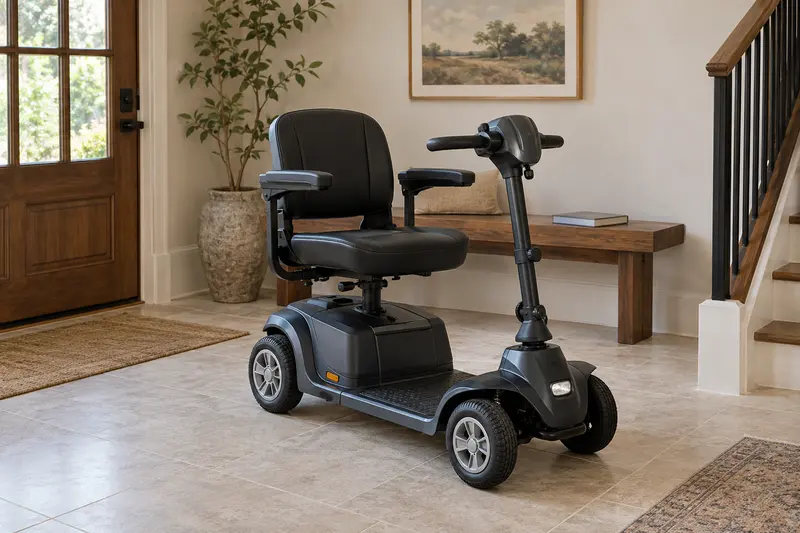
Pride’s US GoGo Elite Traveller 2 information lists a 37-inch turning radius, five-piece disassembly and a 35-pound heaviest front section. Its 12Ah and 18Ah range figures are both stated at a 220-pound user weight. Terrain, battery condition and other conditions affect range. These specific figures illustrate why headline range and “portable” are incomplete descriptions.
Read the complete exact-model specification as a group of conditional facts. Overall width and length, turning information, battery option and transport-piece weights answer different questions. A published range needs its stated conditions and current variant; it is not a promise of the reader's personal journey. The cited Pride page is a concrete US example, with the maker qualifying speed and range according to user, terrain, battery and other conditions.
The actual US specification gives a more useful battery comparison than two anonymous best-range scores. Pride lists up to 8.8 miles with the 12Ah option and up to 13.8 miles with the 18Ah option, both at the stated 220-pound weight. The nominal gap is five miles; it is not an extra five miles guaranteed for the reader. Put the battery option, stated conditions and dated source on the same shortlist row. Ask whether the larger option addresses a documented journey need and what it changes in the transport routine. If a retailer quotes 13.8 miles while the order identifies 12Ah, request clarification before paying. Do not average the two figures, copy the longer range into both offers or invent performance at an unlisted rider weight. A compatible route and an understood configuration matter more than winning a headline comparison.
Pride's current Go Go Elite Traveller 2 information describes five-piece disassembly and a thirty-five-pound heaviest front section. Those numbers should not be converted into a claim that every user can lift it. Shape, grip, the vehicle opening and available appropriate help matter to the actual task. Keep battery and other components separately identified in the transport enquiry. A portable category does not establish that the complete arrangement can be handled alone or loaded into any car.

The product page also specifies the battery system for that exact model. Do not assume a lithium system or copy e-trike charging advice into this scooter's operation simply because both vehicles are powered. Use the relevant owner manual and provider explanation. If the ordered regional version or generation differs, request its own specifications and instructions. A similar model name may conceal an important equipment change.
Separate nominal dimensions from practical approval. A turning figure or ground-clearance number can frame a question, but it cannot authorize an obstacle crossing or establish personal operation in a room. Ask for an appropriate model-specific review of the spaces that matter. The website has not tested maneuvering, battery range or stability and should not present these information-based comparisons as hands-on ratings.
Try the transport routine before committing
Make the car routine a complete sequence with responsible assistance. Identify which documented components are removed, where each goes, how the approved transport arrangement is handled and who helps at the destination. Ask the provider to demonstrate only under the exact instructions and appropriate conditions. The article supplies no lifting technique or dismantling tutorial. A component fitting inside a boot does not prove the route through its opening or the handling task is suitable.
For a hypothetical household, the scooter's parts fit the available storage space but one key component remains a difficult personal handling question. The buyer seeks the appropriate advice and provider explanation rather than attempting an unfamiliar lift unaided. Another household can arrange help at home but not at its destination. That dependency needs to be visible before the order. A folding mechanism or five-piece description is useful equipment information, not a guarantee of independent transport in every situation.
Discuss permitted securement and any transport-provider requirements with the responsible sources. A private car trip differs from a coach, bus, rail or air journey, each of which may have its own acceptance process. Ask the actual operator about the exact model and battery where relevant. Do not infer approval from a travel photograph or the general word airline-friendly. This guide does not represent verified operator acceptance for the named scooter.
Plan storage and charging using the exact manual. Identify the model-specific battery and charger, approved location requirements and the responsible provider for unclear steps. Keep household routes considered in the actual setup without inventing a universal charging procedure. The cited Pride owner-document page is a route to the relevant materials, but the installed regional version should be confirmed. A supplier's handover can be compared by the explanation and supported setup actually included.
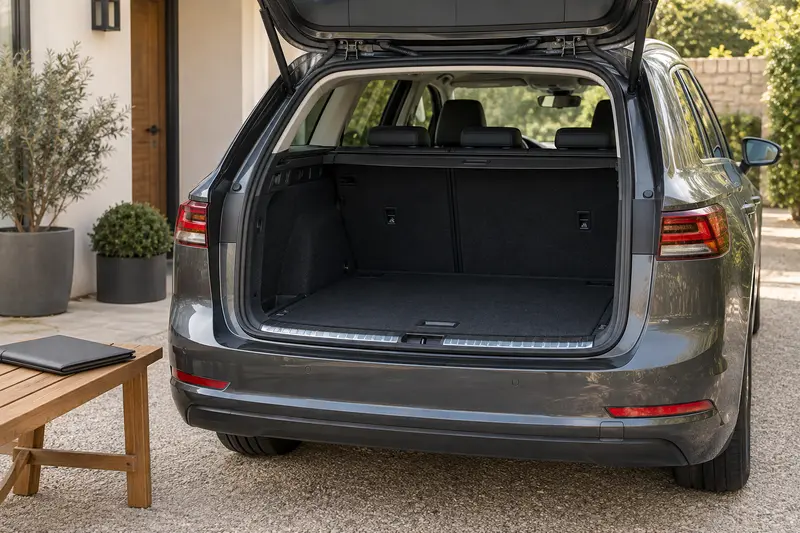
Include the journey after unloading. A scooter may be transported to a destination whose entrance, parking or ordinary route has not been considered. In a hypothetical visit, help is available for the car routine but the destination’s access question is still unanswered. The household contacts the relevant operator or property source and discusses the actual task with the provider. This avoids treating transport to the address as proof that the whole outing works. If a venue changes, revisit that part of the plan rather than assuming a previous trip establishes every later destination. The purpose is a complete enquiry, not a website-generated access certificate.
The battery option changes a handling question as well as the nominal range. Pride lists battery weights of 19.5 pounds for 12Ah and 29.6 pounds for 18Ah, a difference of 10.1 pounds. Its listed total weights with those options are 102.5 and 112.6 pounds respectively; the front section remains listed at 35 pounds. Keep those separate fields instead of calling the whole scooter a 35-pound purchase. For a car enquiry, record the documented pieces, the opening and the agreed help at both ends. Ask the provider to confirm how the supplied configuration is handled under its instructions. Those catalogue weights do not show that a particular person can lift a component, and choosing the smaller battery does not automatically resolve grip, space or assistance.
Keep the daily arrangement simple and privately documented. If the car, destination help, storage location or equipment changes, revisit the affected routine. A prior successful trip is useful context but not blanket approval for every later combination. A no-purchase or different-configuration outcome is valid when the complete transport task remains unresolved.
Check the local rules and service
Use the applicable local rule source for the exact vehicle and intended location. GOV.UK's guidance describes who may use mobility scooters and powered wheelchairs and how class affects permitted use and other requirements. A US model page does not establish the local classification of a supplied UK unit. Ask the relevant local provider and check authoritative guidance rather than assuming that maximum advertised speed alone answers every legal question.
For a hypothetical UK purchase, the seller offers an imported product described simply as a mobility scooter. The buyer asks for its actual locally supplied configuration and relevant class documentation, then consults official guidance for the proposed places of use. Another country's buyer needs that country's source, not a copied UK conclusion. An operator's transport acceptance is also separate from local route rules. Keep those distinctions on the journey sheet so one positive answer does not fill all permission fields.
Service needs a named local route. Ask who accepts support requests, how collection or a call-out is arranged and which exact parts the provider can supply. A business appearing in an international brand network does not establish a particular appointment, regional warranty obligation or every repair capability. Request the actual service scope for the proposed order. A low online equipment price can leave support uncertain; clarify that dependency before judging the total commitment.

Read component warranty and current terms with batteries, delivery, assembly and return conditions separate. An optional plan should explain what it adds to included cover. If reimbursement matters, use the actual payer and qualified provider process; a listed billing code does not guarantee coverage. Do not invent a commission, insurance payment, usual repair price or financial saving. Keep unconfirmed costs blank until a responsible source provides the actual figure or applicable document.
Keep the maker's identifier with any regional enquiry. The cited US quick-view sheet identifies this four-wheel GoGo Elite Traveller 2 as SC442E and gives a maximum speed of up to 4.23 mph. That is a documentary reference, not confirmation of the configuration sold in another country. Do not round the number to four and declare UK pavement eligibility. Ask the local seller for the actual supplied model, its local documents and relevant classification, then check the intended use against the official guidance. A matching marketing name or similar photograph cannot fill that field. This avoids buying a superficially comparable import while assuming it has the local operating permissions, instructions or service arrangement of another version.
Record the actual contracting seller and purchase region. A translated manufacturer page does not prove local stock, installation service or program availability. A useful comparison is based on exact equipment, verified local questions and documented ownership responsibility rather than a global product badge.
Make a journey comparison record and a short shortlist
The journey comparison record should record a requirement, exact-model answer, source and next check for each of the five rows. Keep route permission, personal operation, transport, charging and service distinct. A favorable published specification can answer one field while leaving another essential question open. Avoid a percentage that appears to certify the scooter or user. The article is an organizing guide and has not assessed a person's ability or tested the named model.
For a hypothetical shortlist, one candidate has clear battery and dimensional information but an uncertain service route. Another has local support while its car routine still needs an appropriate review. The buyer progresses those actual questions instead of adding more thumbnails to a long list. A third household finds that its current documented equipment serves the ordinary journey and needs no replacement. Each outcome should remain available without pressure from a promotional countdown.
Before ordering, confirm the exact model, battery option, supplied storage and provider scope. Product photographs can include optional equipment, so the written package matters. Ask what is included before buying another basket or bag. Any new accessory needs the maker's exact compatibility and load guidance; extra containers do not automatically add vehicle payload. A modest approved item should solve a defined remaining task rather than make a large convenience bundle feel necessary.
At handover, ask for the actual equipment, relevant instructions and agreed ordinary-use explanation through the provider's appropriate process. Resolve differences with the responsible seller or manufacturer instead of making unsupported adjustments. Keep receipts, identifying details and correspondence private. Manufacturer links here are information sources; no live price, stock, tested range, approved affiliate relationship or reimbursement is represented.

Before adding storage, read the exact package and accessory restrictions. Pride lists a front basket and a removable footboard basket for this US model, so a generic basket bundle may duplicate an included function. Its quick-view information also says only one rear accessory can be used at a time. A shopper considering both a rear basket and a walker holder should therefore ask the provider which approved arrangement serves the necessary task, rather than ordering both for simultaneous use. Confirm the actual supplied package and exact accessory compatibility; a photo is insufficient. The lowest-cost useful outcome might be using the included basket, removing an unnecessary item from the order or waiting until the ordinary journey identifies a remaining storage need. Extra containers do not increase the vehicle's permitted load.
Review the comparison record when a meaningful journey or equipment change occurs. An earlier route description cannot predict every new surface, assistance arrangement or destination. The useful purchase is one with a well-understood documented scope and the needed personal and local checks, while retaining existing suitable equipment, seeking another assessment or waiting are equally informed decisions. Optional items should earn their place through the actual journey.
MAKE THE SPEND MEANINGFUL
Before adding to the basket.
- Ask a qualified provider about suitable reconditioned or rental equipment if offered; inspect documentation and coverage.
- Use the included basket before buying additional storage, provided it meets the manufacturer’s limits and the actual task.
In brief
Questions worth answering
Is advertised range enough to choose a scooter?
No. Start with the actual route, charging, transport and support needs. A manufacturer’s range figure is tied to stated test conditions and is not a promise for your journey.
What should I check before putting a scooter in a car?
Confirm the exact transport method in its instructions, the heaviest component and the practical loading arrangement. A folding label alone does not show that you can lift or secure it.
How this guide was prepared
AI-assisted editorial research, checked against the linked primary sources. Product testing and a credentialed individual review are not claimed.
source-checked editorial; no hands-on testing or expert suitability assessment claimed
How we use sources and AI assistance ↗Sources & fact checks
The guide separates sourced facts from editorial questions and examples. We have not claimed hands-on product testing. How we use sources and AI assistance.
- Pride Mobility: exact US GoGo Elite Traveller 2 battery options, weights and accessories ↗
- Pride Mobility: Go Go Elite Traveller 2 owner documents ↗
- GOV.UK: mobility-scooter classes and permitted use ↗
Found an error or an outdated detail? Contact the editorial team.