
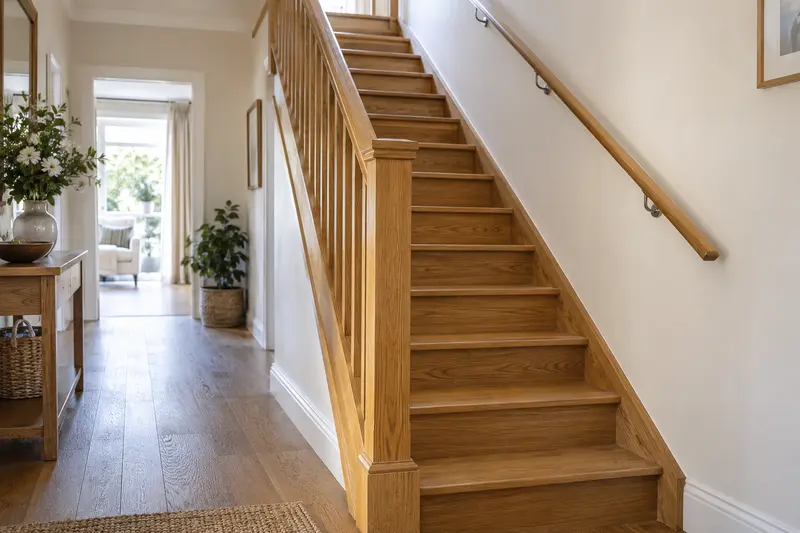
In brief
Prepare a professional conversation about handrails by describing the full stair route, existing fixings and everyday use. A decorative rail or improvised fixing is not a substitute for an appropriately specified installation. Start with what is already present and what needs review.
IN THIS GUIDE
Describe the route and the concern
The CDC home checklist asks readers to address loose or broken handrails and considers rails on both sides of stairs. That household guidance gives a reason to review the route; it does not specify a fixing method or rail dimensions for every building.
Write down which section lacks a useful rail, where the existing one stops and whether any fixing appears loose. Do not pull hard on a doubtful rail as a test. Photograph the arrangement from a stable position and ask a suitable professional to review it. Include the people who use the stairs in the discussion, without assuming one grip or height suits everyone.
Ask about the wall and the ends
An installer needs to identify the actual wall or support structure, not simply the paint finish. Ask who verifies the fixing arrangement and what product documentation is supplied. Keep rail shape, ends, turns and clear passage in the project discussion rather than choosing purely from a decorative sample.
Describe nearby doors, switches and any existing stairlift rail. Ask how the proposed addition interacts with those features. Where a personal access assessment is needed, separate it from the installer’s construction role. This article provides a request brief; it does not offer a DIY load-bearing installation design.
Worked decision: the attractive rail kit
Suppose an online rail kit includes brackets and screws, but the listing does not explain whether those fixings suit the staircase wall. Buying the kit first can create a false sense that the important decisions are settled. Ask the installer to identify the wall and acceptable fixing system before ordering.
The existing rail may need a repair rather than complete replacement, or a second rail may be discussed after assessment. A decorative finish can be chosen once the practical specification is clear. The lower-cost answer may therefore be appropriate professional repair, not the cheapest unverified set of components.
Take a short installation brief
Make a one-page record of the stair route, current rail, relevant users’ questions and obstructions. Ask the professional to return a written scope showing what is supplied, how the installation is checked and which work is excluded. Keep any care and inspection information with the household documents.
Lighting and clutter can be reviewed alongside the handrail as separate route tasks. They do not make a loose fixing acceptable. If the rail is damaged or unreliable, obtain appropriate advice about use and repair rather than waiting for a complete decorating project.
- RouteRecord starts, ends, turns and missing sections.
- StructureAsk who checks the support and specified fixings.
- InteractionsMark doors, switches, passage and lift equipment.
- CompletionRequest the checked installation and care information.
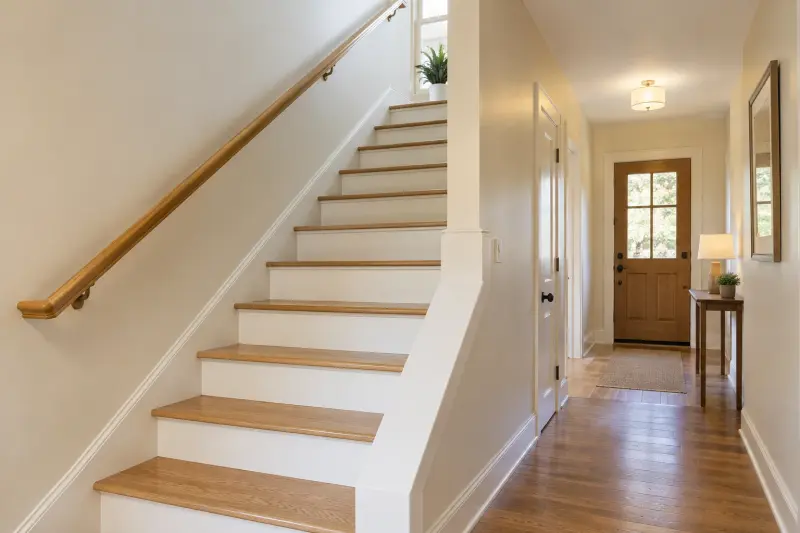
Describe the existing route before choosing a rail kit
Begin with the full stair route, including the approach before the first step, any turn or landing and the destination after the last step. Draw the existing rail and mark where it starts, stops or changes direction. Add doors, switches and equipment that share the space. A request for another handrail is easier to discuss when it describes the ordinary route rather than only the length of wall available for a decorative product.
Record the concern in plain language. Perhaps one section has no rail, a fixing appears loose or a particular user wants the existing arrangement reviewed. Do not pull on a doubtful fixing to create evidence or ask someone to recreate a difficult stair movement. Ordinary observations and photographs taken from an appropriate stable position can communicate the question. The professional review should determine the relevant work, rather than the household trying to diagnose the structure through a shopping checklist.
Separate the person's task from the building question. A user may describe a grip, reach or support concern that needs appropriate assessment. The installer needs information about the wall or supporting structure and proposed fixings. Those roles can inform one another without one replacing the other. A rail kit's shape and supplied screws do not establish either individual suitability or the support available behind a finished wall.
Include other household users. A second rail, nearby door or existing stairlift can change ordinary passage. Describe the route used by people who do not use a proposed aid, as well as the person requesting review. Avoid assuming every household member needs identical grip or movement. The practical brief should allow the relevant professionals to explain an arrangement serving the actual use rather than a photograph of an empty staircase.
Before buying components, ask who will specify and install the proposed work. An existing rail may need appropriate repair; a new section or second rail may need another scope. Keep those possibilities open until reviewed. The lower-cost useful next step may be a professional assessment of the present arrangement, while finish samples and accessory packages can wait. The brief's job is to clarify the concern, not to turn an unverified kit into a settled installation decision.
Keep household safety guidance distinct from construction requirements
The CDC's home checklist asks readers to address loose or broken handrails and considers rails on both sides of stairs. That is a useful household prompt to review the route. It does not provide a project-specific fixing design, prescribe a rail height for every user or determine the construction rules applying to a particular property. Keep the checklist's role clear when preparing a professional conversation.
For an England project, GOV.UK publishes Approved Document K as statutory guidance covering matters including stair design. Its geographic and building-work scope should be considered by the appropriate local professional. This guide does not import its requirements into another country or decide which provision applies to an existing household alteration. Ask who determines the applicable rules and how that response becomes part of the written project scope.
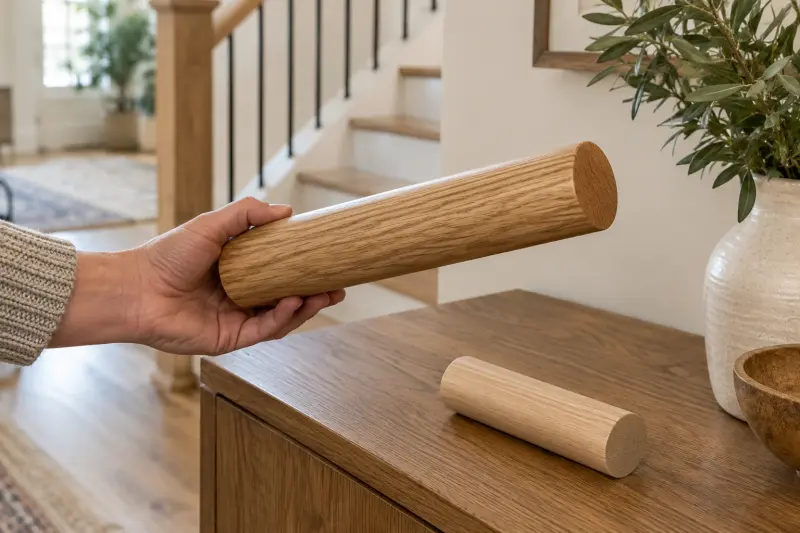
Distinguish current guidance from research about possible future changes. GOV.UK's commissioned domestic-stair research page expressly says its recommendations are not government policy or guidance. A new report can raise useful questions without becoming a new rule for today's installation. Do not select a measurement or requirement from a news summary or research recommendation and present it to the installer as a universally mandatory design.
Ask the professional to identify the relevant source and its application to the actual work. You can keep the document reference in the project folder without reproducing a technical design yourself. If the response relies on another jurisdiction, ask for clarification. Your country, type of property and proposed work can matter to the requirements. Confirm the actual local approval and any permission to alter the property instead of assuming either follows from a general guide.
The distinction is useful for shopping too. A retailer's description of a compliant product does not establish that the supplied kit, fixing and location form an appropriate installed arrangement in your home. Ask about the complete specification and responsible installer. A source-backed brief should make it easier to obtain a proper response, rather than encouraging the household to assemble a load-bearing design from disconnected dimensions found online.
Ask about substrate, fixing, shape and continuity separately
The wall finish is not the same as the supporting construction. Paint, tile or a decorative panel may conceal the part an installer needs to understand. Ask who identifies that structure and specifies an appropriate fixing arrangement for the proposed rail. Keep the answer with the product and installation scope. Do not assume screws supplied in a general kit suit every wall or improvise a different fixing because it looks substantial.
Ask about the rail's shape and how the proposed user task is considered. A decorative sample can show finish and appearance without explaining grip, ends or the route through a turn. Relevant personal questions should receive appropriate assessment. The installer can then relate the proposed specification to the building. Avoid declaring one diameter, shape or finish best for everyone from a general buying article.
Discuss continuity through the actual stair route. Where does the proposed rail begin and end, and how does it handle a landing or change in direction? Ask the provider to show the arrangement rather than estimating it from a component photograph. Existing doors, switches and equipment should be marked on the same brief. A neatly cut kit length does not answer the route at its ends or its interaction with another fixture.
Separate fixing and finishing tasks in the quote. Ask what preparation, installation, sealing or making good is included where relevant, and what happens if the supporting construction requires another response. Identify how a changed scope is agreed before work proceeds. Do not buy extra brackets to anticipate an unknown construction issue. The appropriate professional should explain the task and components it will stand behind.

Finally, ask about completion and ongoing care. Which instructions or record will the household receive, who handles a concern about movement or damage and what owner observation is appropriate? Do not create an improvised load test at handover or a universal inspection interval from this article. Keep the actual installed specification and provider response, so later questions concern the arrangement supplied rather than the decorative product originally seen online.
- SubstrateWho identifies the supporting construction?
- FixingWhat exact system is specified for the proposed arrangement?
- RouteHow are starts, ends, turns and adjacent fixtures addressed?
- CompletionWhich instructions, record and support contact are supplied?
Worked example: supplied screws do not complete the specification
This hypothetical household finds an attractive handrail kit online. It includes brackets and screws, and the listed rail length seems to match a wall beside the stairs. The household initially assumes the package settles the installation decision. The brief reveals three gaps: the wall construction is not identified, the ends and nearby doorway are not described, and the user's support task has not been reviewed where needed.
Before buying, the household asks a suitable installer to review the existing arrangement and the proposed work. It shares ordinary route observations and the kit information without performing a support test. The installer is asked whether the listed components are appropriate, whether another fixing specification is needed and whether the current rail could be repaired instead. The package's completeness as a retail product is kept distinct from completeness as a home project.
The review may show that a repair is the relevant first task, or that another rail arrangement deserves consideration. If an additional section is proposed, the household requests a written scope showing the actual route, components and work. A finish preference can then be discussed within that scope. It does not decide supporting construction or become the reason to accept a kit before those questions are understood.
Suppose the selected specification is less elaborate than the original kit. That can be good value when it serves the confirmed task with appropriate installation. Suppose instead it requires more work than anticipated. The household can see why: a real supporting or route question was missing from the initial product comparison. Neither result proves that an online kit is inherently good or bad. The relevant question is what the appropriate provider can specify and stand behind for this home.
The example has no invented installer visit, compliance approval or measured load result. Its purpose is to expose the gap between buying components and arranging the installation. A professionally reviewed repair, another specification or a decision to await assessment can each be useful progress. The household should not be pressured to complete a decorative order merely because the finish already matches its interior.

Use a written brief and a scoped quotation for the final choice
Keep the request brief to one or two pages. Include the route sketch, existing arrangement, ordinary concerns, relevant household use and any assessment question. Add the location and supporting-construction questions that the installer needs to answer. Measurements collected appropriately can be marked preliminary; uncertain figures should remain uncertain. Do not make the brief look like a technical drawing that you have already approved.
Ask the professional to return a scope describing the proposed rail, fixing arrangement, preparation, fitting and finishing. Identify responsibility for any local applicability or permission question. If another party must approve or undertake something, record who and when. This avoids comparing a delivered kit amount with a properly installed project as though they were the same commitment. Use genuine dated quotes where supplied and leave missing amounts visible.
For choices, separate essential specification from finish preference. Ask what variation is available within the appropriately specified arrangement and which changes would require another review. A premium finish may be enjoyable, but it should not obscure a required task or trigger replacement of sound equipment merely to complete a matching set. Conversely, the cheapest finish does not make an unverified fixing acceptable.
At completion, ask the provider to explain what was supplied and how questions are reported. Keep the product information, installation record and any owner-care instructions together. If an aspect differs from the scope, describe it and ask for the provider's resolution. Do not independently add another fixing or test the rail with excessive force to demonstrate a disagreement. The record supports communication with the responsible party.
Keep separate route improvements in their own section. Lighting, clutter and storage can each deserve attention, as the CDC checklist illustrates, but none makes a doubtful rail fixing acceptable. A household may undertake a modest storage tidy-up while professional rail work remains pending. Naming the separate tasks helps avoid one visible improvement being mistaken for complete resolution. Choose the rail arrangement on its confirmed task and scope, with the smaller no-purchase alternatives retained where they are relevant.
- RequestRoute, existing rail, user concerns and unresolved assessment.
- OfferProduct, supporting structure, fixing, installation and finishing scope.
- ChoiceEssential specification versus separately valued finish.
- RecordSupplied arrangement, instructions, discrepancy and contact.
Reader questions about stair handrails and professional installation
Should every home have a second stair handrail?
The CDC checklist gives a reason to consider rails on both sides and review loose or broken rails. The actual arrangement should be discussed for the route, users, building and relevant local requirements. This guide does not supply a universal installation design or make the same personal recommendation for every household.
Can I choose a kit by matching its length to the wall?
Length is only one product detail. Supporting construction, fixing, starts, ends, turns, adjacent fixtures and the user's task also matter. Ask the appropriate professional to specify the arrangement before treating a kit as the answer. Do not assume supplied screws suit every wall or add components independently to compensate for an unknown requirement.
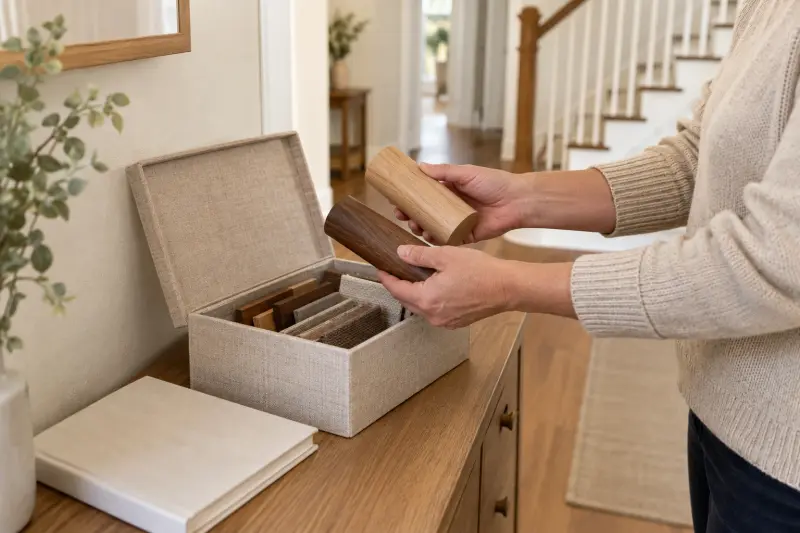
Does a decorative rail have the same role as an assessed support arrangement?
Appearance does not establish the installed role or personal suitability. Ask what the proposed specification is intended to do and how the relevant requirements are addressed. Keep uncertain grip, reach or support questions for appropriate assessment. A pleasing finish can be selected after the practical arrangement is understood.
Can a new research report change today's installation rules?
Research and current guidance are different sources. The cited England research page explicitly describes its recommendations as not government policy or guidance. Ask the local professional which applicable requirements govern the proposed work. Do not convert a recommendation or another country's diagram into a universally mandatory measurement.
Is repair worth considering before replacement?
Ask a suitable provider to review the existing condition and task. An appropriately scoped repair may answer the concern without a complete new rail. It is not a reason to keep using a doubtful arrangement without advice. The useful comparison identifies the work required, not simply whether a new product looks more luxurious.
What can I do before ordering?
Describe the route, photograph the existing arrangement from a stable position and prepare a brief without testing doubtful fixings. Organise the professional review and keep lighting or storage concerns as separate tasks. A written scope can be more useful progress than an early kit purchase. Choose components and finish when the arrangement and installation responsibilities are sufficiently clear.
MAKE THE SPEND MEANINGFUL
Before adding to the basket.
- Ask whether the existing rail can be appropriately repaired.
- Use existing photographs and notes for the first conversation before buying a kit.
How this guide was prepared
AI-assisted editorial research, checked against the linked primary sources. Product testing and a credentialed individual review are not claimed.
source-checked editorial; no hands-on testing or expert suitability assessment claimed
How we use sources and AI assistance ↗Sources & fact checks
The guide separates sourced facts from editorial questions and examples. We have not claimed hands-on product testing. How we use sources and AI assistance.
- CDC: Check for Safety home checklist ↗
- GOV.UK: Approved Document K, England ↗
- GOV.UK: commissioned domestic-stair research is not current policy or guidance ↗
Found an error or an outdated detail? Contact the editorial team.