

In brief
Ask what the exact lift does during a power interruption and how it recharges afterward. Battery operation does not mean unlimited journeys. Keep the current manual and service contact accessible; avoid assuming a different model’s backup procedure applies.
IN THIS GUIDE
Find the model-specific explanation
Stannah’s battery questions describe rechargeable stairlift systems and distinguish continuous charging from charging points on particular rail types. That distinction matters when asking where a chair should be parked. Its general advice is not a substitute for the current manual supplied with your lift.
Write down the exact model and the charging arrangement confirmed by the installer. Ask how you recognize normal charging, a missed charging position and a low-battery indication. If a control or display differs from the documentation, contact the supplier. Do not resolve the mismatch by treating a similar-looking online unit as the same equipment.
Separate travel backup from powered options
Ask which functions remain available when household power is interrupted. Travel, powered turning, folding and rail movement are separate questions. Request the relevant manual sections and a handover explanation of the permitted user actions. Do not ask someone to perform a transfer or emergency procedure that is unsuitable for them simply to test a claim.
Avoid entering a universal number of backup trips into a buying comparison. Ask what the supplier’s statement assumes about charge, route, load and configuration. A quoted capability should remain attached to that exact model and those conditions. Record unresolved details rather than inventing a capacity estimate.
Worked decision: the chair is parked away from charging
Imagine a household parks the chair in a convenient place that is not the charging position for its configuration. During a later outage, the available charge may differ from what the family expected. The planning error is assuming parking and charging were interchangeable.
Ask the installer to identify the correct parked charging positions on the actual rail and explain the indication you should see. Put that note beside the manual. If the current lift reports a fault or low charge, follow its documentation and authorized support advice; do not repeatedly run it as an improvised battery test.
Create an outage information card
Keep a short card containing the charging arrangement, manual page, support number and the limits of any user procedure. Put it somewhere accessible without requiring the unavailable lift to reach it. This is a household information aid, not an emergency repair guide.
Compare battery replacement and service terms before buying backup equipment. A replacement pack must be the approved part and handled through the permitted service route. There is no need to buy an extra system because of a vague fear-based advertisement. Start by understanding the equipment and support already supplied.
- ChargingConfirm the parked position and normal indication.
- OutageAsk which travel and powered options remain available.
- LimitsKeep the provider’s assumptions attached to its claim.
- HelpStore the correct manual reference and support number.
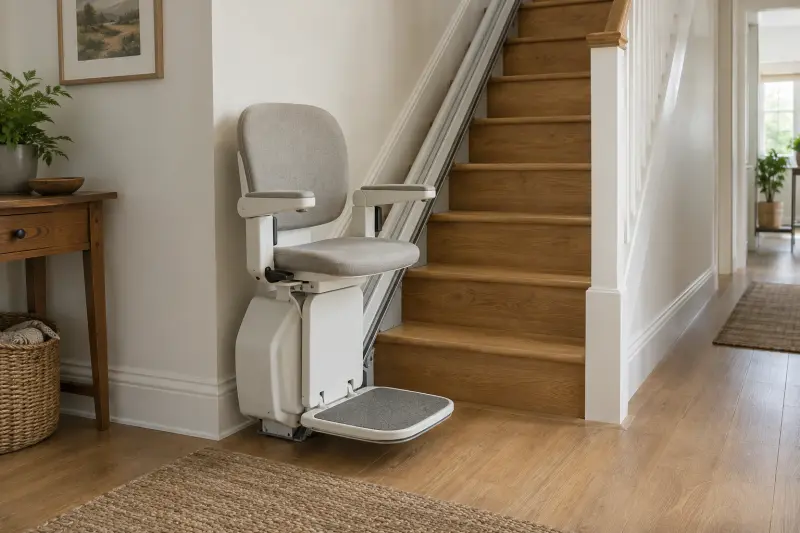
Begin with the charging arrangement actually supplied
Write the model and configuration privately at the top of an information card. Ask the provider to identify the charging arrangement for that exact installation and show where the relevant explanation appears in the current manual. A general statement that the lift is battery powered leaves several questions unanswered: how charging occurs, where the chair should rest and which indication tells the household that the expected state has been reached.
Separate ordinary parking from confirmed charging. A household may prefer to leave the chair away from a doorway, while the supplied configuration has particular charging positions. Ask the provider how the proposed ordinary routine meets the instructions. Do not assume the most convenient-looking resting point is interchangeable with every charging point. If the accepted layout and charging routine appear to conflict, raise the question before ordering rather than choosing one independently after fitting.
Use a drawing reference or provider explanation instead of a guessed marker. The information card can say charging arrangement described in manual section, with a private note from handover identifying the relevant place. It should not supply instructions for a different rail or encourage the user to alter a stop. If the delivered arrangement differs from the document, contact the supplier. A similar photograph online is not a reliable substitute for the configuration at home.
Ask about ordinary household responsibility. Who leaves the chair in the appropriate state after calling it or completing a journey? Does another household member routinely move it to make passage? Explain the real sequence to the provider. If it depends on a helper unavailable during part of the day, preserve that issue as a planning question. The equipment's technical capability and the household's consistent routine belong in the same discussion.
Keep the note accessible without relying on the lift to reach it. A manual stored only in an upstairs cupboard may be inconvenient when the question arises downstairs. Use an appropriate household location or private digital copy that the user can actually find. You do not need a new monitoring app or additional hardware merely to understand the existing charging arrangement. Start with clear documentation and an appropriate support contact before buying another device.
Ask about four functions rather than one backup promise
Create separate rows for travel, seat turning, folding and any moving rail function included in the offered arrangement. Ask which continue during an interruption of household power and what the exact instructions permit the user to do. Not every configuration includes all four functions. Remove irrelevant rows rather than assuming a premium display model and the ordered arrangement have the same capabilities.
For travel, ask what conditions apply to any supplier capability statement. Charge state, route and configuration should remain attached to the response. Do not enter a generic number of return trips into a buying comparison without the matching model explanation. Battery operation is a feature description, not a promise of unlimited journeys or a guarantee about the condition of a particular battery on a future day.
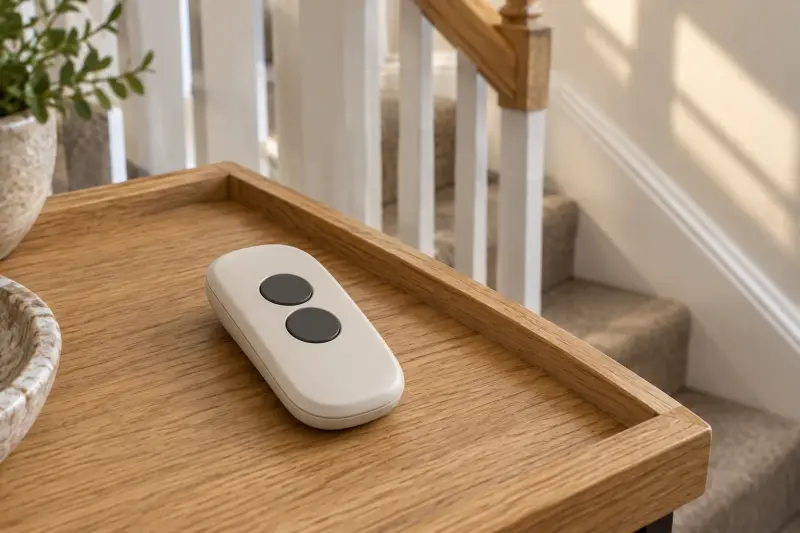
For seat functions, ask the provider to explain how the offered option behaves during interruption and where its instructions are found. Keep personal movement questions distinct from equipment procedures. A permitted manual action may still require an appropriate assessment of the user's task. Do not ask someone to demonstrate an uncertain emergency transfer simply to confirm a marketing statement. The buying worksheet records the question and responsible explanation, not a test of the person's ability.
For a moving rail, identify the exact included arrangement and ask about its stated behaviour and support route. A household may be concerned about a nearby doorway or ordinary passage. Describe that concern so the provider explains the actual configuration. Do not improvise a release, force a mechanism or follow another model's video to make a passage clear. An unanswered function needs the correct document or authorised support response.
Keep communication separate from these equipment functions. Ask how the household obtains assistance under its real circumstances and keep the relevant contact accessible. Do not present a domestic lift as an escape arrangement or infer an emergency-use approval from battery travel. Your information card should point to the actual model's limitations and support process. Understanding separate functions is more useful than buying an extra backup accessory on the strength of a broad promise.
- TravelCapability statement and the exact conditions it assumes.
- SeatTurning or folding behaviour in the offered configuration.
- RailIncluded moving section and the correct support explanation.
- HelpAccessible information and the household’s assistance route.
Understand the limits of general battery figures
A supplier's general battery page can be useful background, but its numerical example is not automatically the capability of the offered installation. Ask the provider which model, route, charge state and function assumptions apply. Preserve those conditions beside any figure supplied. Do not transfer a number from a new demonstration unit to a used battery, another rail arrangement or a different household routine.
The cited Stannah UK FAQ gives more than one example of available travel during a power cut in different parts of the page. We therefore do not select one as a universal count. The practical next step is to request the current explanation for the quoted configuration and its actual instructions. This is a source limitation worth retaining, rather than hiding it behind a convenient rounded number in a comparison table.
Ask how battery condition is assessed through the permitted service route. A purchasing guide should not instruct the household to run repeated journeys until the battery weakens. That would turn an information question into an improvised test and would not establish future performance. Request the provider's documented condition or service response where relevant, especially for a reconditioned offer or an existing unit with an unclear indication.

Editorial illustration Separate capacity context from replacement planning. A supplier may discuss typical service life, but a general age range cannot determine the condition of this component or the appropriate replacement date. Ask who reviews condition, which part is approved and what the service or warranty agreement says about replacement. Avoid assigning an invented annual replacement allowance or lifetime saving to make a particular package appear better.
Use uncertainty honestly in the decision. The information card can say supplier explanation awaited or model conditions confirmed, without claiming our site independently tested backup travel. A specific answer may help compare proposals, while a missing answer may justify another discussion. The goal is an understood arrangement and support route, not a dramatic promise that every power interruption will be handled without any change to the household's access.
Worked example: convenient parking and charging are confused
This hypothetical household normally leaves the chair where it makes a doorway convenient for another person. The family remembers that the lift uses batteries and assumes it is ready whenever needed. Its notes do not identify the charging arrangement for the fitted configuration. The issue is an information and routine gap, not proof that the equipment is faulty or that another battery pack should be purchased.
The household contacts the provider with the exact model and asks for the current instructions and an explanation of the ordinary parked charging arrangement. It describes the doorway routine honestly. The provider's response is recorded on a simple card and related to the actual installation. If the preferred parking position is inconsistent with the stated routine, the provider is asked to review the question rather than the household changing a stop or rail position independently.
The household then discusses who moves the chair. Perhaps a second person calls it to another floor or leaves it after folding. The card is updated to include that ordinary action within the supplier's explanation. No one invents a universal instruction that every lift must be parked in the same place. The record concerns this configuration and the people who manage it, with the correct manual remaining the reference.
If the equipment reports an unclear indication, the household follows its own documentation and authorised support advice. It does not run extra journeys as a battery check, apply another model's fault code or order a visually similar replacement. A reported issue can have several unanswered equipment questions; a purchasing article is not the appropriate place to diagnose them. The useful response is clear identification and the right support route.
The example may conclude with a clarified ordinary routine, a service visit or a review of the proposed arrangement. Its outcome is not a claimed successful fix or a promise of a particular number of backup trips. It shows why charging deserves its own question before buying. A clearer card and provider explanation can answer a practical gap without fear-based shopping for equipment that may not be approved or needed.

Keep drive batteries, control batteries and service questions distinct
Ask the provider which batteries the documentation is describing. The Stannah 600 Siena UK guide has a separate section for remote calling-control batteries. That example matters because a battery reference in a manual can concern a control device rather than the batteries powering travel. Record the relevant component and document section instead of assuming every battery question has the same owner procedure or replacement part.
For a calling-control issue, ask what the exact instructions allow and whether the user needs help with the permitted task. Do not apply a remote-control procedure to another equipment component. A missing light or unfamiliar indication should be interpreted through the applicable document and provider response. Keep any approved component information privately where useful, but do not buy a bulk battery pack merely because an unrelated control uses the same-looking casing.
For travel batteries, use the service route the manufacturer and supplier permit. Ask about condition review, approved replacement, labour and applicable cover. The purchase comparison should identify whether an agreement includes those tasks, excludes them or attaches conditions. A cheap component found through a broad retailer search is not evidence that it is approved for the offered arrangement or that independent replacement is permitted.
For recurring ownership questions, ask how an unclear charging indication is reported and what information the provider needs. Keep model, manual and support details accessible. Do not publish serial references, household absence patterns or account information in a public comment to obtain help. The information card can be used entirely on paper and shared privately with the appropriate service contact.
Finally, keep any proposed accessory separate from the essential equipment response. A power monitor or backup device might be advertised alongside batteries, but its presence in a store does not establish compatibility, approval or need. Begin with the supplied arrangement and provider's explanation. If another item is proposed, ask what confirmed task it serves and which documentation supports the connection. No additional purchase is a valid outcome when the actual information and service route already answer the question.
- ComponentIdentify calling-control or travel battery information.
- PermissionUse the owner task or authorised service route in the exact instructions.
- CoverSeparate component, attendance and replacement labour.
- AccessoryRequire a confirmed task and documented compatibility before purchase.
Questions about stairlift batteries and power interruptions
Will a battery-powered stairlift work during a power cut?
Ask for the exact model and configuration's explanation, including charge assumptions and limits. Do not equate battery travel with unlimited journeys. A general manufacturer's example is useful context, but the supplied instructions and condition of the actual equipment matter to the question.
Will powered seat options behave the same way?
Ask about travel, turning, folding and any moving rail separately. The provider should identify the included functions and the relevant instructions. An equipment procedure does not establish that an uncertain personal movement is appropriate. Keep that task for suitable assessment rather than using an emergency demonstration to settle it.

How many trips should I put in my buying comparison?
Only record a supplier statement tied to the offered model and its stated conditions. Preserve uncertainty if the source is general or inconsistent. We do not provide a universal backup-trip number or independent test result. A focused question to the provider is more useful than selecting the largest number from search results.
Does every parked position charge the lift?
Obtain the exact arrangement's answer and relate it to the ordinary household routine. A convenient resting point is not automatically a confirmed charging point. Ask the installer to explain the correct document and any relevant indication. Do not move stops or alter components to make another position fit your preference.
Should I buy replacement batteries in advance?
Ask the provider about approved parts, condition review and permitted replacement responsibilities. A general age range or a discounted online pack does not establish a need or compatibility. Compare actual service and warranty scope first. Distinguish calling-control batteries from the components powering travel.
What is the useful no-purchase step?
Keep the correct manual and provider contact accessible, document the charging arrangement and ask about unanswered functions. An information card can address a real gap without another device. If a fault or unclear indication exists, use the actual instructions and authorised support route. The goal is an understood household arrangement, not a promise of uninterrupted access under every circumstance.
MAKE THE SPEND MEANINGFUL
Before adding to the basket.
- Understand existing backup before purchasing another accessory.
- Use a simple printed information card instead of an unnecessary monitoring gadget.
How this guide was prepared
AI-assisted editorial research, checked against the linked primary sources. Product testing and a credentialed individual review are not claimed.
source-checked editorial; no hands-on testing or expert suitability assessment claimed
How we use sources and AI assistance ↗Sources & fact checks
The guide separates sourced facts from editorial questions and examples. We have not claimed hands-on product testing. How we use sources and AI assistance.
Found an error or an outdated detail? Contact the editorial team.