
In brief
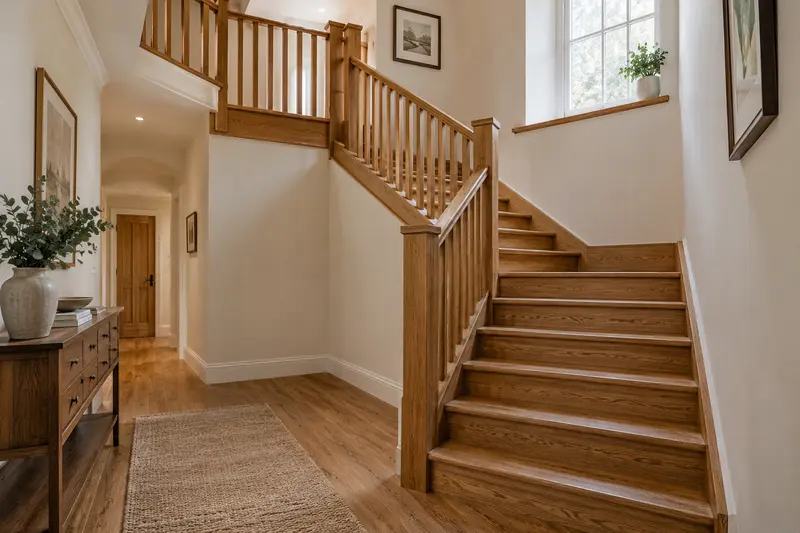
A straight rail follows one uninterrupted stair run. Bends and intermediate landings change the rail conversation. Compare the complete trip, including transfers and parking, before comparing quotes. A sketch can explain your stairs; it cannot approve a rail configuration.
IN THIS GUIDE
Describe the shape, then the journey
Stannah distinguishes straight routes from stairs with turns or intermediate landings, which use a curved arrangement. Its survey also considers nearby doors and the chair’s parked position. That is a manufacturer example, not a promise that every staircase accepts every model.
Draw the stairs as they appear from above. Mark each turn, landing and doorway, then draw the journey between the rooms you actually use. Note whether the proposed trip is continuous or requires getting off partway. Avoid reducing a complicated route to “one flight”: that phrase can conceal a landing that changes the quote and the experience.
Ask what changes beyond the rail
Request the model, seat and control configuration alongside the rail type. Two proposals can both say curved stairlift while putting the parked chair in different places. One might extend onto a landing; another might end near the top step. Ask the surveyor to show the approaches and exits on the same drawing.
Keep household access in the comparison. Where do other people walk while the chair is parked? Does a door open into a rail extension? Is the walking aid available after the trip? These are questions for the site visit and any appropriate personal assessment, rather than details to settle from a product photograph.
Worked decision: a turn that changes the task
Suppose a home has a short lower run, a landing and a longer upper run. One proposal uses a continuous curved route. Another proposes two straight lifts. The second arrangement may look simpler on paper, but it introduces an additional transfer and a place to keep any needed aid. Do not compare those proposals as identical journeys.
Ask each provider to describe every action from the downstairs hall to the upstairs room. If the actual user cannot comfortably demonstrate a required transfer with appropriate support, record that as unresolved. The better next step is an assessment or revised design, even when a headline quote is attractive.
Use a route comparison matrix
Make a separate column for each proposal and fill the rows below with a written answer, drawing reference or “not confirmed.” Do not award points for optional features until the essential route is resolved. A provider should be able to explain why its configuration meets the agreed task.
If you have not yet obtained a survey, keep your existing notes and request one before purchasing. A second opinion on the route can be more useful than shopping for extra controls. Lighting or decluttering may improve a separate household task, but does not make an unsuitable transfer arrangement acceptable.
- Stair shapeMark every turn and landing; request the surveyed rail type.
- ContinuityCount transfers and ask where each takes place.
- ParkingRecord both chair positions and nearby door swings.
- EvidenceKeep the drawing revision and unresolved assessment questions.
Build a survey brief that describes the whole route
Start the brief with two destinations rather than with a rail label. For example: from the downstairs sitting room to the upstairs bedroom, with the user beginning beside the hall doorway. Then write the smaller steps between those destinations. Where does the person leave a walking aid? Who opens the door? Where do they expect to be after getting off? This account gives the surveyor something more useful than a photograph captioned curved stairs.
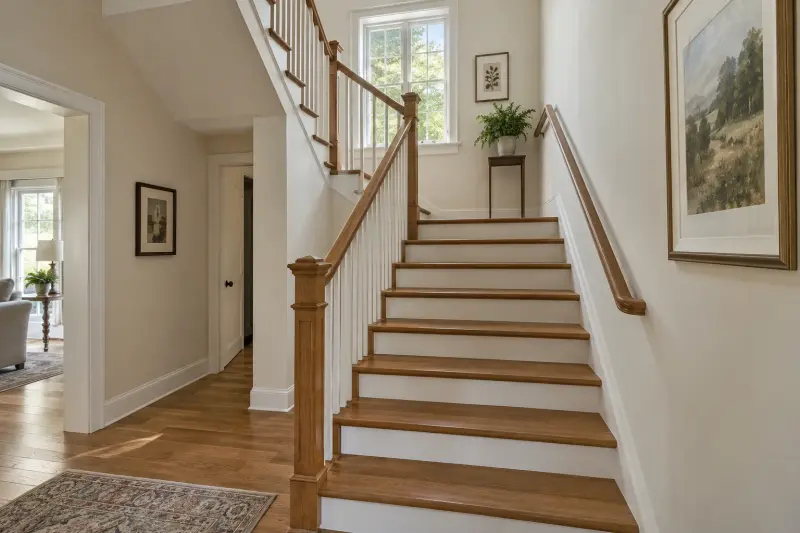
Describe the staircase in ordinary language. An uninterrupted run, a quarter landing and another run is clearer than guessing a specialist term. Mark which turns happen on flat landings and which involve shaped steps. Include the area before the first step and beyond the last. Your drawing can be rough; label the features you can identify and mark anything uncertain. It is an explanation of the home, not a manufacturing drawing or an invitation to measure from a precarious position.
Add a second line for other household members. Perhaps one person carries laundry upstairs while another uses the lift. Record where bags, shoes and a coat rack normally sit. Do not decide that everything must be moved permanently before hearing the proposed layout. Instead, distinguish removable storage from fixed items and ask which conflicts actually matter. The surveyor can then explain the particular arrangement without treating a cleared photograph as the ordinary state of the house.
Keep personal preferences separate from requirements needing assessment. Wanting a continuous ride is a preference to discuss. Being unable to manage a proposed intermediate transfer is a question that deserves appropriate professional attention. Neither should be lost beneath an attractive rail finish. If a helper writes the brief, read it back with the intended user and correct it in their words. Avoid publishing diagnoses, addresses or photographs of private paperwork as part of a quotation comparison.
The finished brief should fit on one page: destinations, stair description, ordinary household use, user preferences and unanswered tasks. Share the same version with each provider. When a site visit reveals an omitted doorway or a better destination point, update the brief and send the revision to the other provider before comparing responses. Otherwise, different proposed rail types may simply reflect different descriptions of the home.
Compare continuous travel with a divided arrangement
A continuous route and a divided route need separate descriptions even when both reach the same floor. Make a line for every point at which the user must sit, rise, turn or change equipment. Add where a helper or mobility aid is needed. This method does not declare either proposal suitable. It reveals whether the proposals are answering the same journey before their equipment or prices are compared.
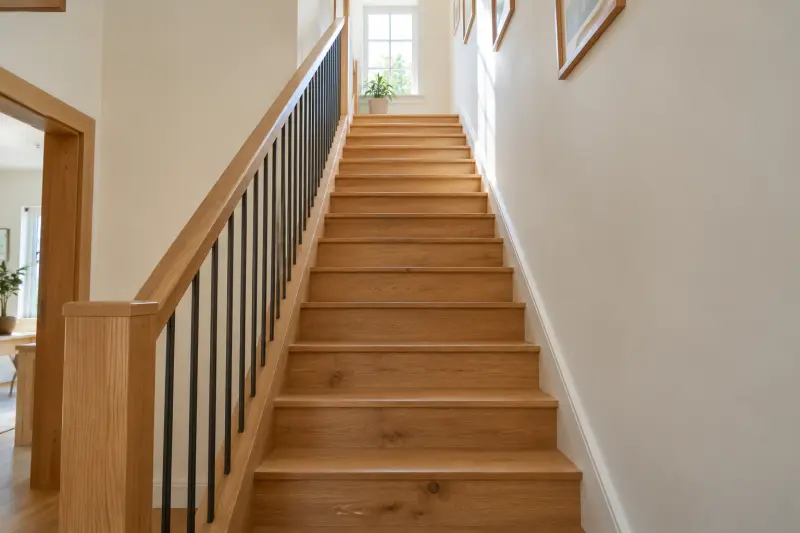
For a continuous proposal, ask where the journey begins and ends and whether the quoted rail follows the entire requested route. A curved label alone does not establish the arrival position. Ask to see any extension drawn beyond the stairs and the chair shown at its destination. Clarify whether that picture represents a parked position, the position during travel or the position used to leave the seat. Those are different questions and should have separate answers.
For a divided proposal, describe the intermediate routine in full. In our hypothetical two-run example, the user rides the lower lift, gets off on the landing, reaches the next chair, sits again and completes the upper run. Record who calls each chair and where any necessary walking aid is available. Do not shorten the sequence to change lifts, because that phrase hides the actions that make the proposal materially different.
Consider the reverse journey separately. A sequence that appears straightforward going upstairs might require a different turn, approach or aid arrangement going downstairs. Ask the provider to explain both directions without asking the user to improvise unfamiliar movements. If the proposal depends on a specific transfer method, have that task reviewed through an appropriate assessment. A sales demonstration of the chair cannot settle the person's task on an unassessed intermediate landing.
Finally, ask what the household must do when the equipment is not in use. Is a chair normally stored on the intermediate landing? Does another household member have to call it away before using a doorway? Who folds the seat or footrest if the order includes manual operation? Record the daily responsibilities without assigning automatic penalties to one format. The right comparison keeps the differences visible and leaves unresolved suitability questions unresolved.
- Continuous proposalStarting point, finishing point, and every manual action.
- Divided proposalIntermediate exit, movement, second entry, and helper or aid locations.
- Reverse tripRepeat the sequence in the other direction.
- Household routineCalling, folding, parking, and ordinary doorway access.
Worked comparison: the same staircase, three different briefs
Consider a fictional home with a short lower run, a landing that turns left, and a longer upper run. The bedroom is beyond a narrow upstairs hall. The household initially requests a lift to the first floor without describing where the trip should finish. Provider A sketches a continuous curved arrangement ending near the top step. Provider B sketches two straight arrangements. Neither sketch should yet be treated as a complete answer to the bedroom journey.
The first revision adds the actual destinations and ordinary access. The user wants to arrive facing the hall rather than remain beside the top step. The landing also serves a cupboard used by another household member. Provider A revises the upper finish and explains the parked position. Provider B retains the divided route but now identifies the additional transfer and cupboard conflict. The important change is improved information; it is not proof that a particular rail is preferable for every turning staircase.
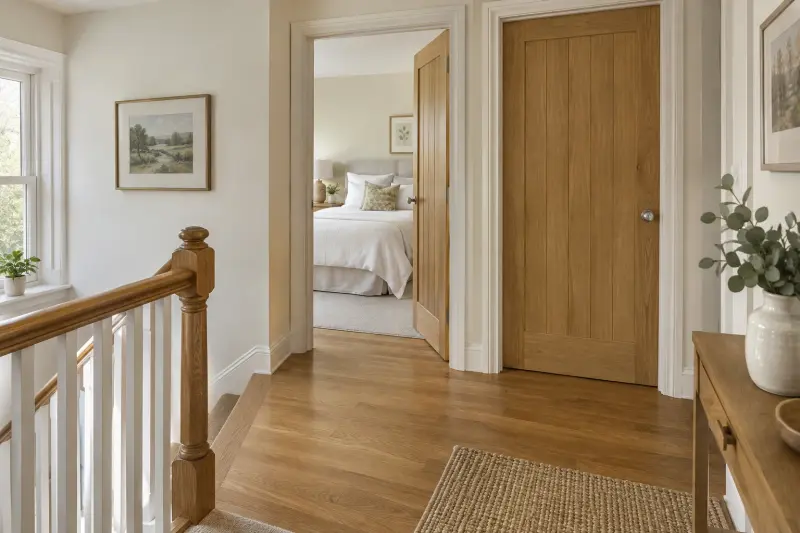
A second revision records an unresolved intermediate transfer. The user has not been assessed for the movement required by the divided proposal. Provider B is asked to explain alternatives and the assessment needed, rather than being given a lower comparison score that could be outweighed by a discount. Provider A still has open questions about upper-hall passage. Both proposals therefore remain conditional, but their remaining questions are different and can be pursued separately.
The third brief separates essential requirements from optional preferences. The continuous journey and appropriate exit arrangement are considered alongside the assessed task. Upholstery colour and convenience functions sit in another column. The household requests a comparable quotation only after the providers explain the proposed route sufficiently clearly. This avoids assuming that a higher-priced package necessarily solves an access problem or that a lower displayed sum justifies an extra transfer.
Your own comparison may end differently. One provider may revise its arrangement substantially; another may explain why it cannot offer the requested configuration. A useful outcome is a documented decision to obtain further advice or explore a different route through the home. Keep the successive drawings and date them. They explain why the final order differs from the first conversation and help prevent a later substitution from quietly restoring a feature you had already questioned.
Read the quote as a route-specific specification
Give the accepted journey an identifier such as Route A, then ask the provider to use that identifier on its drawing and quote. The equipment description should identify the rail arrangement, chair configuration and included functions. A short model name without the proposed start and finish does not establish that two offers cover the same route. Keep the survey drawing alongside the quote instead of trying to squeeze every detail into a single total-price cell.
List the work required to produce the proposed arrangement. Ask about installation, electrical provision, changes to nearby fixtures, removal of existing equipment and any finishing work. Do not infer an exclusion solely from a general manufacturer's description of minimal building work. The provider should explain the scope of your surveyed project. If another trade is responsible for a task, identify that party and ask how its work connects to the installation schedule.
Separate rail-dependent conditions from general chair features. A proposal involving a specially configured route can carry different ordering or return terms from another proposal. Stannah's cited US agreement distinguishes straight and curved orders within its return provisions. That is a reason to request the actual terms for your provider and country, rather than an instruction to apply those US provisions to a UK purchase or another brand.
Ask how the provider handles a change after the survey. Perhaps a door arrangement changes before fitting or the requested upper parking point is revised. Which document will be updated, who agrees the new scope, and what happens to the installation date or amount already paid? Put these questions in the comparison while they are hypothetical. A clear process is more useful than assuming every adjustment can be made without consequences.
Editorial illustration
Bring service and eventual removal into the route discussion too. Ask whether all quoted components are covered by the proposed support arrangement and who deals with the particular rail. For a possible future move, request information rather than promising yourself that the existing equipment will fit another home. The purchasing decision should stand on the documented current journey. Any future reuse, resale or removal value remains an unanswered condition until an appropriate provider gives a specific written response.
Use an evidence worksheet before making a rail decision
Create a worksheet with one row for each route requirement and one column for each proposal. Begin with the start location, finish location, uninterrupted travel, any intermediate transfer, upper exit position, lower approach and ordinary passage for other people. Add a final column for the evidence. Evidence might be a dated survey drawing, an exact-model instruction or a question awaiting an assessment. A salesperson's general reassurance should be recorded as a response, not silently promoted to a confirmed drawing detail.
Write confirmed, provisional or unanswered beside each entry. Confirmed means you have the relevant written response for the stated configuration; it does not mean our website has certified the equipment. Provisional identifies a proposal that depends on a survey or another decision. Unanswered marks a gap. Avoid converting these labels into a numerical safety rating. Some missing answers are essential to the task and cannot reasonably be offset by several answered comfort preferences.
Use the worksheet to prepare a focused follow-up. Instead of sending another broad request for the best stairlift, ask three specific questions: does the proposed journey require a landing transfer, what is the upper arrival position, and where does the chair park beside the cupboard? Attach the relevant drawing. This gives the provider a chance to correct an assumption and gives you a response that can actually be compared with the other proposal.
After the follow-up, record the next action and the responsible person. If a transfer needs assessment, name the service you will contact privately. If a revised drawing is needed, ask the provider to issue it. If ordinary storage can be moved, note who will decide the new location. Each action should answer a real uncertainty. Buying an extra control or a measuring gadget is not necessary merely because the worksheet has an empty box.
Keep the final worksheet for the installation conversation. Check that the model and rail arrangement delivered correspond to the accepted documents, then let the installer explain the actual operation and handover. If something differs, ask for clarification before treating the arrangement as ready. The worksheet's value is continuity: the home journey described at the beginning remains the subject of the final discussion, rather than being replaced by whichever features are easiest to demonstrate.

- RequirementDescribe the destination or movement in ordinary words.
- ProposalRecord the specific offered arrangement, including any extra transfer.
- EvidenceIdentify the drawing, model document, or assessment question.
- Next actionState who answers the gap and what document changes.
Questions readers ask about straight and curved stairlifts
Can a staircase with a landing use a straight lift?
Ask what complete arrangement is being proposed. One uninterrupted straight run and a route involving a turn are different descriptions. If a provider suggests separate straight lifts for separate runs, that creates a different travel sequence from a continuous ride. The useful answer identifies the exact journey, any transfer and its assessment; a yes-or-no rail label alone is incomplete.
Is a curved stairlift always the better choice?
There is no universal buying conclusion in this guide. The route through the home, the person's tasks, the space at each arrival point and the provider's surveyed configuration matter together. A continuous arrangement can avoid one proposed transfer while still leaving another access question unresolved. Compare the specific requirements rather than giving curved equipment an automatic premium score.
Can I decide from photographs and measurements?
Photographs and preliminary notes help explain turns, doors and storage. They do not replace a professional survey or an appropriate assessment of personal movement. Tell the provider which measurements are uncertain. Do not perform an unfamiliar transfer or lean over a stair edge to complete a form. A missing field is better than a measurement collected through an unsuitable task.
Why do two curved quotes look different?
They may include different start points, finish points, chair configurations, parking arrangements or work. Ask the providers to respond to the same dated brief. If one proposal changes the user's destination or household passage, describe that difference before comparing its amount. A more detailed drawing can make the difference visible without proving one brand is inherently superior.
What is worth buying before the survey?
Often nothing specific to the lift. Organize existing documents and describe the ordinary route first. A storage tidy-up or an appropriate lighting review can serve a separate household need, but should not be used to make an unconfirmed transfer appear acceptable. Leave seat accessories, additional controls and route-dependent items until the proposed configuration and the task they serve have been explained.
What should I do if neither proposal answers the journey?
Keep the unresolved questions and request further assessment or a revised route discussion. Another form of access through the home may deserve consideration, but should receive its own planning and scope review. Progress can be a clearer brief, a properly directed assessment or a decision to pause the order. It does not have to be a purchase made before the essential route is understood.
MAKE THE SPEND MEANINGFUL
Before adding to the basket.
- Request another route discussion before paying for options.
- Keep existing measuring notes; precise rail design requires a professional survey.
How this guide was prepared
AI-assisted editorial research, checked against the linked primary sources. Product testing and a credentialed individual review are not claimed.
source-checked editorial; no hands-on testing or expert suitability assessment claimed
How we use sources and AI assistance ↗Sources & fact checks
The guide separates sourced facts from editorial questions and examples. We have not claimed hands-on product testing. How we use sources and AI assistance.
Found an error or an outdated detail? Contact the editorial team.