

In brief
Toenail clippers for thick nails should be plier-style, with long handles for leverage, sharp stainless-steel jaws and an opening wide enough for the nail. Straight jaws make a straight-across cut easier. Soften nails in lukewarm water first. If you have diabetes, numb feet or poor eyesight, ask a podiatrist to trim instead.
Shortlisted for this decision
Affiliate-
Shortlisted
Swissklip Heavy Duty Clippers
For thick nails, plier-style leverage
Plier-style clipper with curved stainless-steel blades and a large non-slip handle for more leverage on thick nails.
Check price on AmazonCheck first: No length or jaw opening published; with diabetes or numb feet, ask a podiatrist to trim.
-
Useful companion
Moen Home Care DN7100 shower chair with back and arms
For wide showers, users who want arms
Back and arm rests, a seat 19 in wide by 17.7 in deep, legs adjustable from 15 to 21 in and a stated 400 lb limit, according to Moen.
Check price on AmazonCheck first: The 18 in leg spread plus arms needs a wide, level enclosure floor. Measure the shower before ordering.
Why it is listed: How to choose a shower chair or seat: fit the enclosure and the routine -
Useful companion
Drive Medical Deluxe Aluminum Bath Chair (RTL12202KDR)
For a light seat with backrest, no arms
A 7 lb seat with backrest, 19.25 in wide and 11.5 in deep, legs adjustable in 1 in steps and a 300 lb limit, according to Drive Medical.
Check price on AmazonCheck first: No armrests and a shallow seat. Drive's page does not state the full height range.
Why it is listed: How to choose a shower chair or seat: fit the enclosure and the routine
Affiliate links: we may earn a commission from qualifying purchases at no extra cost to you. Prices are shown only on Amazon. Amazon.com (US listing). See the full comparison ↓
Documented options
Toenail clippers for thick nails: options compared
Options based on manufacturer documentation. Retailer links are affiliate links: we may earn a commission from qualifying purchases.
Affiliate retailer links
-
Swissker by Swissklip Heavy Duty Toenail Clippers
Exact variant: Heavy Duty, single clipper
View product details on Amazon — United States
IN THIS GUIDE
Who should trim at home, and who should not
Nails often thicken with age, and bending to reach the feet gets harder at the same time. A better tool can help, but it does not change who should be doing the cutting.
MedlinePlus advises people with poor vision or reduced feeling in their feet to have a podiatrist trim their toenails, to prevent injury. The same page says not to cut very thick toenails yourself, and not to trim thick, discolored nails that may have a fungal infection.
If any of those apply, a foot file for between visits may be the most useful purchase, while a professional does the cutting.
- Diabetes, poor circulation or numbness in the feet: see a podiatrist
- Thick, discolored or painful nails: get them checked first
- Poor eyesight or shaky hands: ask for help with cutting
- Healthy feet with firm but manageable nails: home trimming may suit
- Blood thinners or slow-healing skin: ask your doctor who should trim
What to look for in toenail clippers for thick nails
Standard lever clippers are small and need a strong pinch. On a thick nail they can slip or crush the edge rather than cut cleanly. Plier-style clippers, often called nippers, use two long handles that multiply hand force, which is why they are the usual choice for thick nails.
Jaw shape matters next. A podiatrist-reviewed guide from Michigan Foot Doctors favors straight jaws for thick nails, because a straight edge makes it easier to cut straight across and avoid rounding the corners. Curved jaws can still work if you take small cuts and keep the corners square.
Long-handle clippers put the cutting head at the end of a shaft so you bend less. They help with reach, but control and visibility can be harder, so try the grip before relying on one.
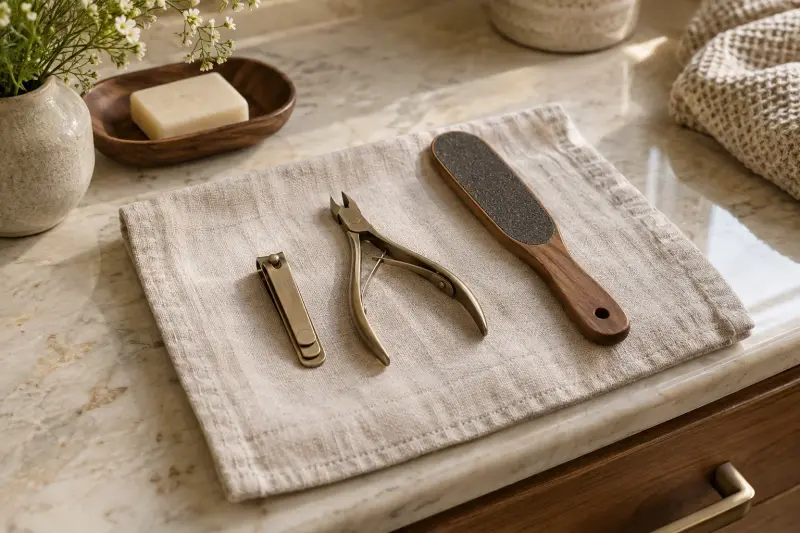
- Plier-style handles: more leverage than a lever clipper
- Jaw opening: wide enough to fit the full nail thickness
- Jaw shape: straight is easier to keep square; curved needs care at corners
- Sharp stainless-steel blades that meet cleanly along their length
- A spring that reopens the jaws, and a non-slip grip that fits your hand
How the pick compares
Only one clipper passed our listing and maker-page checks. The facts below come from the Swissklip product page and the Amazon listing title, set beside the two simplest alternatives.
The maker's page does not give a length, weight or jaw opening, and its blades are curved, so plan on small cuts that keep the corners square. Compare the photographs and handle shape with your own grip before ordering.
If your hands are stiff or weak, notice whether you can open and close a clipper smoothly with one hand while the other steadies your foot. A heavier tool is not always better.
- Swissklip Heavy Duty Toenail Clippers: plier style; curved stainless-steel blades; large non-slip ergonomic handle; no length or jaw opening published
- Typical lever clipper: small; straight or curved edge; needs strong pinch; widely available
- Foot file: no blade; lowest risk of cuts; slow, gradual results
- Swissklip offers a 30-day money-back guarantee only on direct purchases
How to cut thick toenails, step by step
Soften the nails first. MedlinePlus suggests soaking the feet in lukewarm water before trimming, and the Michigan Foot Doctors guide suggests 5 to 10 minutes or trimming right after a shower. Dry the feet well, including between the toes.
Oxford Health NHS advises cutting straight across and not too short, because cutting into the corners can lead to ingrown toenails. On a thick nail, take several small cuts working from each edge toward the center rather than one large bite, then file any rough edge.
Sit on a stable chair with your foot on a low stool, in good light. Rushing or trimming in a dim room is when slips happen.
- Soak in lukewarm, not hot, water, then dry well
- Cut straight across in small steps from each edge
- Do not cut too short, and never dig into the corners
- File rough edges instead of cutting deeper
- Stop and seek help if a cut bleeds or the nail splits deeply
Cleaning and storing the clipper
Wipe the jaws clean after every use and dry them fully before putting them away. Keep the clipper for one person only, which is a simple way to avoid passing on a nail infection.

Store it closed, in a case or drawer, out of reach of children and pets. If the jaws stop meeting cleanly or the spring weakens, replace the tool rather than forcing it.
- Clean and dry the jaws after each trim
- One clipper per person, never shared
- Store closed, in a case or drawer
- Replace if the jaws are misaligned or loose
When to get professional foot care
A podiatrist or foot-care nurse can thin and trim thick nails safely and check the skin at the same time. Book help sooner if a nail is painful, red, swollen, discharging or growing into the skin. These are reasons for an examination, not a stronger clipper.
Check costs before you book. Medicare.gov lists nail trimming as routine foot care that Medicare usually does not cover, while Part B covers podiatrist exams or treatment for medically necessary conditions. Ask your doctor or plan what applies to you.
- Pain, redness, swelling or pus around a nail
- A nail that keeps growing into the skin
- Any foot wound that is slow to heal
- Diabetes, which usually needs regular foot checks
- Bring your usual shoes and a note of recent changes
MAKE THE SPEND MEANINGFUL
Toenail clippers for thick nails: low-cost alternatives
- A foot file or large emery board after a bath, which Oxford Health NHS notes can often keep thickened nails under control.
- Ask your doctor or health plan whether a podiatry or foot-care nurse visit is covered for you, since Medicare usually treats routine nail trimming as not covered.
- Ask a family member with steady hands and good eyesight to help, using your own clipper.
In brief
Toenail clippers for thick nails: questions answered
What kind of clipper works on thick toenails?
Most people with thick nails use a plier-style clipper, also called a nipper, because its long handles give more leverage than a small lever clipper. Look for sharp stainless-steel jaws that open wide enough for the nail; straight jaws make a straight-across cut easier. Do not cut very thick or discolored nails at home, which MedlinePlus says need a podiatrist.
Are long handle toenail clippers easier for seniors?
They reduce bending, which helps people with stiff hips or backs. The trade-off is less fine control and a harder view of the nail. Some people do better sitting with the foot raised on a stool and using a normal plier-style clipper. If reaching the feet is hard, a podiatrist visit may be safer than any clipper.
Should someone with diabetes cut their own toenails?
MedlinePlus advises people with poor eyesight or reduced feeling in their feet to have a podiatrist trim their nails, to prevent injury. Many people with diabetes have regular foot checks for this reason. Ask your doctor or diabetes care team who should trim your nails and how often your feet should be examined.
Does Medicare pay for toenail trimming?
Usually not. Medicare.gov lists trimming, cutting or clipping nails as routine foot care that Medicare typically does not cover. Part B does cover podiatrist exams or treatment for medically necessary foot conditions. Coverage can depend on your health and your plan, so ask your doctor or plan whether a podiatry visit would be covered for you.
How this guide was prepared
AI-assisted editorial research, checked against the linked primary sources.
Written with AI assistance from the sources listed below and checked against them. We have not tested these products in person.
How we use sources and AI assistance ↗Sources & fact checks
The guide separates sourced facts from editorial questions and examples. How we use sources and AI assistance.
- MedlinePlus: Diabetes, taking care of your feet ↗
- Michigan Foot Doctors (podiatrist-reviewed): trimming thick toenails ↗
- Swissklip: Heavy Duty Toenail Clippers product page ↗
- Oxford Health NHS: Nail care ↗
- Medicare.gov: foot care coverage ↗
Found an error or an outdated detail? Contact the editorial team.