
In brief
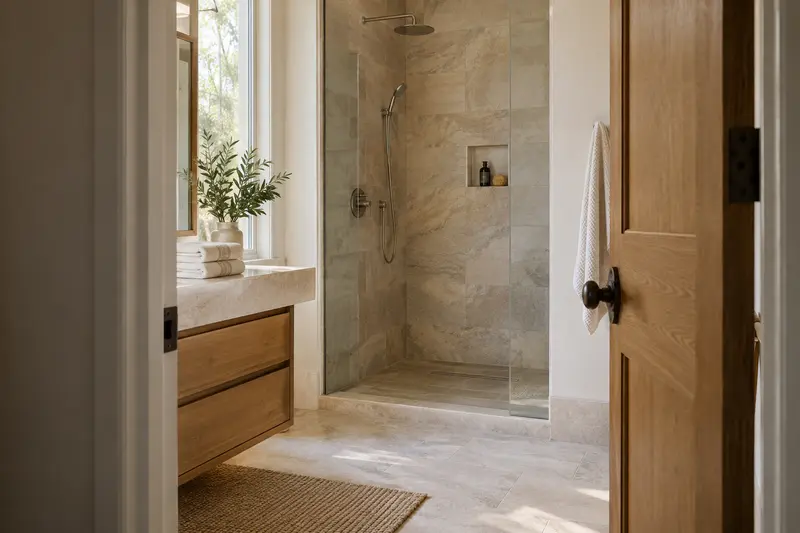
Compare the seating format with the task: back and arm support, space, adjustment, storage and any wall fixing. A stool is not simply a cheaper chair, and a fitted seat is not automatically suitable because it frees floor space. Have personal support and transfer needs assessed before choosing.
Documented options
A clearer comparison.
Research options based on manufacturer documentation. These are not results of hands-on testing. Manufacturer links are informational; no commission relationship is currently active.
IN THIS GUIDE
Start with the washing task, not the product label
The useful starting question is what you want to do while seated. You might want to wash at a comfortable pace, reach particular areas more easily, or make room for someone helping. Describe that task in ordinary words before choosing a shower chair, shower stool or wall-mounted seat. A category name cannot establish the support or transfer arrangement an individual needs.
Separate a preference from a requirement. A compact appearance may be desirable; a particular form of support may be essential after assessment. Put these on different lines of your notes. Otherwise a visually appealing stool can appear to win a comparison simply because a needed arm or back component was never included in the comparison.
Write the routine from the bathroom doorway through washing, drying and leaving. Include turning the water on, handling soap and the shower handset, reaching a towel and moving any equipment. If another person helps, describe where they usually stand and what they need to reach. These details make a supplier conversation much more useful than asking for the 'best shower chair'.
Ask for professional input when personal support, balance or transfers are uncertain. This guide helps you organize a buying decision; it does not prescribe a sitting height, transfer technique or support configuration. There is no need to prove that you can manage an unfamiliar movement during shopping. A suitable assessment should come before a product demonstration that would require such a movement.
What the three formats actually change
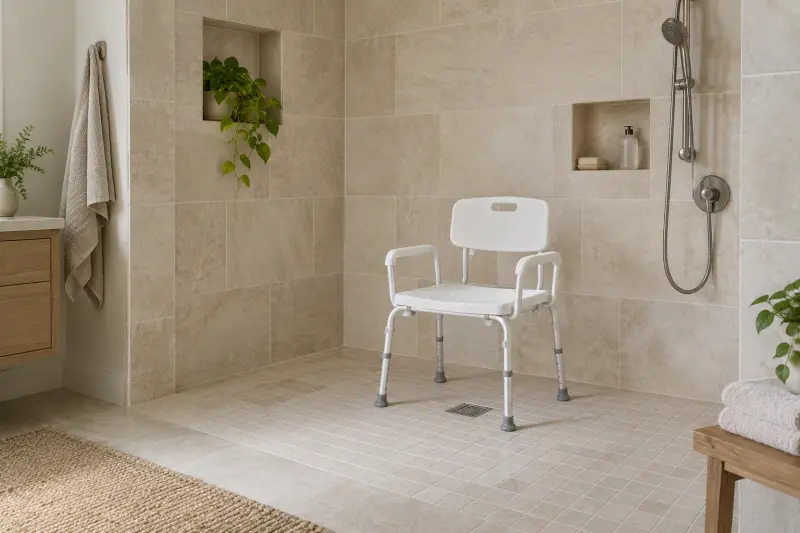
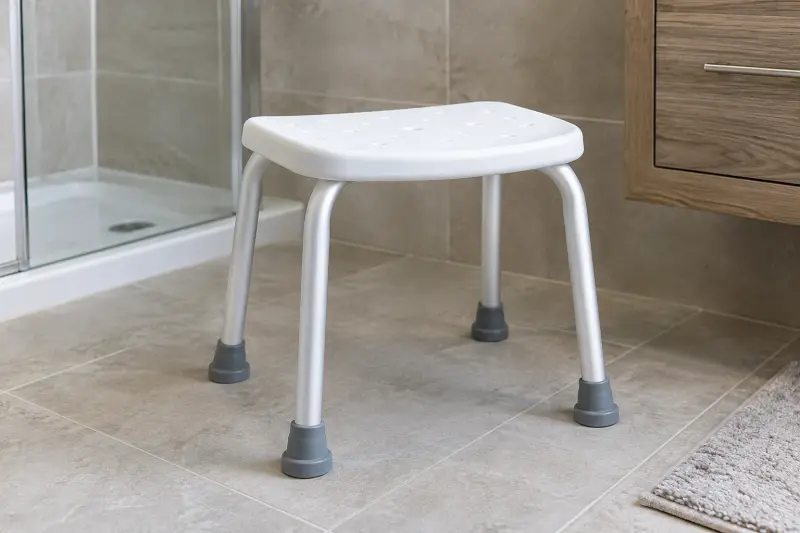
A freestanding stool provides a sitting surface in a movable arrangement. A chair configuration can add back and arm components. A fitted shower seat introduces a wall connection and installation responsibility. These differences affect room layout, daily handling and the questions to ask. They are not a ranking from basic to better, nor a promise that a particular format will make a bathroom task manageable.
The Etac Swift family is a documented example of stool and chair configurations with approved optional supports. Its relevance here is the distinction between configurations, rather than a recommendation for your body or bathroom. If a supplier offers a 'Swift chair', ask exactly which components and variant are included. Keep the model identifier with its current regional instructions.
For a fitted example, Etac Relax documentation describes configurations with different components and requires a qualified person to assess the wall and mounting. A folded seat may make the room look clearer between uses, but the deployed seat and its supports still occupy space during washing. Folding does not erase the installation or personal-support questions.
Other categories, such as shower commodes or equipment used for assisted transfers, may arise during assessment. Do not force those needs into a stool-versus-chair comparison because the products look simpler. Ask the assessor to identify the appropriate category, then compare products within that category. Shopping becomes easier when the list contains relevant candidates rather than every seat sold for a bathroom.
Distinguish required support from optional comfort
Back support, arm components, padding and accessory holders can look like interchangeable extras on a product page. Ask what each proposed component is intended to do in the assessed arrangement. Keep any required component in the specification before comparing prices. Removing a needed part to match the price of a simpler listing changes the product you are comparing.
A comfort preference deserves attention too, but it should remain accurately described. If you prefer a particular surface feel, ask about a demonstration or the manufacturer's approved pad. A folded towel, household cushion or unrelated pad is not automatically an equivalent accessory. It can change the arrangement and introduce care questions that the product's documentation does not answer.
Use separate columns headed 'required', 'preferred' and 'not decided'. For example, a back component might be required in the proposed arrangement, a particular colour preferred, and the usefulness of a soap holder undecided. This prevents a bundle of attractive extras from obscuring a missing support component. It also makes it easier to ask about a simpler version without casually deleting a requirement.
A stated maximum user weight is a product limit, not a complete suitability assessment. Do not treat a number on a listing as proof of fit, support or transfer compatibility. Ask the supplier or assessing professional which specification applies to the exact configuration. Where more information is needed, record an open question rather than assigning the product a safety score.
Seat width and occupied space are different measurements
A wide sitting surface and a wide floor footprint answer different questions. The sitting surface concerns the proposed seating arrangement; the footprint concerns where the product's outer parts go. Arm components, back components and legs can influence the occupied area. Ask for a dimensioned drawing of the actual configuration instead of copying the largest number from a retailer's specification box.
The Swift product booklet is a useful example because it distinguishes seating and product dimensions. It does not supply a universal minimum shower size. Product dimensions should be taken from the exact relevant document and considered alongside the enclosure, fittings and routine. A seat fitting inside a rectangle on paper does not prove that the user or helper has a workable approach.
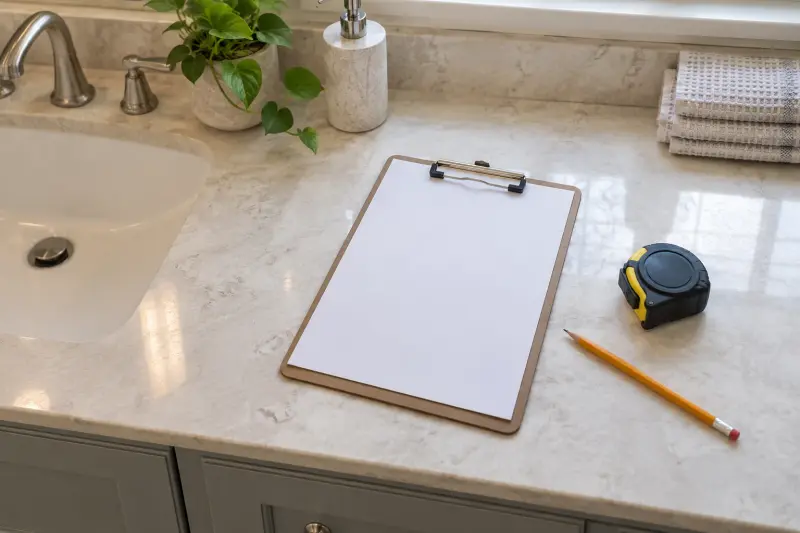
Measure the usable enclosure, not just the nominal shower tray. Doors, handles, screens, taps and protruding shelves can reduce the space available at different heights. Draw their positions. Identify where the seat would sit and how the door behaves in both open and closed positions. Leave final clearance and support decisions to the appropriate professional.
Use your measurements to reveal questions before purchase. If a candidate seems to occupy most of the enclosure, ask for a demonstration or on-site review of that arrangement. Do not try to compensate by balancing a leg on a different surface or altering the product. A smaller suitable candidate or a different bathroom plan may be worth discussing, but first establish what the routine requires.
Include assembly or fixing in the quotation
A freestanding product may arrive assembled, partly assembled or flat-packed. A fitted product brings mounting and wall questions. Ask who will assemble or install the exact item, confirm the intended configuration and explain its permitted use. 'Tool-free' describes a design feature; it does not establish that every buyer can complete or verify the work without assistance.
Etac's Relax page specifically places wall load assessment and mounting with a qualified person. Treat that as a product-specific requirement for the example, not as permission to choose fixings from a generic online chart. The visible tile is only part of the installation context. Ask who will assess the relevant wall construction and any additional work before confirming the fitted option.
For either format, obtain a clear description of what the quoted service includes. Delivery to the door, assembly in a room, installation, demonstration and removal of packaging are different services. If you assume they are all included, a modest product price can leave you with an arrangement you cannot yet use as intended.
Agree what happens when the installer or supplier finds a limitation. Will work pause for a revised plan? Who explains alternatives, and what are the cancellation or return terms at that stage? It is better to ask before purchase than to accept improvised changes on delivery day. Keep the installation decision separate from product colour or a temporary promotion.
Make a demonstration answer your specific questions
Request a demonstration of the proposed configuration, including the supports and adjustments that matter to you. Ask whether the showroom item differs from the one on the quotation. A different height range, missing arm component or unusually roomy display enclosure can make a demonstration less informative. Record the differences instead of assuming that the impression will transfer unchanged to home.
Take your task notes and room sketch. Ask the demonstrator to explain what the product's adjustments do, which parts are approved, and where the instructions place limits. Where a personal movement needs assessment, say so. A sales visit should not become an unsupported attempt to transfer or balance in an unfamiliar arrangement.
A companion can help capture details: how clearly the parts are identified, how the product is handled between uses and what questions remain unanswered. The buyer's own preferences still matter. Avoid substituting the companion's ability to lift, adjust or operate the seat for what the person or actual helper will manage at home.
Compare the care routine and replacement parts
Cleaning is part of ownership, especially if the chosen arrangement has several detachable components or pads. Ask for the current care instructions for the exact model and accessories. Find out which areas require attention, how parts are handled and how the equipment should be dried or stored. Follow those instructions rather than assuming that any bathroom cleaner or disinfectant is compatible.
Consider who will do the care tasks. A person who can use a seat comfortably may still find turning it over, moving it or cleaning underneath difficult. A helper might have limited time or access to storage. These practical constraints belong beside the support and footprint requirements, because a product that is difficult to care for can become burdensome.
Ask the supplier how approved replacement parts are identified. Retain the model number, any variant identifier and the relevant parts information. If a foot, pad or other component becomes worn or damaged, the question is which approved part and process apply—not whether an unrelated item looks similar. Do not create a replacement schedule from an article or a retailer's general advice.
A low-cost comparison can include the availability of parts and the effort of regular care without inventing a lifetime-cost figure. Request current prices where relevant and label estimates as estimates. An inexpensive seat with unclear local support may be less convenient than an appropriate model with accessible documentation, but you need actual information to compare them responsibly.

Compare complete, appropriate arrangements
Put the assessed configuration at the top of each quote comparison. Then list the product, necessary components, delivery, assembly or fixing, demonstration and any separate work. This makes an apparent price gap easier to understand. A bare stool listing and an installed chair arrangement are different offers even when the photographs share a similar colour.
Ask which optional items can be omitted and which are part of the agreed setup. A storage accessory or colour choice may be discretionary; a specified support component may not be. Removing an optional item can be a sensible saving. Removing a required one merely to achieve a lower total changes the decision and should be reconsidered with the appropriate professional.
Include what happens after purchase. Who handles a fault report? How do you obtain a relevant replacement part? What are the actual return conditions, especially after assembly, installation or use? Consumer rights differ by market and circumstances, so ask for the applicable local terms rather than borrowing a warranty or return promise from an overseas page.
A comparison that keeps essential questions visible
Consider an illustrative buyer who wants a back component, shares a shower and cannot conveniently move a wet seat into another room. Three advertised options appear: a low-priced stool, a chair with the requested components, and a folding wall seat. The initial temptation is to rank them by price and how neatly they fit the room photograph.
The stool's missing back component means it is not yet a like-for-like candidate. The chair may match the proposed support arrangement, but its occupied area and storage need review. The fitted seat may solve the storage issue, but its exact components, wall assessment and installation cost remain open. None of these observations selects a winner; they identify the next questions.
Build a table with rows for required components, enclosure fit, handling between uses, installation and care. Write 'confirmed', 'observed with limitations' or 'unresolved', followed by a short note and its evidence. Avoid adding points. An unresolved wall or personal-support question should not be cancelled out by a good score for colour, delivery speed or an accessory.
The next action follows the missing evidence. The buyer might ask for the correct stool configuration, arrange an enclosure review for the chair and request a fitted-seat assessment. If only one candidate can meet the established requirements within the budget, the comparison becomes simpler. If none can, the bathroom plan needs reconsideration rather than a compromise disguised as a bargain.
Use the appropriate local assessment pathway
Personal support questions are different from a supplier's product specification. Ask the relevant professional or local service what assessment is available for the bathroom task. In the UK, the NHS home-adaptations page describes a council assessment pathway. Its details belong to that setting; they do not establish funding, eligibility or service access in the United States or another country.
If you are arranging a UK assessment, describe the routine and difficulties rather than requesting a particular branded seat as the sole answer. Bring your room sketch and note any proposed products, but remain open to a different arrangement. An assessment can identify questions that a product comparison alone would miss. Do not assume every item discussed will be provided or funded.
For another market, verify the local route through the relevant health, social care or community service. Ask who evaluates personal use, who assesses building work and who supplies equipment. These responsibilities can sit with different people. A supplier may know the manufacturer's permitted configuration while another professional addresses the person's support and transfer requirements.
Keep sensitive details private. The supplier usually needs the practical information relevant to the task, not an unrestricted copy of all personal records. Ask what information is necessary and how it will be handled. A focused written brief can support a useful conversation without putting identifiable health information into public reviews, social posts or shared shopping documents.
Finish with a format decision, not a shopping score
Your final comparison should state the format, exact configuration, unresolved questions and the evidence behind the choice. Include the model identifier and current instructions, but do not mistake a completed shopping checklist for medical or installation approval. Where a personal or structural question remains open, name the person who will resolve it before the relevant purchase or work proceeds.
Use five headings: support, occupied space, daily handling, installation and care. Beneath each, write a short factual answer or a precise question. For example, 'supplier drawing received; enclosure review still required' is more useful than 'space: good'. This approach preserves uncertainty and helps a family member understand why the cheapest listing may not match the intended arrangement.
You may decide to retain a suitable existing assessed arrangement, investigate a simpler relevant configuration, or postpone buying until a missing assessment is complete. All three can be reasonable results. The guide's goal is to help you spend on what serves the task, rather than buying more features or accepting an unsuitable simpler item because it costs less.
MAKE THE SPEND MEANINGFUL
Before adding to the basket.
- Retain a suitable existing assessed arrangement if it still meets the current task and instructions.
- Compare a simpler appropriate configuration after required support is established; omit only genuinely optional accessories.
- Prepare a paper routine and room sketch with household materials before purchasing a measuring or storage kit.
How this guide was prepared
AI-assisted editorial research, checked against the linked primary sources. Product testing and a credentialed individual review are not claimed.
AI-assisted, source-checked editorial; no hands-on test, human expert review or personal suitability assessment claimed
How we use sources and AI assistance ↗Sources & fact checks
The guide separates sourced facts from editorial questions and examples. We have not claimed hands-on product testing. How we use sources and AI assistance.
- Etac Swift: configurations and model-specific documents; international page ↗
- Etac Relax: wall-mounted configurations and qualified installation requirements ↗
- Etac Swift product booklet: seat dimensions and occupied footprint ↗
- NHS: UK home adaptation assessment pathway; eligibility is individual ↗
Found an error or an outdated detail? Contact the editorial team.