

In brief
Compare the completed bathroom project, not only the bath. Ask who handles removal, supply, plumbing, electrical work, finishes and later service access. Keep optional comfort features and unfinished scope visible beside the quoted total.
IN THIS GUIDE
Start with the exact supplied bath
Record model, door orientation, drain system, fittings and installed options. A quote that simply says walk-in bath leaves important differences hidden. Kohler’s installation description includes replacement, plumbing, electrical work and a feature tour in its dealer process. That example is not proof that another seller includes the same package.
Attach the surveyed room drawing and the accepted configuration to the comparison. Label remote estimates separately from site-reviewed proposals. Ask whether the quoted price changes after further inspection, and request the written process for accepting revised work. Do not treat an appealing installation-duration headline as a guaranteed bathroom reopening date.
Follow removal through to making good
Give separate rows to taking out the old bath, disposal, delivery, preparation, plumbing, electrical work, installation, room finishing and cleanup. Add water-system changes if recommended and identify their provider. Put the name of the responsible business beside each task.
Ask how service panels remain accessible after finishing. A completed wall surface should not hide an unanswered maintenance-access question. Identify tile, flooring or wall work outside the contract and whether matching materials are available. A modest finished specification can be perfectly suitable, but it needs to be agreed rather than assumed.
Worked decision: the missing wall finish
Suppose offer A includes the bath and plumbing, while offer B also includes an agreed wall treatment and disposal. A’s lower displayed figure is not yet a like-for-like saving. Ask A to price the remaining tasks or obtain a separate contractor’s proposal for the finish the household actually wants.
Ask B which finishes are optional and which work is essential to complete the installation. This may reveal a simpler acceptable specification without choosing a premium package. Compare the same finished task, then consider cosmetic preferences separately. Keep unconfirmed amounts as unconfirmed rather than entering zero.
Keep terms beside the scope matrix
Add payment stages, cancellation process, quote expiry and responsibility for changes discovered during work. Read the actual sale documents instead of transferring terms from another provider. Ask who receives a fault report after completion and whether product and installation cover are documented separately.
The worksheet may lead to a revised quote or another survey before purchase. Use existing room notes to make that discussion precise. The goal is an understandable completed project with support information, rather than a headline price that becomes less useful once the old bath has been removed.
- ProductExact orientation, fittings, drain and options.
- TradesRemoval, preparation, plumbing, power and installation.
- CompletionFinishes, disposal, cleanup and retained service access.
- AgreementChanges, payment, handover and responsibility for faults.
Identify the bath and finished room the offer describes
Give each provider the same project brief and room information. Record the intended bathing routine, exact model or offered alternative, door orientation, drain arrangement, supplied fittings and options. Ask the provider to explain departures from that brief. The comparison should describe the completed room and task, rather than assume that any offer labelled walk-in bath contains equivalent equipment or installation responsibilities.
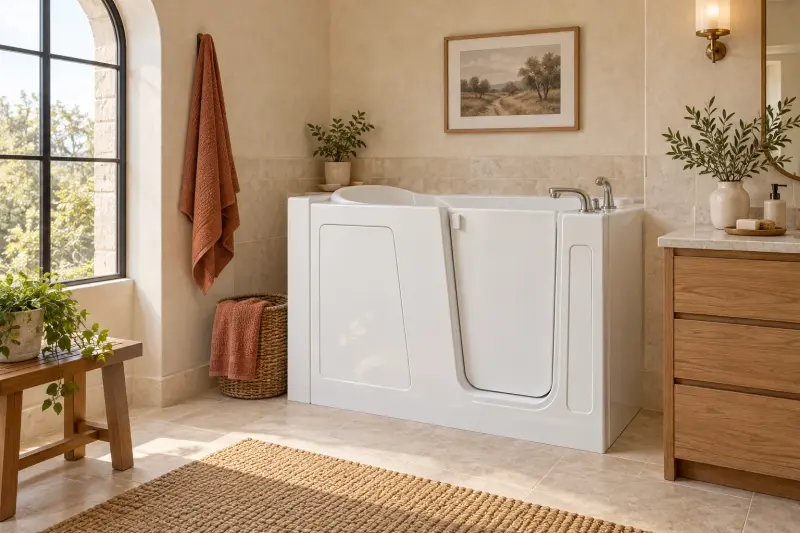
Put evidence status beside the total. Is the quotation an early estimate, a proposal following a site visit or an order tied to accepted project documents? Ask what remains to be checked and how any finding would change the scope. A professionally formatted number can still rely on an unconfirmed water-system assumption. Do not present a remote estimate and a surveyed project as if they contain the same level of information.
Kohler's US installation page describes its dealer process as including replacement, plumbing, electrical work and a feature demonstration. That is a specific supplier-process example, not evidence that another seller includes those tasks or that every project follows the same duration. Ask each provider to define its own scope. Keep any installation-time statement attached to its site conditions and terms rather than turn a headline into the household's confirmed bathroom reopening date.
Separate the bath from optional decorative and comfort choices. A wall finish may be part of the agreed completed room or an upgrade from a simpler acceptable specification. An option may perform a meaningful task or be a preference. Ask what changes if it is omitted and request a revised offer where relevant. Do not estimate the upgrade's value from a separate online listing or remove a feature whose role has not yet been explained.
End the first reading with configuration, completed-work boundary and unresolved questions on one sheet. Attach the current room drawing and model documents privately. This gives another household member a clear account of what the amount represents. The quote is not ready for a like-for-like comparison when one provider's offered bath, finish or water-supply work remains undefined, however attractive its promotional wording may be.
Follow the old bath out and the completed installation in
Build the work matrix in the order the project happens. Start with access planning, removal of the existing bath, disposal and delivery of the replacement. Then list preparation, plumbing, electrical work where relevant, installation, wall and floor finishing, cleanup and handover. Put the responsible provider beside each row. This sequence helps reveal tasks that can be omitted when the conversation focuses only on the supplied bath.
Ask how the provider describes removal and disposal. Does the scope include the actual existing arrangement and any relevant access constraints? Keep this question distinct from the new bath's fit. A product may be specified for the bathroom while the removal route or preparation remains unanswered. Request the relevant site review rather than dismantling anything to investigate. The household's ordinary sketch and photographs can frame the question without replacing professional work.
Give water-system changes their own row. Ask for the professionally evaluated need, exact scope and responsibility. Do not assume a larger heater is compulsory for every bath, but do not omit a necessary recommended change from the completed project. Likewise, identify the configuration-dependent electrical work rather than treating no jets as proof that no powered component is present. The professionals should specify these tasks for the actual model and location.
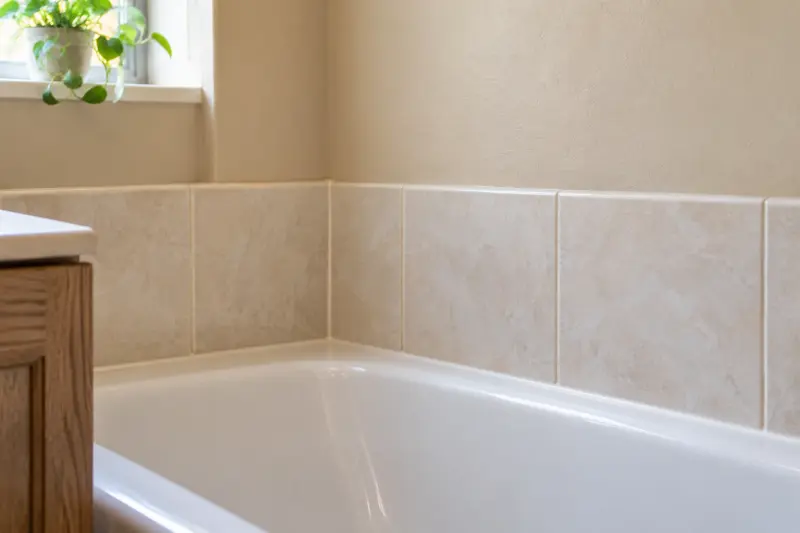
Define making good precisely. A local repair around the installation is different from redecorating an entire room. Ask what finish is supplied, where its boundary lies and which matching materials are included or available. Keep service access visible in that discussion. A continuous-looking wall finish should not conceal an unanswered maintenance-access responsibility. The final scope should describe the room the household can actually expect.
Mark each amount as confirmed, allowance, excluded or unanswered. If another contractor supplies a task, retain its actual offer and the dependency on the bath provider's documents where relevant. Do not enter zero for missing work or invent a market average to complete the total. A clear subtotal with open items is more useful than a single reassuring number that has silently converted gaps into assumptions.
- Removal and deliveryExisting arrangement, disposal, route, and responsible provider.
- Preparation and servicesDefined building, water and electrical work where applicable.
- CompletionInstallation, finishes, cleanup, service access, and handover.
- Amount statusConfirmed, allowance, excluded, or unanswered.
- EvidenceCurrent project document and actual provider response.
Check allowances, changes and timing as part of the purchase
Ask what each allowance covers and how its final scope or amount is approved. An allowance is not the same as an unlimited inclusion. Keep the provider's description and date beside it. Where a task has not been evaluated, label it accordingly rather than treating an allowance as confirmation that every possible issue is resolved. The household should understand which part of the project is defined and which part remains conditional.
Read the variation process in the actual offer. Who identifies a change, who agrees it, which document is revised and what happens to amount or timing? A new site finding and a household preference change may be treated differently under the terms. This article does not determine contractual rights or enforceability. It gives the reader concrete questions to clarify before accepting an offer or obtain locally appropriate advice where needed.
Put payment stages and quote expiry in separate rows. Record the event each payment relates to using the document's wording. Do not assume all providers use the same stages or that an advertised financing option applies to the reader. If finance is being considered, keep its actual terms and application status distinct from the bath project total. No assumed approval or savings calculation belongs in an otherwise documented scope comparison.
Ask about the bathroom's unavailable period and the conditions affecting it. A scheduled arrival does not automatically establish when the room can be used again. Describe the household's practical access needs and ask who confirms work boundaries and reopening. Keep estimated dates labelled as estimates. Avoid arranging an essential routine around a general installation-duration headline that has not been tied to this room and project.
Before accepting a revised total, compare the model, options, orientation, finish and responsibilities with the earlier version. Record what changed and why. A lower or higher amount can describe a different physical proposal rather than a price adjustment to the same work. Keep the current drawing and offer together, while archiving earlier versions privately. This makes the commercial decision reviewable without substituting a spreadsheet for the actual project agreement.
Worked quote comparison: a lower bath price with missing wall work
Imagine two fictional proposals for the same requested bathing routine. Offer A includes the bath and defined plumbing work but excludes wall finishing and disposal. Offer B includes those tasks within a specified room package. The household first sees A's lower displayed total and calls it a saving. The comparison is revised because the offers do not yet describe the same completed work. No real supplier price or typical installation amount is implied.
The household asks A to clarify the disposal task and obtains an actual offer for the requested wall finish through the appropriate provider. It asks B to identify which finish is essential to completion and which is optional appearance. Both responses are recorded with scope and status. If one finish offer still depends on site information, that row stays provisional. The household does not enter a guessed price or zero just to force two tidy totals.
Next, the household checks the bath configurations. B includes a comfort option that A does not, but the reader has not yet decided whether it serves a valued task. The provider explains its function, care and relevant installation scope. The option moves into a separate choice column where appropriate. An apparently premium package is not automatically better value, and a stripped-down offer is not automatically equivalent.
The third review concerns support. Both providers are asked who receives a fault report and how product coverage differs from installation work. The household retains the actual documents rather than infer identical cover from similar headings. A clearer scope may make one proposal more understandable even while another answer is pending. The comparison does not invent service response times or rank installers without evidence.
The outcome could favor either provider, a simpler revised package or another survey. The household records the completed-work boundary, remaining conditions and reasons for its decision. The useful lesson is to connect amount to task. A lower price for less work may be a legitimate choice when the excluded tasks are understood and arranged; it becomes misleading only when the comparison silently pretends those tasks do not exist.
Bring care, cover and handover into the scope conversation
Ask for the correct owner instructions and applicable care information before choosing additional systems or finishes. Who performs ordinary cleaning, and which supplied instructions apply to surfaces, hardware and any jets or powered drain? A comfort option can have an ownership commitment separate from its installation amount. The household should understand the actual task rather than assume more features have no effect on routine care.

Editorial illustration Request product coverage and installation coverage separately where different parties provide them. Record the applicable model, regional terms, start event and relevant exclusions. Do not assume a long manufacturer headline means every visit or repair is free. Ask how diagnosis, labour, access to equipment and making good are handled under the actual documents. Leave missing answers visible rather than create a coverage promise from a marketing badge.
Ask how service access is retained after finishing. American Standard's cited US manual includes access provisions for its relevant components. This narrow installation-document example prompts a question for the selected model and room; it does not supply a DIY panel or fixing design. The provider should identify its actual required access and the trade responsible for maintaining the accepted detail in the finished proposal.
Prepare handover questions around the actual user and configuration. The installer should explain normal use, door and water sequence, supplied options, care and the appropriate support route through the current instructions. Record unresolved items and ask how they affect completion or routine use. A generic feature video does not establish that every delivered option or household question has been addressed.
Keep the final order, current room drawing, care documents and handover record in an existing private folder with a simple index. A lower-cost organizer may help a known retrieval task, but is not necessary to make the quote comparison professional. Clear documents are the value. They help the household understand the purchase, question an omission and locate the right provider afterward without publishing private home or account details.
Questions readers ask about walk-in bath installation quotes
Why do walk-in bath quotes differ?
Compare exact model, orientation, options and the complete work boundary first. Removal, disposal, water or electrical work, finishes and support can differ. Ask providers to answer the same brief and label any departure. A total becomes interpretable when its scope is understood; the category name alone does not establish a like-for-like offer.
Should I choose the cheapest quote?
Ask what complete task it buys and what remains excluded or unanswered. A lower amount can be a sensible choice if the scope suits the reader and remaining work is documented. Do not select a figure that leaves essential questions hidden. Conversely, a premium package should explain the task of its additional features rather than receive an automatic value score.
Does installation include the whole bathroom finish?
Read the actual offer and ask where making good begins and ends. A local repair differs from full decoration or a selected wall treatment. Record the responsible trade and applicable allowance or exclusion. Do not infer inclusion from a photograph of a finished room or from another supplier's described process.
What if another contractor's offer is missing?
Mark that task unanswered and request the information the contractor needs to define its work. Keep dependencies and amount status visible. Do not enter zero or an invented average. The project can involve separate providers while remaining understandable if their scopes join clearly and the household knows which condition is still pending.

Can I rely on a one-day installation headline?
Ask about this room's scope, layout, services and the confirmed work schedule. Kohler's US page qualifies timing by site conditions. A headline is not the same as the household's agreed bathroom reopening arrangement. Explain practical access needs and obtain the relevant provider's answer before relying on a date for an essential routine.
What should be settled before acceptance?
Clarify the configuration, surveyed room proposal, completed-work boundary, amount status, terms, important care responsibilities and support route. Obtain appropriate advice if a consequential term remains unclear. Keep remaining conditions explicit rather than force a completed checklist. A revised quote or another site discussion can be the right next step before ordering.
MAKE THE SPEND MEANINGFUL
Before adding to the basket.
- Keep an appropriate simpler finish when it meets the project brief.
- Clarify missing scope before buying a premium installation bundle.
How this guide was prepared
AI-assisted editorial research, checked against the linked primary sources. Product testing and a credentialed individual review are not claimed.
source-checked editorial; no hands-on testing or expert suitability assessment claimed
How we use sources and AI assistance ↗Sources & fact checks
The guide separates sourced facts from editorial questions and examples. We have not claimed hands-on product testing. How we use sources and AI assistance.
- Kohler: installation and handover ↗
- American Standard: walk-in bath installation and owner instructions ↗
Found an error or an outdated detail? Contact the editorial team.