
In brief
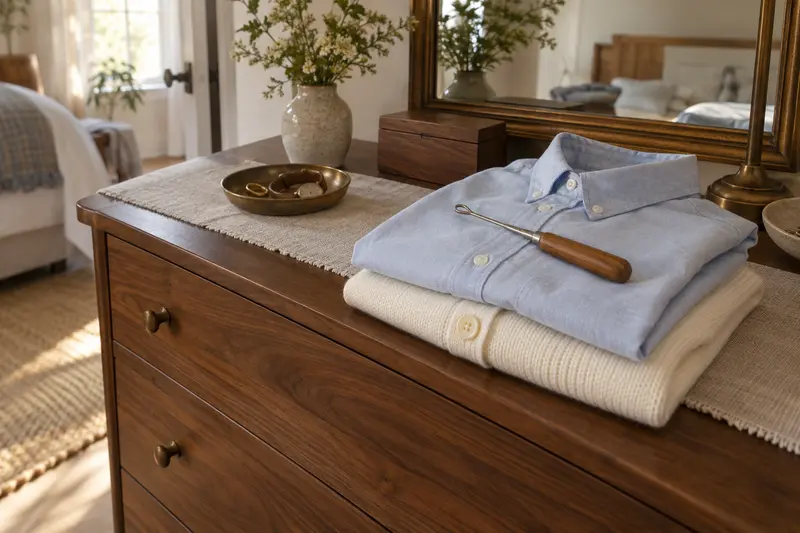
A button hook is a small dressing aid with a wire loop that pulls each button through its buttonhole, so you fasten clothes with a gentle pull instead of a fingertip pinch. Choose a handle you can hold for a minute without strain and a smooth loop that fits your buttons; a zipper pull end helps with jackets.
Shortlisted for this decision
Affiliate-
Shortlisted
Vive Button Hook with Zipper Pull
For buttons and zips, wide handle
A wide 1.25 inch handle with a wire button loop at one end and a steel zipper puller at the other.
Check price on AmazonCheck first: Tiny collar or cuff buttons can still be hard; the user needs enough grip to hold the handle.
-
Shortlisted
Vive Button Hook, Finger Hole
For hooking a finger rather than gripping
The index-finger opening suits people who find hooking a finger through easier than clenching a handle.
Check price on AmazonCheck first: The finger opening is a fixed size; check it suits larger or swollen fingers.
Affiliate links: we may earn a commission from qualifying purchases at no extra cost to you. Prices are shown only on Amazon. Amazon.com (US listing). See the full comparison ↓
Documented options
Button hook dressing aid: options compared
Options based on manufacturer documentation. Retailer links are affiliate links: we may earn a commission from qualifying purchases.
Affiliate retailer links
-
Vive Button Hook with Zipper Pull
Exact variant: Single tool, wire button loop with zipper pull
View product details on Amazon — United States -
Vive Button Hook with Zipper Pull
Exact variant: Single tool, wire button loop with zipper pull
View product details on Amazon — France
Affiliate retailer links
-
Vive Button Hook with Finger Hole
Exact variant: Single tool, finger-hole grip with zipper pull
View product details on Amazon — United States
IN THIS GUIDE
Who a button hook dressing aid helps
Buttons ask a lot of the fingertips. You need a pinch grip, steady fingers and enough feeling to guide a small disc through a tight slot, often while you cannot see it well.
A button hook replaces that pinch with a loop that pulls the button through. Versus Arthritis describes it as an aid you can use to guide any button through a buttonhole. It suits stiff or sore finger joints, reduced fingertip feeling, a weaker hand after an injury, or a tremor.
This guide covers the modern dressing aid. The antique buttonhooks sold to collectors were made for Victorian boots and gloves and are not designed for daily assisted dressing.
- People who can dress themselves but find buttons slow, sore or frustrating
- Anyone who now uses one hand much more than the other for fine tasks
- Family members who help with dressing and want the person to do more on their own
- Travelers who want a light, pocket-sized backup for shirts and coats
How to use a button hook, step by step
Push the wire loop through the buttonhole from the outside, catch the button in the loop, then draw the button back through the hole. The handle stays in your palm, so the hand makes a gentle pull rather than a fine pinch.
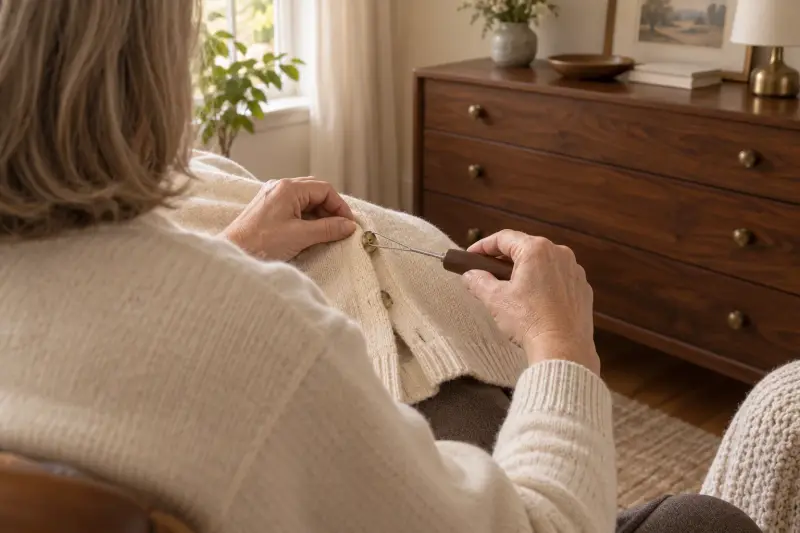
Start at the bottom button, where you can see the work, and move upward. Versus Arthritis suggests sitting down to dress if balance is a problem, and good light makes the first tries calmer.
Practice first on a shirt laid flat on a bed or table. Once the movement feels natural, try it while wearing the garment, and expect it to feel slower than fingers for a while.
- Hold the garment edge flat with the free hand or against the body
- Feed the loop through the buttonhole first, then catch the button
- Pull steadily rather than jerking, to protect thread and fabric
- Use the zipper end through the eye of the zipper tab, then lift
Which button hook grip suits which hand, including one-handed use
The handle matters more than the loop. A handle that is too thin forces a tight grip, which can be as tiring as the buttons were. Holding a marker or a wide spoon handle of similar width is a quick way to judge comfort.
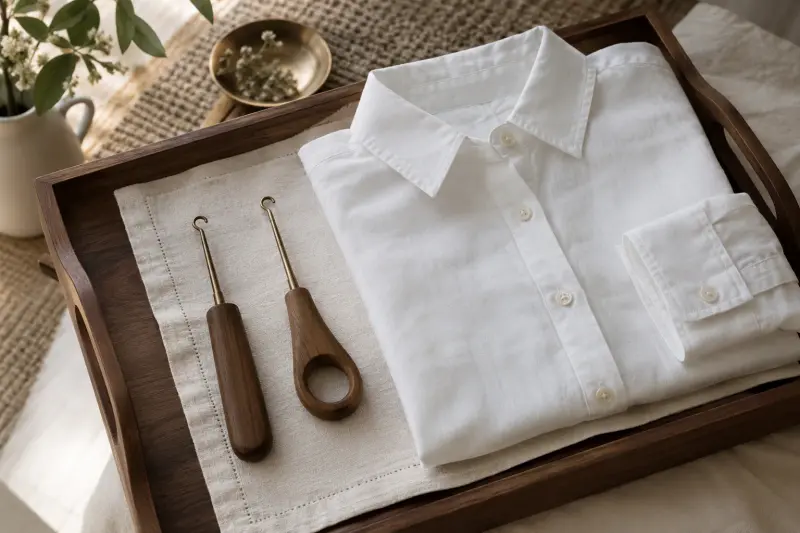
Across the ranges we checked, grips come in four styles: a straight wide handle, a handle with a finger opening, a round palm knob and a long handle. Etac, for example, sells its Butler Buttoner in round and long versions.
Then look at your clothes. Very small collar and cuff buttons are the hardest for any hook, and stiff new buttonholes resist the loop. If zippers also give trouble, a two-ended tool saves carrying two items.
- Straight wide handle: suits a fair whole-hand grip
- Finger opening: suits people who find hooking a finger easier than clenching
- Round palm knob: lets the palm push and pull instead of the fingers
- Long handle: helps when elbow or shoulder movement limits reach
- A smooth loop that will not snag knits or fine fabrics
How the two Vive models compare
Both picks come from Vive and pair a steel wire loop with a zipper pull on the opposite end. The difference is the grip. One has a straight wide handle, and the other has an opening for the index finger.
The facts below come from Vive's own product pages. Neither page gives care steps, so treat both as simple hand tools and wipe them clean as needed.
- Vive Button Hook with Zipper Pull: 7.5 in long and 1.25 in wide, wire loop, nonslip composite handle, steel zipper puller
- Vive Button Hook Model V: 8 x 2 x 0.65 in and 2.4 oz, steel wire loop, latex-free composite handle, steel zipper hook
- Grip: a straight wide handle versus a handle with an index-finger opening
- Both: Vive says the loop works with buttons of any size and is made not to snag fabric
Other dressing aids for elderly adults, and easier clothes
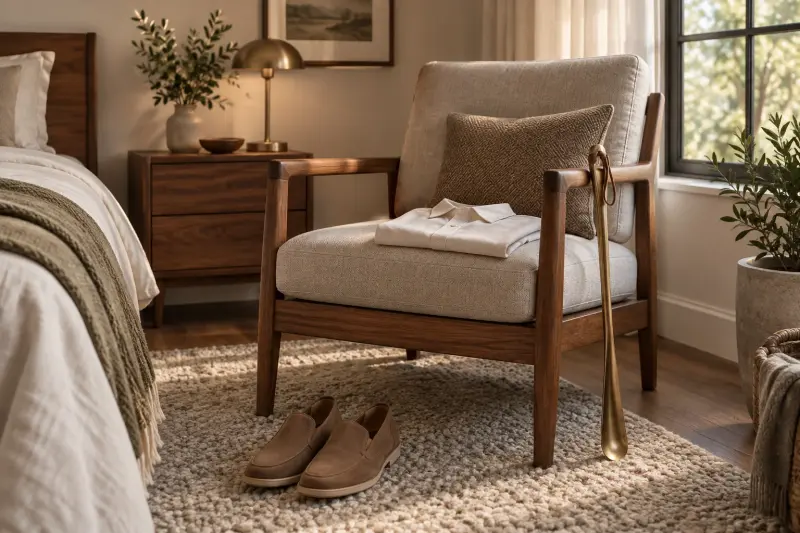
A button hook solves one task. If socks, shoes or reaching the feet are also hard, other dressing aids for elderly adults may matter more, such as a sock aid, a long shoehorn or a reacher. An occupational therapist can suggest which ones fit the routine.
Sometimes the simplest fix is the clothing itself. MedlinePlus suggests Velcro fasteners instead of buttons and slip-on shoes for people with tremor. Versus Arthritis suggests snap fastenings, magnetic zippers or a small piece of material threaded through a zip tag.
- A fabric loop or key ring on a zipper tab, so a finger can pull
- Front-opening tops with fewer, larger buttons
- Hook-and-loop or magnetic closures sewn behind buttons
- Elastic shoelaces or slip-on shoes for lace trouble
When to ask an occupational therapist
A button hook is a convenience tool, not a treatment. If dressing has become harder quickly, if numbness or weakness is new, or if a fall happened while dressing, speak to a doctor first.
An occupational therapist can watch the whole dressing routine and suggest the order, seating and tools that fit. Arthritis Society Canada makes the same point, suggesting a talk with an occupational therapist about which devices suit your kind of arthritis.
Ask your doctor or local health service how to reach one. Some areas offer home visits, and a short session can save money on aids that do not suit the person.
- New or sudden changes in hand strength or feeling
- Pain that makes any gripping hard, not just buttons
- Balance worries when standing to dress
- Help needed with several dressing tasks, not one
MAKE THE SPEND MEANINGFUL
Button hook dressing aid: low-cost alternatives
- Thread a fabric loop or key ring through zipper tabs so a finger can pull instead of pinching.
- Build up a thin handle with foam tubing, as the Ability Toolbox Guidebook shows, before buying a thicker one.
- Ask whether a local occupational therapy service, loan closet or charity can lend dressing aids to try first.
In brief
Button hook dressing aid: questions answered
What is a button hook used for?
A button hook is a small dressing aid with a wire loop that pulls a button through its buttonhole. It replaces the fine pinch grip that buttons usually need, so people with stiff fingers, weaker grip or reduced feeling in their fingertips can fasten shirts, cardigans and coats. Button helper is another common name, and many models add a zipper pull.
How do you use a button hook?
Push the wire loop through the buttonhole from the outside, hook it around the button, then pull the button back through the hole. Hold the garment edge flat with your other hand or against your body, start with the lowest button and sit in good light. Practice on a shirt laid flat before trying it while wearing the garment.
Can a buttoning aid work with small shirt buttons?
It can, but small collar and cuff buttons are the hardest for any hook. Practice on larger buttons first, sit down in good light, and keep a steady pull. If cuffs stay difficult, many people leave cuff buttons fastened and slip the hand through, or have a tailor add an elastic or hook-and-loop cuff.
Which dressing aids for elderly adults are most common?
Common dressing aids include button hooks, zipper pulls, sock aids, long-handled shoehorns, elastic laces and reachers for picking up clothes. The right mix depends on which part of dressing is hard. An occupational therapist can watch the routine and suggest a few tools, which avoids buying several that go unused.
How this guide was prepared
AI-assisted editorial research, checked against the linked primary sources.
Written with AI assistance from the sources listed below and checked against them. We have not tested these products in person.
How we use sources and AI assistance ↗Sources & fact checks
The guide separates sourced facts from editorial questions and examples. How we use sources and AI assistance.
- Versus Arthritis: Getting dressed with arthritis, tips to make it easier ↗
- Wikipedia: Buttonhook, history of the Victorian tool ↗
- Manage at Home: button hook range, including round and long Etac Butler handles ↗
- Ability Toolbox Guidebook: Button hook, with foam tubing for a longer, thicker handle ↗
- Vive Button Hook with Zipper Pull (SKU LVA1014): dimensions and materials ↗
- Vive Button Hook Model V with finger hole (SKU LVA2051): dimensions, weight and materials ↗
- MedlinePlus: Tremor self-care, including Velcro fasteners and slip-on shoes ↗
- Arthritis Society Canada: assistive devices for daily life, including button hooks and zipper tips ↗
Found an error or an outdated detail? Contact the editorial team.