
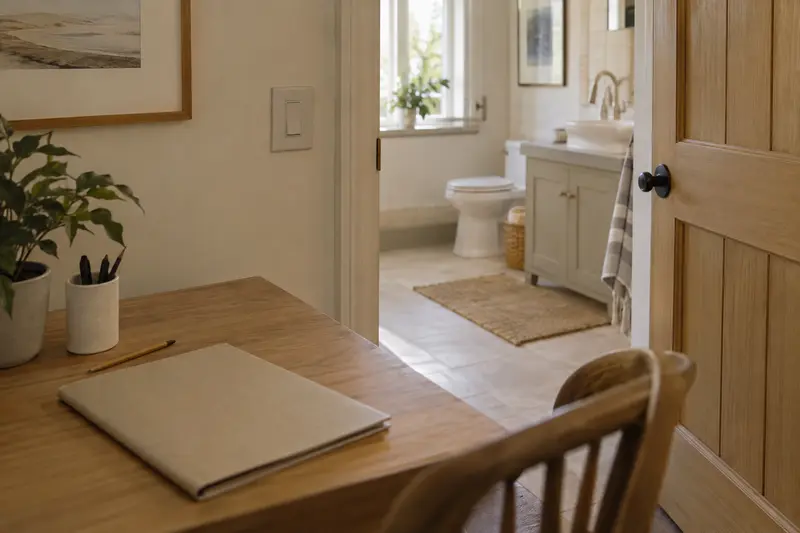
In brief
Prepare a private task brief: what is difficult, when it happens, who helps and what you want to keep doing. Ask the service what the assessment covers and how equipment, installation and funding are handled. You do not need to publish medical details to use a planning worksheet.
IN THIS GUIDE
Prepare a task brief rather than a product request
A bathroom adaptation assessment starts with daily life. Explain what you want to keep doing, what is difficult and what help is currently involved. A product can be relevant later, but an early request for a particular bath, rail or shower chair may obscure the actual problem. A clear task brief leaves the appropriate solution open.
Write the routine from entering the room to leaving it. Include controls, washing, personal-care items, towels and any assistance. You do not need a polished floor plan or expensive planning software. A short record in the person's own words can be more useful than a catalogue of equipment selected before anyone reviews the situation.
Keep preferences distinct from requirements. “I like having a bath” describes an important preference; “I cannot manage the present routine comfortably” describes a concern requiring assessment. Both belong in the conversation. Neither should be erased by a family member's enthusiasm for a product or a contractor's preferred renovation package.
This guide helps organize that conversation and subsequent purchasing scope. It does not diagnose a difficulty, decide a transfer method, promise funding or replace a professional visit. Use the private brief with the relevant local service. The useful result is a documented problem and a clear next step, even when no immediate purchase is appropriate.
Describe one ordinary routine without staging a demonstration
Use a simple sequence of tasks: approach the room, enter, prepare items, use the relevant fixture, wash, finish and leave. Adapt those headings to the person's actual routine. Do not ask someone to recreate a difficult or unsafe movement just to make the worksheet complete. Observations from normal use and the person's description are enough for an initial brief.
For each task, record what happens, the particular difficulty and what assistance is already provided. “I need someone to fetch the towel from behind the door” is more useful than “everything is hard.” Specific descriptions allow the assessor to discuss layout, equipment and assistance without relying on a vague overall label.
Include when a problem occurs. A routine can differ at another time of day, when a helper is absent or when the room is shared. State those variations honestly without trying to predict every future event. If something is uncertain, write it as a question. The brief is not a test that the person must pass.
Do not minimize a small task because it seems less important than a major renovation. Opening a cupboard, finding a control or managing stored items can affect the overall routine. The NHS home-adaptation information explicitly encourages explaining smaller difficulties during its described assessment pathway. Keep that task detail visible when larger products are discussed.
Confirm the local service and what its assessment covers
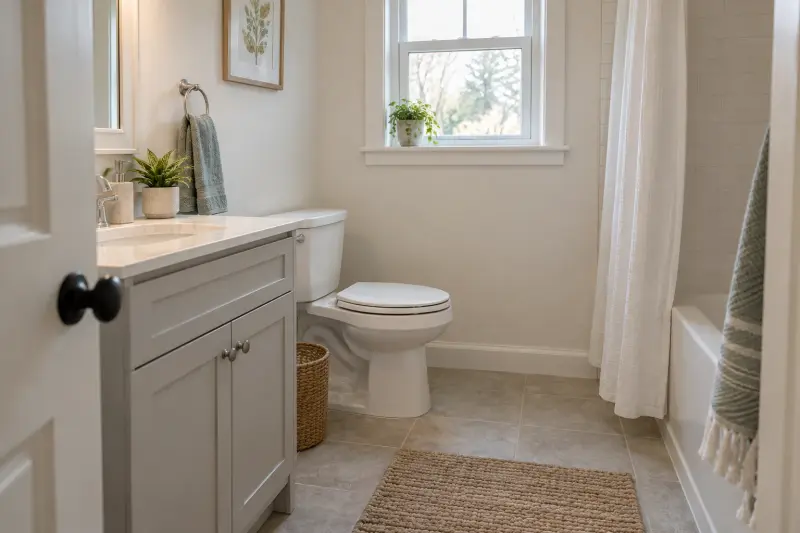
The NHS describes a local-council home-assessment pathway involving an occupational therapist. That is a useful UK-facing starting point, rather than an instruction for every country or a promise about an individual's service. Ask the relevant local body how to request help, what information it needs and what the assessment will cover.
Clarify whether the visit concerns personal tasks, equipment, home adaptations, care support or a particular combination. Different appointments and providers can have different scopes. A contractor measuring a shower enclosure is not necessarily providing an individual equipment assessment, while a personal assessment may not complete every building survey needed later.
Ask how someone can prepare, whether another person may attend and how communication preferences can be accommodated. If the user wants a supporter or advocate, discuss that with the service. Keep the person who uses the bathroom central to the conversation. A helper should clarify their wishes rather than replace them with a shopping preference.
For US readers or people elsewhere, use the appropriate local healthcare, equipment or aging-support route and ask about its actual scope. Do not copy UK council or grant descriptions into another country's funding plan. This article provides a private preparation method that can travel across settings; the service, rules and eligibility must be established locally.
Protect the user’s voice in a family planning conversation
A relative may notice different problems from the person using the bathroom. Make separate entries for the user's priorities, the helper's observations and questions both want answered. That small distinction can prevent a family shopping list from being presented as the user's choice. It also gives the assessor a clearer account of the household routine.
Ask what the person values: privacy, a familiar routine, less setup, simpler controls, an easier cleaning arrangement or another practical aim. Do not assume that independence means refusing help or that assistance means buying the most elaborate equipment. The appropriate arrangement depends on the person's priorities and assessment, not a slogan on a product page.
Describe existing help accurately. Include which task someone assists with and what difficulties the helper experiences, without proposing a new manual-handling technique yourself. If support responsibilities are unclear, make that a question for the appropriate professional. A product order should not silently assign a family member a task they cannot manage.
Where preferences differ, keep the disagreement visible and respectful. For example, the person may prefer a seated shower while the family wants a replacement bath. The brief can record both without forcing an answer before assessment. A well-prepared conversation explains the tradeoff and leaves room for an appropriate solution.
Keep personal evidence private and limited to what is needed
Use paper or a private document for sensitive notes. You do not need to upload diagnoses, medication lists or detailed health information to a public buying tool. A household planning worksheet can describe ordinary tasks and equipment questions while the relevant service receives necessary personal information through its appropriate process.
If photographs help, ask what the assessor actually needs. An empty-room image can show layout without including a person bathing or private paperwork. Check reflections and labels before sharing it. Keep photographs with the private assessment record and use the service's appropriate route, rather than posting them in a public product question.
Do not collect more information simply because a template has space for it. A home-planning brief and a formal service application are different documents. The service can tell you which details are required for its process. The shopping worksheet should stay focused on confirmed tasks, equipment scope and unanswered practical questions.
If a supporter keeps the notes, agree how the intended user can access and correct them. Record the person's wording where useful, without publishing a quotation as a testimonial. Privacy and clear communication support a better assessment: the user should know what is being represented and should not discover that a family purchasing record has become public content.
Describe the room without pretending to complete a technical survey
A simple sketch can show the door, fixtures, existing equipment and storage. Mark obvious features that affect the routine, such as a screen, a projecting cupboard or a control location. Do not inspect wiring, remove panels or climb to collect details. Uncertain dimensions can remain questions for a qualified survey.
If measuring is comfortable and relevant, keep units and measurement definitions with the values. Ask the assessor or supplier which measurements matter before collecting a large set. A room's overall width is not the same as a product's supporting dimension, and a photograph cannot establish every property or condition needed for installation.
Include equipment already in use and who supplied it. Keep its current configuration and instructions available if possible. A proposed adaptation should account for existing assessed arrangements rather than treat the bathroom as empty. The same applies to shared use and any help provided: space that looks unused may serve an ordinary task.
Label the drawing as a household layout sketch. The assessor or installer should identify what further survey is required. This avoids a common misunderstanding in quotations, where an informal sketch is treated as if it confirmed plumbing, electrical work or a suitable substrate. Preparation helps the survey; it does not replace it.
Worked example: a renovation request becomes a clearer assessment brief
Imagine a fictional family considering a walk-in bath. Their initial request names the product but says little about the existing routine. The intended user explains that a shorter seated wash is the priority, while another household member still wants ordinary bath use. Those aims need to be discussed together rather than resolved by a sales photograph.
The family writes the task sequence and separates the user's preferences from its own suggestions. It notes where items are stored, which controls are used and what help is currently provided. It does not stage a difficult transfer or decide which new movement equipment would make possible. Those questions go to the appropriate assessor.

The assessment discussion may identify equipment, layout changes, assistance or further survey requirements. The family records each recommendation with its status instead of announcing that a particular product is approved from a general conversation. If a building change is relevant, it asks who will define the scope and confirm the installation requirements.
This example does not conclude that a shower is better than a bath. It shows how task detail can keep a large purchase from becoming the answer before the question is understood. The final solution might be modest or substantial. What matters is that the user's routine, preferences and confirmed requirements remain attached to the decision.
Separate confirmed recommendations from ideas and further surveys
After the visit, create three groups: confirmed recommendations, options requiring another decision and questions requiring further survey or advice. Ask the service to clarify uncertain wording. A suggestion to consider a shower seat is different from identifying the exact configuration and arrangement suitable for the task.
For each recommendation, record its purpose, responsible contact and next action. Ask whether the service provides equipment, arranges installation or expects a private purchase. Do not infer responsibility from the fact that a product was mentioned. A household can otherwise order something while a provider is preparing a different arrangement.
Keep personal assessment, product compatibility and property installation distinct. A recommendation can establish a need without confirming that a particular wall supports a chosen rail. A technical survey can establish an installation scope without deciding the user's bathing technique. Both can be necessary, but neither should be represented as the other's completed work.
Ask how changes in the person's needs or household situation should be reported. Do not use an old brief to settle a new difficulty automatically. The follow-up record should identify the appropriate contact and the unresolved question, so another family member can understand why a purchase is being considered, delayed or revised.
Ask about provision and funding before making commitments
Assessment and funding are separate questions. Ask the responsible service what can be provided, whether an application is needed and what conditions apply in the actual case. A general webpage can describe a pathway without confirming an award. Keep written service advice with the private record and do not use a retailer's broad funding statement as approval.
GOV.UK describes Disabled Facilities Grants as a council-led pathway for relevant home changes. Readers must check the applicable local process and conditions with the responsible council; we do not determine eligibility, award amount or timing. The overview is a starting point for questions, not a promise that a named bathroom purchase will be reimbursed.
Before ordering or commissioning work, ask whether doing so could affect the relevant application or provision process. Do not assume that paying privately now can be reclaimed later. The service responsible for the actual pathway should explain the required order of steps. Keep any answer tied to that service and case rather than generalizing it to another household.

If no funding route is appropriate, a private quote still needs the confirmed scope. Compare what is required, what is optional and what remains unresolved. A smaller assessed change may answer one task while another needs building work. The budget discussion should follow the actual recommendations, not drive the assessment toward whichever product has the most appealing finance advertisement.
Turn assessment findings into comparable purchase scopes
When private quotes are relevant, give each provider the same confirmed brief and identify where a survey is still needed. Request separate lines for equipment, installation, making good, delivery, handover and service. A product-only amount should not be compared with a completed adaptation scope as if both included the same responsibilities.
Ask providers to name the exact equipment or specify what remains to be selected. Broad terms such as accessible bathroom can conceal different fixtures, controls and support arrangements. Tie each proposed item to a documented task or installation requirement. Optional finishes should be compared separately so they do not obscure essential scope.
Avoid ordering accessories to anticipate the assessor's recommendations. A shower organizer, extra rail or bath mat may seem inexpensive, but its location and instructions still need to fit the confirmed arrangement. Buying a bundle early can create clutter or duplicate provided equipment. Wait until the specific task and relevant configuration are understood.
Save the current written terms and ask about deposits, cancellation, returns and service in the actual region. This guide does not state a universal consumer-rights rule. Where a contract or funding condition is unclear, obtain appropriate advice before committing. The useful purchasing record contains exact scope and responsibilities rather than optimistic assumptions about what everyone usually includes.
Use a follow-up list with one owner for each question
Every unresolved question needs a named owner and a next action. Examples include a service clarifying provision, a qualified installer surveying a wall or a supplier identifying a product variant. A vague entry saying “someone will check” can leave essential work unassigned while the household continues shopping.
Record contact date and response without turning the worksheet into a complex project-management system. A paper list is enough if it is accessible and used. Put the most consequential unresolved requirement first. If personal suitability is unsettled, asking about decorative finishes is unlikely to unlock the decision.
When several providers are involved, ask who coordinates the final arrangement. The household should understand how an assessment recommendation, product selection and installation confirmation are connected. Do not assume that each provider has seen the other's advice. Share relevant practical information through appropriate routes while keeping unnecessary private details out of commercial enquiries.
After equipment or work is supplied, retain the handover information and responsible service contact. Delivery alone is not the same as a completed agreed arrangement. If the household does not understand operation, care or assistance responsibilities, return to the appropriate provider for clarification rather than buying another accessory to fill the gap.
Your private assessment preparation and decision record
Finish with a one-page brief: the user's priorities, the ordinary task sequence, specific difficulties, current help, relevant room features and the questions requiring assessment. Attach a simple layout sketch if useful. Keep personal health details separately for the service's appropriate process rather than entering them into a public planning tool.
After the visit, add confirmed recommendations, further survey requirements, provision questions and named next actions. The record should show what was actually established and what still needs an answer. Avoid a completion score or a product recommendation generated from a few dimensions. The professional conversation and actual setting determine the appropriate next step.
A good result may be no purchase, a modest equipment change or a substantial adaptation with a clear scope. Preparation is valuable because it helps the user explain the routine and the household compare relevant proposals. It does not need to end with the largest order or the quickest checkout.
Use our specific shower-seat, bath-board and storage guides only when those purchasing questions become relevant. They can help organize product evidence while the assessment record preserves the person's task. Together the documents make the decision easier to understand without pretending that editorial information supplies individual medical advice, installation approval or guaranteed funding.
MAKE THE SPEND MEANINGFUL
Before adding to the basket.
- Prepare the task brief on paper or in a private document without buying an app.
- Check actual service provision before paying privately for equipment.
- Retain appropriate existing equipment when the confirmed assessment supports it.
- Avoid advance accessory bundles while the task and configuration remain unresolved.
How this guide was prepared
AI-assisted editorial research, checked against the linked primary sources. Product testing and a credentialed individual review are not claimed.
AI-assisted, source-checked editorial; no hands-on test, human expert review or personal suitability assessment claimed
How we use sources and AI assistance ↗Sources & fact checks
The guide separates sourced facts from editorial questions and examples. We have not claimed hands-on product testing. How we use sources and AI assistance.
- NHS: UK home adaptation assessment pathway; eligibility is individual ↗
- GOV.UK Disabled Facilities Grants overview: council-led pathway; no individual award or eligibility implied ↗
Found an error or an outdated detail? Contact the editorial team.