
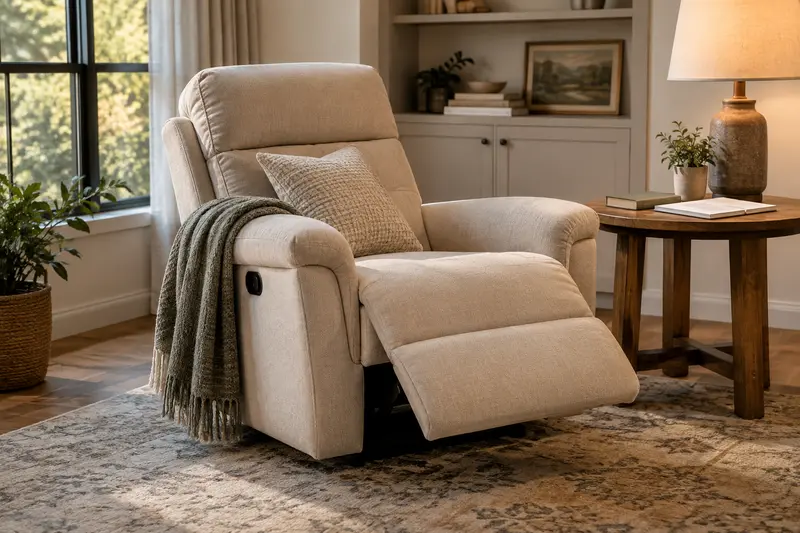
In brief
Buy a recliner accessory only after identifying the task it solves and confirming compatibility with the exact chair. Remote storage or a reading surface can be helpful; an attachment that obstructs movement can create a new problem.
Documented options
A clearer comparison.
Research options based on manufacturer documentation. These are not results of hands-on testing. Manufacturer links are informational; no commission relationship is currently active.
IN THIS GUIDE
Give every accessory a task before giving it a place
Recliner accessories are most useful when they solve a recurring task in an appropriate way. Start with a short task ledger: what the person wants to do, what the chair already provides, what remains awkward and what evidence is needed for a proposed addition. Avoid buying a bundle simply because the main chair is expensive.
A task can be ordinary and specific: keeping the approved remote accessible, setting down a book, reading with suitable light or following the exact upholstery-care instructions. That is more useful than a general promise of comfort. The relevant arrangement should match the actual chair and user.
The cited US-published Pride manual carries a prescription-use sale caution and describes provider involvement. For other markets, obtain the local device documentation rather than infer the requirements from this US reference. Accessories do not replace the relevant device requirements or personal suitability advice. An item sold beside a lift chair is not automatically a safe attachment, support or medical aid for that person.
For a fictional reader, the main need is somewhere appropriate to put a book. The ledger checks the existing table before considering a new tray. Another reader has a remote-storage question that needs provider advice. These are different tasks. Compare an organiser only against the particular item, location and equipment restrictions it must address, rather than assuming that a popular accessory category solves both problems.
Check the supplied features and existing furniture first
Identify what the exact chair already includes. A pocket, approved holder or charging feature may be standard on one configuration and optional on another. Ask the seller to confirm the supplied arrangement rather than assuming the display chair represents every order.
Review existing nearby furniture. A side table, shelf or lamp may already solve the task if it can be placed appropriately with the full chair motion and personal access needs. Do not assume it works simply because it looks good beside the upright chair. Ask the provider to review relevant placement questions.
For a fictional reading corner, the supplied pocket holds the appropriate remote and an existing table can accommodate the book. A generic chair organiser would duplicate those functions. The reader can leave it out of the initial purchase without losing a task they actually need.
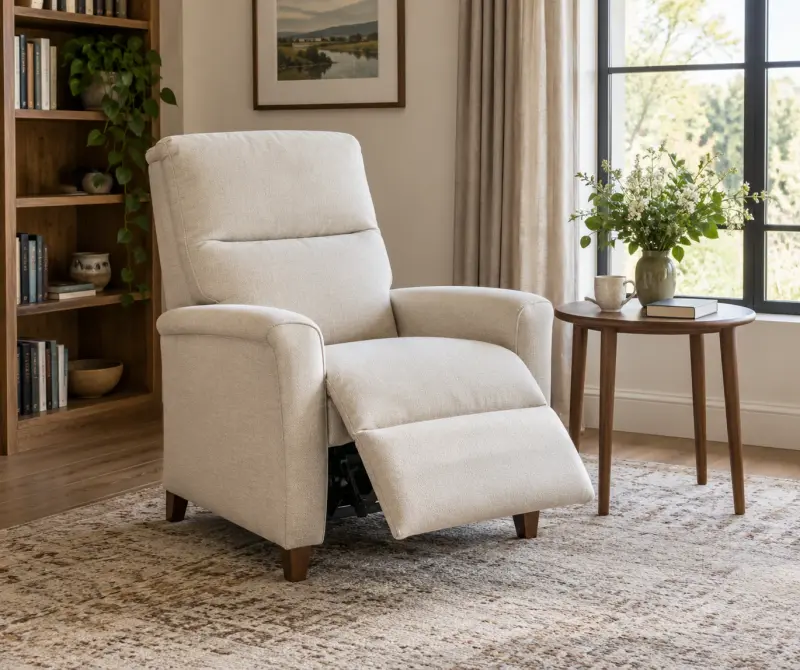
Make the no-purchase result explicit in the ledger. “Task already met” is a completed decision, not a failed shopping opportunity. It leaves the budget available for required equipment, setup and support. If a genuine gap appears later, investigate a compatible solution then rather than selecting every extra before the household has understood the approved arrangement.
Choose storage by access and permitted attachment
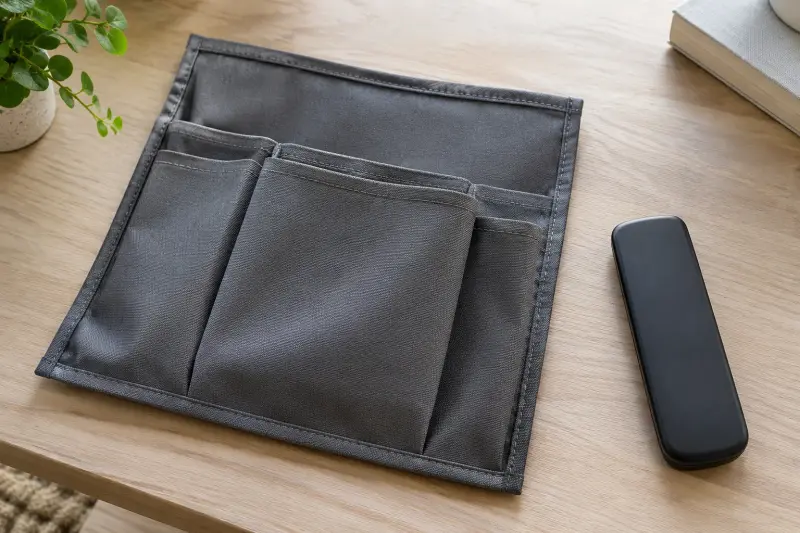
A remote or small-item organiser needs a clear access question. Ask where the intended user can appropriately reach the item in the relevant chair positions and what the manufacturer permits. A pocket being large or a holder being advertised as universal does not answer personal reach or device compatibility.
Check the exact attachment arrangement before purchasing. A strap, hook or under-cushion flap can interact with the chair, covering or moving parts. Do not improvise fitting based on a sofa accessory photograph. The provider should identify what is appropriate for the actual chair.
Keep storage and support distinct. A tray edge or organiser is not a grab support for getting up. This guide does not recommend a transfer aid or prescribe how a person moves. If that is the real concern, seek appropriate advice instead of buying a storage item and expecting it to carry body weight.
For a fictional reader, a pocket is inconvenient in one intended position. The task ledger records a provider question rather than immediately proposing a hanging pouch. An approved alternative may exist, or another arrangement may be appropriate. The useful outcome is accessible storage that the equipment provider can support, not another low-cost object with uncertain attachment.
Compare a surface for books and ordinary items
For a book or another ordinary item, compare surface size, position and the chair's full motion. A freestanding table and an attached tray have different space and compatibility questions. Ask what the item is intended to hold and whether the arrangement remains practical when the chair changes position.
Do not treat a small side table as a body support. A product's load capacity for objects is not evidence that it can be leaned on for standing or transfers. If the reader needs a support aid, obtain appropriate advice and a product intended and assessed for that purpose.
For a fictional comparison, an existing narrow table solves the book task after another ordinary item is moved elsewhere, subject to appropriate placement. A proposed tray would require exact attachment confirmation and could conflict with movement. The ledger can reasonably prefer the existing table without declaring it universally safest.
Keep return terms and assembly responsibilities visible for a new surface. A low listed price can be poor value if the base cannot fit the room or the user cannot appropriately access it. Use actual dimensions and intended placement, while avoiding an automatic clearance score that claims to approve personal reach or device operation.
Read cup-holder restrictions before relying on convenience
A cup holder is a feature with instructions, not permission to keep every drink in place during all chair movement. Ask the provider what the exact model permits and whether contents must be removed for particular actions. A holder shown in a promotional image is not a complete use plan.
Pride's VivaLift insert tells users of the specified equipped chairs to remove cup-holder contents before elevation beyond the seated position, because they can shift or spill. Keep that source within its scope. Do not generalise the exact procedure to every recliner or ignore the actual manual supplied with another model.
An added cup holder needs exact compatibility as well. Check attachment, movement and any power-feature interaction before buying. Do not use a generic clamp to create a new holder location without approval. A convenient position can still conflict with the chair or a route.
For a fictional reader, an appropriate nearby surface may be more practical for the ordinary drink task than an unverified attachment. Another chair may supply a permitted holder with clear instructions. The ledger records the actual arrangement and restrictions. It should not push an extra holder simply because it is inexpensive or present convenience as proof of safe use.
Solve the reading task without adding another conflict
A reading light should illuminate the actual task and have an appropriately reachable control. Begin with the existing light arrangement and ask the reader about shadows, glare and ordinary use. Do not promise a lamp prevents eye strain or delivers a measured benefit this publisher has not tested.
Check the base, arm and cord against the chair's full motion and required routes. A floor lamp can occupy more space at floor level than its slim appearance suggests. An adjustable arm can cross the movement envelope. The placement needs an appropriate review, not simply a colour match.
For a fictional reading corner, changing the permitted position of an existing light may improve the task without a purchase. If another lamp is needed, compare exact dimensions, control location and the local electrical version. A photograph of a premium lamp is not evidence it suits this user's reach or room.
Keep chair charging features and lamp supply questions separate. Do not power an unverified light from a chair port or assume a long cable across the room is acceptable. The relevant device instructions and electrical requirements apply. A useful accessory solves the reading task while respecting the whole arrangement.
Treat pillows and seat additions as configuration changes
A pillow or cushion can alter the seating experience, effective dimensions and relationship to the back. Ask about exact compatibility and appropriate personal advice, especially where the goal involves posture, pressure or pain. A soft material description is not evidence of therapeutic benefit.
Golden offers a manufacturer-defined adjustable head pillow through its retailer route, including custom fabric choices and its stated arrangement. That is an example of an accessory enquiry with a specific maker. It is not a universal recommendation for every Golden chair or every user's neck or seating needs.

Ask the provider whether the proposed accessory is appropriate for the actual chair and person, what arrangement is permitted and whether another supplied feature already meets the task. Do not improvise a weighted or attached pillow from the description or copy a fitting method for another model.
For a fictional reader, the chair's supplied headrest has not yet been properly demonstrated. The ledger requests that explanation before considering a pillow. Another reader may have an appropriately advised accessory need. The difference matters: buying an add-on should follow the established task and approval, rather than conceal an unresolved seat comparison.
Keep powered comfort options distinct from generic add-ons
Heat and massage options need the exact model's instructions and personal suitability consideration. Do not treat a plug-in mat or aftermarket heated cover as interchangeable with an approved chair option. The powered device, covering, controls and user circumstances all matter.
Golden's heat-and-massage accessory page says the option is available on selected models. This identifies a compatibility boundary, not a promise that it can be fitted to every chair later. Ask the manufacturer or provider about the actual order, installation and current instructions before comparing an upgrade.
Do not adopt therapeutic claims from marketing copy. This guide does not say an option treats pain, improves circulation or is appropriate during sleep. Where a health objective or sensation concern matters, seek the relevant professional advice and follow the actual device's restrictions.
For a fictional buyer, an optional feature is offered before the seat and control configuration is resolved. The ledger marks it as a separate preference enquiry. It should not displace an essential fit or support requirement in the budget. If the task is simply ordinary warmth or comfort, discuss an appropriate arrangement rather than assuming a powered upgrade is the necessary answer.
Buy protectors and cleaners from the exact care task
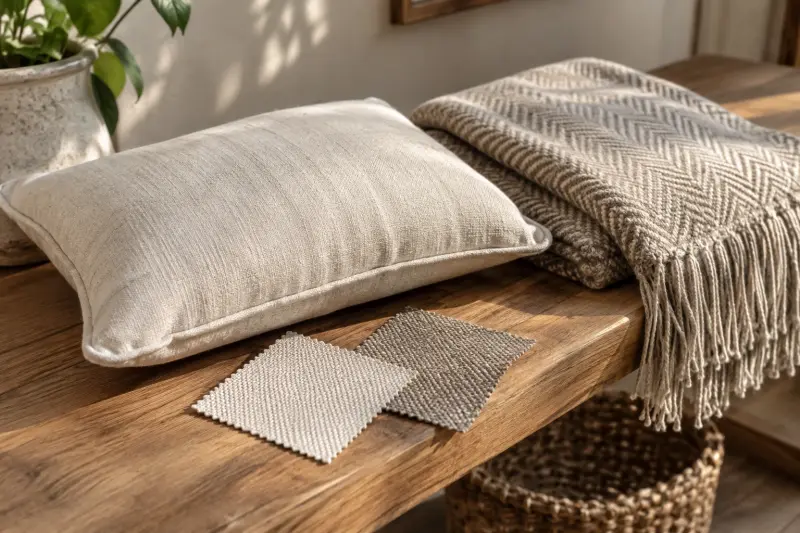
A protector, throw or cleaner should follow the actual upholstery and chair instructions. Identify the exact fabric first. A covering described as stain-resistant or water-resistant does not establish that any treatment or fitted cover is permitted on the complete powered chair.
Ask whether a proposed protector affects seat feel, controls or movement. Loose material can introduce another arrangement question. Where the purpose involves personal care or clinical support, obtain appropriate advice rather than claiming a generic washable cover makes the chair suitable.
For a fictional household, the supplied care sheet allows a routine that can be performed with already owned permitted items. A large cleaning bundle has no demonstrated additional task. Another material may have a specified product route that needs a real quote. The ledger records the difference instead of promoting the same kit to every buyer.
Keep electronics care separate from upholstery care. Do not spray, soak or use a universal household recipe around a powered device based on a lifestyle article. The manufacturer and provider should explain the appropriate instructions. Buying less can be the better decision when the proposed item has no verified purpose or compatibility.
Use four gates before approving an accessory purchase
Put every proposed addition through four enquiry gates: a real task, exact compatibility, appropriate placement or attachment, and usable care and support. If a gate is unanswered, mark it pending. The ledger organises questions; it is not an automatic safety assessment or an installation approval.
For a fictional organiser, the task is clear and the price is within budget, but the attachment is unverified. That is enough to pause the purchase. For a fictional lamp, compatibility with the chair is not an attachment issue, yet placement and the local electrical version still require consideration.
Ask which party can answer each question. The chair manufacturer or provider addresses permitted attachments and powered components. The accessory maker provides exact dimensions and instructions. Appropriate personal advice addresses reach or seating needs. A retailer's broad “fits most” phrase does not replace all those roles.
Do not use customer photos as proof that an arrangement is approved. They can show how someone placed an object, but they do not establish the same chair, user or instruction set. The strongest accessory evidence relates to the actual product and task. That makes a small purchase useful rather than merely easy to add to a cart.
Keep low-cost purchases accountable to useful value
Use actual prices and complete terms for an accessory once its purpose is established. Include assembly, required components and return arrangements where relevant. Do not assume a cheap item has no downside, or invent a value for a convenience the reader may not use.
Compare the existing appropriate arrangement with the new purchase. If both meet the task, a preference can reasonably influence the decision, but state it as a preference. A premium appearance or popular-product ranking is not evidence that the item improves personal independence or equipment safety.
For a fictional budget, the reader chooses one appropriate reading item and leaves a duplicate organiser, unverified cushion and extra charging cable out. That is a more focused purchase than a broad starter kit. It also keeps spending available for necessary chair setup and support.
Avoid urgency prompts that exploit discomfort or uncertainty. A task that needs professional advice should lead to advice, not a quick-sale countdown. Useful buying guidance can still recommend a specific compatible item when verified evidence and actual availability support it. Until then, a clear enquiry and a no-purchase option serve the reader better.
Review the complete arrangement after every addition
When a permitted accessory arrives, check its identity and instructions against the order and agreed arrangement. Do not rely on the product photograph if the supplied version differs. Seek the relevant provider advice if fit or operation is uncertain rather than improvising an attachment.
Review the chair's full movement, required routes, controls and power arrangement with the appropriate support. An item that solved one task can introduce another conflict after furniture is moved. Keep the task ledger current and remove unnecessary extras through the proper arrangement.
If the user has a changed seating, reach or operation need, review it as a personal question. Do not assume an additional pillow or holder is the answer. The actual chair and appropriate advice may need reconsideration. A past accessory decision is not permanent approval for every future use.
The best accessory plan is concise: it states what the reader wants to do, why the existing arrangement does or does not meet it, what exact addition is supported and which restrictions apply. That allows genuine useful purchases while leaving out products whose only justification is that they are cheap, popular or displayed beside an expensive chair.
MAKE THE SPEND MEANINGFUL
Before adding to the basket.
- Use existing appropriate tables, lights and supplied pockets where they meet the task.
- Request a provider explanation of existing features before buying items that duplicate them.
- Delay optional extras until a recurring need and exact compatible arrangement are established.
How this guide was prepared
AI-assisted editorial research, checked against the linked primary sources. Product testing and a credentialed individual review are not claimed.
AI-assisted, source-checked editorial; no hands-on test, human expert review or personal suitability assessment claimed
How we use sources and AI assistance ↗Sources & fact checks
The guide separates sourced facts from editorial questions and examples. We have not claimed hands-on product testing. How we use sources and AI assistance.
- Pride US-published manual: provider, prescription-use and accessory requirements for the exact chair; US-published document, local market requirements need separate verification ↗
- Pride VivaLift insert: cup-holder contents and chair movement restrictions apply to the specified equipment ↗
- Golden head pillow: manufacturer-defined custom accessory and retailer route; exact chair suitability still required ↗
- Golden heat and massage accessory: available on selected chair models; feature description is not a treatment claim ↗
Found an error or an outdated detail? Contact the editorial team.