

In brief
A backup-power label does not explain which chair movements remain available, how the battery is maintained or what happens during a prolonged outage. Ask the provider to demonstrate the exact installed system and document its limits.
IN THIS GUIDE
Ask what backup power means on the exact chair
A battery-backup label can describe a limited recovery arrangement or another model-specific capability. Start by identifying the exact chair, power unit and battery system, then ask the provider what the current instructions say. Do not interpret the label as a promise of continuous ordinary operation.
The Pride US/Canada manual contains separate 9V and lithium-ion backup sections. It describes a one-time return purpose while also giving a qualified lithium-system operating statement elsewhere. That is a reason to obtain a model-specific explanation, rather than publishing one universal runtime or copying the most attractive figure from a general manual.
The cited US-published Pride manual carries a prescription-use sale caution and describes provider involvement. For other markets, obtain the local device documentation rather than infer the requirements from this US reference. These must be addressed for the actual chair and market. Backup power does not establish personal suitability, independent operation or an appropriate transfer arrangement. This guide does not prescribe a recovery movement.
Ask the provider to give a clear ordinary-language answer: which functions the installed system supports, what limits apply and what the user should do under the approved instructions. A brochure's reassuring phrase is a starting question. The useful purchase evidence relates to the exact equipment and the person's practical support needs.
Identify the complete installed system before comparing
Record the chair model, size and supplied configuration, along with the approved power unit and battery reference. Ask whether backup is standard, optional, included but not installed, or dependent on another supplied component. A battery symbol on a product page does not answer all those questions.
Distinguish an installed rechargeable pack from a system using specified replaceable batteries. They can have different checking, replacement and charging requirements. The provider should identify which arrangement applies to the actual order. Do not infer chemistry or maintenance from the shape of an enclosure.
Ask for the current model-specific instructions and any relevant supplement. A general series manual may discuss several systems that are not all fitted to the same chair. The correct purchasing record names the relevant section and supplied components rather than treating every illustrated option as included.
For a fictional comparison, Offer A says backup included but does not name the pack, while Offer B identifies the installed system and provides the applicable instructions. A remains pending. That does not prove B is better overall, but it makes the next question clear. Do not fill A's gap with another model's battery description.
Separate chair movement from optional features
Ask which chair movements remain available under the actual backup arrangement and what the manufacturer expects the user to do. Keep the answer tied to the current instructions. A system intended for a particular recovery task should not be described as supporting every usual function.

Editorial illustration Ask separately about optional heat, massage, charging ports or other powered features. Do not assume that because a chair can move, all accessories remain available for the same duration. The provider needs to explain the exact system rather than answering with a broad “the chair still works.”
For a fictional buyer, the ordinary concern is understanding the approved action during a short supply interruption. Another household is asking about a longer interruption and additional assistance. Those needs require different questions. A single battery-capacity figure cannot answer both without the relevant model and usage information.
Record what remains unknown. “Optional heat on backup not confirmed” is a useful entry, not an invitation to test it repeatedly. A product guide should not turn the reader into a battery endurance tester. If the backup capability is important to the purchase, get a written model-specific answer before relying on it.
Read runtime claims with their conditions intact
If a manual or supplier gives an operating duration or number of movements, ask what conditions and functions the statement covers. Battery condition, equipment configuration and use can matter, and a qualified claim should remain qualified. This publisher has not measured the chair or battery.
Do not translate an “up to” statement into a guaranteed duration for the reader. A chair being left unplugged, being moved repeatedly and supplying optional features are not necessarily equivalent conditions. Ask the provider how the documented claim relates to the intended backup task.
The Pride series literature's different backup descriptions are especially relevant here. Read the section matching the installed system and seek clarification when broad statements appear difficult to reconcile. Do not choose the largest number in the literature and assume it overrides the specific equipment's instructions.
For a fictional comparison, one seller states a duration without conditions, while another provides the relevant document and explains the intended use. The first claim needs clarification; the second still is not a personal performance guarantee. A careful buying sheet can compare documented capability and uncertainty without fabricating a tested runtime or promising that a battery will cover every outage.
Ask who checks and maintains the actual backup
Find out which checking and maintenance tasks the manufacturer assigns to the user and which require provider help. Ask the provider to explain the current instructions and demonstrate only the approved relevant actions. This article does not give a generic battery-installation or replacement procedure.
Do not assume an installed pack looks after itself indefinitely. A replaceable-battery system and rechargeable pack can have different requirements, and a dormant backup can still need attention. Use the exact instructions rather than a reminder copied from another chair's manual.
Ask how the household records the required checks. A simple private note with the equipment identity and relevant dates can be enough. It should reflect actual manufacturer requirements, not an invented six-month interval applied to every battery system. If the provider specifies a schedule, record where it comes from.
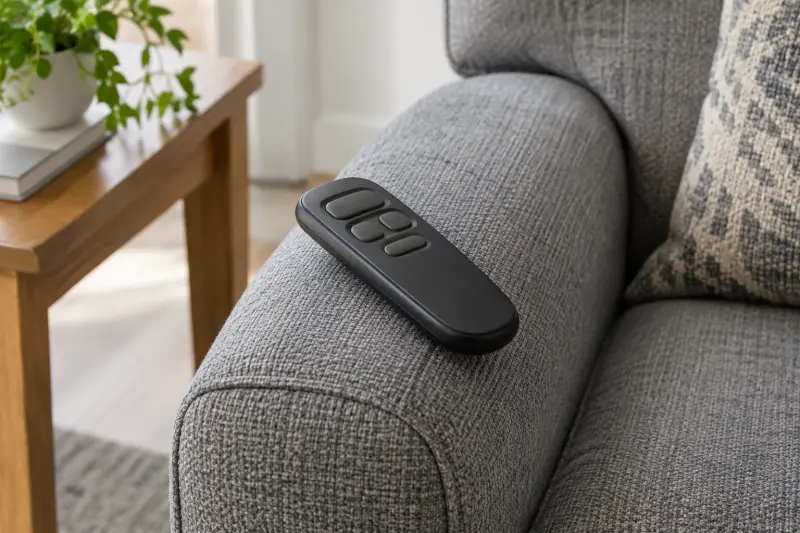
For a fictional reader who needs help with maintenance tasks, the enquiry includes who will perform them and how the arrangement is supported. A backup feature has limited practical value if an essential requirement cannot be met. That does not mean buying a larger battery is the answer; the unresolved issue may be support rather than capacity.
Keep the approved supply arrangement intact
Ask how the chair and installed backup relate to the approved power arrangement. The current manual should identify the appropriate connection and restrictions. Do not improvise a power source, extension setup or converter because the room layout or outage concern makes it tempting.
Pride's current literature contains specific power-connection restrictions. The provider should explain those for the exact supplied chair. A backup discussion is not permission to replace the transformer, attach an unknown battery or connect a generic power bank. Matching a voltage label is not established compatibility.
If electrical work is needed for the ordinary supply location, consult a qualified electrician and the relevant device instructions. Keep the household route and power-unit placement outside movement and access conflicts. This guide does not provide wiring or technical modification instructions.
For a fictional living room, the preferred chair location has an unresolved supply arrangement. The buyer asks for appropriate advice and a real quote where work is needed. Backup power should not be used as a shortcut around that question. A device advertised with a battery still needs the intended ordinary setup to be appropriate.
Plan household support separately from the battery feature
Discuss what the user needs if ordinary power is interrupted. The appropriate provider or professional adviser should address personal operation and assistance concerns. A backup feature does not guarantee that a person can independently complete every task or remain appropriately supported during a longer interruption.
Keep contact routes available privately in a practical form. Include the equipment provider and any household assistance arrangement the user actually has. Do not invent a trained attendant or assume a family member is always nearby. A realistic plan identifies who can help and which questions remain unresolved.
A phone, lighting and other household services can have separate power needs. Do not assume the chair's battery supports them or that a chair charging port is an emergency supply arrangement. Consider those needs independently through appropriate advice and ordinary household planning.
For a fictional household, the chair's documented backup addresses one equipment task, while the user also needs to know how to request assistance. The purchase discussion records both. Adding another battery without understanding compatibility or the personal support issue is not a complete outage plan and should not be presented as one.
Ask for an appropriate explanation without staging a home test
Before purchase or at setup, ask the provider to explain the installed backup and the manufacturer-approved procedure. The provider should decide how any demonstration is performed. Do not deliberately interrupt power, repeat movements or run the battery flat to reproduce a marketing claim.

Use a question list rather than a test script. Ask where the relevant instructions are, which components are supplied, what indications mean and when to contact support. Keep personal use concerns separate from the technical explanation. A correct product demonstration does not replace individual suitability advice.
For a fictional buyer, the seller points to a backup feature but cannot identify the applicable manual section. The reader requests that information before relying on the offer. Another buyer receives a clear explanation yet still has an unresolved assistance need, which is discussed through the appropriate route.
A companion can help retain the explanation, but should not improvise operation after the appointment. Save the instructions and supplier contact. The useful outcome is confidence about where reliable information comes from and what the system is intended to do, not an unsupported claim that the household has verified every outage scenario.
Use the exact approved replacement route
Ask how a replacement battery or pack is identified and supplied for the exact chair. Obtain the approved component reference and service route where relevant. A similar-looking pack, connector or voltage is not enough to establish compatibility. Do not convert a chair's backup system using a generic online kit.
Request current availability and an actual quotation if replacement cost matters to the comparison. Find out whether fitting, checks, delivery or disposal questions are separate. This guide does not invent a typical replacement price or claim every pack can be changed by the owner.
Keep warranty cover distinct from maintenance and ordinary replacement. A battery can have different cover from the frame or motor, with its own conditions. Read the applicable current terms for the exact product and market rather than extending a long chair warranty to the backup system automatically.
For a fictional order, an optional backup pack is offered through a seller but its exact approval is unclear. The buyer asks the manufacturer or appropriate provider to confirm the part before payment. Waiting for that answer can avoid an unnecessary purchase. Cheap unsupported compatibility is not a useful budget alternative to the approved equipment route.
Compare backup evidence alongside the whole chair
Make a backup comparison with fields for exact system, included status, intended function, documented limitations, maintenance responsibility, provider explanation and replacement support. Use confirmed, pending and unavailable statuses. Do not create a universal safety score from battery capacity.
For a fictional comparison, Chair A meets the seat and control requirements but its backup documentation is pending. Chair B has a clear backup description but has not been tried in the appropriate size. Neither is a complete choice yet. The worksheet keeps the two different uncertainties visible instead of awarding the better battery an overall winner.
Include the actual room and ordinary supply setup. A documented backup feature cannot compensate for an unsuitable seat or impractical approved connection. Likewise, a suitable chair may require a different personal assistance arrangement than the buyer initially expected. Ask the relevant parties to resolve those matters.

Editorial illustration Use real quotations for any required optional system and support. This article does not assign a fictional financial value to peace of mind or claim a backup will repay its price. Its value is the particular documented task it serves within an appropriate equipment and household arrangement.
Avoid emergency accessories bought before compatibility is known
Outage worries can encourage purchases of power banks, extra packs, converters or portable supplies. Start with the chair's actual manual and provider advice. Do not assume a general electrical accessory is appropriate for the device because it is marketed for backup power.
A compatible approved option can be useful when it serves a documented task, but its purchase should follow exact evidence. Ask who installs it, how it is maintained and which functions it supports. A broad retailer compatibility list is weaker than an answer relating to the actual chair and configuration.
A no-purchase improvement may be obtaining the current instructions, arranging needed household assistance or keeping the provider contact accessible. These do not increase electrical capacity, but they can resolve practical uncertainty without adding an unverified powered item.
For a fictional reader, the backup already supplied addresses the manufacturer-defined task, while a second pack has no confirmed purpose. The reader leaves it out of the initial order. Another reader may need a different properly advised arrangement. The guide should support that specific investigation without turning concern about an outage into pressure to buy a universal emergency bundle.
Keep the installed-system record current
At delivery, ask the provider to identify the actual backup system and explain the relevant current instructions. Compare supplied components with the order. If the pack or power unit differs from the documented offer, seek clarification before assuming the earlier explanation still applies.
Keep required maintenance notes and support information with the chair record. Review them when the battery, power unit, chair or household arrangement changes. A past product page is not evidence that a replacement component has identical requirements, and a general series manual should not be used to infer another system.
If the system behaves unexpectedly or a battery appears damaged, contact the appropriate provider and follow its relevant advice. This article does not offer repairs, recovery improvisations or electrical troubleshooting. A product feature should not create pressure for the user to experiment with a powered medical-device arrangement.
A good backup decision states exactly what is installed, which task it is documented to support, what limitations apply and who maintains and explains it. That is more useful than a reassuring label or a borrowed runtime. It lets the reader assess practical value while keeping personal assistance and the ordinary approved power setup visible.
Include the backup system in a future service enquiry rather than only the purchase enquiry. Record its exact identity, the applicable instructions and who supplies an approved replacement if needed. If the household cannot establish which system is installed, that uncertainty should go to the provider. A chair continuing to move under normal mains power does not prove that its separate backup arrangement is ready for use.
MAKE THE SPEND MEANINGFUL
Before adding to the basket.
- Obtain the current instructions and support explanation before buying extra power accessories.
- Use an existing private reminder or equipment folder for the actual maintenance requirements.
- Leave additional packs out of the budget unless compatibility and a real task are confirmed.
How this guide was prepared
AI-assisted editorial research, checked against the linked primary sources. Product testing and a credentialed individual review are not claimed.
AI-assisted, source-checked editorial; no hands-on test, human expert review or personal suitability assessment claimed
How we use sources and AI assistance ↗Sources & fact checks
The guide separates sourced facts from editorial questions and examples. We have not claimed hands-on product testing. How we use sources and AI assistance.
- Pride US-published lift-chair manual: distinct 9V and lithium backup sections, limits and provider requirements ↗
- Golden official manual library: identify the exact regional chair and its backup instructions ↗
- Pride VivaLift insert: exact lithium pack and power arrangement; current supplied instructions required ↗
Found an error or an outdated detail? Contact the editorial team.