
In brief
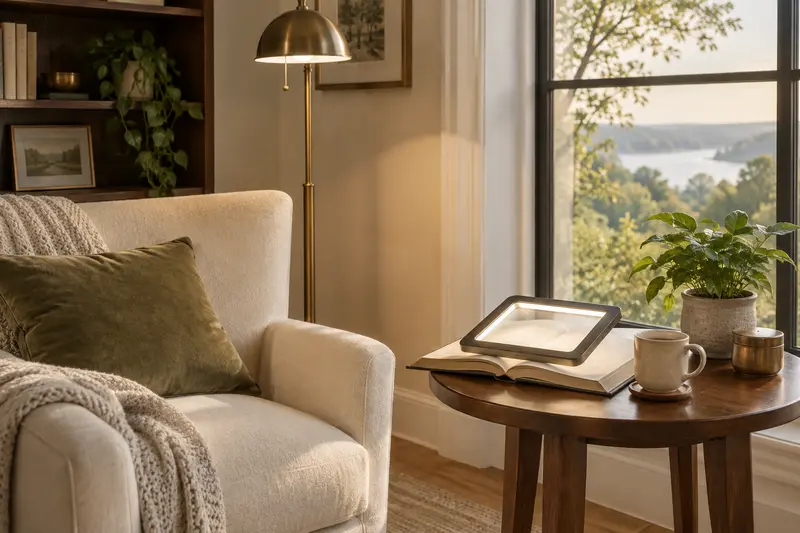
A magnifying glass with light makes small print larger and brighter at the same time, which helps in dim rooms and with faint labels. For reading, choose a wide rectangular page lens that shows whole lines, then decide between handheld or a stand. Check light modes and battery life, and see an eye care professional about any vision change.
Shortlisted for this decision
Affiliate-
Shortlisted
MagniPros 5X Page Magnifier
For several lines of print with light
A large rectangular lens covers several lines of print, and the built-in light helps in dim rooms.
Check price on AmazonCheck first: Handheld, so long reading can tire the hand; vision changes need an eye professional.
-
Shortlisted
MagniPros 5X Magnifier with Stand
For hands-free reading on a stand
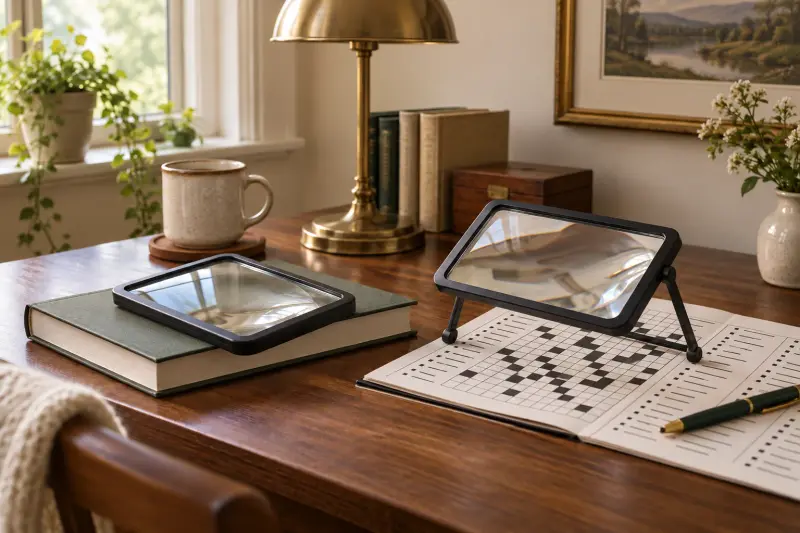
The detachable stand lets the magnifier rest over the page for crosswords, letters or longer reading.
Check price on AmazonCheck first: The Amazon title does not say rechargeable; confirm it matches MagniPros' rechargeable model.
Affiliate links: we may earn a commission from qualifying purchases at no extra cost to you. Prices are shown only on Amazon. Amazon.com (US listing). See the full comparison ↓
Documented options
Magnifying glass with light: options compared
Options based on manufacturer documentation. Retailer links are affiliate links: we may earn a commission from qualifying purchases.
Affiliate retailer links
-
MagniPros 5X Rechargeable LED Page Magnifier
Exact variant: 3 color light modes, Black
View product details on Amazon — United States
Affiliate retailer links
-
MAGNIPROS 5X LED Page Magnifying Glass
Exact variant: Detachable stand, 3 color modes
View product details on Amazon — United States
IN THIS GUIDE
Who a lighted magnifier helps
Small print on medicine labels, bills, recipes and newspapers is often the first reading task to become hard. A magnifier makes the print larger, and a built-in light adds brightness and contrast right where you are looking.
A lighted magnifier helps people who still read but tire quickly, people who read in rooms with weak light, and anyone doing close tasks like crosswords or mending. It is a reading aid, not a fix for changes in eyesight.
- Readers who struggle with labels, menus and bills
- People who read in the evening or in dim rooms
- Puzzle, letter and recipe readers who want both hands free
- Family members setting up a reading corner for a parent
What to check in a magnifying glass with light
Start with strength. Hadley, a US nonprofit for people with vision loss, explains that the stronger the lens, the less you can see at one time; a very strong lens may show only a few letters. For reading lines of text, a wide rectangular page lens keeps your place better than a small round one.
Next, decide how it will be held. Vision Australia notes that a hand magnifier is focused by moving it up and down above the page, while a stand magnifier rests on the page and stays in focus. For long reading, a stand can matter more than any lens feature, because holding a lens steady is tiring.
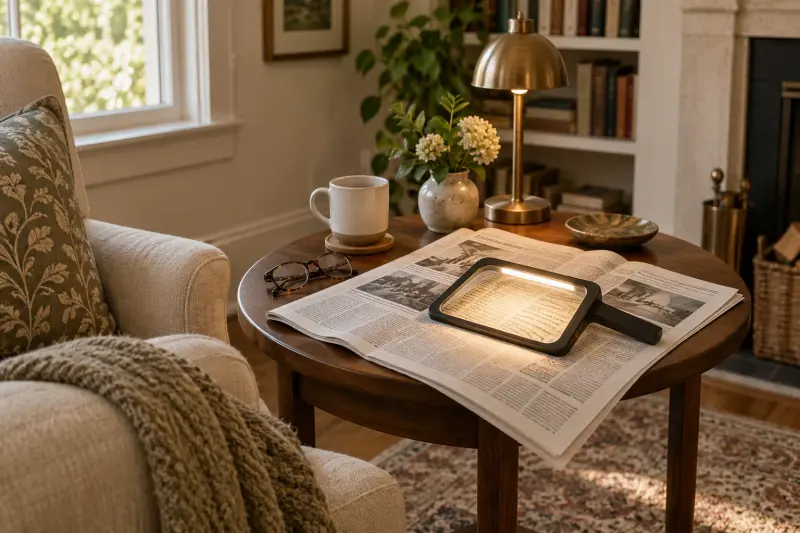
Then look at the light and power. Warm and cool light modes help with glare, and a rechargeable battery avoids buying batteries. A light frame with a comfortable handle is easier for sore or shaky hands.
- Magnification strength and how much of the line the lens shows
- Lens shape: a rectangle for lines of text, a round lens for small objects
- Handheld only, or a stand for hands-free reading
- Light modes and brightness control
- Battery type, charge time and stated run time
How the two MagniPros page magnifiers compare
Both picks are 5X page magnifiers from MagniPros with three light modes, an anti-glare lens and a rechargeable 1000 mAh battery. The main difference is that one is handheld only, and the other comes with a detachable stand.
The facts below come from MagniPros' own product pages. The stand version's page does not list lens size or weight, so check the Amazon listing for those details.
In short, the handheld version suits quick checks around the house, while the stand version suits longer reading, puzzles and letter writing at a table.
- Rechargeable 5X Page Magnifier: 4.5 x 7 in acrylic anti-glare lens, 28 SMD LEDs, 4 oz
- Handheld version: cool white, warm and combined light; about a 2-hour charge; up to 10 hours on medium; wall charger sold separately
- 5X Page Magnifier with Stand: 24 SMD LEDs; cool white, warm white and combined light; anti-glare lens
- Stand version: foldable, detachable stand; 2-hour charge; up to 8 hours on medium
How to use a magnifier for reading, plus a two-minute fit check
Before buying, measure the text you read most with a ruler: a newspaper column, a recipe card or the dose line on a pill box. A lens wider than that text lets you read a full line without sliding sideways, and the 4.5 x 7 inch MagniPros lens is about 7 inches across.
To read, lay a handheld magnifier flat on the page, then lift it slowly until the print is sharp, and move the lens along the line in a smooth path. Keep your usual reading glasses on unless an eye care professional says otherwise. With a stand, slide the page or the stand instead.
Give it a few days of practice. Most people need time to get used to the smaller field of view and to moving the lens rather than the eyes.
- Measure the column or label width before choosing a lens size
- Sit upright and bring the page up, rather than bending the head down
- Try warm light in the evening and cool white for crisp black print
- Charge the battery on a set day and wipe the acrylic lens with a soft, dry cloth
Room lighting still matters
A built-in light helps the page, but the room still needs good light for comfortable reading and safe movement. A lamp placed to the side of the reading hand avoids shadows on the page, and turning the magnifier light down helps when glossy paper reflects glare.
The National Eye Institute lists lights seeming dimmer than normal among the signs of possible vision loss. If a brighter room no longer helps, that is a reason to book an eye exam rather than to buy a stronger magnifier.
- A side lamp aimed at the page, not the eyes
- Matte surfaces near the reading chair to cut glare
- Night lights on the route from the chair to the bathroom
- Large-print versions of bills and statements, where companies offer them
When to see an eye care professional
A magnifier can make reading easier, but it cannot tell you why reading became hard. The National Eye Institute advises seeing an eye care professional about any change in eyesight, and regular dilated eye exams.
If glasses no longer correct vision, ask about an optometrist or ophthalmologist who specializes in low vision. The National Eye Institute notes that vision rehabilitation programs include training with magnifying devices, and both Hadley and Vision Australia advise trying different magnifiers before buying.
Bring the magnifier you use now to the appointment, along with an example of the print that is hard to read. It helps the specialist see the real task.
- Blurry, distorted or wavy lines when reading
- A sudden change in vision, which needs prompt care
- Needing more and more light to read
- Glasses that no longer seem to help
MAKE THE SPEND MEANINGFUL
Magnifying glass with light: low-cost alternatives
- Use the built-in magnifier and larger text settings on a smartphone or tablet for quick label checks.
- Ask the library for large-print books and service companies for large-print bills.
- Move a good lamp closer to the reading chair before buying any magnifier.
In brief
Magnifying glass with light: questions answered
What magnification is best for reading?
There is no single best strength, because it depends on the eyes and the print. Stronger lenses make letters larger but show fewer words, so reading slows down. Many page magnifiers for reading, including the two picks here, are 5X. A low vision specialist can let you try several strengths, which matters most when vision is changing.
Is a magnifying glass with light better than a plain one?
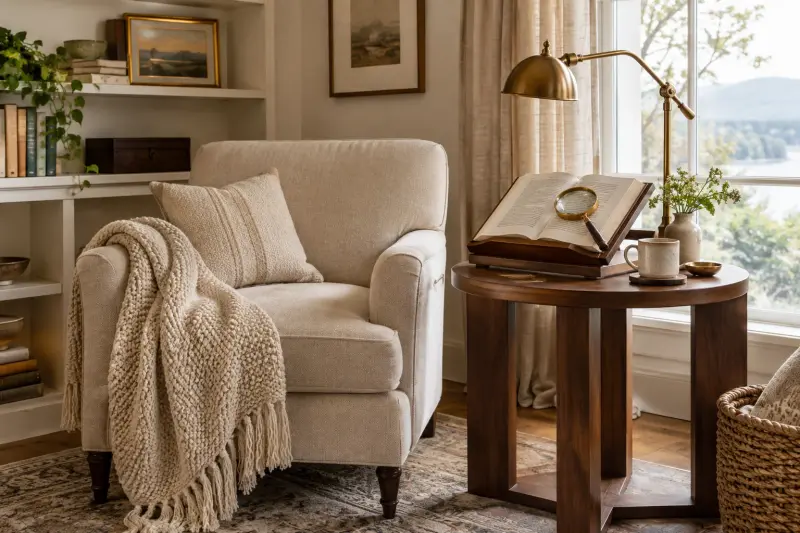
A lighted magnifier adds brightness and contrast right on the page, which helps in dim rooms or with faint print. Plain magnifiers are lighter and never run out of power. If room lighting is already good, a plain lens may be enough. If evenings or glossy pages are a problem, a built-in light is worth considering.
Is a handheld or stand magnifier better for reading?
For long reading, a stand magnifier is usually easier, because it rests on the page and stays in focus, as Vision Australia explains. A handheld magnifier is more portable and suits quick checks of labels, menus and mail, but it must be held at the right height and kept steady, which tires the hand over time.
Can you use a magnifier with reading glasses?
Usually, yes. Many people keep their regular reading glasses on and use a magnifier for the smallest print. The combination changes how far the lens should sit from the page, so move it slowly until the print is sharp. Ask an eye care professional if you are unsure which glasses to wear.
How this guide was prepared
AI-assisted editorial research, checked against the linked primary sources.
Written with AI assistance from the sources listed below and checked against them. We have not tested these products in person.
How we use sources and AI assistance ↗Sources & fact checks
The guide separates sourced facts from editorial questions and examples. How we use sources and AI assistance.
- Hadley: how to choose the right magnifier for low vision ↗
- Vision Australia: hand and stand magnifiers, focusing and trying before buying ↗
- MagniPros Rechargeable 5X Page Magnifier: lens size, LEDs, battery and weight ↗
- MagniPros 5X Rechargeable Page Magnifier with Stand: LEDs, stand and battery ↗
- National Eye Institute: visit an eye care professional for changes in eyesight ↗
Found an error or an outdated detail? Contact the editorial team.