
In brief
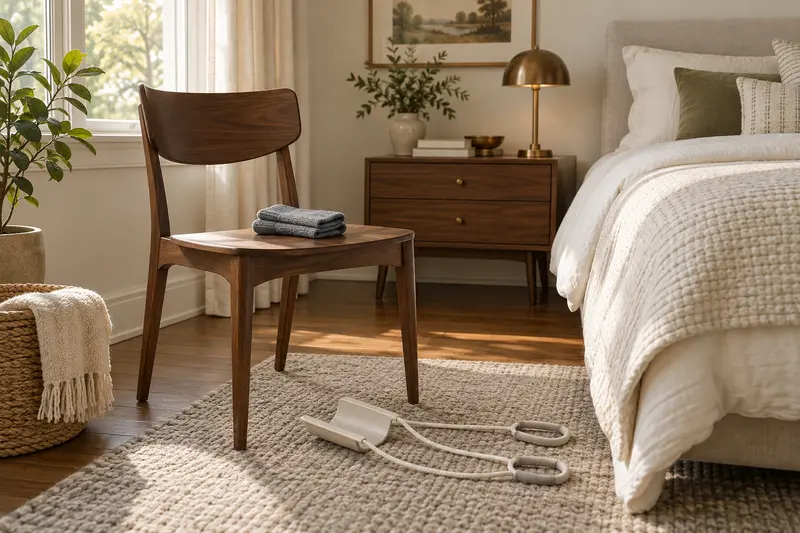
To use a sock aid, load a sock onto its flexible shell, lower the shell to the floor by its cords and pull it onto your foot, so you can put socks on without bending. It suits people avoiding deep bends after hip surgery or with stiff hips. Check cord length, opening width and grip, and ask a clinician about compression stockings.
Shortlisted for this decision
Affiliate-
Shortlisted
Vive Sock Aid
For putting on socks while sitting upright
A flexible shell with long cords and foam handles, so socks can be pulled on while sitting upright instead of bending to the feet.
Check price on AmazonCheck first: Pulling the cords needs a fair grip; ask the prescriber before using it with compression stockings.
-
Shortlisted
Vive Sock and Shoe Assist Kit
For socks and shoes from one chair
A sock aid plus a 23 inch two-piece shoe horn with a sock-removal hook, for the whole sock and shoe routine from one chair.
Check price on AmazonCheck first: The cords still need a fair grip; check compression stocking use with the prescriber.
Affiliate links: we may earn a commission from qualifying purchases at no extra cost to you. Prices are shown only on Amazon. Amazon.com (US listing). See the full comparison ↓
Documented options
Sock aid: options compared
Options based on manufacturer documentation. Retailer links are affiliate links: we may earn a commission from qualifying purchases.
Affiliate retailer links
-
Vive Sock Aid
Exact variant: Easy on and off stocking slider, single
View product details on Amazon — United States -
Vive Sock Aid
Exact variant: Easy on and off stocking slider, single
View product details on Amazon — Germany -
Vive Sock Aid
Exact variant: Easy on and off stocking slider, single
View product details on Amazon — France
Affiliate retailer links
-
Vive Sock Aid and Shoe Horn Kit
Exact variant: Sock aid plus 23 inch two-piece shoe horn, single kit
View product details on Amazon — United States -
Vive Sock Aid and Shoe Horn Kit
Exact variant: Sock aid plus 23 inch two-piece shoe horn, single kit
View product details on Amazon — Germany -
Vive Sock Aid and Shoe Horn Kit
Exact variant: Sock aid plus 23 inch two-piece shoe horn, single kit
View product details on Amazon — France -
Vive Sock Aid and Shoe Horn Kit
Exact variant: Sock aid plus 23 inch two-piece shoe horn, single kit
View product details on Amazon — Spain
IN THIS GUIDE
Who needs a sock aid?
Putting on socks asks for a deep bend at the hip and a reach to the toes. When that becomes hard, a sock aid lets you do the same job sitting upright.
MedlinePlus lists a sock aid among the aids to have ready before knee or hip surgery, along with a reacher and a long-handled shoehorn. It is also used by people with stiff joints, back pain or limited reach who want to keep dressing on their own.
If you have been given movement limits after surgery, those limits come first. Ask your surgical team or an occupational therapist how to use the aid within them.
- People told to avoid deep bending after hip or knee surgery
- Anyone with a stiff back or hips that limits reaching the feet
- People who want to keep dressing independently
- Caregivers who want to make a morning routine easier
How do you use a sock aid? Step by step
Sit on a firm chair or the side of a stable bed, with both feet flat. Slide the sock over the shell so the toe end is snug at the tip and the heel faces down, leaving the opening clear.
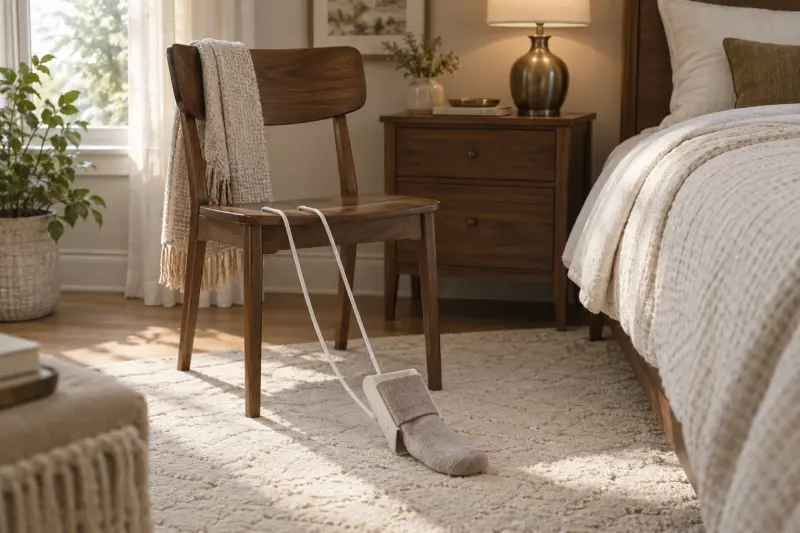
Hold the cords, lower the shell to the floor and slip your toes into the opening. Pull the cords toward you so the sock rides up over the foot and heel, then keep pulling until the shell slides free. HSS notes that a sock aid lets you do this without bending over or crossing your legs.
After hip surgery, use the method your therapist showed you; UMass Memorial Health's guide has you hold the loaded sock in front of the foot on the operated side. To take socks off, sit down, catch the back of the sock with a reacher or a shoe horn hook, and push it down off the heel.
- Sit on a stable chair, not a soft or rolling seat
- Load the sock smoothly with the heel facing down
- Point the toes into the shell, then pull both cords evenly
- Remove socks with a reacher or shoe horn hook, not by bending
- Practice a few times before you rely on it
What to check before buying a sock helper
The shell should be flexible enough to curl around the sock, but firm enough to hold it open. A wider opening suits larger feet or thicker socks.
Cord length matters for reach. Long cords let you lower the shell without leaning forward, and padded handles are kinder to sore hands. A non-slip lining stops the sock from sliding off the shell before the foot is in.
Think about storage and travel too. A soft shell packs flat in a bag for a hospital stay, while a rigid frame takes more space but can be quicker to load for some people.
- Flexible shell that still holds the sock open
- Opening wide enough for your foot and sock type
- Cords long enough to reach the floor from a seated position
- Thick or padded handles for a comfortable grip
- Non-slip lining to keep the sock on the shell
Sock aids compared: Vive Sock Assist, the Vive kit and other types
We list the Vive Sock Assist and Vive's Sock and Shoe Assist Kit because they have manufacturer pages we could match to Amazon listings. The other rows are general types, so you can compare any listing on the same points.
Vive's page showed the Sock Assist out of stock on its own store on our check date. Confirm the Amazon listing is current before you order.
| Sock aid | Shell or frame | Opening and cords | Notes |
|---|---|---|---|
| Vive Sock Assist | Flexible, latex-free shell, 9.75 x 4 x 3.25 in (25 x 10 x 8 cm); non-slip cuff lining | 4 in (10 cm) opening; 33 in (84 cm) adjustable cords with thick foam handles | Vive says it works with compression stockings |
| Vive Sock and Shoe Assist Kit | The same sock assist | 4 in (10 cm) opening; 33 in (84 cm) cords | Adds a 23 in (58 cm) two-piece shoe horn with a sock-removal hook |
| Rigid-frame sock aid | Stiffer frame with handles | Varies by model | Often easier to load; bulkier to store |
| Compression stocking aid | Built for firm hosiery | Varies by model | Ask the prescriber which suits |
Sock aid troubleshooting, care and storage
Most early problems come from loading, not from the aid. If the sock slips off the shell before your foot is in, pull it further over the tip and check that the non-slip lining faces the sock.
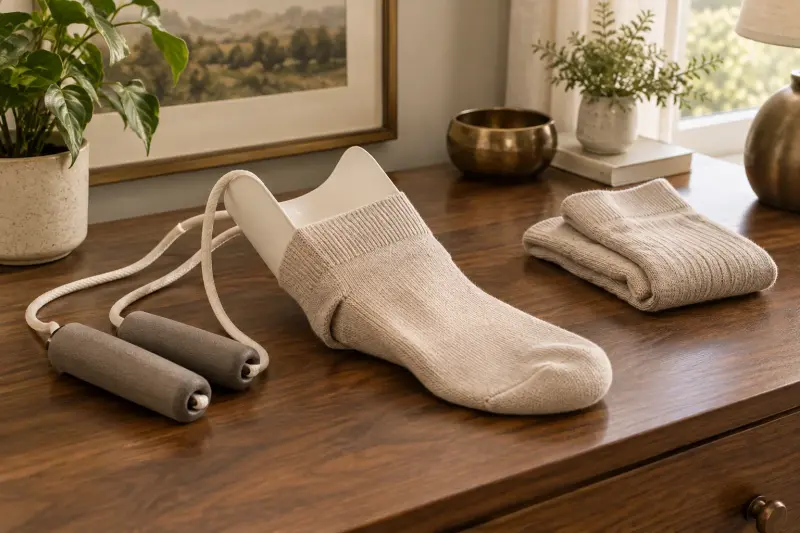
If the heel ends up on top of the foot, the sock was loaded twisted, so reload it with the heel facing down. If the shell will not release, point your toes and keep a steady pull on both cords rather than jerking.
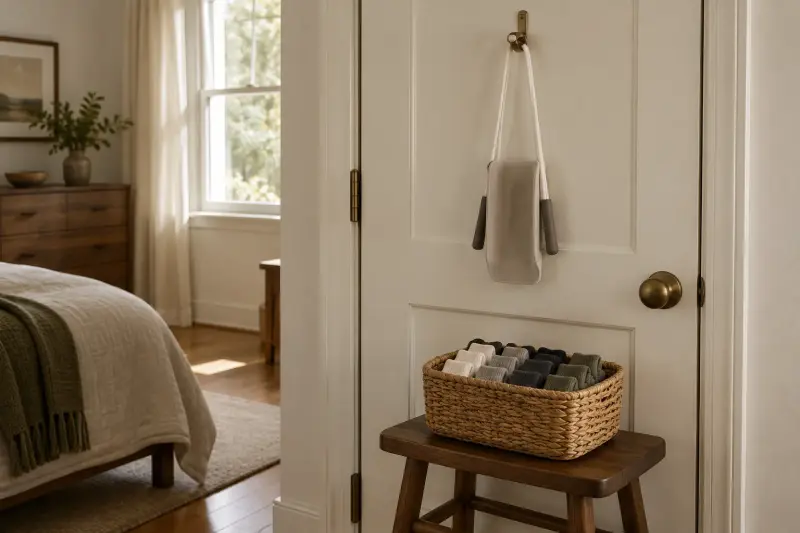
Keep the aid where you dress, on a door hook or in a basket by the chair. Replace it if the cords fray or the shell cracks, since a snapping cord can pull you off balance.
- Sock slides off early: load it further and check the lining
- Heel lands on top: reload with the heel facing down
- Tight sock will not fit: try a wider opening or stretchier socks
- Store it beside the dressing chair
- Check the cords and knots for fraying
When to get personal advice
Compression stockings are a common reason people look for a sock aid. Vive says its shell works with compression stockings, but firm medical-grade hosiery can be harder to pull on, so ask the clinician who prescribed them which aid to use.
If dressing has become hard in several ways, an occupational therapist can look at the whole routine. They may suggest a different seat, a set of dressing aids or a different order of dressing.
Some health plans and hospital programs provide dressing aids after joint surgery, so it is worth asking before you buy one yourself.
- Compression stockings: ask the prescriber which aid suits
- Movement limits after surgery: follow your surgical team's advice
- Weak grip in both hands: ask about aids with larger handles
- Several dressing tasks getting hard: ask an occupational therapist
MAKE THE SPEND MEANINGFUL
Sock aid: low-cost alternatives
- Ask your hospital, surgeon's office or an occupational therapist whether a sock aid is included in a hip kit or available on loan.
- Looser, stretchier socks are easier to pull on with any aid, or with a little help.
- A caregiver can help with socks for a short recovery period while you decide whether an aid is needed long term.
In brief
Sock aid: questions answered
How do you use a sock aid?
Sit on a firm chair, slide the sock over the shell with the heel facing down, then lower the shell to the floor by its cords. Put your toes into the opening and pull the cords toward you until the sock is on and the shell slides free. It usually takes a few practice runs.
Does a sock aid work with compression stockings?
Some do. Vive says its Sock Assist works with compression stockings, but firm medical-grade hosiery can be much harder to pull on than ordinary socks. There are also aids designed specifically for tights and compression stockings, so ask the clinician who prescribed them which type to use before you buy.
Do I need a sock helper after hip replacement?
MedlinePlus lists a sock aid among the items to have ready before knee or hip surgery, because it helps you dress without bending deeply. Whether you need one depends on the movement advice your surgical team gives you, so ask them or your occupational therapist before surgery.
How do you take socks off without bending?
Sit down and use a reacher, a dressing stick or the hook end of a long shoe horn. Catch the top of the sock at the back of the heel, push it down past the heel and off the toes, then lift it with the reacher. MedlinePlus lists a reacher and a long-handled shoehorn among the aids to have ready before hip or knee surgery.
How this guide was prepared
AI-assisted editorial research, checked against the linked primary sources.
Written with AI assistance from the sources listed below and checked against them. We have not tested these products in person.
How we use sources and AI assistance ↗Sources & fact checks
The guide separates sourced facts from editorial questions and examples. How we use sources and AI assistance.
- MedlinePlus: Getting your home ready, knee or hip surgery ↗
- HSS: Putting on your socks and shoes after hip replacement ↗
- UMass Memorial Health: After hip surgery, getting dressed ↗
- Vive Sock Assist: dimensions, 33 inch cords, foam handles and lining ↗
- LiveUp: Sock aid, including versions for tights and compression stockings ↗
- Vive Sock and Shoe Assist Kit ↗
Found an error or an outdated detail? Contact the editorial team.