

In brief
Turn a demonstration into a check of ordinary tasks: approach, seating, controls, stopping, maneuvering and transport. The intended user should take part with suitable support. A good demonstration answers questions; it should not pressure someone to complete a purchase.
IN THIS GUIDE
Use a demonstration to answer your actual buying questions
A scooter demonstration is useful when it addresses ordinary tasks for the intended user. It should help explain the equipment, reveal unresolved requirements and support an informed decision. A short showroom ride or a promotional folding display does not settle seating, controls, home access, transport and support together.
Start with a brief describing why the person is considering a scooter. Include intended destinations, the setting, any transport requirement and the practical questions that matter most. Do not write a specification shopping list before the actual task is understood. The provider should know what the user wants to do, not just which colour the family likes.
Keep personal suitability with the appropriate professional and provider route. Pride's consumer safety guidance connects product selection, fitting and instruction with the user and relevant healthcare or equipment support. We do not use a demonstration checklist to diagnose ability or authorize a device independently.
The demonstration can end with an exclusion, a further assessment question or a request for another configuration. That is useful progress. The person should not feel they have failed because a particular product does not answer the task. A good buying process leaves room to wait, choose another assessed arrangement or make no purchase.
Prepare a short brief before booking
Name the intended user and ask what they want reviewed. If another person handles loading, charging or setup, include that person appropriately in the planning conversation. A family member buying remotely may not see the practical routine, so the brief should reflect the people who will actually use and support the equipment.
Choose a few concrete questions: whether the controls are understandable, whether a relevant home route can be reviewed, or how the actual transport task is demonstrated. Ask the provider what it can cover and what requires a different specialist. A demonstration appointment and a formal personal assessment can have different scopes.
Describe communication or support preferences when arranging the visit. Ask whether the person can bring a supporter and how information will be provided. Do not assume an online video or fast verbal explanation is sufficient for every user. The household should have an appropriate opportunity to understand the product and ask questions.
Keep private health information within the relevant provider process rather than submitting it to a public checklist. The website card only needs practical task headings and the status of questions. A simple paper brief can be more useful than a long app form that collects sensitive information without improving the purchasing decision.
Check that the demonstrated configuration matches the proposed order
Ask for the exact model, variant, battery and approved accessories on the demonstration equipment. Keep that identity with the notes. A familiar model name may hide different seating, transport or battery configurations, and a showroom item may not match the product quoted for delivery.
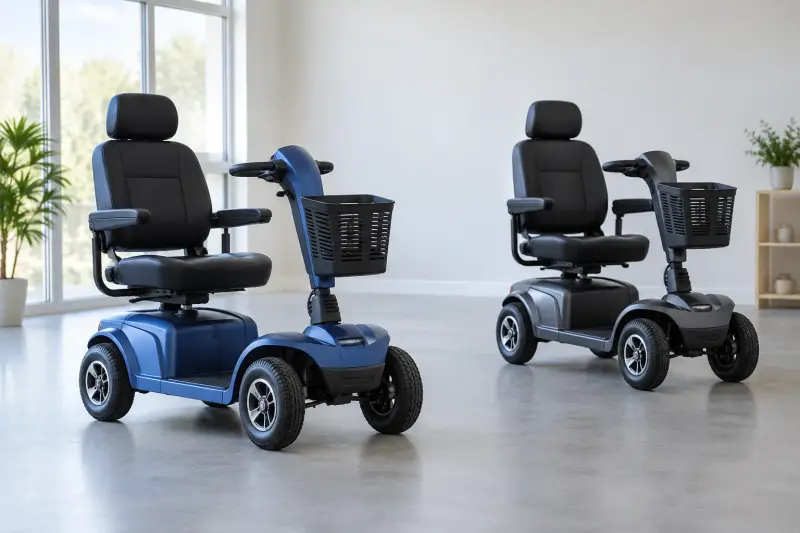
Editorial illustration Request the applicable documentation before drawing conclusions. Pride's Elite Traveller 2 document page illustrates a model-specific route to owner and safety information. Use the appropriate source for the actual product and region rather than assuming that a general brand leaflet covers every setup.
Record any difference between the demonstration and proposed order. If another seat, battery or accessory is being supplied, ask which questions need to be reviewed again. A favourable impression of one arrangement should not silently become a recommendation for a changed configuration.
Do not remove required parts or modify the equipment to reproduce a convenient showroom result. The approved arrangement and relevant provider guidance must stay intact. The identity card helps preserve that boundary and makes the final quote easier to compare with what the intended user actually saw and discussed.
Discuss the approach and seating task with appropriate support
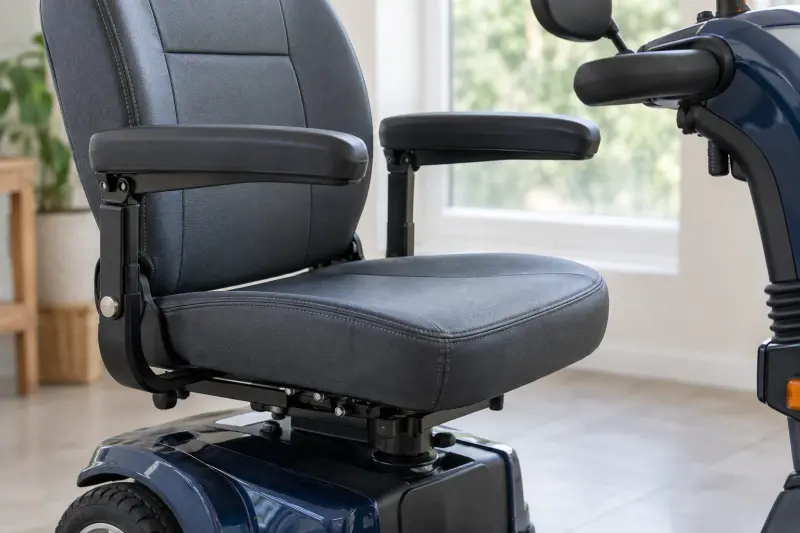
The person needs more than a seat dimension to understand the relevant seating arrangement. Ask the provider how the personal approach and use questions are assessed, and who confirms the configuration. We do not prescribe transfer techniques or tell someone to demonstrate an unfamiliar movement without appropriate advice.
Describe any concern in the person's own words. A user may find a control location awkward, want a clearer explanation of a support or be uncertain about how an everyday task is managed. These observations are useful. They should not be reduced to a pass-or-fail performance test for the person.
Keep seat dimensions, personal fit and room access as separate questions. A narrow product may fit a doorway while leaving personal suitability unresolved. A wider seat may be relevant to the person while requiring a different home-route review. The provider should address the actual combination rather than selecting the smallest model automatically.
Ask which adjustments belong to the provider and how the supplied configuration will be documented. Do not improvise cushions or change supports to make a demonstration more comfortable. An accessory or adjustment may be relevant when properly assessed and approved, but it should not be introduced through a household guess during the appointment.
Ask the user to explain the controls in their own words
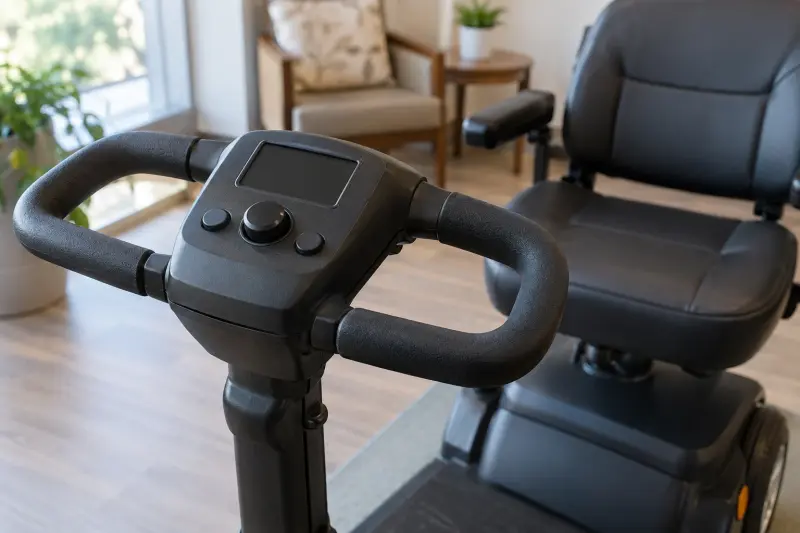
An understandable control arrangement is more useful than a long feature list. Ask the provider to explain the functions under the actual instructions, then give the user an appropriate opportunity to ask about what remains unclear. We do not teach driving or prescribe a stopping exercise through this article.
Record the person's response to the explanation. Can they identify the relevant function, or do they want another demonstration or format of instruction? Keep the wording respectful. An uncertainty is a question requiring support, not a reason to pressure the person into operating equipment before they understand it.
Ask about any control change between the demonstration model and the proposed order. A different controller, tiller or accessory can change the task. Do not infer usability from a large lever or a marketing claim about minimal dexterity. Personal operation and appropriate instruction remain necessary.
Editorial illustration
For a household with helpers, clarify which tasks each person is expected to perform. A user may operate the scooter while another person handles storage or transport. The demonstration should not blur those roles or assume that every helper can operate or modify equipment. Keep the provider's documented responsibilities with the order.
Review the relevant setting without inventing a test course
Ask the provider how the intended operating setting can be reviewed appropriately. An open showroom differs from a doorway approach, local journey or destination. The demonstration should connect with the actual tasks and product limitations, while the appropriate professional decides what review is relevant.
Do not create a challenge course of tight corners, slopes or obstacles to see whether the equipment can cope. This guide gives no manoeuvring sequence or instruction to approach a limit. A catalogue slope, radius or obstacle figure is not permission for a user to attempt a particular feature during shopping.
Use the home or route brief to identify questions. An empty-space sketch can show a doorway, corner or threshold requiring review. A route record can identify distance and visible conditions. These are preparation aids, not safety certificates or a substitute for the provider's actual assessment.
If a concern remains after the appointment, write it plainly rather than summarizing the product as passed. A successful movement in one setting does not establish suitability everywhere. The demonstration record should name what was reviewed and what needs another answer, so the final order is based on the actual scope.
Include loading, setup and the return journey when relevant
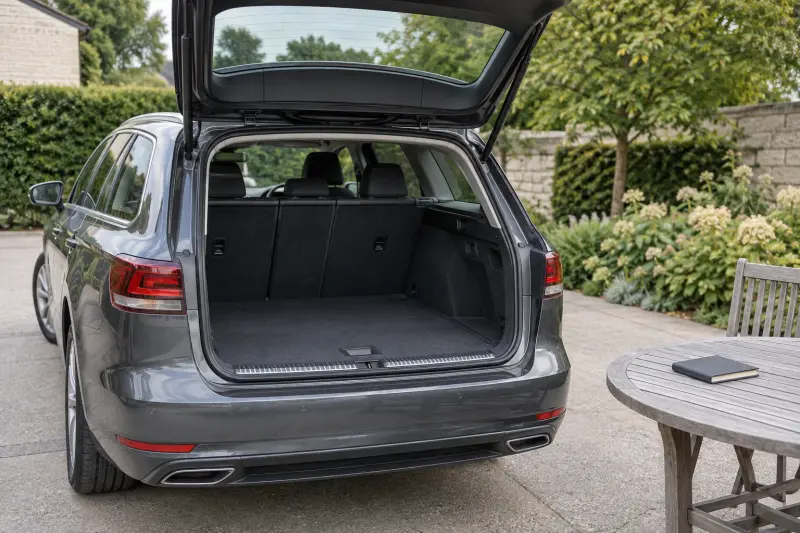
If car transport is a main task, ask whether the appointment can include the actual vehicle and relevant helper. Bring aperture and interior measurements with their definitions, but do not treat them as approval of a loading method. Handling, equipment configuration and secure transport need their appropriate confirmations.
For folding equipment, record the completed transported load and full shape. For dismantling equipment, record every piece and setup responsibility. A quick promotional sequence may hide the task that matters most to the household. Do not choose a format solely because it creates fewer pieces or a smaller headline weight.
Include arrival and the return home. A routine can differ when space, assistance or other conditions change at the destination. Tell the provider about those scenarios instead of demonstrating only the convenient departure setting. A useful appointment may identify a need for a different documented transport arrangement.
Do not attempt unsuitable lifting or improvise a ramp or restraint to secure a positive result. Ask about the relevant professional route where a vehicle system is needed. A demonstration can confirm a specific question, but it should not become a household engineering experiment or an automatic transport approval.
Worked example: separate a pleasant ride from a completed decision
Imagine a fictional shopper who enjoys a short showroom demonstration and is offered a quick checkout. The model appears comfortable in that setting, but the intended journey includes a narrow approach at home and transport in a particular car. Neither task has been reviewed, and the proposed battery configuration differs from the showroom item.
The shopper uses the brief to ask which questions were actually covered. The provider identifies the demonstrated configuration and explains what additional review is needed. The household records the pleasant initial impression as a preference, while home access, transport and changed equipment remain separate pending requirements.
The intended user and transport helper attend the appropriate follow-up. They receive the relevant instructions and ask about responsibilities rather than staging an unsafe handling trial. If the candidate does not answer an essential task, the household considers another assessed arrangement without treating the original impression as a commitment.
This example does not claim a real test or conclude that a scooter was bought. It shows how a demonstration record can protect a good decision from being rushed. Enjoying a product is useful information, but the final purchase needs the relevant actual tasks, configuration and support scope understood.
Ask about ownership tasks the showroom ride does not show
A demonstration should leave room for charging, storage, care and service questions. Ask the provider to identify the applicable instructions and the actual household responsibilities. We do not give a universal charging schedule or maintenance interval. Those requirements belong to the supplied equipment and support route.
If handling a battery or moving the scooter for storage is a concern, describe it before selecting a configuration. A battery capacity or folded size can appear attractive while introducing a task the household does not want to manage. The ownership brief should make that issue visible.
Ask what local service supports the exact model and how equipment reaches it. A dealer explaining controls during an appointment may offer a different service scope from a distant online seller. Keep workshop access, collection, home attendance and current written terms separate rather than assuming a generic warranty settles all support questions.
If an accessory is suggested, ask which recorded task it answers and whether its approval and configuration are confirmed. A storage bag or cover can be relevant, but it should not become a default bundle added after a pleasant demonstration. The user's actual routine determines whether the purchase is useful.
Get an order scope that preserves the demonstration evidence
Ask the quote to identify the exact configuration reviewed and any differences in the supplied order. Include delivery, setup, instruction, required approved components and service scope. A product-only amount cannot be compared fairly with a provider arrangement that includes additional essential tasks.
Read current regional return, cancellation and warranty terms before a commitment. Ask how configured, delivered or used equipment is handled by the actual seller. We do not state a universal cooling-off or refund rule. Keep the written terms and any promised follow-up with the demonstration record.
Do not treat a limited-time offer as a reason to skip a necessary assessment or confirmation. An ethical buying process should let the person understand the task and scope. The fact that a model is available for immediate delivery does not establish that it is the correct configuration.
A no-purchase decision can be the appropriate result when essential questions remain. The household may request another demonstration, seek relevant assessment or retain an existing suitable arrangement. The checklist should support that outcome rather than act as a script designed to move every attendee toward checkout.
Use a confirmed, pending and excluded question record
Create three columns for each task: what was observed or explained, what the responsible source confirmed and what remains pending. Include the exact configuration and document reference. A simple note such as nice scooter may preserve a feeling but gives another household member little basis for a substantial purchase.
Use precise confirmation wording. “Provider explained this control on the named model” is different from “all operating tasks assessed.” “Cargo dimensions compared” is different from “transport arrangement confirmed.” The record should preserve the boundary of each answer, especially when different professionals address different parts of the decision.
Mark an essential mismatch as excluded from the intended task. Do not leave it in the shortlist because the user liked another feature. Once required questions are resolved, preferences can help choose among relevant candidates. That sequence avoids a points system that hides a limitation beneath a high overall score.
Write one next action for each unresolved question and who can answer it. The record should make follow-up practical, not complicated. A paper card is enough if it is clear and retained. There is no need to upload health data or buy a project-management app for a useful demonstration decision.
Your final demonstration-to-order decision card
Finish with the intended user's actual task, demonstrated model and configuration, relevant document sources, confirmed questions and remaining next actions. Keep personal suitability information with the appropriate private provider records rather than publishing it. The shopping card should not claim a diagnosis, independent test or expert approval the site has not provided.
Before ordering, compare the quote with that card. A changed battery, seat or accessory should prompt the relevant confirmation rather than be accepted as an equivalent automatically. Make sure delivery and handover responsibilities are understood. Equipment arriving at the door is not proof that every task discussed has been resolved.
After supply, keep the applicable instructions and responsible contact accessible. If the person does not understand operation or a task changes, return to the relevant professional or provider. Do not rely on a vague memory of the showroom appointment or improvise a new arrangement based on a feature list.
Our transport, seating and ownership guides help develop connected questions when they matter. A good demonstration brings those needs together without forcing a sale. The strongest outcome is a relevant, documented and understood decision, including waiting or declining a purchase when the actual evidence does not yet support it.
A second appointment should answer a named question, such as a route review that the first visit did not cover. Ask whether it is another equipment demonstration, a home visit or a separate personal assessment, and whether any charge or booking condition applies. Confirm that scope before paying, so repeated showroom time is not mistaken for progress on the unresolved task.

MAKE THE SPEND MEANINGFUL
Before adding to the basket.
- Use a paper demonstration brief without submitting sensitive health information online.
- Request relevant follow-up before buying accessories to solve unanswered questions.
- Retain an appropriate existing arrangement when the new candidate is unnecessary.
- Decline or postpone the order where an essential task remains unresolved.
How this guide was prepared
AI-assisted editorial research, checked against the linked primary sources. Product testing and a credentialed individual review are not claimed.
AI-assisted, source-checked editorial; no hands-on test, human expert review or personal suitability assessment claimed
How we use sources and AI assistance ↗Sources & fact checks
The guide separates sourced facts from editorial questions and examples. We have not claimed hands-on product testing. How we use sources and AI assistance.
- Pride consumer safety guide: personal fitting and instruction boundaries; no independent test claimed ↗
- Pride Elite Traveller 2 US/Canada: applicable owner and safety document route ↗
Found an error or an outdated detail? Contact the editorial team.