
In brief
Separate a cover used while the scooter is stored from an accessory intended for riding. Confirm the exact model fit, permitted use, ventilation and care. A covered scooter is not automatically suitable for outdoor storage, charging or travel in all weather.
Documented options
A clearer comparison.
Research options based on manufacturer documentation. These are not results of hands-on testing. Manufacturer links are informational; no commission relationship is currently active.
IN THIS GUIDE
Choose the task before choosing a scooter cover
A scooter cover can be a useful storage accessory, but the word cover can describe very different products. Separate something placed over unoccupied equipment while stored, an accessory intended for use during operation and a product intended for vehicle transport. Do not assume a single cover is approved for all three tasks.
Describe what you want it to protect against and where the scooter is actually kept. Dust in an appropriate indoor storage area is a different question from an outdoor location exposed to weather. The scooter's own permitted storage and environmental instructions govern the equipment; a cover purchase cannot rewrite them.
Ask whether the existing storage arrangement already answers the need. If the problem is an unsuitable location, start with the maker or provider rather than buying fabric to make that location appear appropriate. If a confirmed location simply needs a relevant storage accessory, its exact fit, permitted use and care can then be compared.
This guide organizes those purchasing questions without claiming a tested cover, waterproof equipment or suitability for every weather condition. We do not give riding-enclosure, charger-covering or vehicle-restraint instructions. The useful result is one documented accessory serving a confirmed task, or no purchase when the underlying storage arrangement needs another answer.
Keep storage, riding and transport descriptions separate
A storage cover is normally considered while the equipment is unoccupied and not being operated, subject to the actual product instructions. A riding accessory can involve visibility, controls and the occupied configuration. A vehicle-transport cover can introduce another environment and securing arrangement. Read the exact permitted use instead of relying on the category photograph.
Do not ride under an ordinary storage cover or adapt it to leave openings for controls. This article supplies no instructions for creating a weather enclosure. An accessory used during operation needs manufacturer approval for the actual device and configuration, alongside the appropriate personal and operating guidance.
A cover also does not replace secure equipment transport. Fabric enclosing the scooter is not a restraint system or proof of compatibility with an external carrier. If vehicle use is the task, ask the appropriate scooter and transport-system providers about the actual arrangement rather than ordering an indoor storage item.
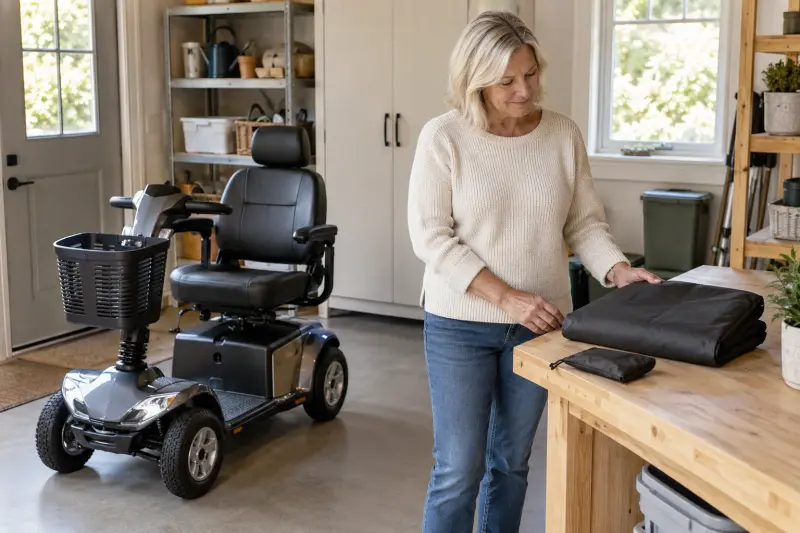
Write the selected category at the top of the worksheet. That small step prevents a retailer's broad weather label from becoming a multi-use promise. If a listing does not make its purpose clear, request documentation before comparing materials or dimensions. Convenience matters after permitted use is established.
Read a named manufacturer example with its limits visible
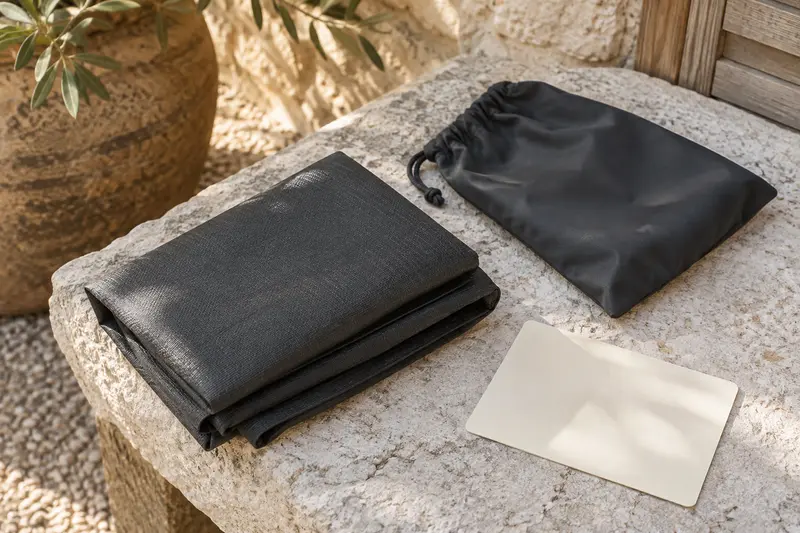
Golden's US Scooter Cover page describes a water-resistant nylon cover and gives dimensions of 50 by 22 by 33 inches. It also describes an included storage sack. Those facts identify a named accessory for further enquiry, not an assurance that it fits every Golden model or makes any scooter suitable for outdoor storage.
The page's water-resistant description should not be rewritten as waterproof. Nor should its seasonal marketing language be treated as a technical approval of the equipment's storage location. Ask the maker or provider to confirm the exact scooter configuration and permitted cover use before placing an order.
We include this manufacturer example to show the information a shopper can request. The dimensions are not an independent fit test and the site has not handled the product. Local stock, affiliate approval and current seller terms remain separate from the primary information link.
For another accessory, obtain that item's own current dimensions and instructions. A familiar brand or similar fabric does not make the same limits apply. Keep the exact item identifier, market and source attached to the comparison so a later buyer knows which evidence was actually reviewed.
Measure the complete stored configuration
Record the scooter as it will actually be stored, including the approved seat position and accessories that remain attached. Ask the provider what changes are permitted and which dimensions the cover comparison needs. Do not remove supports or alter equipment simply to make a generic size chart pass.
Separate overall length, width and height and label the orientation. A cover's dimensions may describe a particular shape or method of measurement, so ask the manufacturer how those figures should be compared. A rectangular arithmetic match alone cannot establish closure, projection or compatibility with the actual equipment.
For a fictional planning example, an attached approved mirror changes the relevant stored height while a basket changes the shape at one end. A worksheet based on the bare scooter can omit both. The useful action is to confirm the complete arrangement and ask the accessory maker about it, rather than buying a larger item automatically.
Get help where measuring would involve awkward handling. If the equipment cannot be measured comfortably, ask whether the provider has the necessary configuration record. Keep an unknown dimension visible. An estimate selected to support the preferred purchase creates false precision and may lead to an accessory that cannot serve its intended task.
Resolve the storage location under the scooter’s own instructions
Ask the maker or responsible provider whether the actual storage location is appropriate for the supplied scooter and battery arrangement. The cover's marketing does not establish that answer. Keep temperature, moisture and other relevant environmental questions with the applicable equipment documentation rather than a general accessory review.
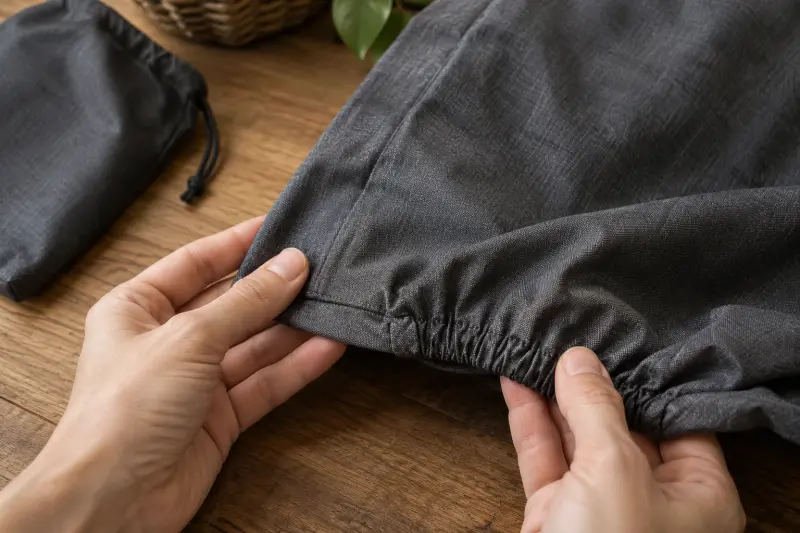
Pride's Elite Traveller 2 document route is a useful example of where readers can obtain model-specific information. Use the applicable manual and supplements for your own product. This guide does not transfer one scooter's environmental limits to another or provide a universal outdoor-storage permission.
A household may want to store equipment in a garage, shed or shared area, but the actual conditions and access need review. Do not assume that enclosing it under fabric solves an inappropriate environment. The provider should address any unresolved equipment-storage requirement before the accessory shortlist is treated as ready.
Include ordinary access around the stored arrangement. A cover can create a handling or storage task of its own, and its removal should not depend on blocking a necessary route. If a location is already unsuitable for the complete routine, the low-cost answer is an appropriate storage enquiry rather than another layer of accessories.
Plan how the cover is fitted, removed and kept out of use
Ask the manufacturer for the applicable fitting and removal information and consider who manages the task. We do not reproduce a universal tying or cinching sequence. The household should understand the exact accessory's permitted arrangement without improvising fasteners or using it during operation.
Describe any handling concern before buying. A cover can be lightweight yet awkward to spread over a particular configuration, especially when access is limited. Tell the provider what the household wants to manage. Do not ask the user to lean, climb or remove required equipment parts to demonstrate convenience.
Keep the removed cover in an appropriate separate place under its care instructions. An included sack can be useful for organization, but it should not be assumed suitable for storing every condition of fabric. Ask about cleaning and drying requirements rather than forcing a damp item into a small container to keep the area tidy.
For shared equipment tasks, clarify who removes the accessory before the scooter's routine and how the household follows the applicable instructions. The cover should not introduce uncertainty about readiness or permitted operation. A simpler storage arrangement may be better where the extra task is unwanted or cannot be managed appropriately.
Do not let a cover answer an unresolved charging question
Charging requirements belong to the exact scooter, battery and approved charger arrangement. Ask the maker or provider how a proposed cover relates to that process. Do not assume charging under a storage cover is permitted, or cut an opening for a cable because the location is convenient.
Keep charging and covering as separate worksheet tasks. If the appropriate instructions require a different arrangement, record it accurately and ask how the household manages the transition. This article does not prescribe electrical placement, extension leads or a homemade ventilation solution.
A cover's water-resistant description does not certify a charger for a damp or outdoor setting. Nor does battery operation make every accessory arrangement appropriate. Use the actual documentation and relevant local professional route for unresolved electrical or environmental questions rather than relying on a shopping photograph.

If the charging routine or storage location is not yet confirmed, leave the cover order pending. A small accessory purchase can create shopping momentum while the essential equipment question remains unanswered. Resolve the actual arrangement first, then choose an accessory only when its task and permitted use are established.
Worked example: dust protection versus unsuitable outdoor storage
Imagine a fictional household noticing dust on equipment kept in an already appropriate indoor area. It considers a named storage cover and asks about the actual scooter configuration, documented dimensions and removal routine. That is a focused accessory question with an existing confirmed location.
A second fictional household wants to leave its scooter in an outdoor location and assumes the same cover will make the arrangement suitable. The buying brief is different. It must first ask the scooter maker or provider about the actual storage and battery requirements. The cover's material or seasonal marketing cannot settle that equipment question.
Both households can use the same worksheet, but their next actions differ. The first may proceed to an exact accessory-fit enquiry. The second may need an appropriate storage solution before choosing any cover. Neither should treat an online size match as proof of personal handling, charging permission or environmental suitability.
These examples do not endorse a product or report real use. They show why a lower-cost companion purchase needs a defined job. A useful cover can serve a confirmed storage task; an unnecessary cover can hide the problem the household actually needs to resolve. The guide should help readers distinguish those situations before checkout.
Ask about fabric care and replacement evidence
Obtain the exact accessory's cleaning, drying and storage information. Do not assume that a nylon description permits machine washing, particular detergents or a domestic drying method. The applicable instructions should govern care, and the household should understand who can carry out the task.
Record damage or an unexplained change without diagnosing performance from appearance. A tear, closure issue or other concern should prompt the appropriate maker or supplier enquiry. We do not certify water resistance through a household spray test or recommend applying a coating to restore an assumed property.
Ask whether replacement components or an approved service route are relevant. A generic strap, cord or coating is not automatically an appropriate repair. If the accessory no longer answers its documented task, obtain the responsible guidance rather than continuing under an unsupported assumption.
Keep the care record short: exact item, task, observation, source of advice and action. Do not invent an annual replacement interval or treat warranty duration as a promise about continued performance. The actual condition, instructions and task determine the useful next question.
Compare exact inclusions and avoid accessory bundles
Ask what the named cover includes and what the seller expects the buyer to arrange separately. Photographs can show equipment, straps or other items that are not part of the order. Keep the exact accessory identifier and supplied scope on the confirmation rather than relying on a general scooter-cover category.

Read current regional return and warranty terms before opening or using the product. Ask how a fit concern is handled and whether mounting, use or care changes the applicable policy. We do not claim one seller's terms apply to every retailer or market. Retain the written answer with the configuration record.
Avoid adding unrelated storage bags, rain accessories or replacement parts simply because a bundle has a lower unit price. Each item should answer its own documented task and approved compatibility question. An additional cover does not create a better storage environment by quantity.
A no-purchase alternative may be an existing appropriate clean storage arrangement that already serves the equipment. If a cover is relevant, one documented item with a manageable care routine may be sufficient. We do not invent a universal budget or promise that the accessory prevents expensive repairs.
Questions to ask when a listing sounds more capable than its evidence
If a listing says waterproof, ask for the exact manufacturer's documented claim and permitted use. Do not rewrite a water-resistant page into a stronger description because a retailer uses another adjective. The scope should be clear before the item is considered for a specific location.
If a seller says universal fit, ask which complete equipment shapes and configurations are covered and how the relevant dimensions are defined. A model name in a broad list may not include every seat or approved accessory arrangement. An unanswered projection question remains a reason to seek confirmation.
If the cover is shown on an external carrier or during operation, ask whether that actual use is documented for the named item and device. A photograph can illustrate a concept without establishing approval. Keep transport, riding and stored-equipment tasks separate.
If a product is marketed as essential, return to the original task. What requirement does it answer that the existing appropriate arrangement does not? A useful accessory can be worth buying, but an unsupported fear of weather damage should not pressure the reader into an unrelated order. Evidence and a defined purpose should guide the decision.
Your cover-purpose, fit and routine decision card
Finish a one-page card naming the task, actual storage location, exact scooter configuration and candidate accessory. Attach the current manufacturer information and any provider confirmation. Keep private equipment identifiers within the appropriate service record rather than public content.
Add separate fields for permitted use, documented dimensions, charging relationship, handling and care. Use precise outcomes such as fit enquiry pending or storage location awaiting provider review. Do not print a weatherproof verdict from a size comparison or general material description.
If a candidate proceeds, match the delivered item with the documented order and follow the applicable instructions. Keep the responsible contact available for a concern. If a requirement remains unresolved, write the next question and leave the order pending rather than improvising a new use.

Our storage-bag, battery and car-fit guides develop related tasks when they matter. A cover should connect to the same approved configuration and routine without pretending to solve all of them. The best outcome is a small justified purchase or no purchase, with the actual equipment requirements kept visible.
Keep a storage check separate from a travel-weather decision. A cover selected for a parked scooter does not extend the manufacturer’s permitted riding conditions. Record where the cover will be stored after removal so damp material is not left on the seat or around electrical equipment contrary to instructions. Ask the provider to resolve any uncertainty about the storage arrangement.
MAKE THE SPEND MEANINGFUL
Before adding to the basket.
- Keep a confirmed appropriate existing storage arrangement when it already answers the task.
- Ask the provider about location suitability before buying fabric to disguise a storage problem.
- Use a paper purpose-and-fit card rather than a paid planning tool.
- Avoid cover and rain-accessory bundles without distinct approved requirements.
How this guide was prepared
AI-assisted editorial research, checked against the linked primary sources. Product testing and a credentialed individual review are not claimed.
AI-assisted, source-checked editorial; no hands-on test, human expert review or personal suitability assessment claimed
How we use sources and AI assistance ↗Sources & fact checks
The guide separates sourced facts from editorial questions and examples. We have not claimed hands-on product testing. How we use sources and AI assistance.
- Golden Technologies Scooter Cover US product page: water-resistant storage accessory and stated dimensions; exact model fit requires confirmation ↗
- Pride Elite Traveller 2 US/Canada document route: actual scooter environmental and charging limits must be checked ↗
Found an error or an outdated detail? Contact the editorial team.