

In brief
Compare a used scooter by exact identity, condition evidence, battery history, professional inspection and support. A low asking price or freshly cleaned seat does not establish dependable operation. Keep the ownership and return scope beside the equipment price.
IN THIS GUIDE
Start with suitability before choosing new or used
New and used describe ownership history, not whether a scooter answers the person's actual task. Begin with the intended user, ordinary route, controls, seating, transport and appropriate personal assessment. A discounted used device can still be irrelevant, while a new model can still leave essential requirements unresolved.
Write the confirmed task and essential configuration questions before searching listings. This keeps a bargain from becoming the reason to choose equipment. If the user needs an appropriate demonstration or assessment, retain that requirement for both new and used candidates rather than assuming a familiar-looking second-hand scooter is ready for them.
Ask who supports the actual model locally and what route applies to inspection, parts and service. Ownership history can change the practical enquiry, but it does not remove the need for proper instructions and documented support. A used purchase should not become an improvised maintenance project for a household that wanted ordinary mobility.
This guide helps compare evidence and complete purchasing scope. It does not inspect a scooter, certify condition, predict battery life or claim a particular listing is safe. The useful result is a documented relevant candidate, a professional inspection or a clear decision against a purchase whose essential questions cannot be answered.
Obtain the exact identity and supplied configuration
Ask for the manufacturer, full model identifier, relevant revision and actual battery, seat and approved accessories. Keep serial or service details privately where needed for the appropriate enquiry. A listing title such as four-wheel travel scooter is not enough to identify the applicable instructions or parts.
Match the actual product with its documentation. Golden's owner-document library illustrates a manufacturer route for product and regional information. A current manual for a similar model should not be used to fill gaps in a second-hand listing. Ask the maker or appropriate provider to clarify identity where it remains uncertain.
Compare the photographed equipment with the written listing, but do not assume a photograph proves condition or approval. Ask about visible differences, missing information and components shown separately. The seller should identify what is actually included and what has been changed rather than letting the buyer infer it from a tidy image.
If the exact device cannot be established, keep the candidate pending or exclude it. A low asking amount does not compensate for unavailable identity. The model is the key to manuals, component approval, service enquiries and relevant notices, so it should be settled before the household invests effort in a detailed comparison.
Ask for history as evidence, not reassurance
Request available purchase, service and repair records and ask which parts or accessories have changed. Keep documented dates separate from the seller's estimates. “Barely used” may describe someone's impression, but it does not establish the actual configuration, battery condition or inspection result relevant to the buyer.
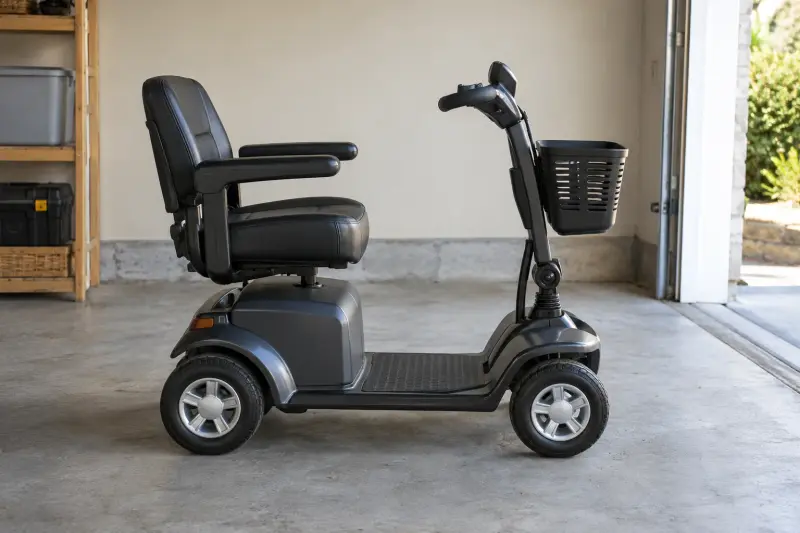
Editorial illustration Ask about the reason for sale without treating a personal story as proof of suitability. The equipment may be sold because circumstances changed, but the next user's needs still require their own review. A device fitted for another person should not be assumed appropriate for you because their height or age sounds similar.
Record any gaps honestly. A missing service record is not a diagnosis of a fault, yet it is an unresolved evidence question. Do not manufacture a history from a clean appearance or infer a universal remaining lifespan from age. The appropriate professional can explain what inspection or support is relevant.
Keep the evidence table factual: record available, date confirmed, source identified or information unavailable. It should not award reliability stars from anecdotes. This approach makes the purchasing comparison easier to discuss with a service provider and helps explain why a candidate is waiting for evidence rather than declared good or bad from an online description.
Arrange appropriate inspection instead of household tests
Ask a relevant professional whether the exact used model can be inspected and what the scope covers. Condition, approved configuration and personal suitability are distinct questions. An inspection may address equipment condition without completing the user's fit or route assessment, so keep each scope separate in the record.
Do not create a test of brakes, slopes, electrical components or battery performance from an internet checklist. This article gives no diagnostic procedure or operating challenge. Describe concerns and ask the provider what information or review is needed. A brief movement in a seller's driveway is not a complete condition assessment.
Clarify whether inspection is possible before commitment and how the equipment reaches the professional. Ask about access, collection and any limits of the service. The price of an inspection is not useful without understanding what it covers and whether the household can actually use that route.
Keep the written result and any required follow-up attached to the candidate. Do not shorten a qualified report into passed. If parts, configuration or service remain unresolved, those requirements belong in the complete scope before the purchase is treated as ready. A clear exclusion can save more trouble than a hopeful bargain.
Separate battery history from new-model range specifications
A manufacturer's new-model range figure is not measured performance of an individual used battery. Ask about the actual supplied battery, replacement history and relevant condition evidence. A seller saying it charges or holds a charge does not answer every question about the arrangement or the intended journey.
Use the exact approved battery and charger information. Do not assume a replacement pack is appropriate because it looks similar, has more capacity or uses a matching plug. If the equipment was altered, ask the manufacturer or responsible provider about the actual configuration rather than treating the seller's modification as an improvement.

An inspection or provider enquiry may show that replacement is relevant, or that another issue needs attention. Do not add an assumed battery cost to every used listing as though it is always required. Equally, do not omit a documented replacement from the comparison because the asking amount looks attractive.
Our battery-and-charger guide provides a component identity card for that enquiry. It does not diagnose faults or prescribe an upgrade. Keep the battery question linked to the exact used candidate and current provider response, rather than using a generic lifespan estimate to predict how much use remains.
Check current service and approved-part availability
Ask a relevant local provider whether it supports the exact model and configuration. Brand familiarity does not guarantee that every workshop can service every revision or supply approved components. A seller may no longer be involved after the transaction, so the buyer needs an actual support route before relying on future help.
Golden's current support page links warranty, service, parts and document enquiries. That illustrates a manufacturer contact route, not a promise that a particular second-hand product has transferable coverage or that service is available to every reader. Ask the appropriate source about the actual candidate and region.
If a component is unavailable, ask what that means for the purchase and any possible documented alternatives. Do not order a similar-looking part or improvise a repair. The support gap should remain visible in the comparison. A model with an attractive specification can still be an impractical ownership choice when an essential service question is unresolved.
Record who handles concerns, how equipment reaches them and what current written scope applies. A distant service route can introduce a task the household cannot manage. The useful support comparison includes access and responsibility alongside charges, rather than ranking providers solely by a workshop price.
Read the actual seller’s written terms and relevant market context
Identify whether the seller is a business, private individual or another actual route, and read the relevant current terms. Do not assume identical consumer protections or return policies across those settings or countries. If the legal position matters and is unclear, seek appropriate local advice rather than treating this buying guide as a contract opinion.
The US FTC's shopping guidance emphasizes complete cost, reading seller terms and retaining purchase records. Its warranty guidance explains the value of written coverage and distinguishing separate service contracts. These are useful US-facing sources, not promises about a private used sale or another country's law.
Ask what the seller will do if the item supplied differs from the description or a concern is reported. Keep the answer and applicable terms with the listing. A broad statement such as sold as seen should be understood in the actual context, not interpreted by the website as a universal rule.
For a business refurbished offer, ask exactly what refurbishment means and what documented inspection, replaced components and support are included. Do not treat refurbished as a technical certification by itself. The written scope should explain the actual work and responsibilities rather than relying on a reassuring adjective.

Worked example: compare complete scope rather than asking amounts
Imagine a fictional household comparing a new provider-supplied candidate with a used listing of the same broad category. The used asking amount is lower, but the listing does not identify the actual battery arrangement or inspection scope. The new quote includes documented setup and a specified support route, although personal and transport questions still need review.
The household first confirms the user's relevant task and asks the appropriate providers about both candidates. It requests exact identity, records and inspection information for the used item. Any required confirmed component or service is added as a separate line instead of assuming that the low asking amount represents the complete purchase.
The comparison now shows what is known and unknown. The family does not invent a battery replacement price or a remaining lifespan to make one side win. It obtains actual quotes for relevant work and keeps unresolved support or suitability requirements visible. A candidate that cannot answer an essential requirement is excluded before optional features are compared.
This example does not imply that new is always better or that used always saves money. It shows why the same task and complete scope must be used on both sides. The final choice may be a relevant inspected used device, a supported new arrangement or no order while necessary evidence is pending.
Use an evidence-based complete-cost worksheet
Create lines for asking or quoted purchase amount, relevant inspection, confirmed required components, delivery, setup and actual transport requirements. Add optional items separately. Use dated quotes rather than assumed averages. If a cost is unknown, leave it unknown and identify who can provide it.
A transparent comparison can use letters while information is pending: purchase amount P, confirmed inspection I, required approved work W and delivery or setup D. The documented starting scope is P plus I plus W plus D, with qualifications retained. This is bookkeeping, not a forecast of future maintenance or equipment life.
Do not claim an expected saving until comparable scope is established. A used candidate missing a required service route cannot be made equivalent by assigning an optimistic future cost. A new quote including unnecessary accessories should also be reduced to relevant scope before comparison. Both sides need the same actual task.
Keep possible future ownership questions separate from confirmed starting costs. Ask providers about applicable service and component requirements without inventing a replacement calendar. The ownership-budget guide helps organize that longer view. A useful budget makes evidence and uncertainty visible, rather than supplying false precision to encourage a purchase.
Read photos, reviews and sales language as limited information
A cleaned seat, polished frame or attractive background says little about approved configuration or technical condition. Use photographs to ask identity and scope questions, not to certify a product. A seller's description can be useful when supported by actual records, but a persuasive story cannot replace the relevant inspection or personal assessment.

Customer reviews of the same model may describe another configuration, seller or user's task. They can suggest questions but do not establish your used candidate's condition. Avoid ranking a listing by star rating or treating a favourable review as evidence that a battery or accessory is appropriate.
If a seller pressures the household to skip documentation or inspection because other buyers are waiting, return to the essential requirements. We do not fabricate scarcity or recommend a hurried order. A relevant used device should still be identifiable and supported through the appropriate process before a substantial commitment.
Keep communications and the exact listing privately with the decision record. That helps preserve what was offered without publishing another person's details or turning the sale into a testimonial. The useful question is whether the evidence supports this actual purchase, not whether the advertisement feels convincing.
Confirm the supplied equipment and responsibilities at handover
Ask how the exact item, included battery, charger, approved accessories and instructions will be documented on supply. Match those details to the confirmed order and relevant inspection record. Do not accept a changed component as equivalent simply because it has the same colour or the seller describes it as upgraded.
Clarify setup and instruction responsibility before collection or delivery. A used transaction may have a different scope from a provider's new-equipment arrangement. The household should know which appropriate service answers operation, configuration or condition questions afterward, rather than discovering that every party expects someone else to handle them.
Keep any unresolved personal or route requirements separate from handover. Equipment changing ownership does not automatically make it suitable for the next user. If relevant fitting or demonstration is still needed, retain that next action and follow the appropriate professional guidance instead of proceeding from the seller's routine.
Store the actual documentation, written terms and contacts in a private equipment folder. This can support future service enquiries without collecting unnecessary health information in a public tool. A good handover record explains what was supplied, what was confirmed and what remains to be done.
Your new-versus-used evidence and support card
Finish a one-page card with the actual task, candidate identity, supplied configuration, available history, inspection scope, support route and complete quoted starting cost. Keep private serial or seller information within the appropriate records. The public comparison method needs no personal data.
Use three clear outcomes: relevant evidence established for the next step, waiting for a named answer or excluded from the intended task. Avoid a reliability score derived from age, appearance or a seller's claim. An essential unknown should remain visible even when the asking amount is appealing.
If the candidate proceeds, retain the exact order and handover scope. If it does not, record the reason so the next listing can be reviewed more efficiently. That can help the household avoid repeating the same missing-document or unsupported-component enquiry across several similar offers.

Our demonstration, battery and service guides develop connected questions when relevant. A suitable used purchase can be worth considering with appropriate evidence, while a new order still needs task and scope confirmation. The strongest result is a justified, understood decision, including waiting or making no purchase when the necessary evidence is unavailable.
MAKE THE SPEND MEANINGFUL
Before adding to the basket.
- Ask about a relevant inspected and supported used option instead of assuming new is necessary.
- Retain appropriate existing equipment where it still serves the confirmed task.
- Use a private paper evidence card rather than buying a comparison application.
- Decline unsupported bargains and avoid optional accessories without a recorded need.
How this guide was prepared
AI-assisted editorial research, checked against the linked primary sources. Product testing and a credentialed individual review are not claimed.
AI-assisted, source-checked editorial; no hands-on test, human expert review or personal suitability assessment claimed
How we use sources and AI assistance ↗Sources & fact checks
The guide separates sourced facts from editorial questions and examples. We have not claimed hands-on product testing. How we use sources and AI assistance.
- Golden Technologies owner-document library: exact model and region must be matched ↗
- Golden Technologies support: warranty, service, parts and document contact routes ↗
- US FTC online shopping guidance: complete cost, seller terms and purchase records; US context ↗
- US FTC warranty guidance: written scope, claim process and service contracts; US context ↗
Found an error or an outdated detail? Contact the editorial team.