
In brief
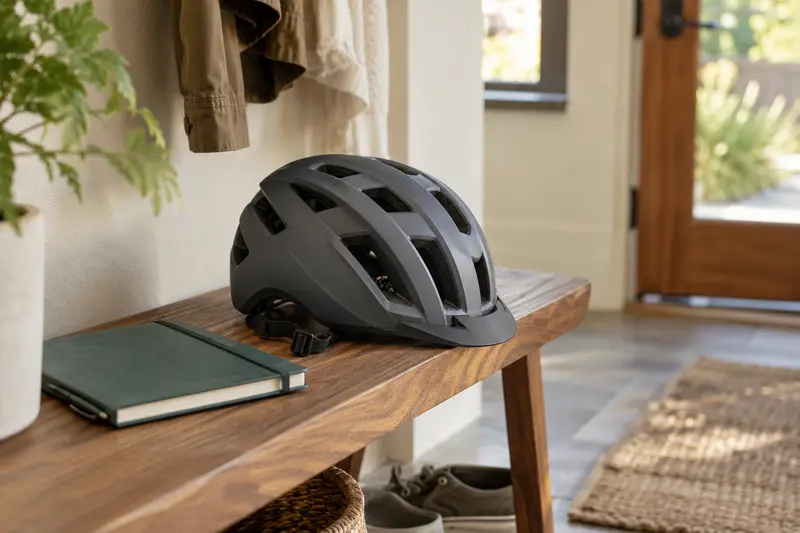
Choose a helmet for the vehicle and riding conditions, with the applicable local standard and a proper fit. Check the exact model and label rather than assuming a familiar brand name is enough. Three wheels do not remove the need for a helmet. Compare fit and understandable adjustment before optional styling or premium features.
Documented options
A clearer comparison.
Research options based on manufacturer documentation. These are not results of hands-on testing. Manufacturer links are informational; no commission relationship is currently active.
IN THIS GUIDE
Identify the riding use and requirement
Ask a seller to identify the unit it will actually supply, rather than answering with a helmet family's general international page. An enquiry can include the offered regional designation, intended activity and a request for the applicable label information. If a substitution is proposed, keep that as a new candidate. Documentation for the original offer should not silently follow another version because the two have a similar name, colour or outer shape.
For US bicycle helmets, CPSC's guidance requires identifying marks and a compliance label. Together, these include the model designation, certificate-issuer information, production-lot identification and manufacture month and year. Those details support matching the item to its documentation and a relevant recall enquiry. Keep the supplied identifying information privately. A screenshot of the retailer's logo cannot perform that matching task, and a country selector does not replace the actual unit's required information.
Treat the riding description as a small factual brief. Name the exact vehicle, its regional configuration and the places you expect to use it. A recreational cycle ride, a different legally classified powered vehicle and a private-site activity may raise different equipment questions. This article cannot settle those categories from the word trike. Resolve the vehicle and local guidance first, then ask which helmet standard applies to the actual activity. The same shell appearance can hide a different intended use or certification.
In Great Britain, Rule 59 of the Highway Code recommends a cycle helmet meeting current regulations, correctly sized and securely fastened. That recommendation should not be rewritten as a blanket criminal helmet mandate for every cyclist. It also does not settle rules for a vehicle classified differently from a qualifying pedal cycle. For a US purchase, check the applicable local riding rules alongside the CPSC bicycle-helmet labeling information. An international retailer's country selector is not itself evidence that the specific unit in the parcel has the required local certification.
For a hypothetical comparison, two sellers offer a helmet with the same family name. One provides a photograph of the relevant label and identifies the regional version; the other only repeats a global description. The buyer has a documentation question before a color decision. They request the exact model, intended use and supplied label information rather than assuming the more expensive offer solves it. If the answer remains unclear, another properly documented candidate or a knowledgeable local retailer may be a better research route.
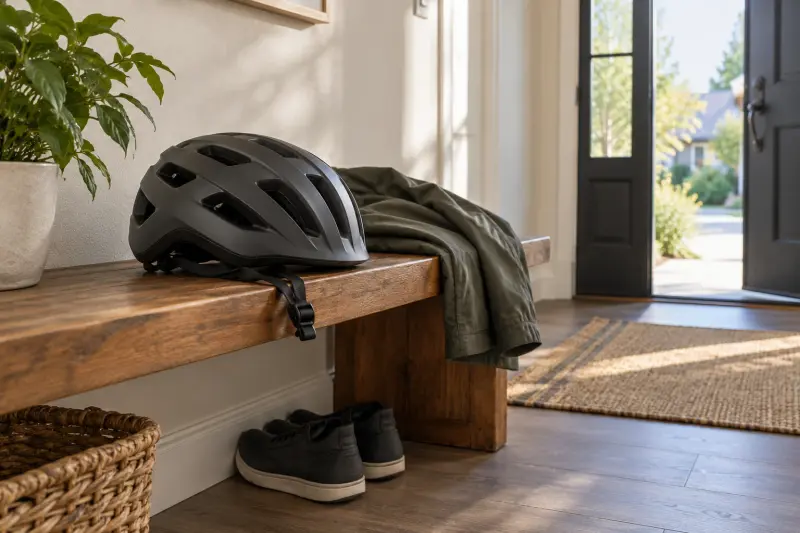
Keep the distinction between a product standard and a personal outcome visible. Standard compliance is an essential factual check where applicable, but it is not a prediction that the wearer will avoid injury in every incident. Avoid ranking helmets by unverified marketing language or treating a star rating as a crash test. This guide has not conducted comparative impact testing. Its practical contribution is to connect the exact use, authoritative local guidance and documented product before the reader buys.
Save the official guidance link and date privately with the helmet record. Revisit the question if the vehicle category or country changes. A previous choice for one use should not silently become approval for every later powered vehicle or journey.
Measure, then check the actual fit
Keep the original circumference measurement and its unit beside the maker's chart. In a hypothetical enquiry, a shopper measures near a stated boundary but rounds the number before contacting the retailer. The rounded value can hide the very uncertainty the fitter needs to discuss. Record the measurement as obtained under the instructions and ask about the actual suitable options. This example supplies no universal allowance or rule telling readers to select the smaller or larger shell.
Check which sizing description belongs to the item in the basket. A retailer may show a broad adult category alongside a more specific model chart, while the selected variant has its own listed range. Ask for the chart matching that variant rather than treating the category name as a personal fit result. If the supplied documentation and offer disagree, resolve that evidence gap before relying on a fitting appointment arranged for another version.
Measure under the exact maker's instructions and record the unit used. Do not convert a rough guess into a precise size choice. A circumference measurement helps identify the candidate range, but head shape and the actual wearing position still matter. Use the product's current size chart rather than a general adult chart or a number copied from another brand. If two regional versions have different options, match the chart to the actual item offered.
Giro's Register II page is useful as a documented feature and sizing reference. Its adjustable fitting system and removable visor can be examined after the required regional label is established. The page viewed for this guide lists CE EN1078 in its certification field; that should not be turned into an unverified claim about every US unit. Ask the seller or maker about the precise regional version and label. A familiar product family is a starting point for questions, not a substitute for the supplied unit's documentation.
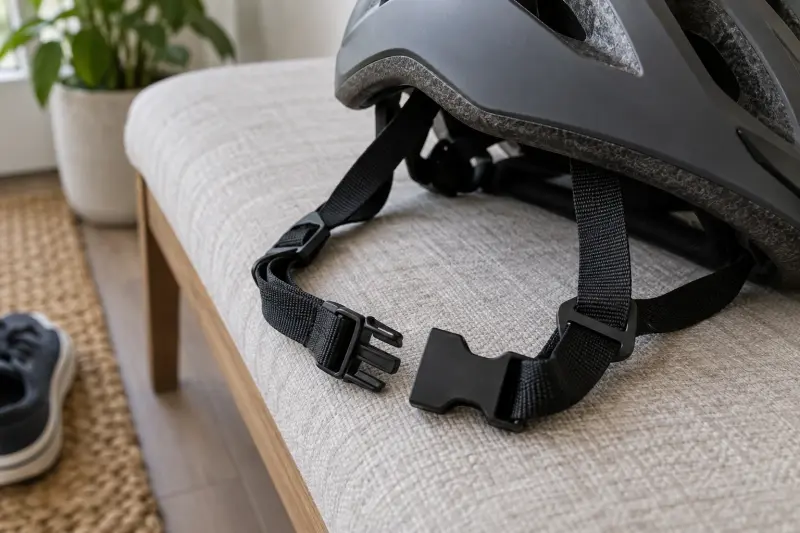
For a hypothetical fitting appointment, a measurement falls close to a size boundary. The shopper brings the measurement, intended riding use and ordinary eyewear to a knowledgeable retailer. They ask to compare the appropriate actual options under the maker's instructions. They do not force the smaller shell to work because its color is preferred. Another person may find a listed circumference range but an unsuitable shape. Those are reasons to seek fitting help, not to invent a different strap route or remove a required component.
Separate the size result from subjective appearance. A helmet can photograph neatly and still leave a fit question unanswered. Ask for the correct wearing, retention and fastening explanation for that model, and repeat any step you do not understand. Keep the instructions after purchase rather than relying on a quick memory of a demonstration. This article does not prescribe a universal measurement tolerance, pressure test or shell position; the manufacturer and appropriate fitting support provide that model-specific guidance.
Before ordering online, clarify whether the seller permits the inspection or fitting you need and what the current return terms say. Do not assume a generous advertised policy covers a worn or altered item. Check the exact variant in the basket again, including size and regional designation. A careful first order is preferable to buying several undocumented sizes and hoping one becomes acceptable.
Choose adjustment you can use consistently
Include the real preparation circumstances in a fitting enquiry. If glasses are normally worn, bring them; if another item is used only occasionally, describe that separately and ask the maker about the complete permitted arrangement. Do not compensate for a changed fit by adding padding, changing strap routing or modifying the shell. The question concerns the documented combination the person intends to wear, rather than collecting more accessories to match a photograph.
Ask for an explanation the wearer can repeat in their own words: which adjustment controls do what, which supplied instruction shows the wearing arrangement and whom to ask if it becomes unclear. A demonstration by a companion does not answer whether the user understands the task. If help is ordinarily involved, describe that actual routine to the fitting adviser. Keep the resulting explanation model-specific instead of writing a new fastening procedure from memory.
Think through the ordinary preparation routine while following the maker's guidance: locating the helmet, putting it on, arranging the straps and fastening it correctly. The task should be understandable to the person who will do it, rather than only to someone demonstrating a new product. Ask a retailer to explain the actual adjustment system in plain language. If a control or buckle remains difficult, record the precise difficulty and ask about an appropriate alternative instead of assuming greater tightening is the answer.
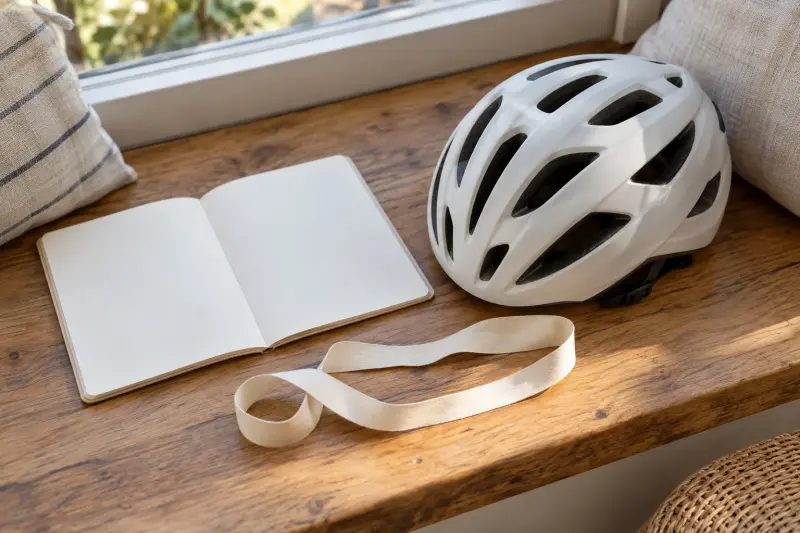
Include items normally worn on a ride. Glasses, an approved accessory or other relevant equipment can change the fit question, but compatibility must be confirmed for the complete arrangement. Do not drill, cut, reshape or alter the retention system to accommodate another item. A photograph of someone using a similar accessory does not document the combination. Ask the helmet maker about any uncertain addition before buying it. Leave room in the purchase plan for a different compatible choice when that answer is unavailable.
For a hypothetical shopper, a premium helmet has appealing styling, but they cannot confidently repeat the correct fastening after the explanation. A simpler candidate offers a different mechanism to examine with fitting support. That is a meaningful comparison of the user's actual task; it does not establish that one model has superior impact performance. Another shopper handles the controls comfortably but has unresolved regional certification. Ease of use cannot replace the earlier standard check, so both questions stay separate on the record.
Keep optional features in their proper role. Ventilation, a visor or a particular finish can be preferences once the intended use, label and fit are understood. Avoid turning those choices into a medical claim or a promise that a person will ride more safely. A retailer can explain what an actual feature does and what it does not change. There is no reason to buy additional decorative riding accessories solely to make a helmet order feel complete.
Consider how the adjustment information will be remembered without exposing personal details online. A private copy of the correct instructions, an accessible demonstration and an identified support contact can be more useful than a long shopping comparison. When help is needed, discuss an appropriate routine rather than leaving the user with unexplained equipment.
Keep condition and replacement instructions
Care advice needs to address the particular cleaner, not only the word washable. CPSC's bicycle-helmet labeling guidance warns that some common cleaners can damage a helmet without visible evidence. Ask the maker which products and method its instructions permit for this exact item. A surface that looks unchanged after cleaning is not proof that an unapproved chemical was harmless. There is no need to add a cleaning product to the basket until its role is understood.
For a recall enquiry, match the actual identifier and relevant lot or manufacture details to the authority's notice. A recall for a similarly named product may concern a particular version, while searching an imprecise family name can miss the relevant distinction. Follow any applicable official instructions rather than improvising a repair. A search returning no matching notice answers that bounded search; it does not verify an unknown item's impact history or certify its suitability.

Ask for the care instructions for the exact helmet at purchase. Cleaning products, storage conditions and replacement guidance should come from that maker, rather than a generic online hack. CPSC's labeling guidance includes warnings about impacts and damaging substances; visible appearance is not a reliable account of an item's entire history. Do not infer continued suitability from an undamaged-looking shell after an incident. Follow the specific replacement advice and seek the manufacturer's answer when the event or condition is uncertain.
A used helmet adds a history question that a photograph cannot solve. Ask what is known about age, impacts, alteration and supplied instructions. A seller's phrase hardly worn does not verify those matters. This guide does not certify a used helmet or provide a do-it-yourself structural inspection. If essential history cannot be established, treat that uncertainty as part of the decision rather than compensating for it with a low price. Obtain appropriate advice about the exact item.
For a hypothetical online order, the box arrives with a different regional identifier from the offer record. The buyer checks the documentation and asks the seller to resolve the discrepancy before ordinary use. They retain the order correspondence rather than discarding it because the appearance is similar. Another buyer has lost the care booklet but knows the exact model. They request the correct instructions from the maker instead of relying on a guide for an older generation. Both examples concern evidence, not cosmetic condition alone.
Keep a simple private record of the model, variant, purchase date, seller and care source. Use the relevant country's product-safety authority for recall information. A recall search requires the actual identifying details; an absent result is not a guarantee of safety or proof of an unknown item's history. If an official recall applies, follow its instructions and contact route rather than improvising repairs. Do not publish your receipt or personal account details in a community question.
Review the condition and replacement question after a relevant event or change of use. This is different from creating an arbitrary calendar that tells every reader to buy a new helmet immediately. Appropriate existing equipment may still serve its documented purpose. The useful decision follows the manufacturer's instructions and actual history, with uncertainty referred to a responsible source.
Resolve the evidence before ordering a helmet
Make a paper evidence record with columns for the exact question, source, response and next action. One row might say regional label awaiting a photograph; another might say actual fitting appointment arranged. Keep those states distinct from resolved. Attach the maker's current instructions and the applicable official guidance reference. Use your private notes to take unresolved questions to the seller or fitter. Completing every box does not certify helmet safety.

Can two helmets be ranked for crash protection from their prices and features?
This guide cannot make that comparison without appropriate comparative evidence. A visor, finish or adjustment description can help explain preferences and use, but it does not establish an injury-outcome ranking. Shortlist only candidates whose essential documentation and fitting questions can be addressed, then compare current purchase terms. Retaining suitable existing equipment remains a legitimate outcome when its actual use, history and maker's instructions support it.
Use your paper notes to organise the evidence without creating a numerical safety score. Each row needs its own source: local riding guidance, actual product label, current size information, fitting explanation and understandable adjustment. Add care and history notes separately. A completed shopping form does not certify a helmet, assess the rider or promise protection against every injury. It should make an unanswered question easier to spot and take to the correct seller, maker or fitting professional.
For a hypothetical final shortlist, Candidate A has the appropriate documented regional standard and a fitting appointment arranged. Candidate B has an appealing discount but no clear version information. The first may be worth progressing even if the second looks less expensive; the decision is about an unresolved essential field. A different reader may already own an appropriate helmet with known history and current instructions. Their next step may be a condition or fitting enquiry rather than a purchase. Neither result needs an accessory bundle to count as progress.
Compare total current purchase terms only after the essential checks. Include delivery, the exact variant, any fitting support and the seller's applicable return information. Keep statutory rights and a voluntary shop policy distinct in the relevant jurisdiction, and obtain advice about an actual dispute where necessary. This article does not quote a live price or represent an approved affiliate relationship. Manufacturer links help the reader examine documentation; they do not establish available stock or a commission arrangement.
The order review should be brief enough to use: correct activity, correct regional item, correct size, understandable use and retained care instructions. Ask a family member helping with research to record unanswered questions without declaring personal fit from photographs. Let the person who will wear the helmet participate in the actual choice and explanation. The most useful outcome can be one properly researched item, continued use of suitable existing equipment, or a pause while essential information is obtained.
A purchase is earned through a resolved need. This publisher has not compared crash performance or assessed any individual rider, and price alone is not a safety ranking. When the evidence remains incomplete, keeping the question open is more useful than adding a confident best label to a product card.
MAKE THE SPEND MEANINGFUL
Before adding to the basket.
- Prioritize documented fit and the required standard before styling extras.
- Compare suitable basic models and avoid buying a bundle of unneeded riding accessories solely to reach a promotion threshold.
How this guide was prepared
AI-assisted editorial research, checked against the linked primary sources. Product testing and a credentialed individual review are not claimed.
AI-assisted, source-checked editorial; no hands-on test, human expert review or personal suitability assessment claimed
How we use sources and AI assistance ↗Sources & fact checks
The guide separates sourced facts from editorial questions and examples. We have not claimed hands-on product testing. How we use sources and AI assistance.
- CPSC: micromobility riding and charging guidance ↗
- CPSC: helmet impact, care and labeling warnings ↗
- Great Britain Highway Code: Rule 59 helmet recommendation ↗
- Giro: Register II helmet and size guide ↗
Found an error or an outdated detail? Contact the editorial team.