

In brief
Compare local service by access, scope and response as well as the quoted charge. Ask whether the provider supports the exact model, how equipment reaches it and what the written offer covers. A cheap workshop visit may be impractical if collection is unavailable.
IN THIS GUIDE
Map how the scooter will actually reach support
A mobility scooter service quote describes only part of the support arrangement. Start by asking where the work happens and how the equipment gets there. A workshop price may be attractive, but it is not a complete solution for someone who cannot dismantle, lift or transport the scooter. Distance on a map is not the same as practical access.
List the ordinary service tasks you are enquiring about separately from a current fault. Routine maintenance, diagnosis, a battery concern and damage after an incident may require different bookings or different providers. Explain what you need without deciding the technical cause yourself. A provider can then say whether its service is appropriate.
Ask whether support is available at home, through collection or only at a workshop. Find out what each route includes, who arranges it and whether there are geographical limits. If a family member would transport the scooter, confirm that this is a realistic arrangement for the actual device rather than treating their help as an unlimited free service.
Make a service-access map before buying a new model as well as when arranging maintenance. A suitable scooter with a usable support route may be a better purchase than a lower-priced alternative with uncertain parts and collection. The comparison should record what is confirmed today, without inventing a future repair frequency or a guaranteed response time.
Give the provider enough information to quote usefully
Prepare the manufacturer, exact model, serial reference and locally supplied configuration. Include the purchase date if known, the current manual and a short description of the requested work. Keep the serial reference private except where a legitimate provider needs it. A photograph of an actual label can reduce confusion between similarly named versions.
Describe the symptom in everyday terms. Note when it first appeared, whether it changes and any displayed message. “The scooter is slower than usual on the same ordinary outing” gives the provider a starting point; “the motor is defective” is an unverified conclusion. Do not provoke a fault or continue an unsuitable test simply to produce a video.
Identify any accessories or changes the provider needs to know about. A used purchase may have missing documentation or components that differ from the original specification. State that uncertainty directly. Avoid calling an unknown part original because it looks similar to a product photograph.
Ask whether the provider supports that exact model and what information is required before an appointment can be confirmed. An organisation servicing a brand does not necessarily stock every part or handle every product generation. A precise enquiry helps distinguish “we can assess it” from “we already know the part and cost needed,” which are different offers.
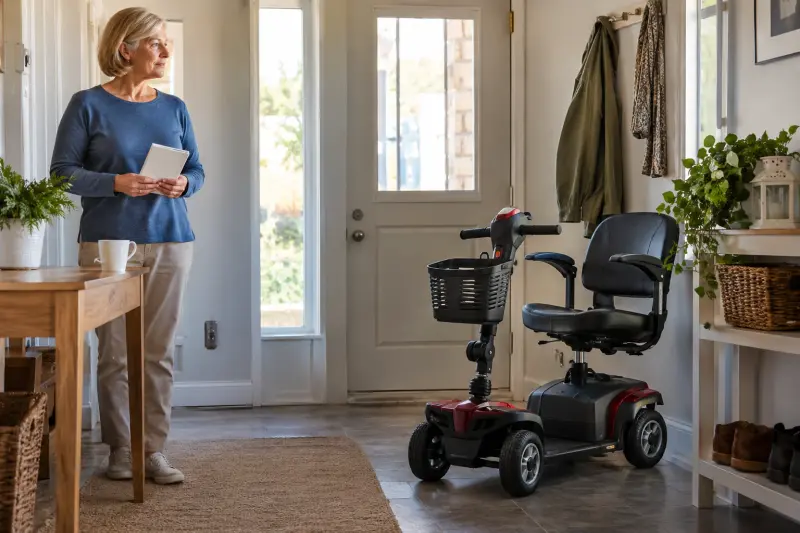
Editorial illustration
Compare the written scope, not the word service
Ask for a written description of what the quoted service covers. A general “annual service” label can leave the actual scope unclear. Find out which checks are included, whether any consumable parts are included and whether the quoted amount is a fixed charge for that stated work or an estimate that may change after assessment.
Keep diagnosis and repair distinct. A diagnostic charge may pay for finding a fault without including the replacement component or its installation. Ask whether that charge is deducted from subsequent authorised work and what happens if no repair is accepted. Do not assume a first inspection provides a complete repair quotation.
Ask how the provider relates its service to the manufacturer instructions for the exact scooter. If the model has a specified maintenance schedule, obtain it from the current manual or supplier. This guide does not prescribe one interval for every scooter, because use, design and manufacturer requirements differ.
Put competing offers into the same scope table before comparing amounts. One provider might include collection while another supplies only workshop labour. One might provide a written report while another offers a short verbal summary. Those differences are neither automatically good nor bad, but they affect what the owner receives and what further questions remain.
Separate the charges that can change the total
Request separate figures for the quoted work, travel or call-out, collection, return delivery, diagnosis, labour and parts where relevant. Ask whether taxes are included and whether a minimum charge applies. Do not add an invented typical battery price or call-out fee to make a comparison look complete.
Check what happens when the provider discovers additional work. Ask whether the owner will receive a revised estimate before it proceeds and how approval is recorded. A clear spending boundary is useful: “Please contact me before any work beyond the agreed inspection” communicates a preference without pretending it changes the contract by itself.
For a fictional comparison, Offer A quotes workshop maintenance but leaves transport to the owner. Offer B includes collection and return within a stated area. The worksheet adds the owner's actual transport quote to A, then compares the two offers on the same basis. It does not automatically prefer B; collection times and the actual scope still matter.
Mark unknown amounts as unknown instead of entering zero. A missing parts figure is not free parts, and a blank collection line is not a promise to collect. The aim is a transparent estimate that can be updated when evidence arrives. That is more useful than publishing a single ownership cost that may have no connection to the reader's location or equipment.
Ask how replacement components are identified and authorised
When parts may be required, ask the provider to identify the proposed component and its compatibility with the exact scooter. A matching connector, broad product name or online seller's compatibility list should not be the only evidence. The appropriate provider can check the configuration and any manufacturer requirements before ordering.
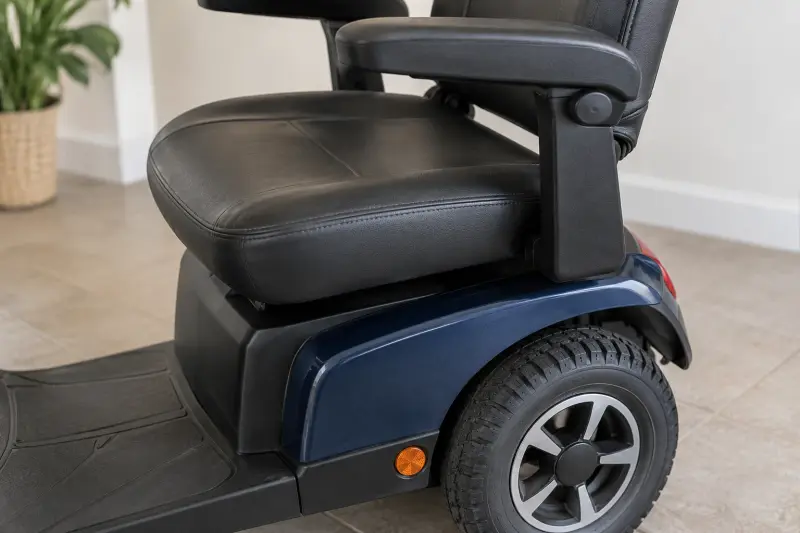
Pride's scooter safety guidance directs readers towards approved components and appropriate provider advice. This matters when a cheaper online replacement appears similar to the supplied part. The comparison is not simply expensive versus inexpensive: it is whether the replacement is approved for the actual device and whether the installer can support that choice.
Ask whether a replacement is new, refurbished or otherwise supplied, and what the written terms say about its own cover. If the original part is unavailable, ask what approved options exist. Do not treat a workaround, battery conversion or improvised repair as a routine budget alternative.
For older or used scooters, parts availability should be established before a substantial repair commitment. A provider may need a diagnosis before giving a final answer, but it can often explain how the enquiry works. Keep availability status, estimated lead time and approval conditions separate. An item listed online is not evidence that the right component is in stock for immediate installation.
Check the actual warranty route before paying twice
If the scooter may be under warranty, find the document that applies to the exact product, purchase and market. Contact the seller or stated support route before authorising chargeable work elsewhere. Ask whether prior approval is needed and whether the proposed provider can perform work within that arrangement.
Golden publishes a separate scooter warranty download through its official warranty page. That route helps locate the correct category of document; it is not a statement that every fault, collection or labour charge is covered. Read the applicable document with the purchase paperwork and ask the provider to identify any uncertainty.
Keep warranty cover separate from a routine service offer. A maintenance appointment may be chargeable even when some components remain covered, and a covered part may have separate labour or transport conditions. The relevant written terms should answer those questions. Do not use the word warranty as a substitute for knowing who pays each charge.
A used purchase needs its own enquiry about eligibility and transferability. Retaining an original invoice can be helpful evidence, but it does not automatically establish cover for a new owner. Record the answer for that scooter and buyer. If support is declined, ask for the stated reason so the next decision can be based on the actual terms.
Ask what the booking commits you to
Before making an appointment, find out when payment is due and what the booking authorises. Is it an inspection, routine maintenance or a defined repair? Ask how cancellation, an unavailable owner or an inaccessible property is handled. These practical terms can affect the final cost as much as the first quoted charge.
Check the collection and return arrangements in writing. Give the provider any relevant access information, such as a lift, steps or limited vehicle access, without promising that the owner will carry equipment. Ask what the crew expects the owner to prepare and whether that preparation follows the manufacturer instructions.

Editorial illustration Keep the appointment window and any estimated completion time distinct. A date for collection is not necessarily a date for return. If parts need ordering after inspection, ask how the owner will be updated. Do not turn an estimate into a guaranteed deadline in your own planning.
Consider a backup mobility arrangement if the scooter will be unavailable. That may require an appropriate assessment or separate booking, and it may not be possible through the servicing provider. Explain that the scooter is important to daily routines so the provider understands the practical consequences. A realistic interruption plan is better than assuming every service includes a free replacement device.
Assess whether a home visit solves the access problem
A home visit can avoid workshop transport, but ask what work the visiting provider can actually perform. Some tasks may still require equipment or facilities elsewhere. Confirm whether the offer is a home assessment, on-site maintenance or a repair expected to be completed there, and what happens if workshop work becomes necessary.
Explain the available location without inventing technical requirements yourself. Ask whether the provider needs a particular working space, power arrangement or access route. Let it decide whether that location is suitable. The owner should not remove guards, reposition heavy equipment or create a makeshift repair area to meet an assumption from a general article.
In a fictional example, a reader can reach a covered entrance but cannot move the scooter through a narrow internal doorway. The home-service enquiry should mention that limitation. A provider might offer another arrangement, or it might decline that location. A booking that ignores the access issue is not more convenient simply because it says “home visit.”
Check who is responsible for any movement, preparation and completion checks. Ask what instructions and paperwork the owner receives afterwards. A useful home service leaves the owner knowing what was done, what remains unresolved and whom to contact. It should not depend on the reader interpreting a technical component list without explanation.
Request a record that supports the next decision
Ask for a written service or repair record showing the exact device, date, work completed and components supplied. Keep it with the purchase information and current manual. A useful record does not need to be elaborate, but it should distinguish observations, completed work and recommendations.
If further work is advised, ask how urgent it is and whether the scooter should be used while that question is resolved. A blog cannot override the provider's assessment or decide that a visible fault is harmless. Obtain clear advice from the appropriate support route and ask for an explanation you can understand.
Note any manufacturer-approved user maintenance instructions the provider gives, and where they appear in the current literature. Do not expand them into a home repair programme. Cleaning, inspection and electrical work are different tasks; the owner should know which actions are intended for them and when to seek help.

Maintain a simple service log rather than a guessed failure forecast. Record actual dates, actual paid amounts and the reason for each visit. Over time this can help the owner compare support options or decide whether another repair is worthwhile. It does not establish the expected lifespan of every scooter in the same product family.
Use a support comparison with honest unknowns
Create a comparison sheet with rows for exact model support, visit location, transport, inspection scope, written estimate, parts approval, communication, warranty handling and return arrangements. Use confirmed, pending and unavailable statuses. Put the actual quoted amounts beside those entries, with the date and conditions.
For a fictional example, a workshop confirms the exact model and provides a detailed inspection scope, but collection is unavailable. A mobile provider offers a visit yet has not confirmed access to a needed component. The comparison identifies two different unresolved issues. It does not assign a universal best provider based on a price or a website review score.
Choose the next enquiry according to the most important uncertainty. Ask the workshop about a legitimate collection option or ask the mobile provider to confirm the component route. This is a better use of time than requesting ten additional prices for offers that still do not answer the owner's basic access need.
Avoid treating advertisements, directory listings or manufacturer partner links as proof of a satisfactory local appointment. Golden's field-service page provides enquiry routes, not a guarantee of your postcode, date or equipment outcome. Confirm the particular booking with the provider. A named route is useful because it makes investigation possible, rather than because it eliminates the need to investigate.
Decide what makes the service worthwhile
Value depends on the task completed and the usable support arrangement. A lower charge for an inspection can be sensible when the owner has appropriate transport and the scope meets the need. A higher total including collection can also be sensible when workshop access would otherwise be impossible. Neither conclusion follows from price alone.
Keep a repair decision separate from a replacement decision. If substantial work is proposed, ask for the actual estimate, the identified problem, any remaining uncertainty and the available approved options. Compare those with a suitable replacement only after its purchase, delivery, fit and support requirements are understood.
Do not use a fictional percentage rule such as “replace whenever repairs exceed a third of purchase cost.” That shortcut ignores personal needs, the equipment's condition and the availability of suitable alternatives. A real comparison can state that more information is needed. Uncertainty is a useful result when it prevents a rushed purchase.
A service plan or extended contract deserves the same scope review as a one-off appointment. Ask which visits, components and transport are included, how many conditions apply and whether the owner can use the stated route. A reassuring plan name is not evidence of unlimited support or a reason to buy cover that duplicates an existing arrangement.
Leave the appointment with a clear next action
At completion, ask the provider to explain the result in ordinary language. Confirm what was done, which concerns remain and what instructions apply before the scooter is used again. If a part is still on order or additional work is required, keep that status visible rather than filing the visit as a complete resolution.
Save the receipt, work record and relevant messages together. Add the provider's contact route to the equipment folder and remove outdated details when they change. A family member helping later should be able to see the last known status without reconstructing a conversation from scattered texts.
The cheapest useful step may be an accurate enquiry, a warranty check or a better record of the symptom. It may also be moving a planned purchase to a provider with practical local support. Do not buy tools, replacement batteries or spare electronics simply because the service discussion raises a possible fault.
A good service decision answers four questions: does this provider support the exact equipment, can the owner access the service, what work and costs are agreed, and what happens afterwards? When those answers are clear, the owner can compare value without pretending every repair is predictable or every scooter has the same maintenance needs.
MAKE THE SPEND MEANINGFUL
Before adding to the basket.
- Start with the correct warranty and manufacturer support enquiry before paying for duplicate diagnosis.
- Use an existing folder or simple service log; a paid maintenance app is unnecessary for basic records.
- Compare actual transport-inclusive offers instead of assuming the lowest workshop figure is the lowest usable cost.
How this guide was prepared
AI-assisted editorial research, checked against the linked primary sources. Product testing and a credentialed individual review are not claimed.
AI-assisted, source-checked editorial; no hands-on test, human expert review or personal suitability assessment claimed
How we use sources and AI assistance ↗Sources & fact checks
The guide separates sourced facts from editorial questions and examples. We have not claimed hands-on product testing. How we use sources and AI assistance.
- Golden Technologies: official field-service and parts enquiry routes; local availability not guaranteed ↗
- Pride scooter consumer safety guide: approved components and provider advice; exact model literature remains necessary ↗
- Golden Technologies: separate current scooter warranty download ↗
Found an error or an outdated detail? Contact the editorial team.