
In brief
Collect the exact battery and scooter documents, then obtain airline confirmation for the itinerary. Battery type, protection and removal arrangements matter. “Airline friendly” on a product page is not permission for every aircraft or carrier.
IN THIS GUIDE
Start with the whole itinerary, not a flight label
Flying with a mobility scooter begins with a journey map. Write down every operating airline, airport connection, flight number and travel date. Include the journey from home to the departure terminal and from the destination terminal to the accommodation. A product can fit one aircraft yet present a problem on a connecting service or in a booked transfer vehicle.
Separate three questions: whether the airline accepts the device, how the airport will assist the traveller, and whether the scooter is suitable for use at the destination. An answer to one does not settle the others. An airline may be prepared to transport equipment without providing the particular assistance the person needs when separated from it.
Ask who operates each flight. A booking sold under a familiar airline name can contain a service operated by another carrier. Obtain the relevant equipment decision from the party responsible for that flight. Record the contact route, response date and booking reference privately; do not put personal travel details into a public product review.
Make unresolved items visible before paying for a scooter specifically for this trip. “Battery documentation requested” and “connection aircraft acceptance pending” are useful statuses. A confident sounding general email is weaker evidence than confirmation referring to the actual device and itinerary. If the trip depends on acceptance, that uncertainty belongs in the buying decision.
Create a scooter identification sheet
Prepare one concise identification sheet for the device you intend to travel with. Include manufacturer, exact model reference, serial number where requested, locally supplied configuration and any fitted accessories. Use the manufacturer's current documents and photographs of your own labels. A marketplace title or an image of a similar scooter is not a reliable substitute.
Record dimensions in the transport configuration the airline requests, with units clearly stated. List length, width and height separately. Include whether a seat, basket or other component is removed under the approved instructions. One folded measurement does not describe the complete package, and a smallest dimension does not show whether equipment passes through a cargo door.
Put the declared transport weight beside the configuration it describes. “Weight without battery” and “weight including both fitted batteries” answer different questions. Ask the supplier for written clarification when the brochure and the actual purchased configuration differ. Do not solve a discrepancy by adding figures from several versions of a product page.
Keep the sheet readable on paper as well as on a phone. An offline copy is useful when a battery is low or a connection fails. The aim is to let staff identify the equipment and find the correct instructions quickly, rather than presenting a lengthy collection of screenshots with missing context.

Identify chemistry and the installed battery arrangement
Battery questions need more detail than “rechargeable.” Ask the manufacturer or provider to identify the chemistry, part reference, number of batteries and the relevant ratings. Photograph the actual label without dismantling the equipment. If information is absent or unclear, obtain it from the supplier rather than guessing from the colour or shape of the case.
The FAA separates lithium-ion mobility devices with protected installed batteries from cases involving removal or inadequate protection. Its US guidance also treats non-spillable or dry batteries and spillable batteries separately. That distinction matters because a rule copied from the wrong category can lead to an incorrect packing plan. It is not a universal permission to carry any battery.
For removed or inadequately protected lithium-ion batteries, the FAA describes a 300 Wh limit and specific spare-battery arrangements. Installed batteries protected by the mobility device's design are addressed in a different section. Ask the airline which category applies to the actual equipment; do not apply one headline limit to every scooter or assume an installed arrangement is accepted.
A product specification may list amp-hours while an airline asks for watt-hours. Request the manufacturer's documented watt-hour rating and supporting battery information. A calculation can help identify a question, but it does not establish protection, test documentation or acceptance. Never substitute an approximate shopper calculation for the airline's required evidence.
Get the approved handling instructions before departure
Ask for the manufacturer-approved transport instructions for the exact scooter and batteries. The airline needs to understand how inadvertent operation is prevented and how any required battery handling is performed. The traveller also needs to know which actions they are expected to carry out, which staff will handle and whether assistance is available.
This guide does not provide a generic disconnection, removal or terminal-protection procedure. Equipment designs differ, and an improvised procedure can damage the scooter or leave it in an unsafe condition. A provider demonstration using the actual purchased device is more useful than copying a video made for another model. Keep the approved instructions with the equipment.
Ask what preparation is required at check-in and what must remain accessible during the journey. If the carrier requires a component to be carried separately, confirm its permitted packaging and location through the carrier's instructions. Do not buy a decorative pouch and assume it meets the required protective arrangement.
Plan the return journey at the same time. The person helping at departure may not be present abroad, and an instruction available only in a supplier's showroom is of little use at the return airport. Make sure the traveller understands the agreed process and has a practical way to request help without attempting unfamiliar mechanical work.
Request confirmation that names the actual device
Send a focused enquiry to the carrier's relevant assistance team. Explain the itinerary and give the identification sheet, battery details and current transport instructions. Ask whether the device is accepted on every operated sector, what advance notice is needed and how any changes to aircraft or booking affect that confirmation.
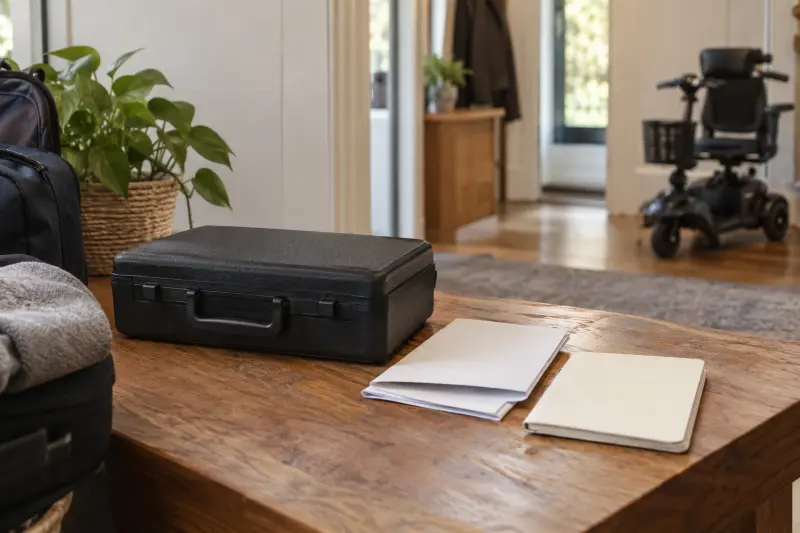
British Airways asks for equipment details including dimensions, unladen weight, installed batteries and instructions to prevent unintended operation. Its information also notes circumstances where carriage may not be possible, including loading constraints on some smaller aircraft. This is an example of why a generic product description cannot decide the result for an actual booking.
Read the response carefully. “Mobility scooters can travel with us” is different from an answer that addresses your model, configuration and itinerary. Ask the carrier to identify any remaining conditions in ordinary language. Keep all replies with the booking, including a statement that a component must be removed or handled separately.
A supplier's “airline compliant” wording can be a starting point for that enquiry. Pride's US Go Go Super Portable product page qualifies its airline description by airline approval. It does not certify acceptance on every aircraft. Avoid paying a premium for that phrase alone; choose between suitable models using actual confirmed travel requirements and everyday needs.
Plan assistance while the scooter is out of reach
Write down what happens between handing over the scooter and receiving it again. The traveller may need assistance to reach a gate, board an aircraft, make a connection or reach the arrivals collection point. Explain the actual support needed to the carrier or airport service, without assuming that transporting the device automatically arranges that support.
Ask where handover is expected and where the equipment is normally returned. Then ask how those arrangements vary at the specific airports. A request to use the scooter until a gate is useful, but it is not evidence that every terminal or connection can offer the same handover. Keep an alternative assistance plan available.
Consider the person's practical needs during the interval: access to essential personal items, communication with staff, an accompanying person's role and enough time for the agreed assistance. These are individual arrangements. A travel article cannot assess transfer ability or prescribe a method of moving between seats; discuss those needs with the appropriate assistance team and professional adviser.
Keep essential documents with the traveller rather than in a bag attached to equipment that may leave them. A short paper summary can state the equipment identity and assistance request, while detailed private health information is shared only where necessary through an appropriate channel. Good preparation reduces ambiguity without exposing more personal information than the process requires.
Treat a connection as its own equipment decision
A connecting journey introduces another loading operation and sometimes a different aircraft type or carrier. Map each leg separately, even if a booking is issued as one itinerary. Ask whether acceptance and assistance details have been recorded for the connection, rather than assuming an approval on the first flight automatically appears on the second.
Consider how much time the proposed connection leaves for assistance and equipment handling. Do not apply an invented minimum connection time from a general blog. Ask the booking provider and assistance team whether the itinerary is practical for the traveller's needs. If the connection is changed, repeat the relevant equipment and assistance checks.

For a fictional example, a traveller compares a direct flight with a cheaper two-flight itinerary. Both options appear to accept the same device in principle. The second option still has an unanswered question about the smaller connecting aircraft and the handover location. The fair comparison records that uncertainty alongside the fare; it does not call the cheaper ticket a complete bargain.
A change in carrier or flight number should trigger a review of the stored confirmation. Keep the enquiry sheet easy to update. Add a “checked after latest change” date so a family member can see whether the documents describe the current booking. That small administrative habit is more useful than assuming an old acceptance email remains sufficient indefinitely.
Check the destination beyond the terminal doors
Aircraft acceptance does not decide whether the scooter can be used conveniently after arrival. Ask the accommodation about the actual access route, lift dimensions where relevant, available storage and approved charging arrangements. A general statement that a hotel is accessible may describe facilities unrelated to the particular device or room you have booked.
Give the transfer provider the device's transport dimensions and weight, and ask what equipment and assistance they provide. A vehicle described as spacious is not a verified transport solution. If a lift or ramp is involved, its provider must establish compatibility with the actual equipment and the intended handling arrangement.
For electrical questions, ask the scooter manufacturer or supplier about the charger supplied for the destination and the locally suitable power arrangement. A plug adaptor changes a plug shape; it does not, by itself, establish that a charger and electrical setup are appropriate. Do not improvise a charger substitution for a holiday.
Check the intended outings separately. A compact travel scooter chosen for aircraft handling may not match every destination surface or route. Discuss those conditions with the provider and look for practical alternatives where needed. Hiring appropriate local equipment can be worth investigating, but availability, fitting, condition and support all require confirmation rather than an assumption that rental is always easy.
Buy only the travel items the confirmed process needs
Travel preparation can attract a long list of accessories: covers, straps, tags, bags and spare batteries. Start with the airline's requirements and manufacturer-approved handling plan. Put each proposed purchase beside the task it solves. An accessory that merely looks like travel equipment should not become an automatic expense.
A cover can make identification or access to required controls more difficult if it is unsuitable for the process. Ask whether the carrier accepts it and how instructions and labels remain available. A water-resistant storage cover is not automatically a protective transport case, approved restraint or packaging for dangerous goods.
Spare batteries require an explicit enquiry. Do not assume that acceptance of the fitted battery extends to any additional battery, or that extra range at the destination outweighs carriage restrictions. Ask the airline about the exact spare and the manufacturer about compatibility. Include its weight and permitted handling in the travel sheet.

A plain document wallet and a privately completed identification label may be enough for the paperwork task. Use items already owned where they meet the confirmed requirement. The goal is a clear, workable journey, not a collection of travel-branded add-ons. Spend on an accessory only when its fit, purpose and handling have been established.
Use a trip-readiness comparison before choosing
Compare candidate scooters with a small trip-readiness table. Give each a row for everyday suitability, exact transport dimensions, documented weight, battery evidence, operating-carrier response, airport assistance, destination charging and local support. Mark each entry confirmed, pending or unsuitable. Do not turn unresolved technical details into a star rating.
In a fictional comparison, Candidate A has a well-documented battery but no confirmation for the return carrier. Candidate B has carrier confirmation but the hotel cannot yet identify an appropriate storage and charging location. Neither is “ready” merely because its product page features an aircraft picture. The next action is a specific enquiry, not an immediate purchase.
Keep everyday use in the same table. A scooter bought for one flight may be used at home for years, so the travel advantage should not erase poor fit or impractical local service. Conversely, a suitable everyday scooter might be awkward to transport, making destination hire or a different itinerary worth comparing.
Do not score clinical suitability yourself. Record the appropriate provider or professional input where needed, and keep that evidence distinct from the carrier's transport decision. A good table exposes separate decisions and who needs to answer them. It helps the buyer see what is actually known without pretending that a calculator can approve a device.
Make a simple condition and document record
Before handing over equipment, keep a dated record of its identification and visible condition, without performing unapproved disassembly or tests. Ask the carrier what documentation is useful and how concerns should be reported. The purpose is clarity if there is a problem, not a guarantee that every claim will be accepted.
Store purchase information, provider contacts and the relevant carrier correspondence somewhere available to the traveller. If the device is returned with damage or behaves differently, ask airport staff how to report it and contact the supplier for appropriate advice before relying on it. Do not attempt an electrical repair to avoid interrupting a holiday.
Find the carrier's current reporting process and any applicable time requirements before departure. These can depend on jurisdiction and circumstances, so a general guide should not invent a universal deadline. Note the correct desk, form or contact route privately with the booking. Ask how the traveller can obtain a record of the report.
Also discuss a practical interruption plan. That might involve contacting the accommodation, seeking suitable local equipment or changing an outing while professional advice is obtained. Availability is not assured, and an insurance policy's cover depends on its actual wording. Check the relevant terms rather than treating a travel policy or product warranty as automatic replacement protection.
Decide whether the purchase solves the actual journey
The final question is whether the chosen arrangement meets the traveller's needs with the important uncertainties resolved. A lightweight folding scooter may make one handling task easier, but no single specification approves the complete trip. Bring together the carrier decision, assistance plan, destination arrangements and appropriate suitability advice.
If an essential answer remains pending, pause that part of the commitment. This does not mean every trip requires new equipment or that flying with a scooter is inherently impractical. It means a purchase justified by travel should be supported by the particular journey, rather than by a broad promise from a retailer.
Compare a no-purchase path fairly. Using existing suitable equipment, choosing a different itinerary, requesting airport assistance or investigating an appropriately assessed local hire can be sensible options. Each has its own practical requirements. Avoid presenting hire as a universal answer or treating assistance as a substitute for support the traveller genuinely needs.
Keep the completed trip-readiness sheet for future bookings and review it whenever the device, battery, airline, aircraft or destination changes. Documented acceptance for one journey is useful evidence of that journey only. The best buying outcome is a device and travel arrangement the person can actually use, with a clear reason for every extra item purchased.
MAKE THE SPEND MEANINGFUL
Before adding to the basket.
- Use an existing document wallet and offline copies instead of buying a branded travel organiser.
- Compare a suitable existing scooter with destination hire and different itineraries using actual confirmations.
- Leave spare batteries and covers out of the budget unless their purpose, compatibility and carriage are confirmed.
How this guide was prepared
AI-assisted editorial research, checked against the linked primary sources. Product testing and a credentialed individual review are not claimed.
AI-assisted, source-checked editorial; no hands-on test, human expert review or personal suitability assessment claimed
How we use sources and AI assistance ↗Sources & fact checks
The guide separates sourced facts from editorial questions and examples. We have not claimed hands-on product testing. How we use sources and AI assistance.
- British Airways: mobility-device information, aircraft constraints and battery handling; confirm actual operating carrier ↗
- FAA PackSafe: US aircraft rules distinguish battery chemistry, protection and removal arrangements ↗
- Pride Go Go Super Portable SC15M: US product specification and airline-approval qualification ↗
Found an error or an outdated detail? Contact the editorial team.