
In brief
Identify the exact toilet, fixing arrangement and personal support task before choosing a raised seat. Check the manufacturer’s compatibility limits and instructions. Added height is not automatically the right height, and arm supports or enclosed fittings can change the comparison.
Documented options
A clearer comparison.
Research options based on manufacturer documentation. These are not results of hands-on testing. Manufacturer links are informational; no commission relationship is currently active.
IN THIS GUIDE
Start with the task that has become difficult
A raised toilet seat should be considered because of a practical requirement, not because extra height sounds inherently better. Describe what has become difficult in the bathroom routine and ask for suitable personal advice. This guide helps organize compatibility and buying questions; it does not prescribe a height, support configuration or technique for sitting or standing.
Write your task separately from the proposed product. 'I want the toilet routine reviewed' leaves room for an appropriate answer; 'I must buy the highest riser' already assumes one. A professional assessment might identify a seat configuration, support arrangement or another solution. Shopping information becomes useful after the relevant requirements are understood.
Include the whole routine: entering the room, approaching the toilet, accessing clothing and hygiene items, any help provided, and leaving. Keep private details limited to what the relevant professional needs. A family member can help prepare notes, but the user's own experience and preferences should remain central to the conversation.
If the question is urgent or relates to a change in personal ability, use the appropriate care or assessment route rather than treating an online purchase as a substitute. There is no universal 'best height for seniors' supplied here. The worthwhile buying decision joins a personally appropriate arrangement to an actual compatible toilet and an understandable ownership routine.
Identify the actual toilet and access to its fittings
Record the toilet manufacturer and model where available, along with photographs of the relevant shape and mounting area. Avoid dismantling the existing arrangement simply to collect information. Ask the supplier what details are needed to establish compatibility. 'Standard toilet' is often too vague for a confident product answer.
Describe whether the toilet is floor-standing or wall-mounted and whether relevant fittings are accessible or enclosed. These observations can affect the product conversation. They should not become your own installation approval. If you cannot identify the arrangement, a qualified installer or manufacturer contact can help establish what the proposed equipment requires.
Etac's UK Hi-Loo Fixed page gives a concrete limit: that example is not suitable for wall-mounted toilets with enclosed fittings. The same page's broad fit description should not erase that restriction. This is why the details beneath an appealing product summary matter, and why a specific model boundary belongs on the buying sheet.
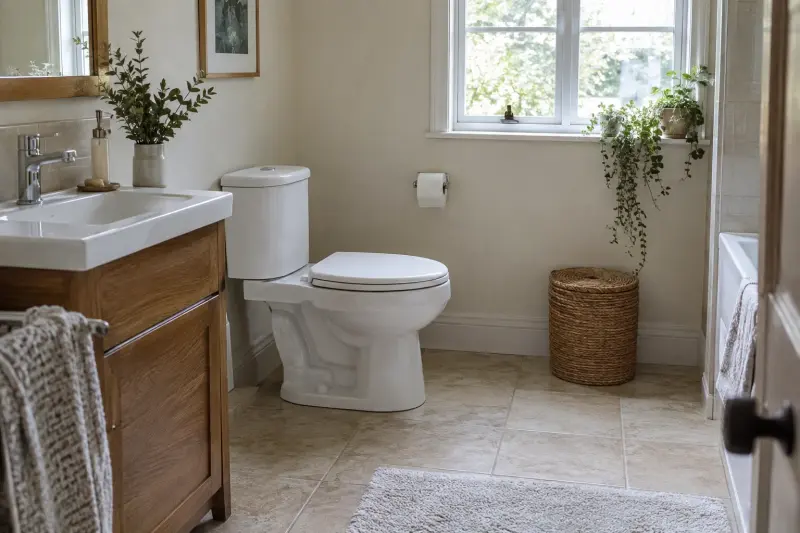
Keep the toilet identification with the proposed seat identification. If a bathroom replacement is planned, tell the assessor and supplier before ordering an adaptation for the current toilet. A new fixture may change the compatibility question. An accessory can be inexpensive compared with renovation and still become an unnecessary purchase if the underlying toilet is about to change.
Understand that mounting categories answer different questions
A bracket-mounted riser, a fixed-mounted arrangement and a freestanding toilet chair are different formats. They bring different questions about the existing fixture, room space, handling and setup. Do not rank them simply by how much height they add or how easily a product photograph appears to sit on a toilet.
Etac's product guide distinguishes these categories and their available configurations. Use it as a manufacturer example of why format needs to be specified. It does not establish personal suitability or make every product in a category fit your fixture. Ask which precise arrangement is being proposed and why it addresses the assessed task.
For a removable format, discuss who handles it, when it is moved and how the intended setup is restored under the instructions. For a fixed arrangement, ask who installs it and what access is needed. For a freestanding category, include its occupied area and relationship to the toilet in the professional review.
If several formats are relevant, create separate candidate rows with their own evidence. A low-priced removable item and a professionally installed support arrangement are not equivalent merely because both are called toilet aids. The comparison should preserve what each includes and which requirements remain unanswered. That makes a modest appropriate option easier to identify without oversimplifying the task.
Separate added height from total seating height
A product's stated added height is not the same as the final seating arrangement in your bathroom. The existing toilet, what remains or is removed under the instructions, and the selected configuration all matter. Ask the supplier and assessing professional how the relevant dimensions should be recorded for the exact proposal.
For a paper-only arithmetic example, a fictional existing reference height of 40 centimetres plus a fictional 6-centimetre addition would total 46 centimetres if the assumed reference and combination were correct. That calculation does not recommend 46 centimetres for anyone, confirm the installation method or show that the existing seat remains. It simply illustrates the difference between two dimension labels.
Keep the measured or documented reference and proposed addition in separate fields. If a listing uses inches while the fixture record uses centimetres, preserve the original number and label any conversion. Avoid rounding a close or uncertain question into a confident answer. Where actual fitting precision matters, ask the responsible provider to confirm it.
More height is not automatically more suitable, and a lower price for one size is not a reason to ignore the assessed requirement. Request personal advice where the seating arrangement is uncertain. A product may be available in several heights without every option being appropriate for the same person or toilet.
Compare the complete support configuration
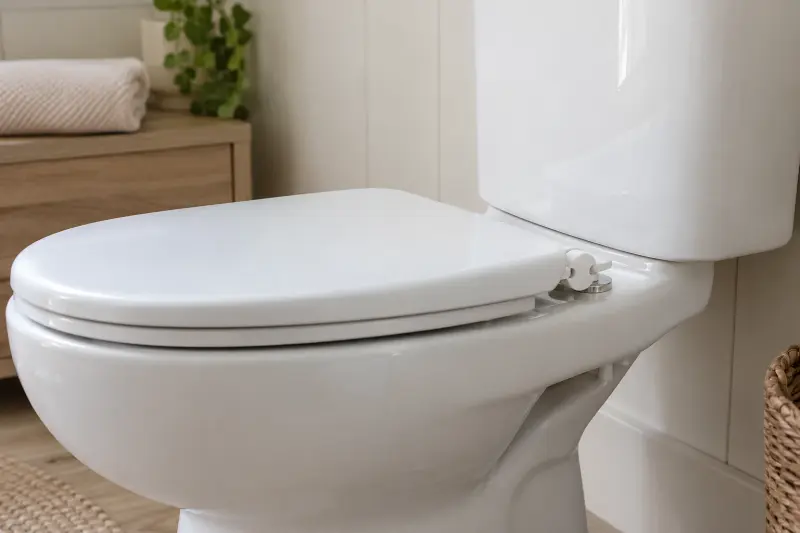
If arm components or another support feature are part of the assessed arrangement, keep them in the product specification before comparing costs. A listing without those components may describe a different offer. Ask whether the selected components are included, optional approved parts or part of another model variant.
The UK Hi-Loo Fixed documentation distinguishes versions with and without arm supports. That demonstrates a configuration question, not a personal recommendation to use a particular arrangement. Read the exact variant's current instructions and have its use assessed appropriately. Do not infer a suitable number or position of supports from the available space alone.
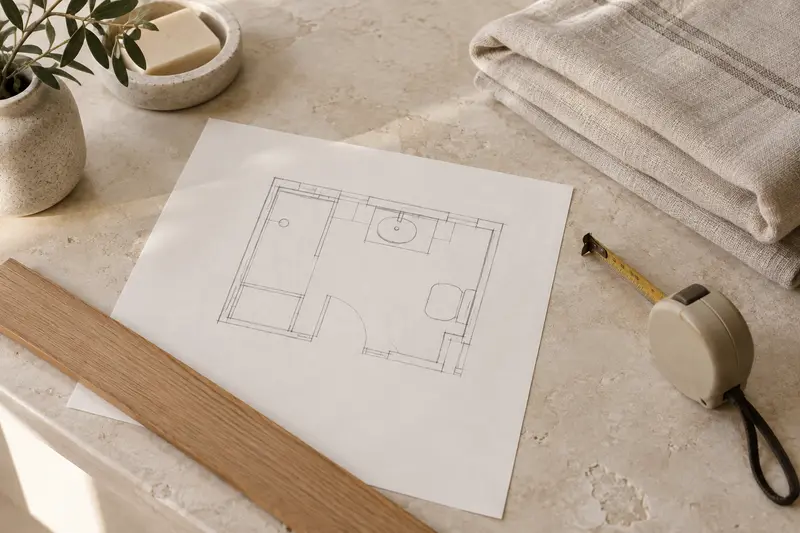
Compare overall occupied width with the usable room, not just the seat's opening. Add nearby walls, controls, doors and hygiene storage to a simple sketch. A support component can affect access and shared use. The product fitting on the toilet is only one part of understanding how the complete arrangement will work.
Avoid stacking or adding unrelated cushions, pads or risers to achieve an assumed target. Such additions change the arrangement and may not be covered by the product's intended use. Ask about approved components and the assessed requirements instead. Optional comfort preferences can be discussed, but they should remain distinct from required support and documented compatibility.
Include access to everyday items and care tasks
A purchase can change how the room is used even when its footprint looks modest. Describe where toilet paper, clothing and other necessary items are reached in the normal routine. If a support component changes access, bring that to the assessment. Do not assume a side-mounted accessory solves the question without checking its intended use and compatibility.
Ask how the proposed arrangement is cleaned and which parts may be handled or detached under the relevant instructions. Include the toilet area behind and around it where appropriate. Someone who uses the equipment comfortably may still need help with those care tasks. Allocate that responsibility before selecting a product solely for ease of fitting.
Consider the actual helper or household member who will maintain it. Can they follow the approved handling routine and restore the setup as instructed? Keep the document accessible. If several people provide help, a clear product record can prevent an approved configuration being changed unintentionally because parts look removable.
A low-cost improvement may be to move existing hygiene storage to an appropriately reachable location after the routine is reviewed. It does not replace needed support or make an unsuitable seat compatible. Keeping storage, equipment and care together in the conversation can identify the smallest useful change rather than a collection of unrelated accessories.
Ask who confirms compatibility and completes setup
Have the seller identify who confirms the toilet-and-seat combination and who completes any assembly or fitting. Delivery alone does not answer those questions. If the product is provided through a service, ask what the handover includes. If bought separately, clarify whether installation advice or a professional visit needs arranging.
Request the exact current instructions before deciding that fitting is simple enough to manage without help. A product advertised as easy to mount still has its own conditions and limits. This guide does not provide a fastening sequence, adjustment prescription or technique for checking a fitted aid. Those belong to the documentation and appropriate responsible person.
Ask what happens if the existing toilet is not compatible when inspected. Will the provider propose another relevant product, pause the work or revise the quote? Put the process in writing where possible. Do not accept an improvised mounting method or substitute merely because the original product has already been purchased.
At setup, keep the specified model and components connected to the assessment and fixture record. If a different variant arrives, ask which earlier checks need reconsidering. A similar family name or colour is not enough to transfer the evidence. The supplier should be able to identify the delivered arrangement and provide the applicable instructions.
Use a demonstration to investigate handling, not prove suitability
Ask for a demonstration of the exact format and configuration being considered. Have the demonstrator identify any difference between the showroom arrangement and your intended setup. A display toilet with accessible fittings or more room around it may not represent your bathroom. Record that limitation instead of treating the demonstration as a final compatibility answer.
Focus on understandable questions: which parts are included, how permitted adjustments are explained, how care tasks are handled and where approved accessories attach. Where sitting, standing or transfers need assessment, do not turn the visit into an unsupported trial. The personal and installation questions should remain with the appropriate professionals.
A companion can take notes or photograph documents with permission, but avoid recording another customer's private situation. Ask the actual user to describe preferences and concerns. A helper's ease with a mechanism is useful only if that helper will perform the task at home. It should not substitute for the intended user's experience.
Finish with a short evidence note. For instance: 'supplier showed selected support configuration; fitting to the identified home toilet remains to be confirmed'. That is a useful next step. A demonstration can narrow the shortlist without proving every part of the final arrangement, and its limitations should stay visible when comparing prices.
A compatibility example with two separate unresolved questions
Imagine an illustrative buyer with a wall-mounted toilet and enclosed fittings. They find a riser advertised as fitting 'most toilets', offered in two heights and with an arm-support option. The attractive price and familiar product photograph make it appear to be a straightforward purchase.
The first question is fixture compatibility. If the exact documentation excludes the identified mounting situation, the broad headline cannot override it. The buyer should ask about a documented appropriate alternative. Ordering the same model in another height would not necessarily address that mounting limitation.

The second question is the personally appropriate configuration. Even after a compatible category is identified, height and support requirements remain to be established. A product's availability with arm components does not decide whether or how they belong in the assessed arrangement. Keep those questions separate so that resolving one does not silently mark the other as complete.
The buyer's sheet can therefore say: 'toilet identified; original candidate excluded by documented mounting condition; alternative and personal configuration pending'. This is a useful purchasing outcome, even before a new item is selected. It prevents a repeated mismatch and guides the next conversation toward the actual unresolved tasks instead of the cheapest listing.
Compare complete setup and applicable seller terms
For relevant candidates, list the exact variant, included supports, any approved necessary components, delivery, setup and explanation. If the supplier has not quoted an essential service, mark it unquoted. A price for the bare seat should not be compared with a complete fitted arrangement as though both deliver the same result.
Ask which optional extras can be omitted without changing the established requirements. A particular finish or approved storage accessory may be discretionary; a specified support component may not be. Reducing optional extras can be a sensible budget choice. Removing a required element merely to reach a lower total changes the comparison.
Clarify seller return terms before buying, including what happens after assembly, installation or use, and who arranges collection if needed. Rights and policies depend on market and circumstances. Do not assume that a bathroom product is automatically excluded from all returns or that every online purchase can be tried freely at home.
Retain the product description, relevant instructions, quote and correspondence. If the supplied item differs from the agreed version, these records help identify the issue. You can leave prices blank until comparable offers are available. Missing compatibility or service information should not be converted into an imaginary saving in a neat budget table.
Use assessment and service information in its own market
In the UK, the NHS home-adaptations page describes a route through local services for assessment of difficult everyday tasks and possible changes. That is a useful starting point when choosing equipment requires more than reading a product page. It does not promise a named seat, a particular configuration or an individual funding decision.
Ask the relevant local service how to request the appropriate assessment and what information is needed. Describe the difficulty and room context rather than presenting a retailer's selected item as the only acceptable solution. If a service recommends equipment, clarify supply, setup, care and support responsibilities.
Readers in other countries should verify the local health, social-care or community pathway and relevant product arrangements. A UK manufacturer page is not a benefit entitlement elsewhere. Even where a family name is sold internationally, regional variants, providers and product documents can differ. Keep local instructions and support information together.
An existing assessed arrangement may remain useful and avoid another purchase, but changing personal requirements or fixtures deserves review. Bring existing equipment information to the conversation so that appropriate items can be considered alongside new candidates. The objective is a manageable routine, not automatically adding another product because a category is commonly marketed to older adults.
Finish with an exact-model compatibility card
Use a card with six entries: practical task, toilet identity, mounting evidence, proposed configuration, care responsibility and ordering terms. Add the responsible professional or supplier to each unresolved question. This helps keep personal suitability and product fit distinct while still bringing them into one decision.
For dimensions, retain labels and sources rather than a single estimated total. For supports, list the actual approved components. For fitting, write what has been confirmed about the identified toilet and what remains pending. The card should help someone else follow the reasoning without implying that you have prepared a clinical or technical approval.
Review the card against the final order. Confirm the regional model, chosen variant and included services. Keep the current instructions and support contact with the delivered equipment record. If the proposed item changes, revisit the affected fields. An earlier positive conversation about one arrangement should not automatically authorize another.
A good result can be a suitable documented purchase, a simpler relevant option, continued use of an appropriate existing arrangement or a request for further assessment. The card is useful because it directs the next action and prevents uncertainty from being hidden by a size label, broad compatibility claim or low advertised price.
MAKE THE SPEND MEANINGFUL
Before adding to the basket.
- Retain an appropriate existing assessed arrangement if it still meets the current task and instructions.
- Move existing hygiene storage where appropriate after the routine is reviewed, rather than buying an unrelated accessory bundle.
- Investigate the relevant local assessment service before independently choosing another seat configuration.
How this guide was prepared
AI-assisted editorial research, checked against the linked primary sources. Product testing and a credentialed individual review are not claimed.
AI-assisted, source-checked editorial; no hands-on test, human expert review or personal suitability assessment claimed
How we use sources and AI assistance ↗Sources & fact checks
The guide separates sourced facts from editorial questions and examples. We have not claimed hands-on product testing. How we use sources and AI assistance.
- Etac UK Hi-Loo Fixed: model variants, mounting limitation and documents ↗
- Etac raised-toilet-seat product guide: distinct mounting categories and configurations ↗
- NHS: UK home adaptation assessment pathway; eligibility is individual ↗
Found an error or an outdated detail? Contact the editorial team.