
In brief
Check the exact connection, compatible handset and bracket, required hose route and cleaning instructions. A longer hose may improve a particular reach task but can add a loop or obstruction. A slide bar or handset holder should not be assumed to function as a support rail.
IN THIS GUIDE
Identify the improvement you actually want
A new handheld shower can solve a specific inconvenience: holding the handset more comfortably, reaching the intended washing area, returning it to a holder or selecting a preferred spray. Start with the inconvenience, then separate it from technical questions such as a leak or poor performance. Buying a longer hose does not automatically address every one of those issues.
Write the routine in a few steps. Where is the handset at the beginning? Who retrieves it? Which areas do you want to reach? Where is it placed while another task is done? Include seated washing if that is part of the assessed arrangement. You are describing needs, not trying unfamiliar movements to prove a product will work.
Decide whether you want to replace only a hose, only a handset, a holder or a complete assembly. These are different purchases. A bundle can be useful when all its parts are relevant, but it can also add an unnecessary slidebar or duplicate a working component. Ask a supplier which parts of the existing system can appropriately remain.
If personal grip, support or reach is uncertain, discuss the task with a suitable professional. A shower-handset rail should not be assumed to be a grab rail. Keep water-delivery convenience separate from body support unless the exact product documentation explicitly covers both. The aim is a useful washing arrangement, not an improvised support solution.
Name the existing parts before comparing replacements
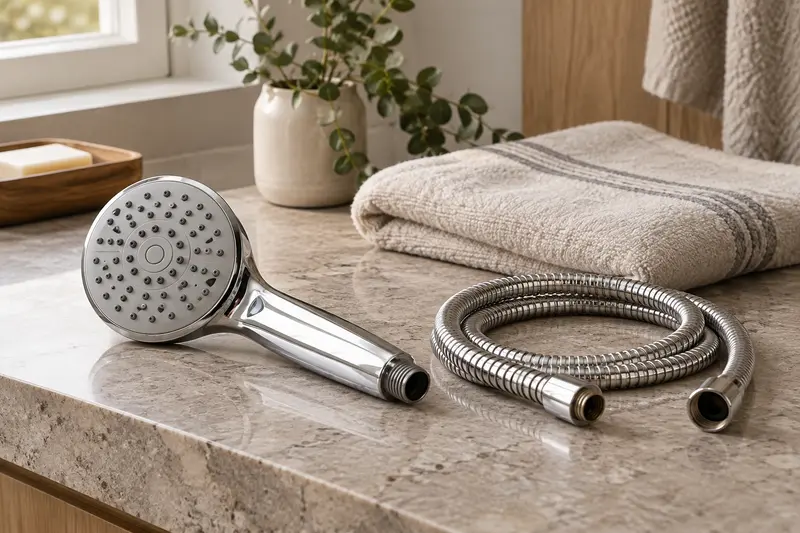
Identify the handset, hose, holder or bracket, shower arm or outlet and the controls that select water flow. Take photographs and note any model information you can find without dismantling the system. Ask the manufacturer or supplier to help identify an uncertain component. Similar-looking products are not necessarily the same model or connection arrangement.
Moen's identification guide describes one North American shower-arm-bracket format: the hose connects the handset to a bracket which connects to the shower arm. It also lists different models. This is useful for understanding that several parts sit between the hand and the water outlet; it is not a universal description of every wall outlet or shower system.
A seller's term such as 'universal' needs clarification. Ask which connection and holder compatibility are actually stated for the proposed part. A matching chrome finish or an apparently similar nut does not confirm compatibility. Avoid buying an adapter first and hoping it will make an uncertain combination acceptable.
Create an existing-system card with known model identifiers, photographs, connection questions and the part you want to change. It saves you from repeating a vague request to several sellers. If an installer identifies the system, add that information to the card. Keep uncertain fields labelled as questions until a dependable source confirms them.

Confirm compatibility as a complete combination
Ask the supplier to confirm the proposed hose at both ends: the existing outlet or bracket and the selected handset. Then confirm that the handset fits the intended holder and can be used in that arrangement. A hose connection that is physically plausible does not answer every compatibility or permitted-use question.
Include any relevant existing diverter or combined fixed-and-handheld arrangement in the discussion. If you want to retain a fixed shower head, the replacement plan may involve more than a hose. Ask a qualified installer to review changes to the system where appropriate. This article does not provide a plumbing, sealing or backflow-modification procedure.
The useful written answer is specific: identified existing parts, proposed replacement model and any required approved components or work. 'Should fit' is a starting conversation, not a completed order specification. If the seller cannot identify the system, a manufacturer support contact or on-site assessment may be the next step.
For an illustrative buyer, a new handset looks like it will sit in the old bracket, but the supplier has not confirmed that combination. The buyer can keep the existing card and ask a focused question instead of ordering multiple inexpensive replacements in succession. A small compatibility check can save more inconvenience than a discount on the wrong accessory.
Choose useful hose reach instead of simply more length
The hose has to serve the intended route from its connection to where the handset is used and stored. Record those points on a simple sketch. Ask whether the proposed length and construction suit that arrangement. Longer can create additional loose hose to manage; shorter can restrict the task. Neither description establishes the appropriate choice by itself.
Use a paper diagram to explain the route. Show the seat, controls and holder if relevant, along with doors and fixed fittings. You do not need to stretch or route a live hose in an awkward position to investigate every possibility. A supplier demonstration can clarify handling, and a professional can review personal-use concerns.
Moen's 3869 specification illustrates an exact documented hose-and-slidebar assembly. Its listed hose length belongs to that model version, not to every Moen handheld shower. The sheet also distinguishes versions. This is a reason to keep the chosen model and current regional document together, rather than use one manufacturer's longest hose as a default recommendation.
Consider where the hose rests when unused. Ask about avoiding an inconvenient route across the ordinary movement area and whether the holder arrangement can be improved. Do not fasten the hose to an unrelated support rail or alter the product to solve an unanswered routing problem. A different appropriately installed holder or relevant assembly may be a better option.
Compare grip, weight and adjustment effort
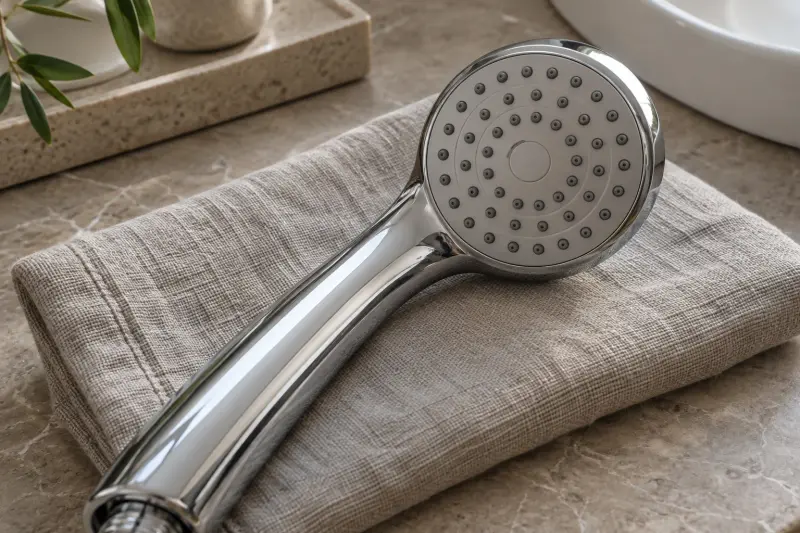
Ask to handle the actual handset where a suitable demonstration is available. Look at whether the grip shape, head size and controls are understandable for the intended user. A large head can look luxurious but may be inconvenient for a particular hand. A small one can look light while requiring a control movement the buyer finds difficult.
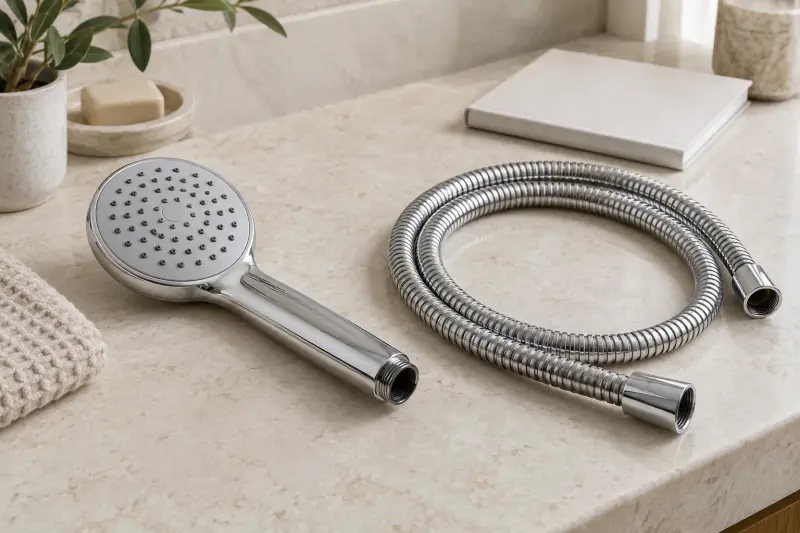
Editorial illustration Keep dry handling and actual-use conditions distinct. A showroom impression can help shortlist candidates, but it does not establish how a person will manage washing with water and soap. Ask what appropriate demonstration or trial is offered and what limitations it has. Do not organize an unsupported wet trial just to answer a shopping question.
Include retrieving and replacing the handset in the demonstration. The bracket position and docking design can matter as much as the grip. Ask which parts of the holder are adjustable and whether the quoted product includes them. A comfortable handset that is awkward to return to its holder can leave the everyday routine unfinished.
Have the actual user and any regular helper describe their own handling preferences. A companion who finds a control easy should not assume it is equally easy for someone else. Record observations precisely: 'selector demonstrated; home holder location still undecided'. This helps compare useful evidence without turning a subjective impression into a claim that a model suits everyone.
Spray counts and convenience features need a purpose
A product with many spray settings is not automatically more useful than a simple single-function handset. List which function you actually want and when you would change it. If one comfortable pattern meets the task, additional modes may have little value. If a selectable pattern is important, the control's handling deserves as much attention as the advertised number of modes.
Ask the supplier to demonstrate the exact selector, docking method and any pause or diverter function. Keep water controls and handset features clearly identified. A feature described with a familiar name can behave differently between models. Follow the exact instructions rather than assuming a button will fully shut off the system or change temperature.
The Moen 3869 sheet identifies its example as single-function and describes an adjustable holder angle. Those facts illustrate two different purchase questions: spray variety and positioning. A buyer who mainly wants a reachable holder might gain little from an expensive multi-pattern head if the positioning problem remains unresolved.
Avoid treating 'massage', 'therapeutic' or similar marketing words as evidence of a medical benefit. This comparison addresses preferences and practical washing tasks. If a condition affects sensitivity or appropriate use, seek relevant personal advice. You can value a pleasant spray without making a health claim or choosing a feature you do not understand.
Separate flow specifications from experience at home
A flow figure in a specification describes the identified product under its applicable conditions. It does not independently promise how the shower will feel in your home. Ask the installer or supplier about the relevant water system and whether the proposed assembly is appropriate. Record limitations instead of assuming a larger headline figure will fix an unsatisfactory experience.
The Moen 3869 specification distinguishes suffixes and production versions in its flow information. That is an exact-model boundary, not a general rule about all handheld showers. If two listings disagree, ask which version and current regional specification will be supplied. Do not select a figure from an older document because it looks more impressive.
Describe the issue you experience in concrete terms. Is the concern the chosen spray, the reach, an inconsistent system or a damaged component? A product seller may answer the first two; a qualified professional may need to review the system. Replacing multiple components before identifying the problem can create expense without improving the routine.
Keep temperature questions separate from the choice of hose or spray pattern. A comfortable-looking handset is not an anti-scald assessment, and this article supplies no universal water-temperature setting. When the existing system needs technical work or personal sensitivity requires advice, involve the appropriate professional before relying on a shopping comparison.
Treat the holder as part of the daily routine
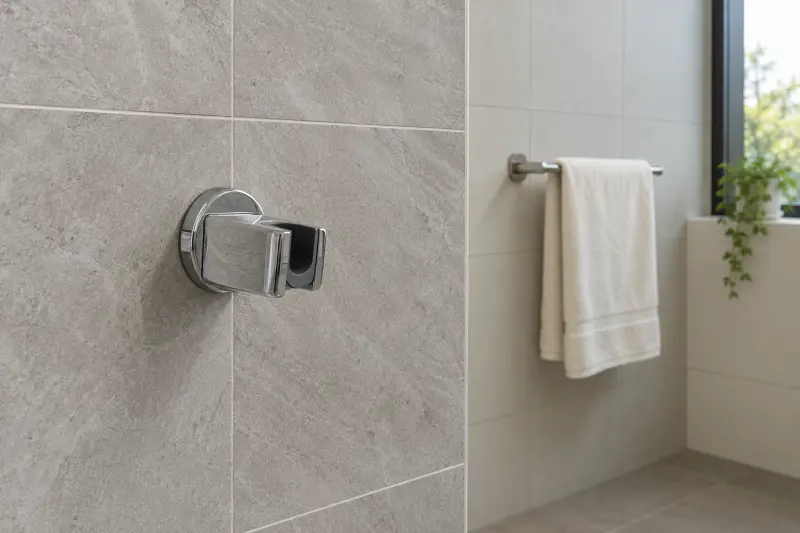
The holder determines where the handset begins and ends its use. Ask whether the proposed position is reachable in the intended routine and whether the mounting method is appropriate for the surface and exact product. A holder that photographs neatly high on a wall may not serve seated washing; a low holder may affect another household member's preferred arrangement.
If a slidebar or additional bracket is proposed, have its installation requirements and permitted adjustment explained. Do not assume it is a body-support rail. Ask what the product is designed to carry and how its documentation describes intended use. Keep a separate grab-rail requirement in the assessment rather than combining two visually similar components without evidence.
Review the hose and holder together. Changing the holder position can change useful reach and the unused hose route. In an illustrative shared shower, a buyer wants easier handset retrieval, while another user wants a different spray height. The appropriate conversation is about an understandable shared arrangement, not simply the longest hose available.
A no-purchase starting point can be to ask whether an existing approved adjustment already addresses the task. Follow the current instructions and seek help if uncertain. If an additional component is needed, buy it for the specific arrangement. There is little value in a collection of low-cost holders that do not match the handset or surface.
Include cleaning, storage and replacement support
Obtain care instructions for the handset, hose, finish and holder. A bathroom cleaner suitable for the enclosure is not automatically appropriate for every plated surface or component. Keep the manufacturer's instructions rather than using a generic descaling recipe from an unrelated product page. This guide does not tell you to dismantle a part or change a safety component.
Ask how the model is identified if a replacement part is needed later. Retain a model card, relevant documents and supplier contact. A hose or holder can have a different identifier from the complete set. Keeping those details makes a later compatibility question more precise and reduces the temptation to choose a visually similar part without confirmation.
For daily organization, decide where the handset and hose will rest when unused under the intended arrangement. If the storage position is inconvenient, include that in the selection. Avoid assuming that a bathroom organizer or hook can carry a component merely because it fits around it. Use components for their documented purpose.
If you notice a leak, damaged part or other concern, follow the applicable instructions and contact the responsible supplier or installer. A care comparison should help you know where to get support; it is not a fault-diagnosis manual. An accessible support route may matter more to a buyer than an additional spray mode rarely used.
Compare a hose-only purchase with a complete assembly
List what the price actually covers: handset, hose, bracket, slidebar, connection components, delivery and any necessary installation. A low-priced hose-only offer may be good value if it is the appropriate compatible part. It is not equivalent to a complete assembly simply because both listings show a handheld shower in the photograph.
Ask which existing components can appropriately remain and which need replacement for the proposed arrangement. Then compare written offers for that same job. An extra bracket or professional visit should be shown as a separate cost rather than disappear until after checkout. Do not assume the most expensive bundle is required to obtain one useful feature.
US FTC online-shopping guidance emphasizes comparing complete costs and checking seller return terms. For this task, record delivery, possible installation, return shipping and any conditions associated with assembly or use. Those practical questions belong to the seller and market; the guide does not promise a universal free trial or refund right.
You can use a blank comparison with columns for parts included, compatibility evidence, useful features and total quoted work. Mark unknown prices or fit questions clearly. This keeps the comparison honest while you obtain information. An unresolved connection question is a reason to seek clarification, not an invitation to buy first because the initial accessory cost is small.
Work through a modest replacement decision
Imagine a buyer who wants to reach the intended washing area while seated and return the handset more easily. The existing spray is satisfactory. Three possible purchases appear: a longer hose, a new multi-function handset and a compatible holder arrangement. These are illustrative options, not recommendations or tested products.
First identify the existing assembly and describe the reach problem. If the supplier confirms that the hose is appropriate but the holder position is the difficulty, a longer hose may add little value. If reach between the connection and the washing position is genuinely insufficient, the hose question stays open. The new spray modes remain optional because they do not address the stated problem.
Next compare only the changes supported by the evidence. Ask for exact compatibility and any needed installation. Have personal reach or support concerns assessed where relevant. The buyer might choose a modest component, an appropriate complete assembly or no purchase after an existing permitted adjustment is explained. All are possible outcomes; the facts decide which deserves consideration.
Write the reason for the decision in one sentence, followed by unresolved questions. For example: 'The proposal addresses handset retrieval; supplier confirmation of the existing bracket combination is pending.' That is clearer than 'best value'. It records why the item was considered and prevents an unrelated comfort feature from taking over the purchase.

Use a connection-and-reach matrix before checkout
Create rows for the outlet or bracket, hose, handset, holder and controls. Give each row an existing identifier, proposed change and source of compatibility confirmation. Then add the daily task that the change is meant to improve. This small matrix joins product information to the routine, which a list of technical specifications alone cannot do.
Add a column for what remains unresolved. 'Manufacturer identified', 'supplier says compatible' and 'installation review pending' are different evidence states. Preserve them. A tidy spreadsheet should not turn a question into a positive answer simply because a cell would otherwise be empty. If the proposed model changes, revisit the relevant rows.
Use the same record for a supplier demonstration and final order check. Confirm that the quoted version includes the components and features discussed. Keep current regional instructions and return terms alongside it. International examples in this guide are prompts for questions; they do not establish local availability or approval of your planned combination.
The worthwhile purchase is the one that addresses the actual task with a documented appropriate arrangement. More spray patterns, a longer hose or a premium finish can be pleasant preferences, but none replaces compatibility or useful reach. Keep the comparison focused, buy only relevant components and retain the evidence needed for future care or replacement.
MAKE THE SPEND MEANINGFUL
Before adding to the basket.
- Ask whether an existing permitted adjustment or working component can meet the task before replacing the whole set.
- Buy only a confirmed compatible hose or holder when that is the appropriate limited solution.
- Prepare a component card and room sketch using existing documents and paper before buying accessories.
How this guide was prepared
AI-assisted editorial research, checked against the linked primary sources. Product testing and a credentialed individual review are not claimed.
AI-assisted, source-checked editorial; no hands-on test, human expert review or personal suitability assessment claimed
How we use sources and AI assistance ↗Sources & fact checks
The guide separates sourced facts from editorial questions and examples. We have not claimed hands-on product testing. How we use sources and AI assistance.
- Moen Solutions: identify handheld showers on shower-arm brackets; North American models ↗
- Moen 3869 specification sheet: version-specific hose, slidebar and flow data; North American example ↗
- US FTC: online comparison, complete costs and seller return terms ↗
Found an error or an outdated detail? Contact the editorial team.