
In brief
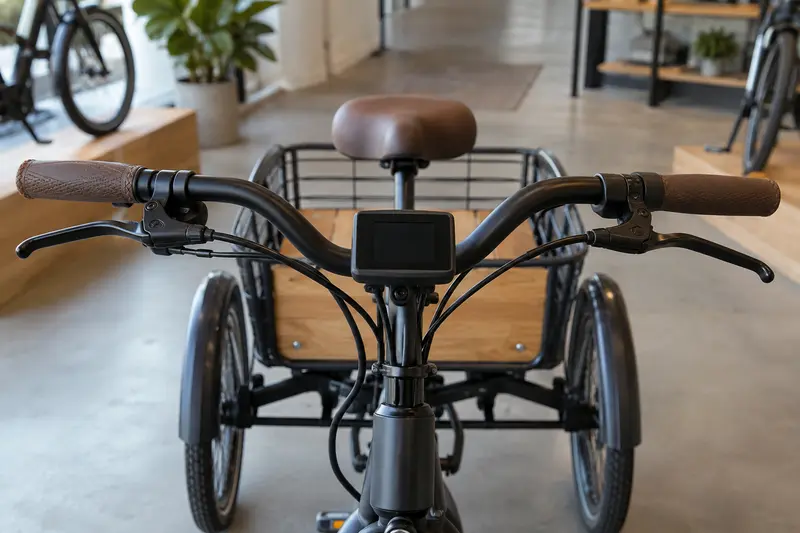
Have a dealer explain and demonstrate the exact controls before a supervised test ride. Compare braking, power selection and parking as separate tasks. Do not infer ease of operation or stopping performance from the word hydraulic, a large display, or a claim that three wheels make riding automatically simple.
IN THIS GUIDE
Identify what each control actually does
Start with the exact model and its manual. Label the controls on a photograph or a simple handlebar sketch: brake levers, assistance selection, throttle if fitted, lights and any parking mechanism. Ask which functions can activate propulsion and which settings reset when the vehicle is switched off.
Lectric’s official manual library is organized by model generation and region. That matters when comparing photographs or used trikes with different controls. Request a current manual and dealer explanation for the unit in front of you. If a button or lever remains unclear, leave that task unresolved before riding.
A control map should describe functions, not merely name components. For each lever or button, ask what action it produces, when that action is available and what the user should understand before operating it. A brake lever, a power setting and a parking mechanism are different systems even when they share the same handlebar area. Have the dealer identify the actual configuration and manual rather than transferring an explanation from another trike. Model generations and regional versions can matter.
Begin with the user's ordinary questions: how is the intended assistance chosen, how is movement stopped, what information does the display provide, and how is the vehicle left stationary? Write these as questions for the demonstrator. This article does not provide an operating sequence, because that must follow the exact instructions and suitable supervision. If the supplier uses unfamiliar terminology, ask for an explanation in plain language and a reference to the correct manual. Understanding a feature's name is not the same as understanding the task.
For a hypothetical used trike, the seller provides a current brochure showing a different display from the unit being offered. The buyer should ask for the manual and identifier matching the actual controls. A replacement display or controller may also need maker confirmation. Do not assume the brochure proves that the used unit has the same settings or functions. Record any mismatch before arranging a demonstration or paying a deposit. An unexplained modification deserves technical clarification, not an optimistic interpretation based on familiar-looking buttons.
Keep this map private with the vehicle documents. A clearly labelled photograph can help locate a question, but do not publish serial identifiers or claim that a diagram applies universally. Ask how the controls behave after the vehicle is switched off and on, and which functions need further explanation. If a feature remains unclear, the correct next action is another supplier explanation. It is not experimenting with propulsion or adjusting brake components from online advice. The control map makes uncertainty visible before it becomes part of an ordinary journey.
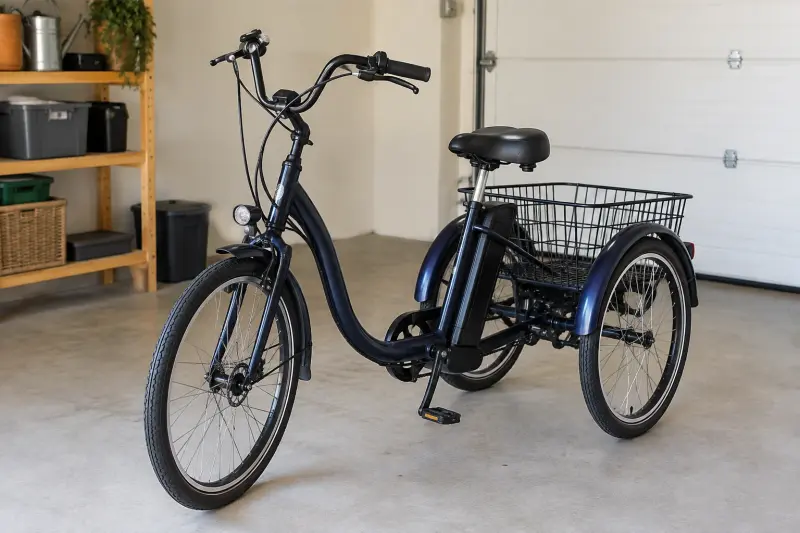
Keep a separate row for the action of finding information. Ask whether the current manual can be downloaded, whether an accessible version is available and which regional support team can explain a confusing section. A QR code alone may be inconvenient if the user prefers paper or cannot access the page during an outing. Ask for a suitable way to keep the exact instructions available. This is a documentation preference to discuss with the supplier, rather than a reason to assume a family member will remember every function. If a later question concerns a fault or an unfamiliar message, having the correct model and document makes the support conversation clearer without encouraging a do-it-yourself repair.
Try the ordinary hand movements
Under supervision, check whether you can reach and operate the needed controls without an awkward change of grip. Use the gloves and glasses you normally ride with where appropriate. Explain a difficult action specifically: reaching the lever, remembering which button to use, or distinguishing a setting on the screen.
An illustrative comparison may reveal that a rider likes a large display but repeatedly presses the wrong assistance button. That is a reason to ask about an approved setup or another control arrangement. It is not resolved by a higher motor rating. Never modify a control or brake component from online advice to force a particular fit.
Control usability combines recognition, reach and the required action. A person might recognize the correct lever but find its operation difficult, or reach a button easily while confusing it with another. Record the specific task rather than using a single easy-to-use label. Ask the dealer what approved adjustments exist and who performs them. Where personal capability is uncertain, appropriate assessment is needed; this buying guide cannot establish hand strength, coordination or suitability from a remote description.
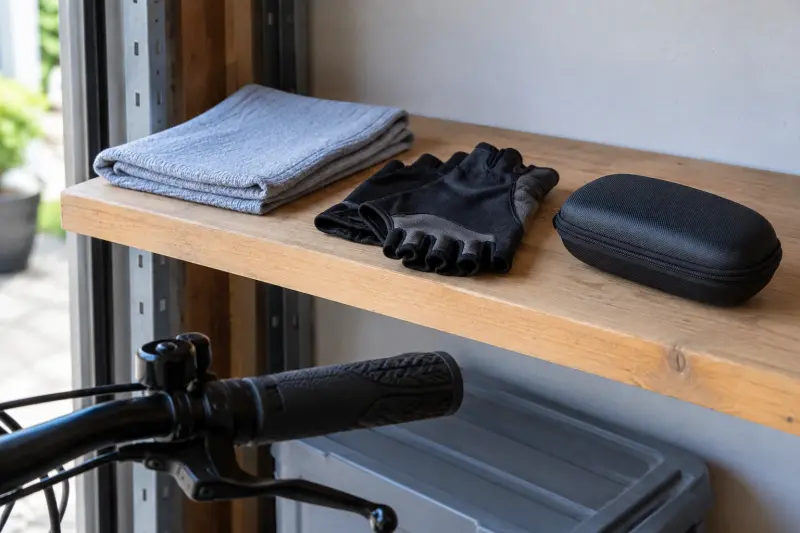
Bring the ordinary items relevant to the demonstration when the supplier considers that appropriate. Glasses, permitted gloves and normal clothing may affect the experience compared with a staged promotional picture. Explain any difficulty without pushing through it to appear comfortable with the model. A controlled demonstration should allow the user to pause and ask questions. The supplier can then distinguish a matter needing explanation from one needing an approved adjustment, another control arrangement or appropriate professional advice.
In a hypothetical comparison, candidate A has a large display with several menus and candidate B uses a simpler arrangement. The rider can see both screens but repeatedly confuses a function on A during the approved demonstration. B therefore deserves consideration on the actual task, provided the remaining fit, route and support questions are answered. This is not evidence that simpler screens are universally better. Another rider may value a feature on A and understand it clearly. The comparison belongs to the person's routine, not a generic feature score.
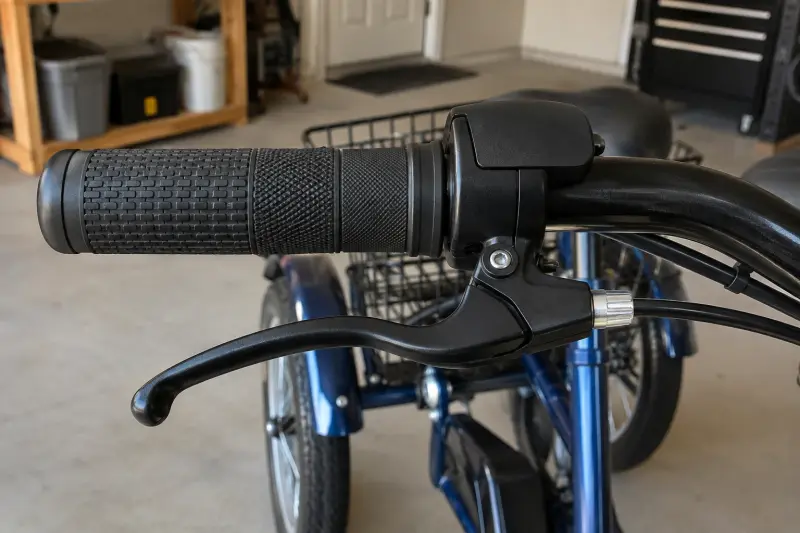
Do not improvise control changes to make the shortlisted vehicle fit. A different lever, grip or controller can create technical and approval questions beyond its physical dimensions. Ask the manufacturer or authorized provider about the exact proposed component. If no approved arrangement answers the need, consider another vehicle rather than forcing the original choice. Keep required control tasks above optional display features in the decision record. A motor upgrade, decorative accessory or larger battery does not resolve an unanswered action at the handlebar.
Separate braking, assistance and parking
Ask the dealer to plan a suitable controlled trial that demonstrates starting, slowing, stopping and the stationary parking process. Follow the manufacturer’s riding instructions. The point is understanding the actions, not measuring stopping distance or simulating emergency manoeuvres yourself. Keep any performance question with the dealer or another appropriately qualified person.
CPSC’s US micromobility guidance emphasizes helmet use and local traffic rules. Choose the test location accordingly; a successful showroom trial does not establish permission to ride on a particular road or path. Record whether turning, surface changes or carrying a normal load require further explanation before a real journey.
A demonstration agenda should treat propulsion, slowing, stopping and parking as distinct topics. Ask the dealer to choose an appropriate controlled setting and explain the conditions for the exact model. Do not create your own emergency-stop test or use a public road to learn an unfamiliar control. The objective of this buying stage is understanding the approved actions with suitable supervision, rather than publishing a stopping-distance ranking or a claim that a particular brake type makes the trike safer.
Terms such as hydraulic describe a design feature, but they do not tell the buyer how a particular complete vehicle will perform in every condition. The condition of components, configuration and intended use still need appropriate provider attention. Ask which routine checks and service requirements appear in the exact owner documentation. Keep technical inspection and adjustment with an appropriately qualified provider. This guide does not prescribe brake maintenance, teach repair or compare performance through invented test results.
A hypothetical demonstration may show that the user understands starting and slowing but needs another explanation of stationary parking. That unanswered task remains important even if the short ride felt comfortable. Ask for the correct manual section and a further demonstration. The parking process at home and at the destination should be part of the transport plan. Do not infer that a three-wheel layout removes the need to understand how the vehicle is secured while stationary, or that a successful first ride completes every ownership question.
Local permission is separate from control understanding. CPSC's US micromobility information directs users to appropriate protective equipment and local rules, but a federal product description does not grant access to every road or path. In the UK, the EAPC rules and route-specific requirements need checking for the actual vehicle. Keep the jurisdiction and source explicit when discussing a planned ride. A dealer's controlled demonstration can answer a product task without determining all the legal conditions of the user's everyday journey.

Take home a control question card
For each control, write its purpose, the action you practiced, the supporting manual page and what still needs clarification. Include how to leave the trike stationary and how to return from an unfamiliar setting. Ask the supplier to answer outstanding questions in writing and identify who can help after delivery.
Choose controls around usable tasks rather than a list of premium features. A less elaborate display or accessory package may be enough when the essential actions are understandable and the setup is appropriate. Arrange another supervised demonstration if needed. You do not owe a purchase because a dealer has spent time explaining the equipment.
The question card should include a place for an unfamiliar situation. Ask whom to contact if a display message appears, a control behaves differently or an ordinary task becomes unclear after delivery. Keep the exact manual and local support route accessible offline. Do not treat a generic troubleshooting video as a substitute for the vehicle documentation. If a safety-relevant function appears faulty or uncertain, seek the appropriate provider's guidance rather than repeatedly operating the system to see whether the problem disappears.
Add the configuration and date to each demonstrated answer. A control explained on a showroom vehicle may differ from one delivered with another regional version or replacement component. At handover, compare the agreed arrangement and ask for any difference to be clarified. Keep the order, identifiers and support details private. If another household member will use or move the trike, ask the supplier what explanation is required for their intended role. Do not assume that watching the first user's demonstration gives everyone the same understanding.
For a hypothetical shortlist, one model has an attractive display but an unresolved brake-control task. Another has fewer optional features, documented local support and understandable controls after an appropriate demonstration. The buyer can compare the second option without feeling that fewer features mean a lower-quality decision. Equally, if a required function is missing from the simpler option, that absence should remain visible. A useful shortlist separates necessary tasks from preferences and gives unresolved questions a clear next action.
Before committing, ask the supplier to confirm the included handover, correct owner manual and service route. Decide whether another demonstration or assessment is needed. Do not allow a temporary offer to close an important question prematurely. This guide organizes buying evidence and practical discussions; it does not certify riding capability, brake performance or road permission. The strongest decision is one in which the user understands the necessary tasks and the remaining technical, individual and regional questions have been answered by the appropriate sources.
What a control-focused handover should explain
Ask the provider what the delivery or collection handover includes before buying. A boxed item, an assembled vehicle and a dealer demonstration are different services. The control-focused scope should identify the exact manual, explain the agreed configuration and show the appropriate ordinary functions under the instructions. Ask whether the appointment includes time for questions and who supplies follow-up support. A leaflet placed in a box is not the same service as an explanation with the intended user.
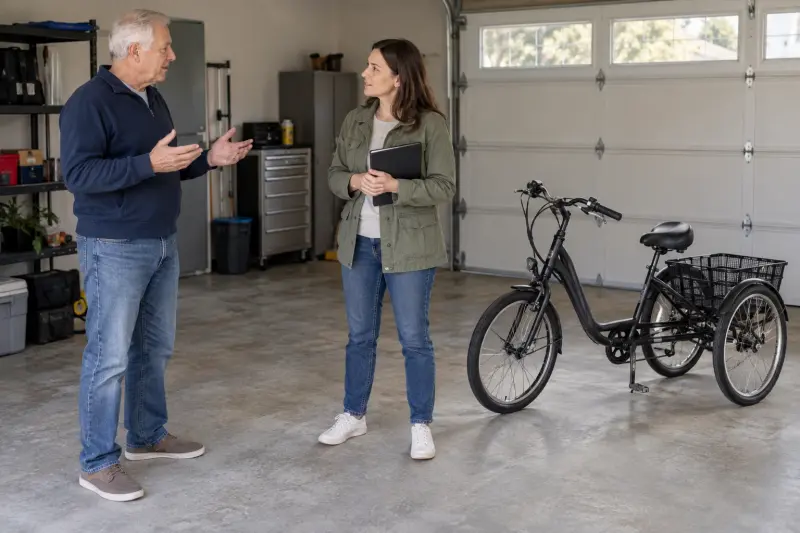
Prepare a short list of the actions that need clarification, including the stationary arrangement and any settings the supplier says should be understood. Avoid demanding a universal tutorial that ignores the model's instructions. Instead, ask the demonstrator to point to the relevant manual and explain the actual equipment. If an approved adjustment has been discussed, ensure the provider identifies it in the handover record. An adjustment promised verbally should not vanish when a different delivery team attends.
In a hypothetical handover, the delivered display differs from the demonstration unit's display. The household should ask whether this is the correct ordered version and obtain matching documentation before assuming the remembered explanation applies. If the seller proposes a substitute, compare the substitute as a new configuration rather than accepting it simply because its screen looks more modern. The controlling question is whether the agreed tasks and support remain resolved, with the relevant exact-model evidence.
Keep a private note of what was explained, what remains open and who will respond. If an important task is unresolved, seek guidance before normal riding. The handover should also make routine owner checks and the authorized service route findable, without encouraging the household to open or modify components. A useful support arrangement respects the boundary between ordinary permitted operation and technical work. That boundary is more valuable than an assurance that all trike controls are straightforward.
Compare evidence without inventing a performance ranking
A product comparison can be useful even when there is no hands-on testing. State the basis clearly: published specifications, exact documentation, supplier explanations and the user's appropriately supervised demonstration. Keep those evidence types separate. A manufacturer's feature description is not an independent test, and a demonstration for one person is not proof of universal suitability. This site does not publish fabricated stopping results, ease-of-use scores or claims that a particular brand is the safest.
Create comparison rows for the actual tasks: identifying assistance settings, operating the required controls, understanding stationary parking, finding the relevant manual and obtaining local service. In each row, record the demonstrated answer or unresolved question. A separate preference row can cover display layout or optional information. Do not let a preference row compensate for a necessary task that remains unclear. That approach makes the comparison honest without turning it into a dense technical ranking.
For a hypothetical buyer, the deciding issue may be a well-explained control arrangement and a provider able to support the exact model locally. For another, a required function may change the shortlist. Neither conclusion requires a universal winner. Ask why each extra feature matters to the intended journey, and remove it from the purchase priority if it does not. A premium label is not evidence that the user will recognize or operate the control more comfortably.
Revisit the record after a relevant change, including a replacement control, a new rider or a different journey. Seek the maker's approval for technical alterations and suitable assessment for personal capability questions. If the necessary tasks cannot be resolved, consider a different model or transport option. A considered decision includes the freedom to pause or decline. The aim is a clearer conversation about the complete vehicle, not a persuasive score designed to make every visitor buy the most elaborate specification.
MAKE THE SPEND MEANINGFUL
Before adding to the basket.
- Compare simpler documented controls before optional electronics.
- Use another supervised demonstration to resolve uncertainty before ordering.
How this guide was prepared
AI-assisted editorial research, checked against the linked primary sources. Product testing and a credentialed individual review are not claimed.
source-checked editorial; no hands-on testing or expert suitability assessment claimed
How we use sources and AI assistance ↗Sources & fact checks
The guide separates sourced facts from editorial questions and examples. We have not claimed hands-on product testing. How we use sources and AI assistance.
- Lectric: exact-model owner manuals ↗
- CPSC: micromobility riding and charging guidance ↗
- UK GOV.UK: EAPC electric-bike rules ↗
Found an error or an outdated detail? Contact the editorial team.