
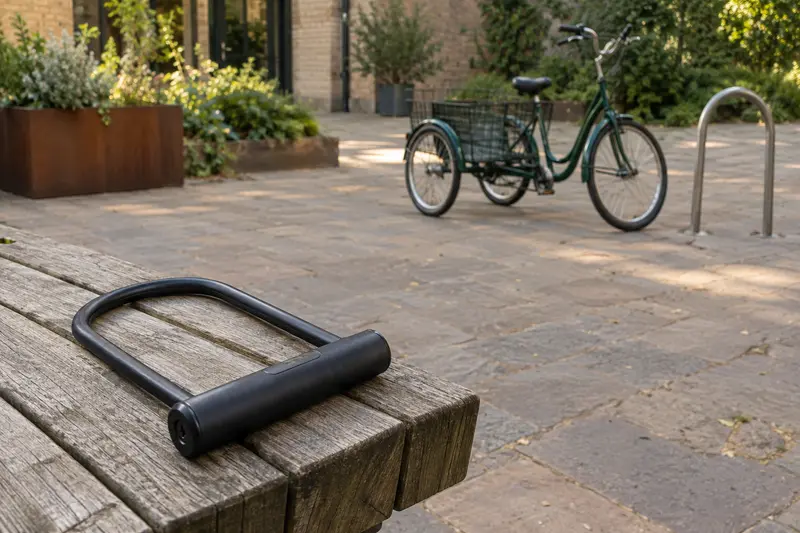
In brief
Choose a lock by the actual frame and fixed anchor you will use, with the exact variant dimensions and any insurer requirements checked. A lock family name, manufacturer security score or expensive price does not guarantee theft prevention. Confirm access, carrying compatibility and ordinary operation before ordering.
Documented options
A clearer comparison.
Research options based on manufacturer documentation. These are not results of hands-on testing. Manufacturer links are informational; no commission relationship is currently active.
IN THIS GUIDE
Draw the locking connection
Sketch the trike frame point approved for securing, the intended fixed anchor and the gap between them. Ask the trike maker or a knowledgeable dealer which parts are appropriate to secure and whether removable components require separate arrangements. A basket or wheel alone may not be the connection you intended.
Measure the combined shape the lock must enclose and compare the exact lock’s internal usable space. A long lock can offer more reach, but it may also be awkward to carry or position. Do not pick a shackle size from the overall trike width; what matters is the chosen frame-to-anchor connection.
The locking task begins with a connection, not a brand shortlist. Identify the part of the trike the maker says is appropriate to secure and the fixed point available at the intended parking place. Ask the dealer about the exact frame and any removable components that need separate consideration. A basket, wheel or convenient-looking opening should not automatically become the chosen point. The lock needs to serve the documented arrangement rather than merely look substantial beside the vehicle.
Draw the shapes the lock must enclose. Include the distance between the permitted frame point and anchor, any obstruction and the space needed to position the lock. Ask the lock maker which dimension describes the usable internal space, as distinct from the overall product size. A long outer measurement does not tell you whether the intended combination fits inside. The trike's complete width is also not the same as the frame-to-anchor geometry. Keep those measurements in separate rows so that a product page cannot be interpreted too generously.
For a hypothetical parking space, the trike sits beside a fixed rail but a rear basket obstructs access to the proposed connection. A larger lock might reach farther while remaining awkward to position. The next question is whether another approved orientation or appropriate fixed point can serve the routine. Do not remove or secure through a component without maker guidance. If an anchor installation is being considered, ask about permission and an appropriate installation scope rather than drilling into a structure based on a generic blog diagram.
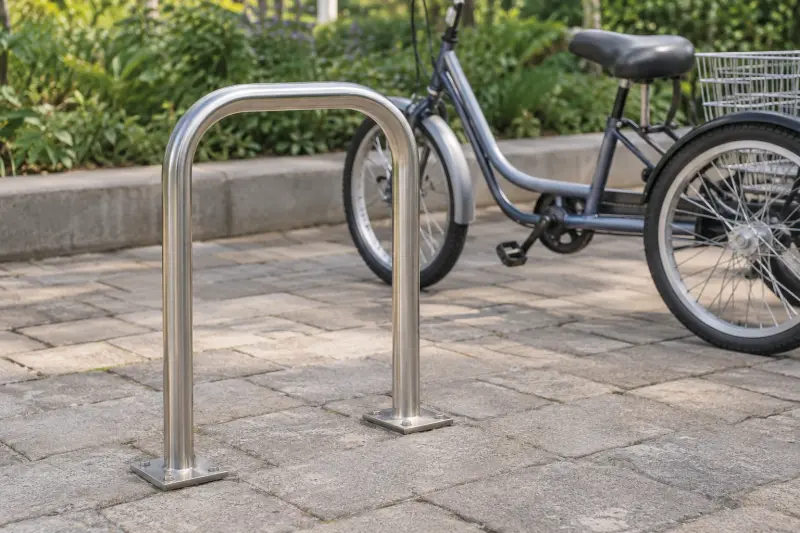
Keep the actual destination parking in the plan as well as home storage. A lock that serves one anchor may not fit another. Ask where the person expects to leave the vehicle and what connection is available there. A smaller permitted trip plan or another parking location may be more practical than selecting a lock around a hypothetical future stand. This guide does not certify an anchor, specify structural fixings or claim that one configuration prevents theft. It helps the buyer identify the exact task that a lock purchase needs to answer.
Compare exact lock and bracket variants
ABUS USA lists the GRANIT XPlus 540 family with variant choices and a carrying bracket. Use the selected variant’s details rather than assuming all locks under the same name have identical reach. Check bracket compatibility with the specific trike and ask whether fitting it interferes with cables, folding or movement.
Manufacturer security levels are the maker’s own labels, not a theft-proof guarantee or an interchangeable scale across brands. If an insurer specifies an independent approval category, confirm the exact lock and current requirement directly. Do not infer an insurance benefit from a badge on another variant’s photograph.
A lock family can include different sizes, carrying arrangements and regional versions. Record the exact variant in the shortlist and ask which usable dimensions apply. The ABUS USA page for GRANIT XPlus 540 provides variant choices and an SHB bracket example. It is a source for comparing the specified item, not proof that every reader's frame or anchor fits it. We have not tested its security performance, verified local stock or established an insurer's acceptance for a particular policy.
Ask how the supplied bracket is intended to be fitted and whether that arrangement is permitted on the exact trike. A bracket pictured on a two-wheel bicycle does not automatically answer fit on a three-wheel frame. Cables, folding operations, cargo equipment and ordinary movement may introduce separate questions. Seek confirmation from the relevant makers rather than adapting a mounting clamp because it appears to fit a tube. An accessory intended to make carrying convenient should not create an unexplained equipment alteration.
For a hypothetical comparison, the buyer finds two locks under the same family name. One has a longer shackle and a different carrying arrangement from the other. They compare the actual frame-to-anchor shape, then ask how each would be carried during the planned ride. The longer version is not automatically better value if it adds an unnecessary handling task. The shorter version is not automatically suitable because it is less cumbersome. Fit and purpose decide which variant deserves further consideration, with unanswered questions kept visible.
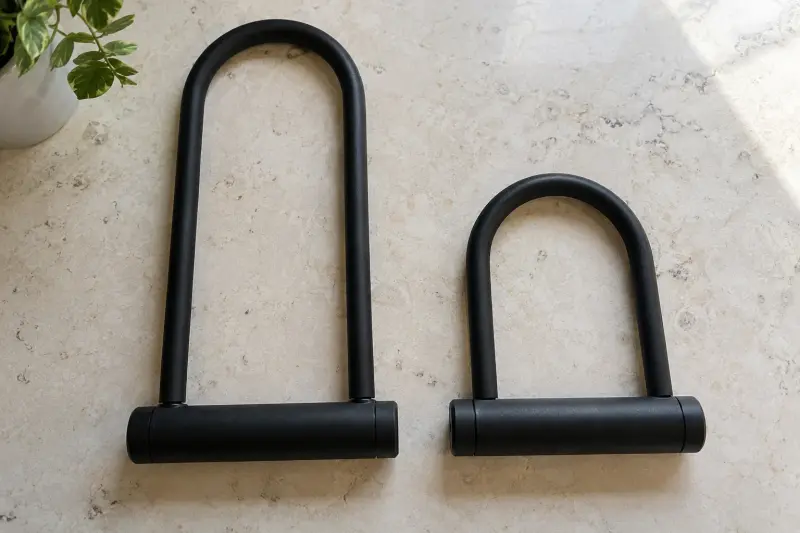
Keep manufacturer ratings and external requirements separate. A brand's own security level is its label and cannot be assumed equivalent to another brand's scale. If an insurer or other responsible source specifies a particular category, ask that source about the exact variant and current requirements. A badge visible on another listing or an older review is not sufficient confirmation. Do not describe the lock as theft-proof, approved for every policy or guaranteed to reduce a premium. Those claims need evidence that this guide does not possess.
Try the everyday locking routine
Consider whether you can position the lock, see the keyway and operate it with the trike parked in the actual space. A useful demonstration includes removing it from its carrier, connecting it to the anchor, locking, unlocking and putting it away. Note reach or handling difficulties before buying.
For a hypothetical storage bay, the anchor sits behind a rear basket. The lock may be long enough but difficult to access without leaning across the vehicle. A different permitted anchor position or storage orientation might answer the task more effectively than a heavier lock. Get approval for structural installations and do not drill an anchor into rented property without the required agreement.
A useful handling discussion covers the whole routine: taking the lock from its permitted carrier, positioning it at the approved connection, using it as instructed and returning it to storage. Ask the user which action needs clarification. A lock can have the right dimensions yet be inconvenient because the keyway is difficult to see or the location is awkward to access. The guide cannot determine personal reach or handling capability. Seek appropriate advice and a supplier demonstration where needed rather than assuming a heavier object is manageable because its specifications look impressive.
Explain the real parking space to the dealer. A home anchor placed behind the vehicle can be different from a stand approached from the side at a destination. A storage orientation that permits the lock's use may also affect access to the battery or the route out of the shed. Keep those tasks together on the room sketch while preserving their separate instructions. A change made solely for locking should not create an unresolved storage, charging or retrieval arrangement.
For a hypothetical household, one person can operate the key while standing beside the trike, but the chosen anchor would require leaning across the basket at home. The buyer asks about another permitted arrangement before selecting a larger or heavier lock. They do not assume a long shackle resolves the access task. Another user finds the carrier convenient in a showroom but has not considered how it interacts with folding. The supplier should answer that exact configuration question rather than treating carrying fit as a universal property of the lock.
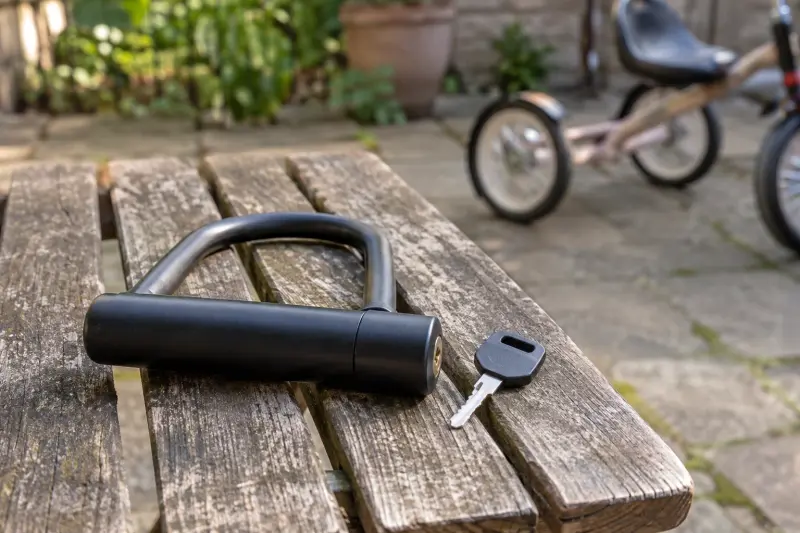
Ask where the lock goes during the journey. A basket can be part of the permitted cargo arrangement, but its loading and securing instructions still apply. A mounted carrier needs exact compatibility and any relevant installation guidance. Do not hang a heavy object from a convenient control area or invent a strap method from a lifestyle photograph. Keep the ordinary carrying task on the purchase card. Security equipment is useful when its actual connection and ownership routine are understood, not simply when it fills a space in an accessory bundle.
Keep a frame-to-anchor fit card
The card should list anchor location, frame point, required reach, exact lock variant, carrying method and any insurer evidence. Leave a row unresolved when the supplier cannot confirm compatibility. Record where spare keys are kept privately and follow the lock’s care instructions.
A correctly selected basic arrangement may be enough for the documented task; a second lock should have a distinct purpose rather than simply completing a bundle. Combine appropriate locking with a sensible parking plan and current insurer instructions if applicable. No lock makes theft impossible, and a paper fit note does not certify security performance.
The frame-to-anchor fit card should name the anchor location, permitted frame point, required usable space, exact lock variant and carrying method. Add any insurer documentation and the date it was checked. Mark measured, maker-confirmed and unresolved information separately. The card is a buying record, not a security certificate. A row of favourable specifications cannot establish that a particular place, structure or insurance policy accepts the arrangement.
Keep keys, replacement-key information and identifying details private. Ask the lock maker how the relevant care and replacement process works for the exact item. A lost-key arrangement should not depend on public images of codes or private identifiers. Save the supplied instructions and purchase record where the household can find them. If another person normally helps with parking, ask which part of the routine needs explanation rather than assuming they can operate a different variant from the one originally demonstrated.
A hypothetical buyer considers a second lock because it is offered at checkout. Before adding it, they ask which distinct task it serves and what the relevant policy or provider requires. A second item may have a legitimate purpose, but it also introduces another carrying and operating task. It should not be bought merely to make the accessory basket look complete. If the proposed connection is unresolved, buying two locks does not automatically answer the problem. Resolve the arrangement first, then compare the equipment that actually serves it.
Before ordering, confirm the variant, included carrier, current local terms and any necessary approval for the proposed setup. At delivery, compare the supplied item with the written record and follow the actual instructions. Review the card when the trike, anchor, carrier or parking location changes. No lock makes theft impossible, and this publisher has not performed attack tests. The useful outcome is a documented purchasing choice that respects exact fit and requirements without manufacturing fear, promising protection or steering every reader toward the most expensive specification.

Translate an insurer requirement into exact buying questions
If insurance is part of the ownership plan, read the actual policy and ask the provider to clarify any lock, parking or storage requirement. Do not rely on another customer's experience or a retailer's generic approved badge. The question concerns this policy, vehicle and use. Keep the relevant wording and written response privately with the fit card. This guide does not interpret a policy as a guarantee of payment or estimate a premium saving from buying a particular lock.
Ask which exact variant and evidence the provider requires, how the requirement applies at home and away, and what documentation should be retained. Keep those answers separate from manufacturer marketing. A brand rating or a family name may not identify the same item as a policy requirement. If a requirement is unclear, obtain clarification before purchase rather than selecting the badge that appears most reassuring. The responsible provider is the source for its current conditions.
For a hypothetical enquiry, the buyer shows the insurer the exact product identifier rather than a screenshot of a different size. They also describe the proposed storage place and connection. If the insurer's answer leaves a condition unresolved, the buyer keeps that row open and discusses an appropriate arrangement. A product link alone does not establish acceptance. The same care applies after changing the parking location or replacing the lock with a different variant.
A lock purchase should not be driven by an invented insurance advantage. Where the required category and connection are confirmed, compare the suitable variants on actual fit, carrying and operation. Where insurance is not part of the plan, the maker's instructions and documented task still matter. A considered choice can be a simple arrangement that answers the purpose, with no claim of theft-proof security. If a policy question materially affects the decision, seek the provider's written answer instead of relying on this website to complete it.
Review the lock when the parking plan changes
A new basket, storage orientation, parking stand or carrying method can alter the original fit question. Return to the frame-to-anchor sketch and identify what changed. Ask the relevant maker about the affected equipment and the responsible property owner or provider about the location. Do not transfer confirmation for one connection into approval for every later arrangement. The card is valuable because it records assumptions that can be revisited rather than hiding them inside a generic best-lock label.
Keep installation permissions distinct from lock selection. A ground or wall anchor requires a suitable property arrangement and appropriate installation. This guide supplies no drilling pattern, structural fixing advice or guarantee that a surface can support an anchor. Ask an appropriate provider about the actual site and obtain required agreement where the property is rented or shared. A product advertised with an installation kit does not settle those questions simply because the kit is included in the purchase. Ask which parts of the proposed work the installer will assess and document, and keep that scope separate from the lock order. An unresolved site question should remain visible before equipment is bought.
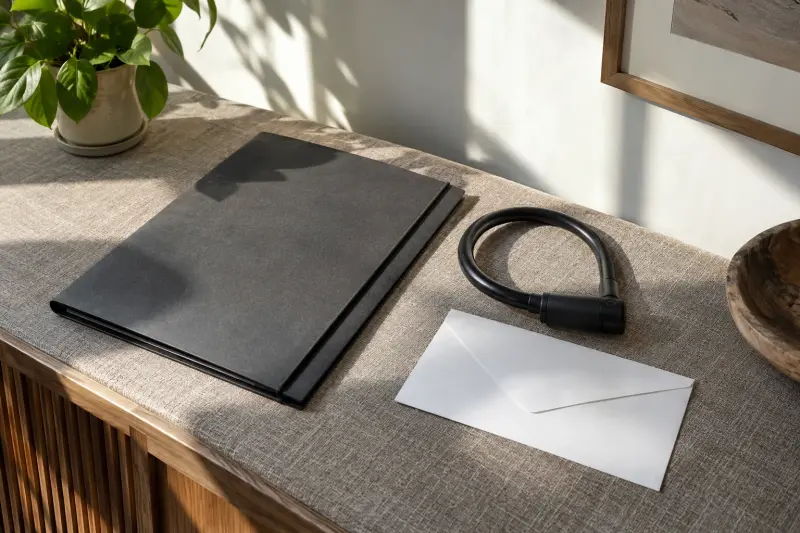
For a hypothetical household, the trike moves to another shed after furniture changes. The original lock still operates, but the new anchor is approached differently and the carrying routine has changed. The household reviews the complete arrangement rather than assuming the same product remains suitable everywhere. Another buyer changes the vehicle and must confirm the permitted securing point on the new frame. A shared three-wheel layout does not establish the same connection or bracket compatibility.
Follow the actual care instructions and seek the relevant support source if operation, damage or compatibility is uncertain. Do not modify a lock, carrier or frame to preserve a purchase already made. The article's role is to make a modest accessory decision more useful and transparent. It does not certify security, recommend an insurer or promise that a costly lock will prevent loss. A good buying record supports the actual parking task and leaves the reader free to select a different variant, another arrangement or more research before spending.
MAKE THE SPEND MEANINGFUL
Before adding to the basket.
- Compare suitable variants before adding a second lock.
- Reorient approved storage to solve reach problems before buying a larger lock.
How this guide was prepared
AI-assisted editorial research, checked against the linked primary sources. Product testing and a credentialed individual review are not claimed.
source-checked editorial; no hands-on testing or expert suitability assessment claimed
How we use sources and AI assistance ↗Sources & fact checks
The guide separates sourced facts from editorial questions and examples. We have not claimed hands-on product testing. How we use sources and AI assistance.
Found an error or an outdated detail? Contact the editorial team.