

In brief
An advertised maximum is not a promised distance for your route. Ask which battery and assistance mode the figure concerns, then compare test conditions with hills, stops, load and weather. Keep a practical journey plan and an alternative way home; never schedule a ride around an unsupported precise range calculation.
IN THIS GUIDE
Identify the claim you are comparing
Save the dated listing for the exact battery and motor configuration. Record whether it describes a maximum, an estimate or a measured test, and whether the test method is provided. A product family can offer more than one battery, so a large headline may not describe the variant in your basket.
Lectric’s XP Trike2 page qualifies range by load, terrain, weather and other conditions. Use that qualification when requesting a route-specific conversation. The statement does not provide a personal range guarantee or a complete comparable laboratory test for every candidate. Leave missing test conditions blank rather than inventing them.
Read the words around the number before putting it in a comparison table. Up to describes an upper advertised figure, not a commitment that every rider will cover that distance. A listing may connect the figure to a particular battery or version while another page describes the entire family. Save the precise configuration and the date checked. If a retailer combines a photograph, price and range claim from different versions, ask for an order-specific clarification rather than assuming the most favourable figure belongs to the least expensive option.
Ask what the manufacturer discloses about the conditions behind the claim. Useful information includes the battery version, assistance setting and relevant load, surface or weather assumptions. Leave a field blank if the source does not provide an answer. A blank makes the evidence request clear; an invented assumption creates a false comparison. Do not turn two different advertised maxima into a claim that one vehicle will travel a particular percentage farther on your own route. The complete systems and disclosed conditions may differ.
The current Lectric family provides a concrete reason to separate versions: its standard and long-range listings identify different batteries and different up-to claims. That is product information, not independent testing by this publisher. Ask the supplier which version is being quoted and what supporting documentation applies. A larger advertised range may be relevant to an intended outing, but it cannot resolve rider suitability, control understanding, storage or local riding permission. Those questions remain alongside the range discussion rather than becoming secondary to a headline.
For a hypothetical shortlist, candidate A advertises a larger maximum with little disclosed context. Candidate B supplies a more detailed explanation of the listed conditions but a smaller maximum. Do not declare either the winner from those facts alone. Bring the intended complete route to the providers, request the missing information and compare the answers. If a seller simply repeats the headline, keep the route-specific question unresolved. A confident sales phrase is not a measurable promise for hills, cargo and the return journey.

Draw the return journey, including errands
Write a normal trip in segments: leaving storage, reaching the destination, making an extra stop and returning. Include known hills and surfaces, expected cargo and the assistance you think you would use. Distinguish measured route length from an estimate and do not omit the journey home because the destination is nearby.
For a hypothetical example, a 4-mile outward route becomes an 11-mile outing once a second stop and the return are included. That calculation tells you the journey requirement; it does not predict battery consumption. Ask the dealer to address the entire route and explain what remains uncertain under the model’s instructions.
Make a journey map with separate legs instead of one destination distance. Write the outward route, planned errands, any diversion and the return. Record how the distances were obtained, such as a measured route or a mapping estimate. Do not assume the return follows the same path if the local layout, permitted access or planned stops differ. A useful map also identifies where the household expects to park and whether help or collection would be available if the outing cannot continue. Keep the units beside each distance and check that all legs use the same system before adding them. Label a planned diversion separately from the normal route. A map estimate is preparation for the discussion, rather than evidence of legal access or riding suitability. Confirm those questions with the relevant local source and provider instead of assuming a mapping application has answered them.
Add conditions as observations, not a battery formula. Note hills, ordinary stopping points, expected load and the assistance preferences to discuss with the dealer. The guide cannot convert these notes into a precise distance guarantee. Even a simple-looking route can differ from an advertised test. Ask the supplier which factors need attention under the exact vehicle instructions and how to begin with manageable permitted journeys. Do not plan to run the battery to exhaustion as a way to validate the marketing claim.
Consider a hypothetical outing with a four-mile outward leg, a three-mile connection to another stop and a four-mile return. The full eleven miles are the requirement to discuss. If the person only records the first four miles, they underdescribe the intended use before comparing batteries. The arithmetic is about distance, not energy consumption. A second example may include a shorter loop with heavier shopping on the return. It is a different use case even if its total mileage is smaller. Keep those cases separate in the buying record.
Discuss the ordinary and occasional journey as different priorities. A buyer may make a short local outing several times a week and a longer trip only occasionally. Ask whether the longer journey can be served by another transport arrangement rather than purchasing every upgrade around it. Conversely, if the longer trip is essential, leave its unanswered range questions visible. Value depends on a supported plan for the intended use, not the largest number available in the catalogue or a speculative cost-per-mile figure.

Do not treat charging as an easy fallback
Consider whether the intended destination offers a permitted charging arrangement compatible with the vehicle. Carrying an unspecified charger is not a solution to uncertain range. CPSC warns against universal micromobility chargers; compatibility must come from the manufacturer, not from a plug that appears to fit.
Plan a sensible alternative if a ride cannot be completed as expected, such as an agreed collection arrangement that can accommodate the trike. Avoid routes that depend on using an unverified public socket, carrying out roadside battery work or exceeding the owner instructions. Confirm range questions before choosing battery upgrades.
Treat destination charging as a separate verified arrangement. Ask whether charging is permitted, whether the equipment and conditions follow the exact battery instructions and whether the household can complete the task appropriately. An available-looking socket in a café or garage is not an agreement to charge a trike battery. A generic adapter or charger that appears to fit is not evidence of electrical compatibility. The CPSC warning about universal micromobility chargers supports asking the manufacturer for the approved combination.
Do not make an uncertain charge stop the only way home. A destination can be closed, access can change and a planned stay can be shorter than expected. Ask the provider about the actual equipment rather than inventing a charging-time calculation from a battery headline. Keep charging instructions, environmental conditions and any permission separate from the route-distance record. If those details are unresolved, the route plan should not assume they will be answered by carrying a charger in a bag.
For a hypothetical journey, the buyer expects to pause at a friend's home and recharge. Before that becomes part of the plan, the relevant household and supplier need to confirm the permitted arrangement and exact equipment. If it cannot be confirmed, discuss another journey or a collection option that can accommodate the trike. Do not use roadside battery work, a borrowed universal charger or a speculative public socket as a fallback. A realistic contingency depends on available and appropriate help, not on the belief that three-wheel vehicles can always be carried like small bicycles.
A replacement or additional battery needs exact-model approval and its own handling, storage and transport questions. More capacity can change the ownership task as well as the quoted range. Ask about approved parts, regional support and current replacement terms before making an upgrade the default solution. The smallest reasonable purchase may be the standard configuration for a well-understood routine; another buyer may need to investigate an approved alternative. Neither conclusion should be based on an unverified promise that a bigger battery solves every journey.
Keep evidence separate from expectations
Use a ledger with columns for exact battery, advertised figure, disclosed conditions, your route and unanswered questions. A missing-condition row is evidence to request, not a penalty score invented by this website. If the supplier only repeats a maximum figure, ask for a clearer explanation before treating the model as suited to a long outing.
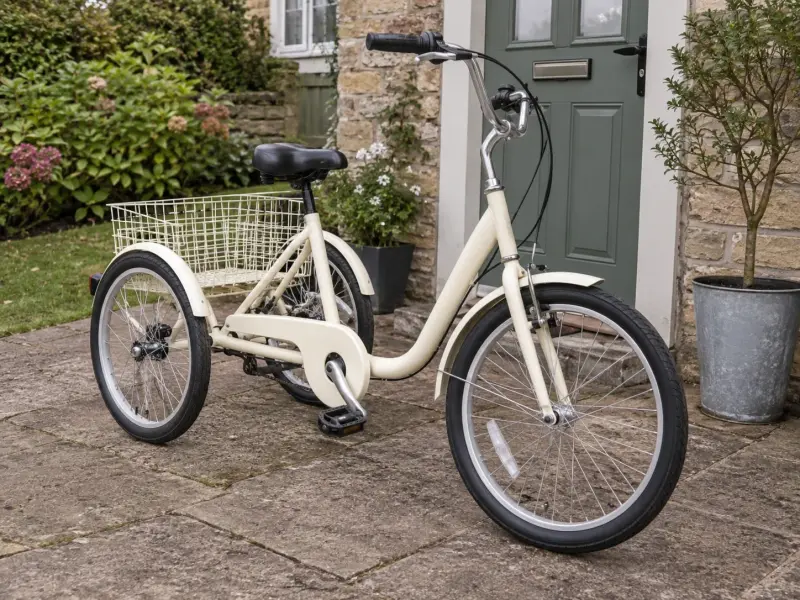
Editorial illustration Compare the capacity you expect to need with handling, storage and replacement support. A bigger battery may change the ownership task and is not automatically a better purchase. Start with manageable journeys under the instructions and build an understanding of the particular equipment without attempting to drain a battery to prove its advertised claim.
An evidence ledger should make the claim and the intended use visible on the same page without pretending they are directly equivalent. Include model and battery identifiers, the advertised wording, disclosed conditions, source date, the complete route and unanswered questions. Add a separate row for the contingency arrangement. Do not generate an overall confidence percentage from incomplete information. The ledger is a record for a supplier conversation, not a range calculator or a test report.
Distinguish three kinds of information: manufacturer publication, supplier clarification and the household's own later observations during permitted use. A manufacturer maximum stays labelled as such. A supplier's explanation should be saved with its scope. An observation on one journey applies to that journey and conditions, rather than proving the published claim or predicting all future outings. The publisher has not tested these products. Any useful comparison must make that boundary clear instead of borrowing the language of a laboratory review.
In a hypothetical decision, a buyer sees a larger advertised maximum and initially treats it as a reason to pay for an upgrade. The ledger shows that their frequent trips are short, while the long occasional outing has a separate collection plan. They can ask whether the standard configuration deserves a demonstration and a complete ownership comparison. Another buyer's essential route may leave a substantial unresolved question requiring a different option. The ledger helps each buyer describe their own requirement; it does not give both the same recommendation.
After purchase, follow the exact battery and vehicle instructions and discuss unexpected behaviour with the supplier. Keep a modest record of permitted journeys if useful, without setting out to exhaust the battery. Revisit the plan when the route, load, equipment or relevant conditions change. If the intended journey cannot yet be supported, choose another arrangement while seeking advice. The practical goal is a considered transport plan, not a contest to reproduce the most optimistic range figure on a promotional page.
Questions that distinguish a useful range explanation
Ask which battery and vehicle version the advertised figure describes. Request the dated source and any disclosed conditions, then show the supplier the complete route. Ask what remains uncertain when the planned load, hills or assistance preference differs. A useful explanation should acknowledge those differences rather than promising the headline distance to every customer. If information is unavailable, record that openly. Do not substitute an internet comment from a different rider as a precise answer for the current purchase.

Editorial illustration Ask about ordinary owner care and the authorized service route. Battery condition and the complete vehicle need their own appropriate attention under the instructions. This guide does not prescribe a maintenance procedure or a percentage reserve. Ask the maker how its display information should be understood and what the household should do if it changes unexpectedly. A remaining-charge indicator or predicted distance on a display needs the exact manual's explanation; it is not automatically a commitment for the rest of the outing.
For a hypothetical supplier conversation, the buyer brings two journey maps instead of asking only how far the trike goes. The first is the regular shopping route and the second is a longer weekend outing. The supplier can discuss their differences and identify questions requiring another source or a different arrangement. That is more informative than repeating an up-to number. Keep the answer tied to the quoted configuration, and ask what further demonstration or confirmation is possible without assuming a personal range guarantee.
Finally, ask which purchase decisions depend on the answer. An approved battery option, a different vehicle, a shorter ordinary route or occasional alternative transport may each deserve consideration. Compare their complete implications for handling, storage, charging, support and budget. Do not assume the option with the most capacity is automatically the best value. The useful decision is the one that addresses the actual requirement with its uncertainty understood, while keeping safety instructions, local permission and personal suitability as separate necessary checks.
A worked shortlist without a fictional range score
Imagine a buyer choosing between a standard arrangement and a maker-approved longer-range version. Their worksheet shows the same weekly destination but different occasional errands. They begin by matching each quote to its exact battery and checking the disclosed conditions. Next they list the practical differences they must clarify: component handling, storage, approved charging and replacement support. They do not calculate a promised mileage increase from two headline claims, because that would ignore the complete vehicles and the person's route.
The buyer then separates essential use from preference. If the standard arrangement still leaves the required journey unresolved, a larger advertised figure alone does not complete the answer. They ask for a clearer supplier discussion and consider other options. If the frequent route is appropriately addressed and the occasional trip can be served another way, paying for additional capacity becomes a considered preference rather than an assumed necessity. No present price, stock or affiliate approval is needed to make this reasoning useful.
Before ordering, the buyer checks that the configuration described in the ledger matches the written offer. A battery substituted for quicker delivery should prompt a new comparison, even if the family name is unchanged. An accessory bundle should not obscure the main question. The final order record includes the exact owner documentation and support route, with private identifiers kept out of public comments. If a significant uncertainty remains, the buyer keeps the purchase open.

This example illustrates a decision process rather than a recommendation for either configuration. Range information is useful when its wording, conditions and limits are understood. It becomes misleading when a maximum is turned into a promise, a precise personal calculator or proof that charging will always be available. A focused guide should help the reader choose a supported journey plan, including a smaller purchase, another transport arrangement or more research before buying.
MAKE THE SPEND MEANINGFUL
Before adding to the basket.
- Choose a battery around real journeys rather than the largest headline.
- Replan an outing before buying an unneeded spare battery.
How this guide was prepared
AI-assisted editorial research, checked against the linked primary sources. Product testing and a credentialed individual review are not claimed.
source-checked editorial; no hands-on testing or expert suitability assessment claimed
How we use sources and AI assistance ↗Sources & fact checks
The guide separates sourced facts from editorial questions and examples. We have not claimed hands-on product testing. How we use sources and AI assistance.
- Lectric: XP Trike2 current configuration and dimensions ↗
- Lectric: current long-range XP Trike2 version and qualified range claim ↗
- CPSC: warning against universal micromobility chargers ↗
Found an error or an outdated detail? Contact the editorial team.