
In brief
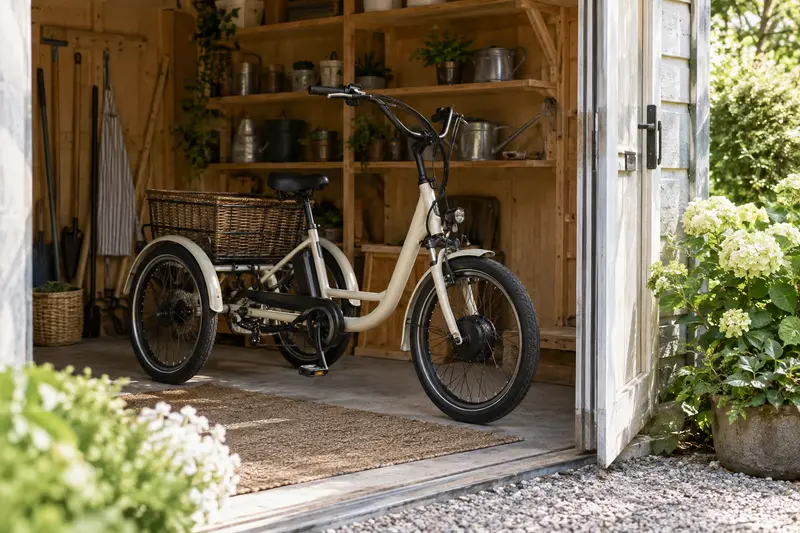
Treat storage as a complete journey, not a single doorway measurement. Record the narrowest opening, changes of direction, usable parking space and the room needed to operate a lock or remove a battery. Compare those observations with the exact trike in both its riding and storage configurations.
Documented options
A clearer comparison.
Research options based on manufacturer documentation. These are not results of hands-on testing. Manufacturer links are informational; no commission relationship is currently active.
IN THIS GUIDE
Map the route before measuring
Start at the street and follow the route you would use after an ordinary ride. Include the garden gate, an alley turn, a shed threshold and any parked bins. Photograph each constraint with a tape measure visible, but do not photograph private addresses for a public comparison. A dealer needs a useful route sketch, not a perfect architectural drawing.
Measure clear openings between the actual obstructions. A door listed as a particular size may offer less usable space once hinges, handles or the opened leaf are included. Record whether another person must hold it open. If access depends on moving furniture every time, put that task in the storage plan rather than calling the route suitable.
Begin the route survey on the side from which you normally arrive. A rear garden entrance may look spacious from inside, yet the approach from the street can include a tight turn between a wall and a parked car. An alley may be clear when photographed but shared with bins on collection day. Write those recurring conditions down. The relevant route is the one the household can actually use after an ordinary outing, with the normal items in place, rather than an exceptional route cleared solely for a dealer demonstration.
For each opening, record the narrowest clear space and the direction of approach. Add whether the surface changes level, whether a door swings into the route and where another person would stand if assistance is needed. Do not reduce everything to a single width figure. An opening followed immediately by a turn poses a different question from the same opening on a straight approach. Label photographs with private notes for the dealer and keep addresses, house numbers and other personal details out of any public discussion or image.
Use a hypothetical survey to see why this matters. The household measures a generous front gate, then discovers that the route into the shed turns beside a fixed water butt. A narrower trike might answer the gate question without answering that turn. Moving the water butt could involve a separate home change; choosing another parking location could change the charging and security plan. These are alternatives to discuss, rather than reasons to assume the rider can tilt or drag the vehicle through. Record the constraint in its actual location before choosing which solution to investigate.
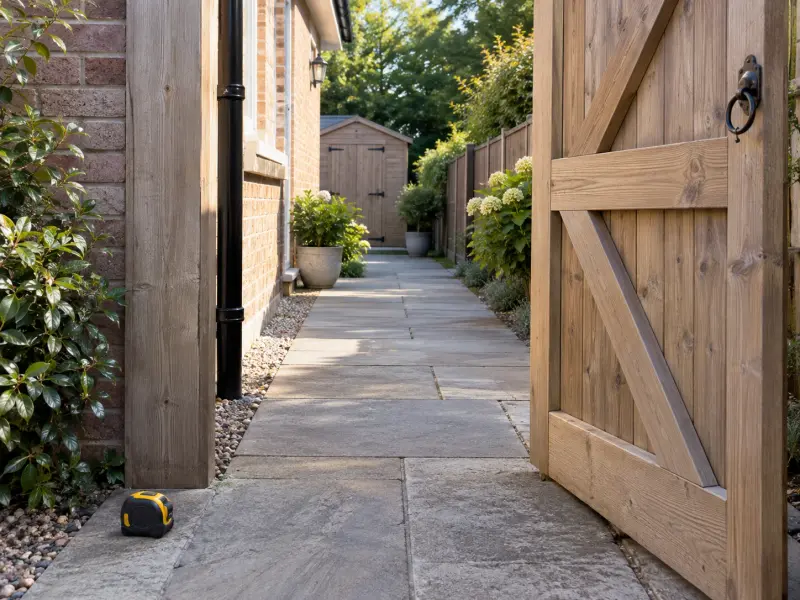
Repeat the route observation at the time you expect to use it. Lighting, a routinely parked vehicle or a shared gate can affect the ordinary task without changing the nominal doorway size. Explain those conditions to the dealer and ask what should be demonstrated. The survey is preparation for a vehicle-specific conversation. It cannot establish a universal safe clearance, authorize lifting manoeuvres or tell you what the rider can manage. Its value is exposing the sequence that a product photograph and one tape-measure reading leave out.
Compare distinct configurations
Record overall width, length and height for the specific model and accessory arrangement. Folding may change one dimension while increasing another. Lectric’s XP Trike2 page lists separate folded configurations, including one with the front wheel removed. Use the configuration you would actually manage; a different advertised photograph does not settle your storage question.
For a hypothetical example, a clear gate of 86cm and a trike of 80cm leave only 6cm total spare width. That arithmetic describes space, not a safe operating clearance. Ask the dealer to demonstrate passage and turning with the exact vehicle. Do not assume that lifting a rear wheel or pushing sideways is an approved workaround.
A configuration is a complete description of the vehicle as it will pass through the route. It includes the frame, wheel arrangement, handlebar position and fitted accessories, as well as whether any manufacturer-approved folding or removal has occurred. Ask whether a published width is measured at the tyres, handlebars or another widest point. Mirrors and cargo equipment may sit beyond a dimension shown in a simplified drawing. Do not subtract an accessory from a specification unless the supplier confirms that removal is permitted and realistic for the planned routine.
Make separate rows for riding, parked storage and transport. A folding feature can improve one of those arrangements and complicate another. The Lectric example includes more than one folded description, so the advertised smallest arrangement should not automatically become the household's storage plan. Ask what operations create that arrangement, which parts need handling and which checks restore it to use. If the rider expects to park without removing a wheel, keep that expectation visible. A configuration requiring a different sequence belongs in a separate comparison.
Imagine two hypothetical candidates. Candidate A is slightly narrower in its ready-to-ride form. Candidate B has a smaller folded length, but reaching that form requires steps the household has not demonstrated. The choice cannot be settled by circling the smallest number on each page. Compare both against the same gate, turn, parking task and retrieval sequence. Mark B's folding routine as unresolved until the maker-approved operations are explained. Mark A's passage as unresolved until the route is checked. Complete information can favour either candidate; incomplete information should not favour the more dramatic marketing image.
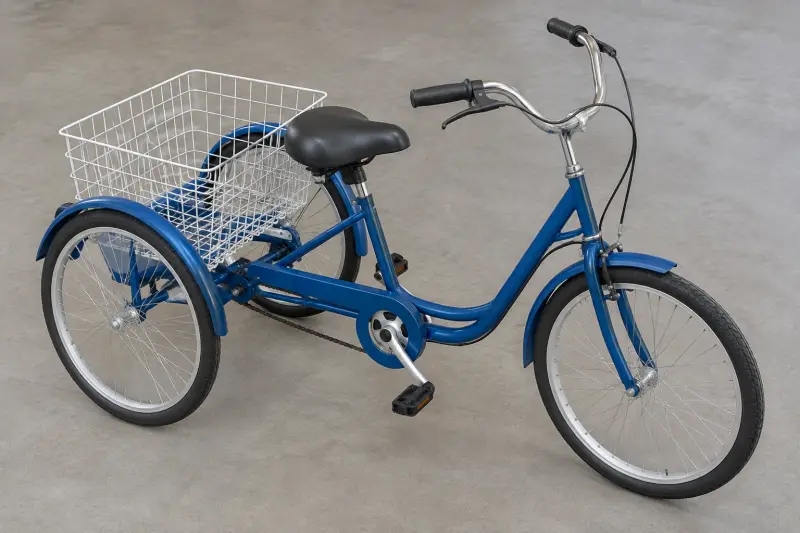
Keep units consistent without implying precision that was never measured. If a source uses inches and the route uses centimetres, retain the original specification beside any conversion. Note whether the dealer has confirmed the actual accessory arrangement. A rounded measurement may conceal most of the apparent spare space in a tight opening. Ask for a demonstration or further clarification when the plan depends on a close fit. There is no universal allowance in this guide that turns a few centimetres of numerical difference into a safe or manageable passage.
Leave space for the work around the vehicle
The parking footprint is larger than a rectangle containing the wheels. Consider where you stand to lock the frame, handle the battery, inspect a tyre or unfold a hinge. Draw those standing positions beside the stored trike. Keep the exit available for other household members and confirm charging arrangements separately.
A narrow shed might hold the vehicle but make every retrieval a difficult manoeuvre. In that situation, compare a different storage location or model before ordering expensive accessories. A ground anchor, cover or rack only becomes useful after the layout is understood. Do not allow an accessory bundle to decide which trike fits your home.
Separate the space occupied by the parked vehicle from the space needed to use the parking place. You may need access to a locking point, a battery release, a tyre or a folding control. Each task has its own position and sequence under the exact instructions. Draw the vehicle first, then add the places where those tasks occur. A shed in which the trike fits only against the back wall may leave no practical access to a component needed after every ride. That is a storage routine question, not simply a vehicle dimension question.
Think about other people who use the same space. Is the shed also used for garden equipment? Does the trike sit between the household and an exit or regularly used cupboard? Will another person need to move it when the rider is away? A convenient dedicated parking spot may differ from a shared corner that must be reorganized daily. Describe the ordinary household use to the dealer. Avoid promising that the vehicle can be moved easily by someone who has not tried the approved stationary handling process.
A hypothetical shed has sufficient floor area for the wheel footprint but no clear standing area beside the battery location. The buyer considers buying a cover and a ground anchor immediately. Neither accessory resolves the missing handling space. First compare repositioning the vehicle, using a different storage location or choosing a different model, with the relevant charging and security questions considered separately. Only after the ordinary sequence is understood should the accessory shortlist be built. This order keeps the purchase focused on the usable arrangement rather than a bundle chosen because it looked complete online.
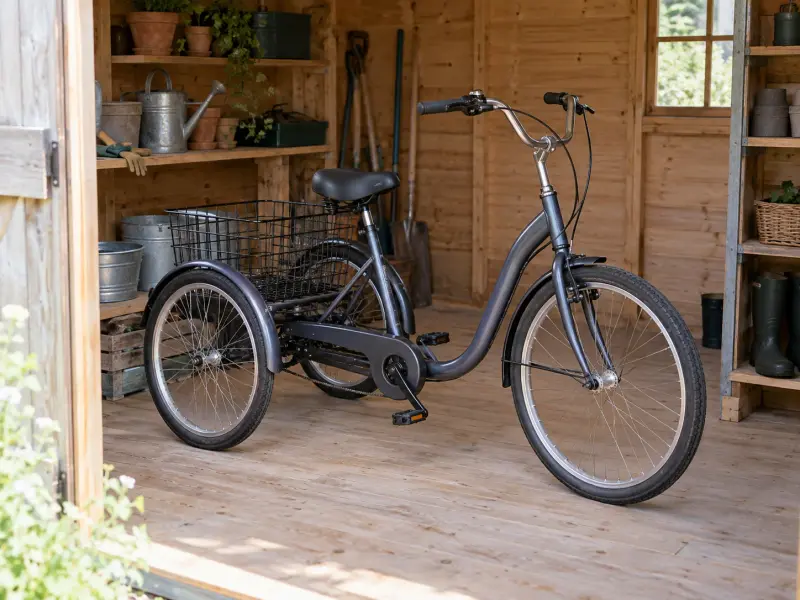
Consider storage through the seasons without inventing a weather rating. Follow the vehicle and battery instructions for environmental conditions, and ask the supplier about the proposed location. A cover is not evidence that an otherwise unsuitable space meets those instructions. Leave charging suitability, battery care and escape-route concerns to their own documented checks. Keep enough information in the storage record to revisit the plan when a basket, battery or household layout changes. A parking place that worked for one configuration should not be assumed to work unchanged for every later accessory.
Use the map in a dealer demonstration
Take the sketch, measurements and photographs to the dealer. Ask which dimensions describe the delivered configuration and whether baskets, mirrors or the handlebar setting change them. Request a demonstration of the actual folding and parking sequence under the manual. Keep uncertainties beside their measurements rather than rounding them into a positive answer.
Your final map should have four columns: location, clear measurement, demonstrated action and unresolved question. If the shed cannot accommodate ordinary handling, solve that constraint before paying a deposit. A measurement sheet can prevent an unsuitable purchase; it cannot certify that a route is safe or that the rider will manage it without assistance.
Tell the dealer what the demonstration needs to answer before visiting. Bring the route record, current photographs and the proposed accessory list. Ask which unit will be demonstrated, whether its dimensions match the quote and whether the relevant storage operations can be shown under the manual. If an in-home demonstration is offered, ask about its scope and any conditions before arranging it. A brief showroom ride does not answer a narrow shed turn unless that storage question is specifically addressed.
During the discussion, distinguish a measured answer from an estimated one. A supplier might be confident that an opening should work, yet still need to confirm the actual mirror or basket arrangement. Record the uncertainty rather than replacing it with a yes. If the explanation involves changing a handlebar position or removing a part, ask where that operation appears in the exact instructions and what is required before the next ride. Avoid treating an improvised sales-floor manoeuvre as an approved daily procedure.
For a hypothetical handover, the buyer's storage card specifies a particular basket and a ready-to-ride parking arrangement. The delivered trike has a different cargo accessory that extends beyond the agreed outline. Contact the supplier and compare the delivered configuration with the order before assuming the original measurements remain valid. A shared model name does not erase that change. Likewise, if the household has moved a bin or added shelving since the demonstration, repeat the route review instead of blaming the vehicle for an altered environment.

Keep the completed map with the order and owner documentation. It should show the demonstrated action, the exact configuration and the unresolved questions, if any. Use it when asking about a future accessory or discussing a different storage place. Do not publish the private home record as a review image. A good buying record explains why a choice was made and when it should be reconsidered. It does not certify handling ability, route safety or legal riding permission, which remain separate questions for the intended user and local journey.
Compare a storage change with a vehicle change
When access is the limiting factor, avoid assuming that a more expensive trike is the only answer. List the realistic alternatives: another approved parking location, a different model, a maker-supported storage configuration or an appropriate change to the home. Each alternative needs its own questions. A new shed position may improve the turn but put parking farther from the usual entrance. A narrower vehicle may change cargo options. A folding arrangement may add daily handling. Compare the whole consequence rather than assigning value only to the width gained.
A hypothetical buyer has two choices that appear to solve a gate constraint. One is a vehicle with a smaller ready-to-ride width. The other is moving a gate obstruction, subject to any necessary property permission and appropriate work. Before spending, obtain a complete vehicle quote and a separate home-change estimate. Include the time and effort of the routine after the change, not just the initial payment. There is no need to publish speculative prices. The useful comparison is between documented scopes that solve the same practical question.
If the current route is not suitable, a collection or delivery arrangement may solve occasional transport without solving everyday storage. Keep those tasks separate. Similarly, choosing a lock, cover or rack cannot make a vehicle fit an opening. Accessories should follow the confirmed storage plan. Ask whether a proposed purchase is addressing an observed task or merely making a difficult plan feel more complete. This is a useful pause before ordering a long accessory list.
Finally, leave room for a different transport choice. If the home cannot accommodate the required trike routine, the correct next step may be another model demonstration or another way to make the desired journey. You do not need to force the home or the user to fit a product already shortlisted. A vehicle purchase is easier to evaluate when declining it remains a valid result. Resolve the storage question alongside rider assessment, route permission and local service support before treating any option as ready to order.
The storage questions to answer before a deposit
Ask the supplier to confirm the dimensions of the exact ordered configuration and the operation that creates any smaller storage form. Request the relevant manual pages, accessory identifiers and a clear explanation of what the household must do at every arrival and departure. Ask who can assist if the storage routine requires help. The information should describe the arrangement discussed, rather than a different vehicle pictured in a generic brochure.
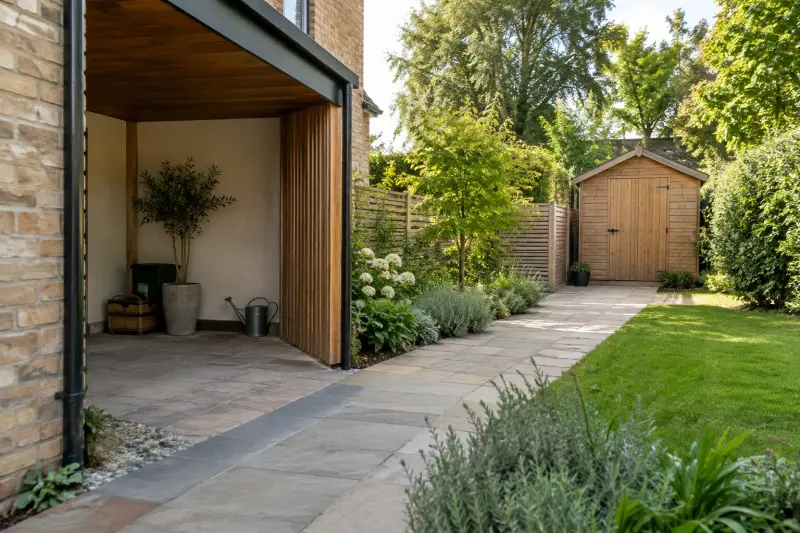
Editorial illustration Ask the seller what happens if the delivered vehicle cannot follow the route as described. Delivery, collection, return condition and any restocking terms need to be understood before payment. Keep statutory consumer rights distinct from a voluntary trial, and use the rules for the purchasing jurisdiction rather than importing another country's policy. A storage measurement is not a promise that a seller will accept a used vehicle back. If the decision depends on a demonstration or inspection period, obtain the exact terms in writing.
Check the boundaries of the plan with three short questions: can the actual configuration reach the parking spot, can the ordinary tasks be completed there under the instructions, and can the trike be retrieved without an unapproved workaround? An unanswered question in any one of those areas deserves attention. Do not average them into a positive score because the remaining features are appealing. The route needs a coherent sequence, with its assumptions documented.
After delivery, preserve the configuration details and follow the owner instructions. If an accessory, storage layout or relevant household need changes, review the affected part of the record with the supplier. This article helps organize a buying conversation; it does not establish a safe width margin or personal capability. The sensible purchase is the one whose complete routine has been explained and whose important uncertainties have been resolved, including the option to keep researching before buying.
MAKE THE SPEND MEANINGFUL
Before adding to the basket.
- Reorganize existing storage before buying a larger shed.
- Compare another documented configuration instead of buying a folding feature you cannot use.
How this guide was prepared
AI-assisted editorial research, checked against the linked primary sources. Product testing and a credentialed individual review are not claimed.
source-checked editorial; no hands-on testing or expert suitability assessment claimed
How we use sources and AI assistance ↗Sources & fact checks
The guide separates sourced facts from editorial questions and examples. We have not claimed hands-on product testing. How we use sources and AI assistance.
Found an error or an outdated detail? Contact the editorial team.