
In brief
Measure the loading aperture and the usable boot or trunk separately, then compare the exact transported pieces. A scooter fitting inside the vehicle is only one check; the loading method, handling and secure transport still need to work.
IN THIS GUIDE
Will it fit is the beginning of the transport question
A scooter fitting inside a car boot or trunk does not establish that the complete transport routine works. It must pass through the loading aperture, occupy a permitted arrangement, leave the vehicle's other requirements satisfied and be handled and secured appropriately. Start with the exact journey and equipment rather than the car's advertised luggage volume.
Write the actual vehicle model and configuration, including the seating arrangement you intend to use. Then identify the exact scooter, supplied battery and approved accessories. A vague combination such as compact car plus folding scooter cannot produce a reliable dimensional comparison. Small differences in configuration can change the relevant shape.
Keep three decisions separate: dimensions, handling and secure transport. The first can be described in a worksheet. The other questions need the appropriate product, vehicle and provider guidance. This article does not teach a lifting method, restraint technique, ramp setup or vehicle conversion. A calculator cannot approve those tasks from a few measurements.
The useful outcome is a clear record for a provider demonstration or transport-system enquiry. If one essential dimension is missing, the worksheet should ask for it. If a load cannot be managed appropriately, the fact that it fits does not make the arrangement suitable. Resolve the entire task before buying equipment specifically for car travel.
Record the vehicle in its actual travel configuration
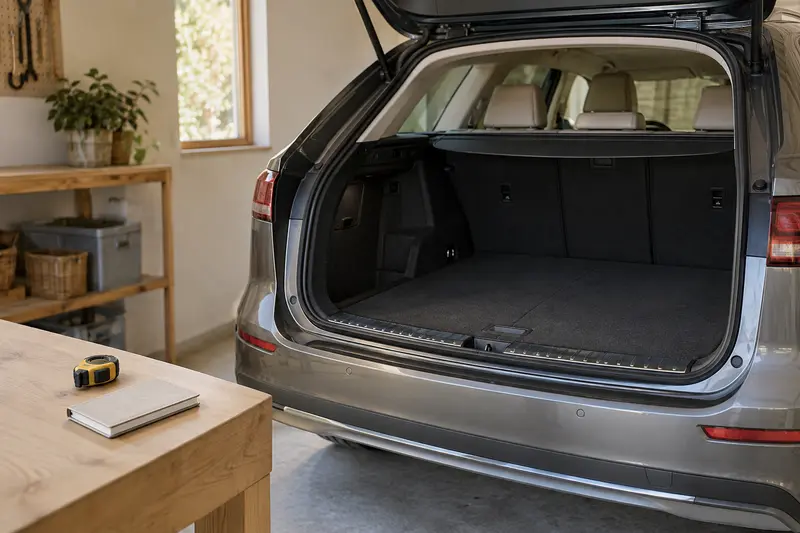
Measure or describe the cargo area as it will be used, not with every seat removed for an optimistic photograph. Include the passengers and ordinary belongings the outing requires. If rear seats must remain available, keep that condition in the brief. Do not assume an occasional folded-seat arrangement is appropriate for every household journey.
Check the vehicle's own documentation and appropriate advice for cargo, seat configuration and transport systems. A boot-volume figure in litres can help compare cars broadly but does not give the aperture shape or usable dimensions for a scooter. The manufacturer's applicable information remains important where load or vehicle-system questions arise.
Identify features that reduce usable space, such as wheel arches, a sloping tailgate, a loading lip or a compartment cover. Record them without removing safety equipment or altering the car to make a paper comparison pass. If access for measuring is awkward, get appropriate help or ask the provider to review the vehicle.
Keep the vehicle record dated. A change of car, seating arrangement or fitted transport equipment can change the comparison. Do not use an old successful outing with a different vehicle as proof of the new arrangement. The worksheet should describe what is actually proposed today rather than an idealized maximum cargo layout.
Editorial illustration
Measure the opening separately from the interior
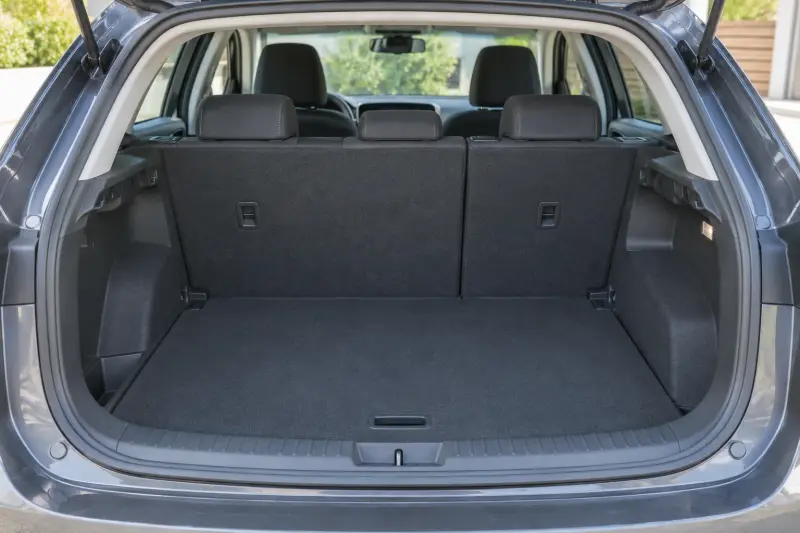
The loading aperture is the space through which the transported object must pass. Record its relevant width and height and any shape restrictions at the intended loading location. Keep those measurements separate from the widest part of the empty interior. A wide cargo compartment can sit behind a narrower opening.
Ask the provider which equipment dimensions and transported orientation need to be compared. Do not devise a tilting or twisting manoeuvre to squeeze a load through because the arithmetic looks close. An appropriate loading method must be established under the relevant instructions and advice, especially where a vehicle system or assistance is involved.
For a fictional rectangle-only example, an opening 68 centimetres wide does not admit a rectangular object presented 72 centimetres wide in that orientation. An interior width of 105 centimetres does not change the opening comparison. Rotating a paper outline may show another geometric possibility, but it does not establish an appropriate handling or transport method.
Record where each measurement was taken and who confirmed it. A number written as “height” can mean the aperture, interior at the tailgate or maximum central height. The definition matters as much as the number. If a required dimension is uncertain, label it unknown and ask for a relevant survey rather than estimating to complete the table.
Use the full occupied shape once the equipment is inside
Inside the cargo area, record usable length, width and height in the proposed arrangement. Include the shape near the closed tailgate and any fixed obstructions. A transported scooter or separated piece may not be a perfect rectangle, so ask for the exact documented dimensions and a provider review where shape or orientation is unclear.
Keep the tailgate closing space distinct from a maximum measured height with it open. Do not force a door or remove equipment parts to make a dimensional check appear successful. The vehicle must be used under its applicable guidance, and the scooter must remain in its permitted transported configuration. A photograph with an open tailgate does not establish the actual travel arrangement.
For dismantling equipment, draw each piece at its full relevant shape and identify its proposed location. Do not assume pieces may be stacked, pressed together or stored in any direction. Ask the provider how the correct transport arrangement is established. A packing sketch can expose missing space, but it does not prescribe stacking or restraint.
Add ordinary luggage only after the equipment arrangement is described. Shopping bags, walking aids or other necessary belongings should not be treated as an afterthought if they are part of the actual outing. The worksheet helps the household understand whether the proposed cargo layout answers the whole journey, rather than a single empty-boot photograph.
Keep folded and operating dimensions attached to the exact variant
A product's operating dimensions and its folded or dismantled dimensions answer different questions. Pride's SC15M specification sheet, for example, distinguishes overall dimensions from a listed folded height of 300 millimetres. That one reduced dimension is not the complete transported shape and should not be treated as a universal car-fit claim.
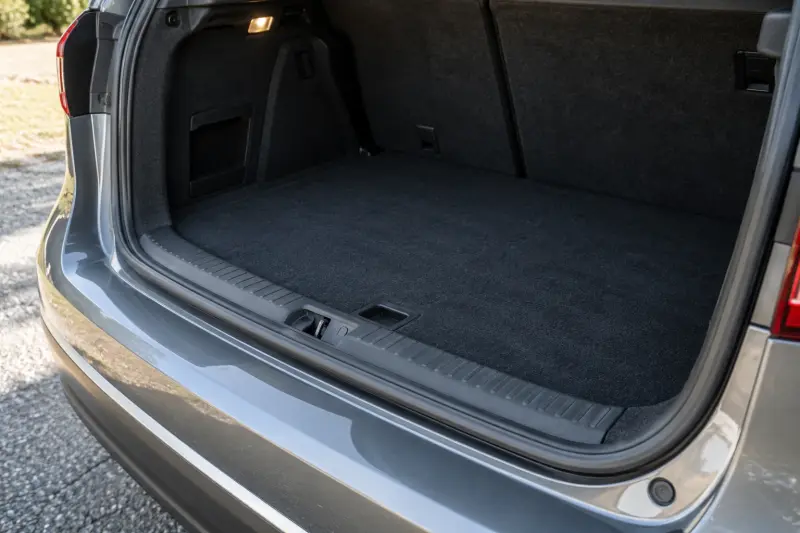
Ask the maker or provider to identify the exact arrangement in which each dimension applies. Include any handle, battery or approved accessory that remains attached. If a retailer uses a different description such as folded depth, clarify the orientation rather than assuming the terms match. The document and supplied configuration should make the comparison understandable.
Do not infer a removable component from a product photograph. Some parts may remain fitted under the applicable instructions, and an accessory can change the transported shape. A smaller image online is not permission to alter the equipment. The provider should confirm the actual routine and configuration before it is placed into the vehicle plan.
Keep units consistent across the worksheet. An inch-to-centimetre conversion can compare values, but it cannot resolve an incorrectly defined dimension or a model mismatch. Record original units and the conversion where helpful, then ask the responsible source to clarify any disagreement. Choosing whichever number makes the fit look easiest is not a valid comparison.
Resolve the loading method with the people who will use it
Name the person who performs loading and unloading, and explain any handling concern to the appropriate provider. A scooter described as lightweight can still be an unsuitable task in a particular car. Do not set a universal lifting limit or ask someone to prove capability by attempting a questionable load.
Record the completed transport weight separately from a battery-excluded headline or the weight of a single dismantled piece. Pride's consumer guide calls for confirmation of the final transport weight when vehicle transport systems are considered. That confirmation needs the actual accessories and supplied arrangement, not simply a number copied from an old product page.
If a lift, ramp or carrier is relevant, obtain a professional compatibility assessment for the actual vehicle, device and scooter configuration. A published capacity is only one part of the question. This guide does not give installation instructions, recommend homemade loading equipment or infer compatibility from a matching weight alone.
Include unloading at the destination. Departure may involve a familiar garage while arrival involves another space or helper arrangement. Tell the provider about those conditions and ask how the documented routine applies. A method that is unresolved at the destination should remain unresolved, even if a showroom loading demonstration appears convenient.
Keep securement and passenger travel separate from fit
After dimensional and handling questions, establish the appropriate unoccupied equipment transport arrangement under the product, vehicle and provider guidance. We do not supply tie-down positions or a restraint recipe. A piece fitting neatly in the cargo area is not the same as equipment prepared and secured correctly for travel.
Do not assume that a scooter can be used as a passenger seat in a motor vehicle. The actual equipment instructions and transport requirements must be checked through the appropriate provider route. This article concerns a cargo-space planning record, not occupied transport approval. A scooter's ordinary seating specification cannot settle that separate question.
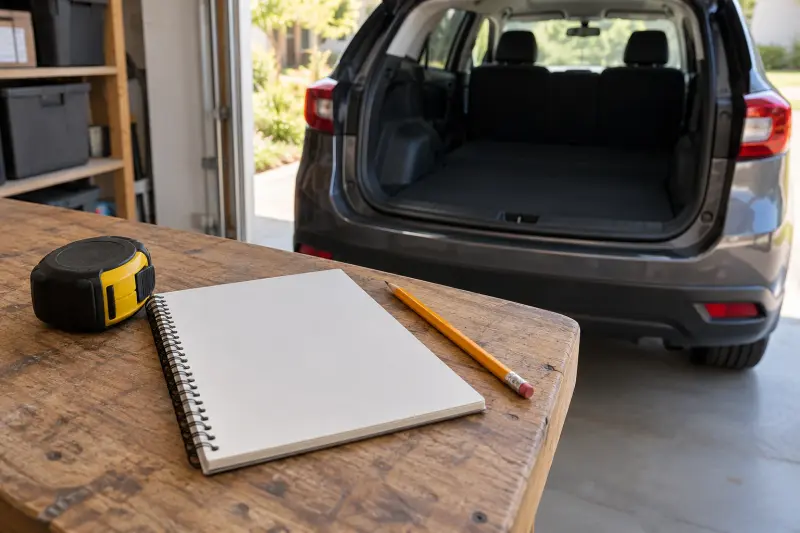
Ask how approved accessories and other carried items affect the completed arrangement. Do not place loose components into an imagined gap simply because the packing sketch has room. Keep the vehicle's applicable cargo requirements and the provider's confirmed transport process attached to the plan. An external carrier introduces its own system and vehicle questions.
Record who confirms each part: scooter provider, vehicle or transport-system professional and the relevant documentation source. Avoid a single checkbox labelled safe that hides several different responsibilities. The worksheet should show what was actually confirmed and by whom, with the remaining next action visible before travel is planned.
Worked example: interior volume does not answer the loading opening
Imagine a fictional household comparing a compact folding candidate with a dismantling candidate. Its car has an advertised luggage-volume figure that sounds generous. The family initially assumes either model will fit because both appear small in photographs. No aperture dimensions or exact transported configuration have yet been recorded.
The household measures the relevant opening with suitable help and asks the provider for the documented transported shapes. One candidate creates an aperture mismatch in the intended orientation. The other appears dimensionally possible as several pieces, but the provider still needs to resolve handling, arrangement and secure transport. The worksheet keeps that second outcome as pending rather than approved.
The household also needs the rear seats for passengers and space for another necessary item. Those conditions are added before a demonstration. The provider therefore sees the actual travel configuration instead of an empty maximum-volume arrangement. That may reveal a different limitation or identify another suitable transport discussion.
This example does not select a scooter or suggest how to angle equipment through a tight opening. It shows the value of a staged purchasing decision: define the vehicle, compare the aperture, review interior arrangement, then resolve handling and transport. A large advertised boot volume is useful background, but the actual task needs more specific evidence.
Bring the real vehicle questions to a provider demonstration
Ask whether a demonstration can include the actual vehicle and relevant helper arrangement. Explain the unresolved dimensional and transport questions in advance. The provider can then say what can be reviewed and what requires another specialist or survey. A generic showroom presentation may not answer your car-specific task.
Bring the equipment and vehicle records rather than a long list of unrelated features. Ask the provider to identify the exact demonstration model, battery and accessories, and whether those match the proposed order. A different variant can create a misleading impression of weight, shape or routine complexity.
Use appropriate support and the actual instructions during any demonstration. Do not attempt unsafe handling or improvise a new loading method to obtain a positive result. The demonstration can reveal a limitation or a need for another transport system. That is useful information, and it should not be treated as an obstacle to be overcome by pressure to buy.

Editorial illustration Ask for important confirmations in writing. The record should state which question was reviewed, the configuration involved and any qualifications. A verbal statement such as “people put these in small cars” does not describe your actual arrangement. Precise documentation helps keep the final order aligned with what was demonstrated.
Compare complete transport scope before buying a compact model
A compact product may still require delivery, setup, an approved accessory or a matched transport system. Obtain current written scope and separate necessary items from optional convenience purchases. We do not assume that a folding scooter is cheaper to own or that dismantling eliminates every transport expense.
If a vehicle change is being considered, do not choose it from cargo volume alone. The same aperture, interior, handling and transport-system questions need to be reviewed. A new car is a substantial decision, and the provider or relevant vehicle professional should help confirm the proposed equipment arrangement before it becomes a justification for purchase.
Read current regional return conditions before committing to a scooter specifically for boot fit. Ask what happens if a required confirmation is still pending and whether an appropriate demonstration is available first. Do not assume that delivered, configured or used equipment can be returned under a universal policy.
The lower-cost alternative may be an existing appropriate arrangement or another confirmed transport service for an occasional outing. Keep personal suitability and service availability with the relevant providers. Buying a compact scooter that does not answer the whole mobility task is not a saving, even when its promotional price appears attractive.
Useful answers to common car-fit shopping shortcuts
Does a folded dimension mean it fits any hatchback? No. It identifies one property of a named configuration. You still need the full transported shape, aperture comparison, interior arrangement and appropriate handling and transport confirmation. A product adjective such as travel does not supply those answers.
Is the heaviest piece the only figure needed for a dismantling scooter? No. It helps frame handling, but all pieces and their permitted arrangements need space. The exact instructions also govern separation and reassembly. A smaller single piece can be useful while creating other tasks that the household must understand.
Can a paper sketch approve a loading method? No. It is a dimensional planning aid. It cannot establish personal handling suitability, vehicle-system compatibility or securement. Keep those requirements attached to their appropriate provider and document route instead of converting a geometry result into a safety statement.
Should you buy a bag, ramp or carrier while waiting for confirmation? Only when its actual task and approved compatibility are established. An accessory purchased in advance can introduce another mismatch. Begin with the unresolved essential question, then order the documented scope rather than trying to solve a transport concern through a collection of generic add-ons.
Your aperture-to-journey car-fit record
Finish one card with the exact vehicle configuration, loading aperture, usable interior, scooter variant and completed transported shape. Add original units, document sources and who supplied each confirmation. Keep personal health details elsewhere in the appropriate private conversation; the dimensional worksheet does not need them.
Attach separate entries for handling, secure transport, passengers and destination unloading. Use precise statuses such as dimensional comparison complete or provider transport review pending. Avoid a single fits verdict that combines unresolved requirements with a few promising measurements. The card should tell another household member exactly what remains to be established.
If an essential mismatch appears, write the next appropriate option or enquiry rather than trimming the measurements. A different configuration, device or transport route may be relevant, but it needs its own evidence. The purpose of the record is to support an informed choice, including rejecting an unsuitable order.
Our folding-versus-dismantling guide develops routine differences, while the ownership-budget guide helps organize actual quotes. Keep those records connected with the wider personal-use assessment. A successful car-fit decision is a documented complete arrangement, not simply a scooter disappearing into an open boot in a photograph.
MAKE THE SPEND MEANINGFUL
Before adding to the basket.
- Use the current appropriate confirmed vehicle arrangement where it serves the journey.
- Request a relevant provider demonstration before buying an accessory to solve uncertain fit.
- Consider a confirmed transport service for an occasional outing where appropriate.
- Use a private paper dimensional record rather than purchasing a planning app.
How this guide was prepared
AI-assisted editorial research, checked against the linked primary sources. Product testing and a credentialed individual review are not claimed.
AI-assisted, source-checked editorial; no hands-on test, human expert review or personal suitability assessment claimed
How we use sources and AI assistance ↗Sources & fact checks
The guide separates sourced facts from editorial questions and examples. We have not claimed hands-on product testing. How we use sources and AI assistance.
- Pride SC15M specification sheet Rev A January 2025: distinct operating and folded dimensions; supplied configuration needs confirmation ↗
- Pride Scooter Consumer Safety Guide January 2025: final transport configuration and unoccupied vehicle-transport guidance ↗
Found an error or an outdated detail? Contact the editorial team.