
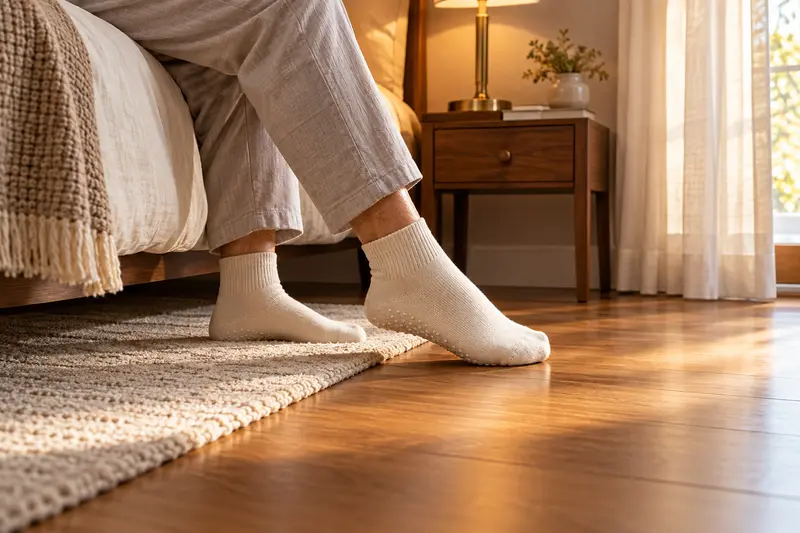
In brief
Non slip socks have rubber grips on the sole, and they suit short trips at home, nights and hospital stays when shoes are not practical. Choose grips that cover the whole tread, the right size and a soft top that does not squeeze. Research has not shown that grip socks reduce falls, so for most daytime walking a well-fitting, closed shoe is the safer choice.
Shortlisted for this decision
Affiliate-
Shortlisted
Silverts Grip Socks, 6 Pack
For grip at home in socks
Six pairs with full-coverage grippers, a seamless toe and a soft non-constrictive top, so there is always a clean pair by the bed.
Check price on AmazonCheck first: Choose S/M or L/XL from the chart, and check the sole photos for one or two-sided grips.
Affiliate links: we may earn a commission from qualifying purchases at no extra cost to you. Prices are shown only on Amazon. Amazon.com (US listing). See the full comparison ↓
Documented options
Non slip socks for older adults: options compared
Options based on manufacturer documentation. Retailer links are affiliate links: we may earn a commission from qualifying purchases.
Affiliate retailer links
-
Silverts Non-Skid Hospital Socks 6 Pack
Exact variant: 6 pack
View product details on Amazon — United States
IN THIS GUIDE
Who non slip socks help
Grip socks, also called hospital socks or slipper socks, are soft socks with rubber dots or patterns on the sole. They give more hold than plain socks on smooth floors such as wood, tile and vinyl.
They are most useful in the moments when shoes feel like too much. Say your mother gets up twice a night for the bathroom. Putting on shoes in the dark is awkward, and plain socks on a wooden floor are slippery. A grip sock is a sensible middle step.
They also help when feet change during the day. Some people have swollen feet by the evening, and a stretchy sock fits when a shoe does not.
- Night trips from bed to bathroom on hard floors
- Hospital stays and recovery at home, when shoes are not to hand
- People whose feet swell so their shoes pinch by evening
- Visitors to a parent's home who like to take shoes off at the door
- Anyone who walks on smooth floors in plain socks today
What grip socks can and cannot do
The NeuRA Falls and Balance Research Group reviewed the studies on non-slip socks. In one small study of 15 older people on a slippery walkway, non-slip socks improved walking compared with standard socks, and gait looked closer to barefoot walking.
Here is the limit, said once: none of the studies showed that non-slip socks reduce falls or fall injuries. One lab study even found them less slip resistant than bare feet. The researchers suggest them mainly where suitable footwear is not available, for example in hospital.
For everyday walking, the same review recommends shoes indoors and outdoors with a firm, thin, slip resistant sole, a low square heel and a supporting collar around the ankle.
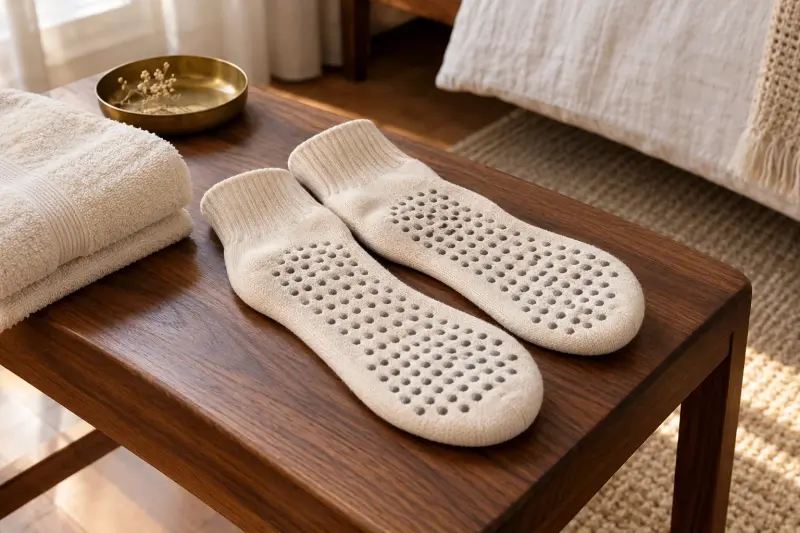
- Better than plain socks or smooth-soled slippers on slippery floors
- A practical choice at night, in hospital, or when feet are swollen
- Not a replacement for a well-fitting shoe during the day
- Not a fix for dizziness, weak legs or poor eyesight, which need their own checks
What to check before you buy grip socks
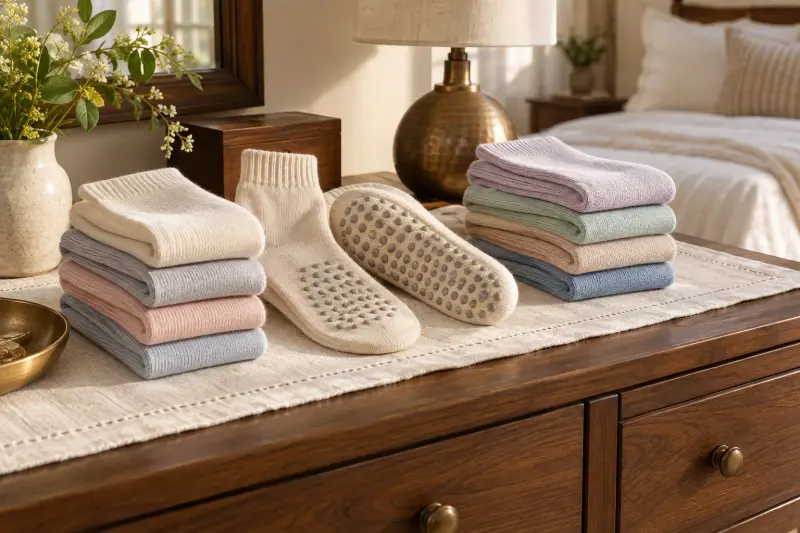
Start with the sole. Look for grips that cover the whole tread from heel to toe, not a small patch under the ball of the foot. If the person tends to put socks on twisted, grips on both sides mean there is always rubber underneath.
Then check size and cuff. A sock that is too big bunches and slides, which defeats the grip. A top band that leaves a deep red ring is too tight, especially for someone with swollen ankles.
Before ordering, read the listing and ask yourself one question: "Can I see the size chart and a photo of the sole?" If either is missing, keep looking.
- Grip coverage: full sole, heel to toe, and one side or both
- Size: match the chart to the person's shoe size, not a guess
- Top band: soft and non-constrictive, with no deep marks after wear
- Seams: a smooth toe seam for sensitive skin
- Care: machine washable, with the drying instructions on the label
Silverts hospital socks and double-tread socks compared
Our verified pick is the Silverts 6 pack, sold on Amazon.com. The facts below come from the Silverts product page and the Amazon listing title. For comparison, double-tread slipper socks, the style many hospitals use, carry grips on both sides.
Medline describes its double-tread slipper socks as having anti-slip treads on both sides and an absorbent terrycloth interior. They are sold to care settings, individually bagged and 48 pairs per case, so they are not a typical home purchase.
In short, the Silverts pack suits home use, with two sizes and easy washing. If your father often pulls socks on twisted, check the sole photos on the listing first, or ask the hospital ward which double-tread socks they use.
- Silverts: 6 pack, 2 of each color, in novelty, pastel or neutral packs
- Silverts: sizes S/M (women 6-9.5, men 4.5-8) and L/XL (women 10-13.5, men 8.5-12)
- Silverts: 95% polyester, 5% spandex, full-coverage grippers, seamless toe, non-constrictive top, machine washable and tumble dry
- Silverts: the page does not say whether grips are on one side or both
- Medline double-tread style: grips on both sides, terrycloth inside, sold by the case to care providers
When a shoe is the safer choice
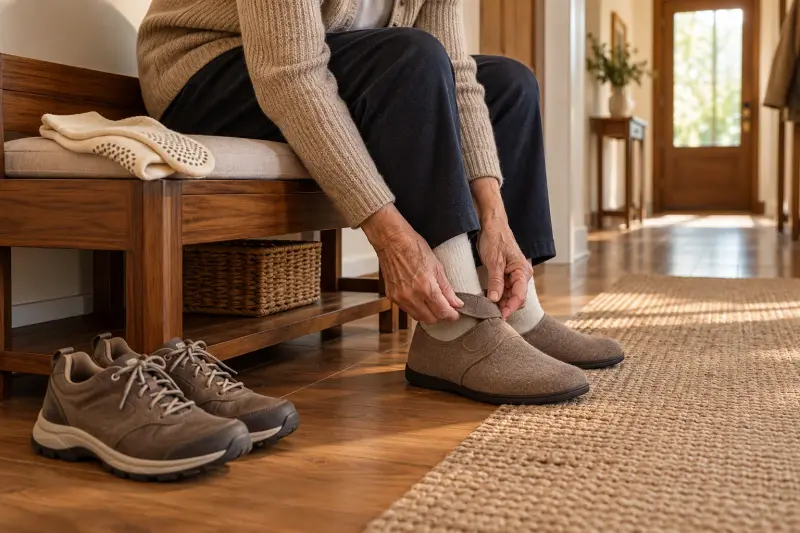
For walking about the house during the day, a supportive shoe or a closed-back slipper with a non-slip sole usually beats any sock. White Plains Hospital advises against slippers without straps, laces or buckles, and against smooth soles.
Imagine your father shuffles to the kitchen in old, stretched slippers. Swapping those for a closed-back pair with a fastening and a grippy sole may matter more than any sock. Ask the shop: "Can I try this with the socks he wears at home?"
Keep grip socks for the times shoes really do not fit the moment: bedtime, bath days and the first days after coming home from hospital.
- Choose a closed back and a strap, lace or buckle
- Pick a thin, firm, slip resistant sole and a low, wide heel
- Try shoes on with the socks normally worn, late in the day
- Retire slippers that have stretched, flattened or lost their tread
Care, common mistakes and when to ask for advice
Grips wear down with washing and walking. Turn the socks over every few weeks and look at the rubber. If the dots are flat, cracked or peeling, the sock is now just a sock.
A few habits help. Keep a clean pair by the bed so no one walks to a drawer in the dark. Do not wear grip socks inside shoes, where the rubber can bunch and rub.
If falls or near misses are happening, the sock is not the answer on its own. Ask the doctor or an occupational therapist: "Could you check her balance, her feet and her footwear together?" A podiatrist can help with foot problems and fitting.
- Check grips monthly and replace worn pairs
- Wash as the label says; high heat can damage the rubber
- Keep one pair at the bedside and one in the bathroom
- Never wear grip socks inside shoes
- Ask for a falls check if there has been a fall or a near miss
MAKE THE SPEND MEANINGFUL
Non slip socks for older adults: low-cost alternatives
- Hospitals often supply grip socks during a stay; ask whether you may take the pair home
- Replace stretched slippers with a closed-back pair before buying many socks
- A small non-slip mat by the bed and good night lighting can help on the same route
In brief
Non slip socks for older adults: questions answered
Do non slip socks prevent falls?
Not on their own. A NeuRA research review found that non-slip socks can improve grip and walking on slippery floors compared with plain socks, but no study showed fewer falls or fall injuries. They are a sensible choice at night or in hospital. For daytime walking, a well-fitting closed shoe with a thin, firm, slip resistant sole is the safer choice.
Should grip socks have grips on both sides?
Grips on both sides help when socks get pulled on twisted, which happens often with stiff hands or in a hurry. Hospital double-tread socks are made this way. Grips on one side work well if the sock goes on straight each time. Either way, look for rubber that covers the whole sole from heel to toe.
Are hospital socks good for people with swollen or sensitive feet?
Look for a soft, non-constrictive top and a seamless toe, which the Silverts pack lists. Check the ankle after a day of wear. A deep red ring means the band is too tight. If feet are very swollen, sore or numb, ask the doctor or a podiatrist before relying on any sock or slipper.
How often should grip socks be replaced?
There is no fixed date, because it depends on how often they are worn and washed. Turn them over every few weeks and look at the rubber. When the dots are flattened, cracked or peeling, replace the pair. Wash them as the label says, since high heat can wear the grips faster.
How this guide was prepared
AI-assisted editorial research, checked against the linked primary sources.
Written with AI assistance from the sources listed below and checked against them. We have not tested these products in person.
How we use sources and AI assistance ↗Sources & fact checks
The guide separates sourced facts from editorial questions and examples. How we use sources and AI assistance.
- NeuRA Falls and Balance Research Group: non-slip socks and falls prevention mini review ↗
- Silverts Men's and Women's Non Skid Hospital Socks, 6 Pack: sizes, fabric, grips and care ↗
- Medline Double-Tread Slipper Socks: tread on both sides and terrycloth interior ↗
- White Plains Hospital Health Library: choose the right shoes for fall prevention ↗
Found an error or an outdated detail? Contact the editorial team.