
In brief
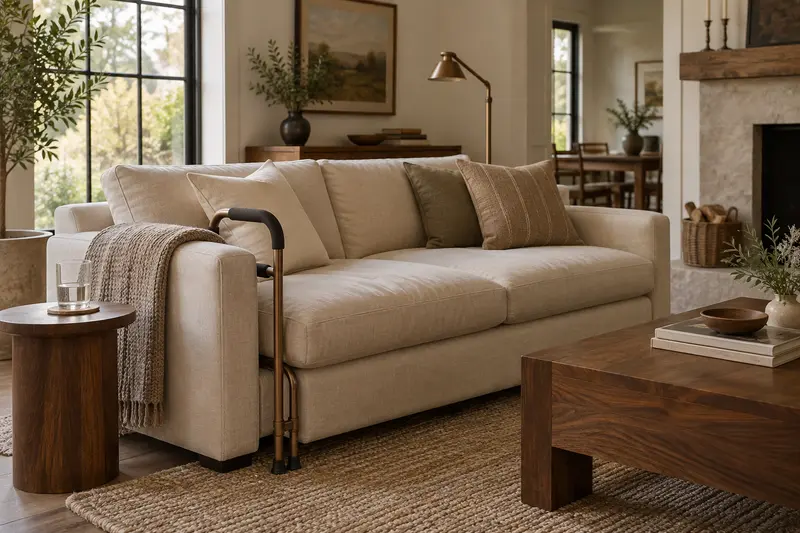
A couch stand assist for elderly users suits someone who can stand with a little push but finds a low or soft sofa or chair hard to leave. Choose a cushion-mounted frame for sofas within its width and depth range, or a floor-based couch cane for a chair with four legs. Check the seat measurements and the weight rating before you buy.
Shortlisted for this decision
Affiliate-
Shortlisted
Vive Stand Assist
For pushing up from sofas or recliners
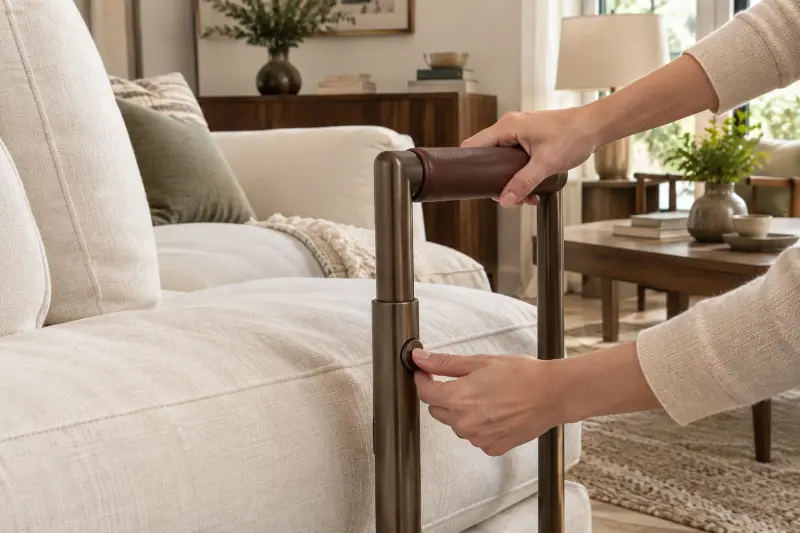
Light aluminum frame that slides under sofa or recliner cushions to give a padded handle at each side for pushing up.
Check price on AmazonCheck first: Fits seats about 19.25-22.25 in wide and 24-27 in deep; rated to 300 lb.
-
Shortlisted
Stander CouchCane
For chairs with legs, tall standing handle
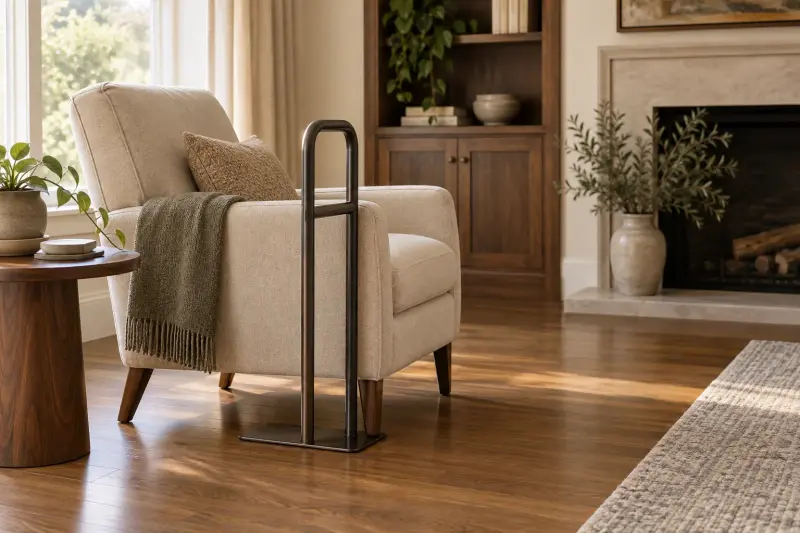
Tall 34-40 in standing handle held in place by the chair's own legs, with an organizer pouch.
Check price on AmazonCheck first: Needs four chair legs 20-36 in apart; not for solid-base sofas; rated to 250 lb.
Affiliate links: we may earn a commission from qualifying purchases at no extra cost to you. Prices are shown only on Amazon. Amazon.com (US listing). See the full comparison ↓
Documented options
Stand assist rails for a couch or chair: options compared
Options based on manufacturer documentation. Retailer links are affiliate links: we may earn a commission from qualifying purchases.
Affiliate retailer links
-
Vive Stand Assist - Mobility Standing Aid Rail for Couch, Chair
Exact variant: One size, single unit
View product details on Amazon — United States -
Vive Stand Assist - Mobility Standing Aid Rail for Couch, Chair
Exact variant: One size, single unit
View product details on Amazon — Germany -
Vive Stand Assist - Mobility Standing Aid Rail for Couch, Chair
Exact variant: One size, single unit
View product details on Amazon — France
Affiliate retailer links
-
Stander CouchCane, Standing Assistance Aid with Safety Grab Bar Handle and Organizer Pouch
Exact variant: Single unit with organizer pouch
View product details on Amazon — United States
IN THIS GUIDE
Who a stand assist helps, and who needs more
A stand assist gives the hands something firm to push on when rising from a seat. It helps most when the legs still do the work but the arms of the chair are too low, too soft or missing. Families often notice the need first, when a parent rocks several times before getting up.
It does not lift anyone. If a person cannot take their own weight, or has started to fall when getting up, a store-bought standing aid is not the answer on its own. Ask a doctor, physical therapist or occupational therapist to look at the whole task.
- Good fit: rising is slow but possible with a push from the hands.
- Good fit: the favorite chair lacks firm armrests at a useful height.
- Get advice first: new dizziness, recent falls or a sudden change in strength.
- Get advice first: the user cannot stand without someone taking their weight.
Measure the seat before choosing a standing aid for elderly users
Each stand assist fits a stated range of seat sizes. Measure the cushion width and depth, then look at the base: does the chair stand on four legs, or does it have a solid skirt to the floor?
Health New Zealand advises a chair at the right height, with feet flat on the floor and solid armrests that you do not have to reach back for. A stand assist can supply the handle, but it cannot fix a seat that is far too low. Write the figures down and keep them with you while you compare products.

- Cushion width, measured across the seat between the arms.
- Cushion depth, from the front edge to the backrest.
- Whether the cushions lift out or are fixed in place.
- Leg spacing, front to back, if the chair stands on four legs.
- The user's weight, compared with the product's stated limit.
How the two stand assist designs compare
The two picks solve the same problem in different ways. One sits under the cushions and puts low handles at the seat sides. The other stands on the floor and rises to a tall grab handle.
The figures below come from the makers' own pages. Compare them with your measurements, not with each other. A product that fits the seat and the user's weight is the only useful shortlist.
- Vive Stand Assist: aluminum frame, under 3 lb, rated to 300 lb, handles 9-12 in high, seats 19.25-22.25 in wide and 24-27 in deep.
- Stander CouchCane: steel, 19.5 lb, rated to 250 lb, handle 34-40 in high, base 20-36 in long.
- Vive mounting: slides under or over removable or fixed cushions, tool-free.
- CouchCane mounting: the chair's front and rear legs stand on its base pads.
- CouchCane extra: a four-pocket organizer pouch for a remote or phone.
When a couch cane makes more sense
A couch cane suits a chair with four separate legs, such as many recliners and lift chairs. The tall handle meets the hand higher up, so the user does not have to reach down to push off.
It will not work on a sofa with a solid base that sits on the floor. Stander states that the front and rear legs of the chair must sit on top of the base pads.
- Check that all four chair legs can stand on the base pads.
- Measure leg spacing: the CouchCane base adjusts from 20 to 36 in.
- Allow floor space beside the chair for the handle and the user's feet.
- Note the 250 lb limit, lower than the cushion-mounted pick.
Setup and everyday checks
Follow the maker's instructions exactly, and test the fit with a helper beside the chair the first time. A handle that shifts when pushed is not ready for use.
Cushion-mounted frames depend on the seat holding them in place. Check the fit again after cleaning, moving furniture or changing cushions. Floor-based designs need the chair to stay put, so watch for legs creeping off the pads on smooth floors.
- Set the handle height so the push starts from a comfortable elbow bend.
- Push hard on each handle before relying on it.
- Recheck knobs and buttons weekly; tighten any that have loosened.
- Keep the floor in front of the chair clear of rugs and cables.
Common mistakes to avoid
Most problems come from a poor match between the product and the chair. A frame that is too narrow for the cushion can tilt, and a couch cane placed under a sofa with a solid base has nothing holding it down.
The other common mistake is buying a handle to solve a problem that is really about the seat. If the chair is very low or very soft, the push still starts from a deep, awkward position. Look at the chair itself before adding hardware to it.
Finally, do not treat a stand assist as a walking aid. Once the person is upright, they still need a safe first step and something steady to hold if they normally use a cane or walker.
- Buying before measuring the seat and checking the base.
- Ignoring the weight limit because the frame looks sturdy.
- Leaving a walker or cane out of reach once standing.
- Using the handle to pull up from a lying or slumped position.
- Skipping the regular check of knobs, pins and cushions.
MAKE THE SPEND MEANINGFUL
Stand assist rails for a couch or chair: low-cost alternatives
- Firm cushion inserts or furniture risers can raise a low seat, but check that the chair stays stable.
- A sturdy armchair with solid armrests at the right height may remove the need for an add-on.
- Ask a therapist about practice with the standing technique, which costs nothing to keep using.
In brief
Stand assist rails for a couch or chair: questions answered
What is a couch cane?
A couch cane is a floor-standing handle that sits beside a chair. Its base slides under the chair, and the chair's own legs hold it in place. It gives a tall grip to push on when standing. It only suits chairs with four separate legs, not sofas with a solid base.
Will a couch stand assist fit under a sofa with low legs?
It depends on the design. A cushion-mounted frame such as the Vive Stand Assist slides under or over the cushions and lists a seat range of 19.25-22.25 in wide and 24-27 in deep, so wide or deep sofas may fall outside it. A floor-based couch cane needs the chair's front and rear legs to stand on its base pads, so it will not work on a sofa with a solid base. Measure the seat and base first.
Is a stand assist safe for someone who has fallen?
It depends on why the fall happened and how the person stands now. A stand assist only gives the hands something to push on; it does not lift or catch anyone. After a fall or a change in strength or balance, ask a doctor, physical therapist or occupational therapist before relying on any standing aid.
Stand assist or lift chair: which is better?
They suit different needs. A stand assist adds a handle to a chair you already own and still needs leg strength to rise. A lift chair tilts the seat forward with a motor. If standing is getting much harder, ask a therapist which approach fits the person and the room.
How this guide was prepared
AI-assisted editorial research, checked against the linked primary sources.
Written with AI assistance from the sources listed below and checked against them. We have not tested these products in person.
How we use sources and AI assistance ↗Sources & fact checks
The guide separates sourced facts from editorial questions and examples. How we use sources and AI assistance.
- Health New Zealand: getting into and out of a chair (seat height and armrest advice) ↗
- Vive Health Stand Assist: capacity, handle height and seat fit ↗
- Stander CouchCane: capacity, height range and four-leg requirement ↗
Found an error or an outdated detail? Contact the editorial team.