
In brief
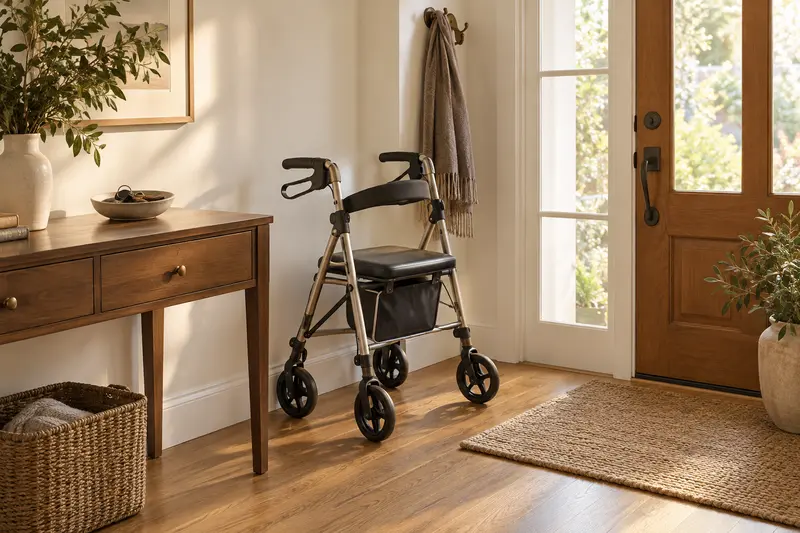
A rollator suits someone who can walk steadily with light support and wants a seat for rests along the way. Before buying, check two things: that the handle range lets the user stand with elbows slightly bent, and that the seat height, seat width and weight capacity fit their body. A therapist can confirm whether wheels suit their balance.
Free tool: Cane and walker height calculator ↗
Shortlisted for this decision
Affiliate-
Shortlisted
Drive Medical R728 rollator
For a light rollator with seat and backrest
Light 14 lb aluminum frame with a padded seat and backrest, and handles that adjust from 33 to 38 inches.
Check price on AmazonCheck first: 300 lb capacity and a 14 inch seat; check seat height against the user's leg length.
-
Shortlisted
Drive Medical Nitro Sprint rollator
For larger users and uneven outdoor paths
A 350 lb frame with an 18 inch wide seat and 10 inch front wheels, according to Drive Medical.
Check price on AmazonCheck first: Weighs 19 lb; confirm the listing is the standard height, not hemi or tall, and check the 21 inch seat height.
Affiliate links: we may earn a commission from qualifying purchases at no extra cost to you. Prices are shown only on Amazon. Amazon.com (US listing). See the full comparison ↓
Documented options
Rollator walker guide: options compared
Options based on manufacturer documentation. Retailer links are affiliate links: we may earn a commission from qualifying purchases.
Affiliate retailer links
-
Drive Medical Rollator Walker with Seat, 7.5 Inch Wheels
Exact variant: Blue
View product details on Amazon — United States
Affiliate retailer links
-
Drive Medical Nitro Sprint Rollator Walker
Exact variant: Standard, Blue
View product details on Amazon — United States -
Drive Medical Nitro Sprint Rollator Walker
Exact variant: Standard, Blue
View product details on Amazon — Germany
IN THIS GUIDE
Who a rollator walker helps, and who needs a different frame
A rollator is a walking frame with four wheels, hand brakes and usually a seat. It rolls with the user, so it suits people who can keep a steady pace but tire on longer walks to the store, the park or a clinic.
Wheels are not right for everyone. MedlinePlus notes that walkers come with no wheels, two wheels or four, and that a surgeon or physical therapist helps choose the type. If balance is uncertain, a frame that does not roll may be the safer choice.
A rollator with a seat also changes the day. A place to sit while waiting in line or in a long hallway can make an outing possible again. Think about where the frame will spend most of its time, indoors, outdoors or in the car, because that decides which measurements matter most.
- Suits steady walkers who want rests along the route
- Four wheels and hand brakes need reliable hand strength
- A frame without wheels may suit less steady balance
- Ask a physical therapist when the choice depends on health or recent surgery
What to measure before choosing a rollator
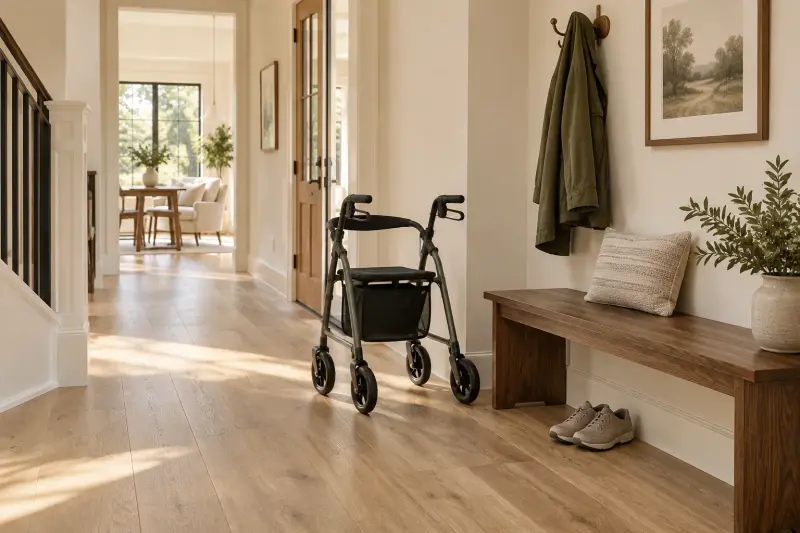
Handle height comes first. MedlinePlus advises that handles sit at hip level, with elbows slightly bent when holding them. Measure from the floor to the crease of the user's wrist while they stand in everyday shoes, then check that figure falls inside the handle range.
Seat height matters when the user sits on the rollator. Their feet should rest flat on the floor with knees near a right angle. Seat width and weight capacity should suit their body with room to spare.
Finally, measure the narrowest doorway and the car trunk opening if the frame will travel. Compare them with the open and folded sizes on the maker's page.
- Floor to wrist crease in everyday shoes, for handle height
- Floor to back of the knee while seated, for seat height
- Hip width while seated, compared with seat width
- Narrowest doorway at home and the trunk opening of the car
- User weight, plus a margin for anything carried in the pouch
How the verified model compares on the facts
We list one rollator with a seat that is verified on Amazon.com and has a manufacturer page with full specifications. The figures below come from Drive Medical's own page for the R728 aluminum rollator, which is sold in blue and red.
Use these numbers as a checklist against your own measurements. No figure here says the frame will suit a particular person.
Two figures deserve a second look. A 23 inch seat is fairly high, so shorter users should compare it with their seated knee height. A 14 inch seat width is narrow for some adults, and the 300 lb rating includes anything carried in the pouch.
Drive Medical lists the frame at 24 inches wide and 28 inches deep when open. Compare the width with your narrowest doorway.
- Drive Medical R728: handle height adjusts 33 to 38 inches
- Seat 23 inches from the floor, 14 inches wide and 12 inches deep
- Weight capacity 300 lb; frame weight 14 lb; aluminum
- 7.5 inch casters with soft grip tires
- Removable hinged padded backrest and a zippered pouch under the seat
Setting up and caring for the frame
Set the handles at the measured height before the first walk, and check both sides match. Test the brakes on a flat floor: squeeze to slow, and lock them before sitting down.
Never sit on a rollator while it rolls, and never use it to be pushed like a wheelchair. Lock both brakes, turn around and sit back with control.
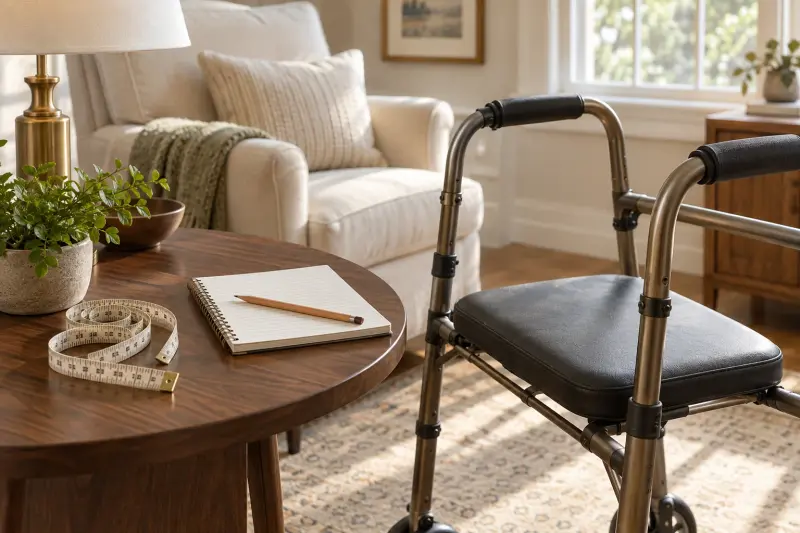
Once a month, look at the tires, brake cables and folding latch. Wipe the frame and seat with a damp cloth and keep the under-seat pouch light.
Practice folding and unfolding the frame indoors before the first trip. If lifting 14 lb into a car is hard for the user, plan who will help, or keep the frame by the front door and use a different aid in the car.
- Lock both brakes before sitting down
- Do not ride on the seat or use the frame as a transport chair
- Check tires, brake cables and the folding latch monthly
- Keep heavy shopping out of the pouch so the frame stays stable
Making the home route walker-friendly
A rollator needs a clear path. MedlinePlus suggests securing loose rugs and cords, removing clutter and keeping floors clean and dry, plus wearing non-skid shoes.
Look at thresholds and tight turns, such as the space between the bed and a dresser. A small bag or basket keeps both hands on the handles, which MedlinePlus also recommends.
Outdoors, larger wheels roll more easily over cracks and grass than small ones. Note the steepest slope and roughest path on the usual walk, and mention them when you ask for advice or compare frames.
- Secure or remove loose rugs and trailing cords
- Keep a clear turning space beside the bed and chair
- Add good lighting along the night route
- Carry small items in a bag or basket, not in one hand
When to get personal advice
Ask a physical therapist or occupational therapist before buying if the user has had a recent fall, surgery or a change in balance. They can check whether a rollator, a standard walker or another aid fits the user best.
MedlinePlus also points out that stairs and escalators need training. Ask for help if walking with the frame feels unsteady.
Family members can help by bringing measurements, photos of tight spots at home and a note of the usual routes. That makes a short appointment far more useful. Keep the user's own preferences at the center, since a frame they dislike often ends up parked in a corner.
- Recent fall, surgery or new dizziness
- Trouble squeezing or holding the brakes
- Weight close to the frame's capacity
- Plans to use stairs, curbs or ramps often
BEFORE YOU DECIDE
Rollator walker guide: buying checklist
These checks organize the decision.

MAKE THE SPEND MEANINGFUL
Rollator walker guide: low-cost alternatives
- Ask a physical therapist or local loan closet about borrowing a walker to try before buying
- A standard walker without wheels can cost less and may suit less steady balance
- Check whether health insurance or Medicare covers a walker with a prescription
In brief
Rollator walker guide: questions answered
What is the difference between a rollator and a walker?
A standard walker has no wheels or two front wheels and is lifted or slid forward with each step. A rollator has four wheels, hand brakes and usually a seat, so it rolls along with the user. Rollators suit steady walkers who want rests; a standard walker gives more fixed support. A physical therapist can say which suits a person's balance.
How do I know what handle height I need?
Stand straight in everyday shoes with arms relaxed and measure from the floor to the crease of the wrist. MedlinePlus says handles should sit at hip level with elbows slightly bent. Pick a rollator whose handle range includes that measurement, ideally not at the very top or bottom of the range.
Is a walker with a seat safe to sit on?
It is designed for resting when used as the maker intends. Lock both brakes, turn around, feel the seat behind your legs and sit back slowly. Never sit while the frame rolls or let someone push you on it, and stay within the stated weight capacity. If standing up from the seat is hard, ask a therapist to show a safe way to rise.
Does Medicare cover a rollator walker?
Medicare Part B can cover walkers as durable medical equipment when a doctor prescribes one as medically needed and the supplier is enrolled with Medicare. Rules and costs change, so confirm coverage with Medicare or the plan and the supplier before ordering. Buying first and claiming later may not be accepted.
How this guide was prepared
AI-assisted editorial research, checked against the linked primary sources.
Written with AI assistance from the sources listed below and checked against them. We have not tested these products in person.
How we use sources and AI assistance ↗Sources & fact checks
The guide separates sourced facts from editorial questions and examples. How we use sources and AI assistance.
Found an error or an outdated detail? Contact the editorial team.