

In brief
The right wheelchair cushion matches the wheelchair seat's width and depth, carries the user's weight with a margin and adds a height the footrests and armrests can absorb. Foam or gel suits everyday comfort. For long hours seated, fragile skin or a past pressure injury, a clinician or seating specialist should choose the cushion.
Shortlisted for this decision
Affiliate-
Shortlisted
Drive Medical gel cushion 18 x 16
For 18 x 16 in seats, gel bladder
Gel bladder inside a foam shell, with a low-shear water-resistant top cover and waterproof base, sized for an 18 x 16 inch seat.
Check price on AmazonCheck first: Rated to 250 lb; measure the seat first and ask a clinician if skin is fragile.
Affiliate links: we may earn a commission from qualifying purchases at no extra cost to you. Prices are shown only on Amazon. Amazon.com (US listing). See the full comparison ↓
Documented options
Wheelchair cushion guide: options compared
Options based on manufacturer documentation. Retailer links are affiliate links: we may earn a commission from qualifying purchases.
Affiliate retailer links
-
Drive Medical 14886 Skin Protection Gel Wheelchair Seat Cushion
Exact variant: Item 14886, 18 x 16 x 3 inches
View product details on Amazon — United States
IN THIS GUIDE
Wheelchair cushion types and who needs more than a basic seat
Most wheelchairs come with a thin sling seat or a basic pad. That can be enough for short trips. People who sit for hours need a cushion that spreads pressure and keeps them in a stable position.
Cushions are usually sold by what is inside. Foam is light and simple. Gel cushions often pair a gel pad with a foam base. Air and custom-shaped cushions also exist, and they are normally set up and adjusted with a seating specialist.
MedlinePlus advises wheelchair users to use a foam or gel cushion or a natural sheepskin pad, and to avoid donut-shaped cushions. A cushion cannot promise to prevent pressure sores. Changing position, checking skin and a chair that fits matter just as much.
- Sits in the wheelchair for long periods each day
- Slides forward or leans to one side
- Has thin or fragile skin, or reduced feeling
- Has had a pressure injury before: get a clinician's advice first
How to measure for a wheelchair cushion
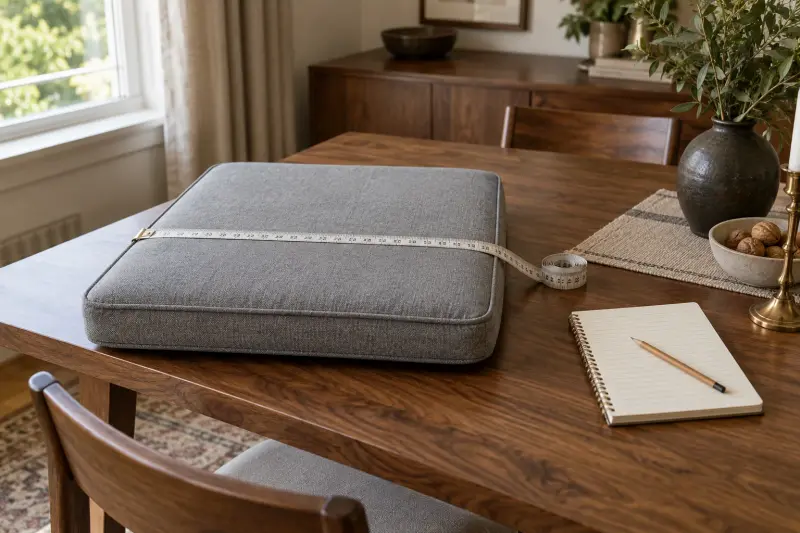
Measure the wheelchair seat, not the person. Wheelchair cushions are sold by seat width and depth, such as 18 x 16 inches, with width given first. The Canadian Red Cross says a cushion should sit directly on the seat and fit snugly.
A cushion that is too wide bunches against the armrests, and one that is too deep can press behind the knees. Then check the height. A 3 inch cushion raises the user by about that much, which changes how the feet reach the footrests and the arms reach the armrests.
Think about transfers too. A taller or softer cushion can make sliding sideways onto a bed or toilet a little harder. If the user transfers often, try the new height with a therapist or helper standing by.

- Step 1: take off the old cushion and unfold the chair fully
- Step 2: measure seat width across, between the armrests or side guards
- Step 3: measure seat depth from the backrest to the front edge
- Step 4: note the user's weight and compare it with the cushion's capacity
- Step 5: check that feet still rest on the footrests once the cushion adds height
How the verified pressure relief cushion compares on the facts
We list one wheelchair cushion that is verified on Amazon.com and has a full manufacturer page. Drive Medical's Gel E Skin Protection cushion comes in several sizes, and item 14886 is the 18 x 16 inch version.
The figures below come from Drive Medical's page. They describe the product, not whether it suits a particular person's skin or posture.
Check two numbers carefully. The 250 lb capacity is lower than some wheelchairs, so confirm it covers the user. And because the cushion comes in five sizes, make sure the Amazon listing is item 14886 if the seat is 18 x 16 inches.
- Drive Medical 14886: 18 inches wide, 16 inches deep, 3 inches high
- Weight capacity 250 lb
- Viscous gel bladder inside a polyurethane foam shell
- Low-shear, water-resistant urethane-coated nylon top cover; waterproof vinyl base
- Carry handle; other sizes run from 16 x 16 to 22 x 18 inches
Setting up, cleaning and daily care
Place the cushion the right way around, following the maker's label for front and top. Check the user sits centered, with feet supported and thighs level. The Spinal Injuries Association suggests checking the cushion set-up every day and cleaning it, ideally weekly.
For a foam cushion, the Canadian Red Cross says a removable cover can be machine washed on a cool cycle and hung to dry. A fixed cover can be wiped with mild detergent and water and left to dry before use. It warns against fabric softener, bleach and solvents. Follow the maker's own care label first.
MedlinePlus advises wheelchair users to shift their weight every 15 to 20 minutes and to check their skin every day. It also suggests avoiding thick seams, buttons or zippers where the body presses on the seat.
- Follow the front and top markings on the cushion
- Shift weight every 15 to 20 minutes, as MedlinePlus suggests
- Check the skin daily and report any redness that does not fade
- Clean the cover and let it dry fully before sitting
- Feel for thin spots, dampness, leaks or a worn cover
When to replace it or get personal advice
The sources we checked give no fixed lifespan. The Spinal Injuries Association says to review cushions regularly and replace them promptly if worn or damaged, to help avoid skin and posture problems. The Red Cross adds that a cushion that moves and lets the user slide is a reason to contact the care team.
Any sign of skin damage, a past pressure injury or a change in health means the cushion choice belongs with a clinician, wound care nurse, physical therapist or occupational therapist. MedlinePlus also suggests a wheelchair fit check once or twice a year, especially after weight changes.
Bring the wheelchair, the current cushion and a note of how many hours the user sits each day. A family member can add what they notice, such as sliding or leaning.
- Foam that stays flattened, splits or feels damp inside
- Redness that does not fade or any broken skin
- A past pressure injury
- Weight gain or loss since the chair was fitted
- Sliding, leaning or pain when seated
Common mistakes with seat cushions
The most common mistake is buying by the user's hip size instead of the chair's seat size. The cushion has to sit flat on the seat, without curling up at the sides or hanging over the front.
Another is adding a thick cushion without checking the rest of the chair. Three extra inches can make armrests too low and tables harder to reach. Stacking is a third: the Red Cross warns that another cushion underneath can make the user unstable, and a pillow on top undoes what the cushion was chosen to do.
- Buying by body size rather than seat size
- Ignoring the height the cushion adds
- Putting a second cushion underneath or a pillow on top
- Using the cushion upside down or backwards
- Keeping a worn or leaking cushion in use
MAKE THE SPEND MEANINGFUL
Wheelchair cushion guide: low-cost alternatives
- Ask the wheelchair supplier or seating clinic whether a cushion comes with the chair before paying for one yourself
- Ask Medicare or your health plan whether a cushion is covered with a prescription before buying
- A loan closet or local charity may lend a cushion to try while you decide

In brief
Wheelchair cushion guide: questions answered
What size wheelchair cushion do I need?
Buy the size of the wheelchair seat, not the user. Measure the seat width between the armrests and the depth from the backrest to the front edge, then choose the matching size, such as 18 x 16 inches with width first. Also check the cushion height, since a thicker cushion raises the user relative to the footrests and armrests.
Is a gel or foam wheelchair cushion better?
Neither is better for everyone. Foam is light and simple, while gel cushions often combine a gel pad with a foam base, as in Drive Medical's Gel E cushion. MedlinePlus lists both foam and gel as suitable types. For someone at higher risk of skin damage, a seating specialist or clinician should choose the material.
How often should a seat cushion be replaced?
There is no fixed interval in the sources we checked; replace it when it is worn or damaged. The Spinal Injuries Association advises reviewing cushions regularly and replacing them promptly when worn, to help avoid skin and posture problems. Signs include foam that stays flat, splits or feels damp inside, a leaking gel pad and a cover that has worn through.
How do you clean a pressure relief cushion?
Follow the maker's care label first. For a foam cushion, the Canadian Red Cross says a removable cover can be machine washed on a cool cycle and hung to dry, while a fixed cover can be wiped with mild detergent and water. Avoid fabric softener, bleach and solvents, and let the cushion dry fully before use.
How this guide was prepared
AI-assisted editorial research, checked against the linked primary sources.
Written with AI assistance from the sources listed below and checked against them. We have not tested these products in person.
How we use sources and AI assistance ↗Sources & fact checks
The guide separates sourced facts from editorial questions and examples. How we use sources and AI assistance.
- MedlinePlus: Preventing pressure ulcers ↗
- Canadian Red Cross: Care and use of a foam wheelchair cushion ↗
- Drive Medical: Gel E Skin Protection wheelchair cushion (14886) ↗
- Spinal Injuries Association: Wheelchair and cushion maintenance ↗
Found an error or an outdated detail? Contact the editorial team.